A New Crypto Game Hides a Million Dollars

The competition combines video games patterns, virtual reality, and cryptocurrencies. The first team to obtain 400 of 1,000 fragments of the private key will be able to move the funds

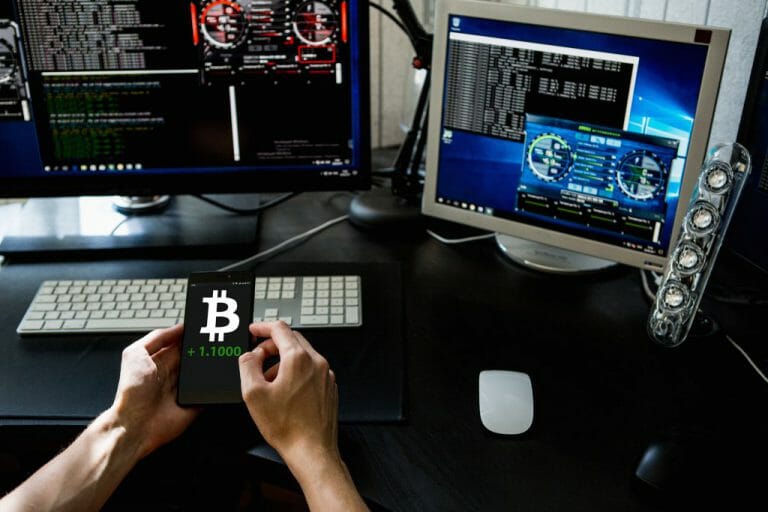
This Monday, April 15th, the bitcoiner community received an invitation to find the keys of a bitcoin wallet and earn a million dollars, as part of the Satoshis Treasure game; one of the virtual games with cryptocurrencies and wallets that have been played during the last months to boost the fondness for cryptoactives.

An anonymous user transmitted the message and challenged the rest of the Bitcoin community to what he called Satoshi’s Treasure, a contest “that will test the resolution, courage, intelligence, and experience of potential hunters”, he said. Taking into account the current exchange rate, the prize is approximately 198 BTC.

In order to access the reward, the Satoshis Treasure hunters participating in the competition must recover 400 of the 1,000 fragments of the bitcoin’s portfolio private keys, which are hidden in different locations worldwide.

In the game, the hunters will have to overcome various challenges which difficulty will increase as they advance in the competition. This will allow them to find the keys to the million-dollar treasure, according to the developers of the game.

Players can register on the satoshistreasure.xyz website to get more information and receive notifications about their progress in the competition. In addition, they will receive clues that will help them reach their goal.

The first track was transmitted using the Blockstream satellite, which transmits data related to Bitcoin. As reported by the team of Satoshis Treasure, there will be challenges that require knowledge of encryption, logic, and mathematics, the possibility of visiting remote locations and the performance of feats of strength, similar to an action movie.

Eric Meltzer, co-creator of the game, explained that the hunters will be able to see in a ranking table which is the team that leads the house, a style similar to the Hunger Games. He added that more than 6,000 people have signed up for the game’s mailing list.

The Zcash Co-Creator, Ian Miers, and 18 other collaborators participated to prevent anyone else from knowing the program or the location of all the tracks. “There are some clues that are very useful for treasure hunts and clues that deal with logical puzzles or mathematical problems”, he explained.

Meltzer clarified that there is no specific group of rules to participate. Because of this, bitcoiners rated it as a game compared to Steven Spielberg’s Ready Player One movie.

“When the winning team wins they do so by taking the bitcoin and we have nothing to do with this. We‘re not giving the prize,”… “There are so many unknowns in this game that we kind of just want to see what happens.”, Meltzer said.

Bitcoin games have become very popular. One of the most recent was in France when a thousand dollars in bitcoins were hidden in the Liberty Leading the People artwork, which was resolved in 2018.

This April 16, 17 and 18 the game will reveal the first three keys to obtain the keys of the Satoshis Treasure, which will allow competitors to advance in the million-dollar hunt.

By María Victoria Rodríguez

A Million-Dollar Purchase Triggered Bitcoin Price and Bots May Be Responsible

Iván López, an expert in economics, technology, and Blockchain, reports the impact of false information on the price of Bitcoin

Undoubtedly, the news that struck the cryptocurrency environment was a rise in the price of Bitcoin that was 20% above the previous day. Many wondered what may have caused it, to which Reuters said that it may have resulted from a single Bitcoin purchase for more that US $100 million.

After surpassing the mark of US $4,000 some weeks ago and gradually rising above US $4,100 in recent days, BTC’s jump to almost US $5,000 was not completely unexpected, but it definitely occurred faster than estimated.

The greatest and most original cryptocurrency soared in operations in Asia, surpassing US $5,000 for the first time since last mid-November. Late this morning, it had been established at about US $4,700, still 15% of its biggest one-day gain since April last year.

Oliver von Landsberg-Sadie, Director of a cryptocurrency brokerage firm, told Reuters that the move was probably due to a single buyer, who used a computer algorithm to activate a purchase of 20,000 bitcoins for US $100 million, in several exchanges such as Coinbase, Kraken, and Bitstamp.

Oliver von Landsberg-Sadie, CEO of the BCB Group cryptocurrency firm, told Reuters:

“At this time, the identity of the big buyer (probably an institutional investor) and the intent of the business are not clear.”

“Only one order has been administered algorithmically at these three places, which was of about 20,000 BTC.”

Regarding the reason why these three exchanges are suspected to be the origin of the mysterious order, the chief official said that “the volumes of each exchange were synchronized volume units of about 7,000 BTC per hour.”

The analyst could not indicate specific news or developments in the cryptocurrency sector that could explain the mysterious buyer’s big order.

A very probable, but not very crazy theory has emerged within this enthusiastic environment. Yesterday there was a lot of false news all over the Net as a joke to celebrate April Fools’ Day. A false article said that the “SEC finally approved two Bitcoin exchange-traded funds (ETF) proposals” and an analyst predicted that this might be among the reasons why the price of Bitcoin immediately soared on April 1st.

Currently, advanced algorithms allow creating even false news and bots with algorithms have developed to the point of responding to fundamental news. For example, those robots create automatized accounts that may spread erroneous information and distort regular conversations that occur online.

George McDonough, CEO of London-based investment company KR1, thinks that this joke might be the reason. He recently revealed that the purchase bots vanished after the false news that the SEC had allowed two Bitcoin ETFs on April 1st.

Jay Clayton, President of the SEC, called the commissioners to end EFT speculation. Supposedly, VanEck and Bitwise were preparing to launch their respective ETF in early May.

In a certain way, the article predicted that the SEC’s announcement would make the price soar to US $6,000. Actually, the price of Bitcoin reached US $5,000, increasing almost 20% per day, and this is not an April Fools’ Day joke.

The reasons behind this may not be clear, but Binance and other exchanges have benefited from this Bitcoin transference. According to CoinNess, not less than 100,000 BTC have been moved in one of Binance’s addresses.

By Willmen Blanco

CoinMarketCap Launches Android App and Revamps iOS Product with Exciting Features

Most cryptocurrency holders have a daily routine. Before engaging into trading activities in crypto exchanges, or going to their e-wallets, they check their token’s price evolution in the last few hours to identify ongoing trends and overall behavior. For a sizable portion of token holders, CoinMarketCap is the go-to page for crypto-related data.

Now, the famous crypto data provider has broadened its offerings and announced the launch of its initial Android mobile app whilst also making improvements to an already existing iOS application. The piece of news was made public by the page itself on Tuesday, April 16th.

Top-notch Features on Both Platforms

It raises people’s attention that both of the aforementioned apps have features that are still not yet found on the CoinMarketCap website. Among them are useful price alerts, user accounts,  the chance of tracking portfolios, direct cryptocurrency comparisons, and candlestick charts.

“We believe that our users will like the new style and the features we’ve added to these apps, and we’ll continue to update the app regularly based on the feedback we receive,” were the words of the site’s Global Head of Marketing Carylyne Chan at the moment of announcing the development.

If users want to save their portfolios or watchlists, they need to register for a valid CoinMarketCap account directly on the apps to do such things. According to the website, the objective is to let app accounts to be synced with the page in the not so distant future, further adding to an already exciting list of features.

The Crypto “Gainers” and “Losers” Section

The mentioned Android and iOS apps will also have an interesting section to spice up things: the crypto gainers and losers, as a way to provide a quick analysis of the latest developments in price movement. There will also be curated news about the industry as a whole on the web page.

CoinMarketCap, arguably the gold standard at the moment of looking for cryptocurrency-related data and charts, developed an API product last year, most precisely in August, and the product is responsible for the entire data provided on the apps.

Other Releases and Products

Similarly, the company released a couple of benchmark indices in March 2019, which cover the top 200 digital assets by market “cap” (capitalization,) one including Bitcoin (BTC) and another one without it, on data feeds from Nasdaq Global Index Data Service (GIDS), Bloomberg Terminal, Thomson Reuters Eikon (Refinitiv) and Börse Stuttgart.

CoinMarketCap also made the news in recent times because of the decision to add crypto asset letter grades to its platform thanks to collaboration with Flipside, a blockchain analytics startup.

The iOS app of CoinMarketCap is about to turn one year old, as it was launched in May as part of the celebration of the company’s fifth anniversary. The Android product is brand-new and has the potential to attend a massive market, with Android being the best-selling mobile operating system in the world.

By Andres Chavez

Samsung Partners with an Indian Giant to Expand the Use of Blockchain Nexledger

The intention is to increase the use of the platform mainly in India, the United States, and Europe

Samsung SDS teamed up with the Indian Giant Tech Mahindra, a multinational provider of information technology and business process outsourcing, looking for its blockchain platform, Nexledger, to enter the foreign market, South Korean press reported last Sunday, April 14th.

SDS, the systems integration arm of the Korean technology giant Samsung, plans to expand the use of its Nexledger blockchain platform, launched in 2017, mainly in India, the United States, and Europe.

Nexledger is a blockchain security platform that has been used in finance (for financial institution authentication), full digital economy, manufacturing, logistics, and other areas. The Korean Customs Service used the blockchain solution in export customs logistics with 48 organizations, including public agencies, shipping, and insurance companies, which joined the test.

Nexledger’s Benefits

“Samsung SDS’s experiences from consulting to operating the entire blockchain system will be invaluable for more organizations to realize the technology’s potential”, Analyst Simon Piff says.

As it is described on www.samsungsds.com, Nexledger is a blockchain solution “used to manage the authentication and authorization of customer information sharing between affiliates with user agreement”.

The page also invites: “Get the Blockchain solution optimized for your business and keep transactions on track using a Blockchain platform. Offering infrastructure and services that can be deployed across all industries, including the finance sector, Nexledger TM is a blockchain platform built for enterprise, empowering your organization to take control of distributed transactions securely and conveniently”.

The platform analyzes for efficiency and identifies the right course of action with Samsung SDS’s unique Blockchain Value Assessment (BVA). It offers speed and efficiency with the exceptional scalability of Nexledger.

Another possibility is to build an easy and secure system “with high performance and detailed management” monitoring features with its blockchain platform. “Designed and developed for enterprise, Nexledger gives you a no-limits approach to grow your business”, it highlights.

Important Partnerships

Recently, Samsung SDS announced it will launch its own blockchain accelerator technology, Nexledger Accelerator, after a successful test with Hyperledger Fabric. The solution would improve the speed of transaction processing. The company also partnered with a Dutch bank for the development of a shipping platform.

On the other hand, Mahindra has also used blockchain technology to create a solution that would allow it to efficiently handle the invoices of its automobile division and its suppliers. In addition, it partnered with Microsoft to use blockchain technology to avoid Spam calls.

It should be noted that the new series of smartphones Galaxy S10 will feature wallet for Bitcoin (BTC), Ethereum (ETH) and two tokens, one of which will serve to support decentralized applications, the company announced last month.

Blockchain can be applied to a variety of fields, from logistics to manufacturing and finance. For this reason, the journey has begun.

By María Victoria Rodríguez

ShapeShift and Binance Delist Bitcoin SV, Kraken is Strongly Considering the Possibility

Bitcoin SV’s last few days have not been pretty. The coin, which is the result of the mid-November hard fork of Bitcoin Cash that also originated Bitcoin ABC, has lost a significant amount of value in the month of April, and has been delisted by famous cryptocurrency exchanges such as Binance.

Not only that, but also, after Binance decided to delist BSV, the anonymous exchange ShapeShift took a similar approach and dropped the digital asset, which caused concern among the token holders and a sector of the industry.

Kraken Could Be Next

Kraken, one of the most prominent crypto exchanges in the United States of America, is also mulling the possibility of dropping Bitcoin SV from its offered cryptocurrencies, in what has the look of a domino effect that threatens to severely damage Bitcoin SV’s future prospects.

Erik Voorhees, who is currently the CEO of ShapeShift, expressed the company’s sentiments via the microblogging site Twitter. On April 15th, he informed that the exchange had decided to delist BSV, supporting Binance in the process: “We stand with @binance and CZ’s sentiments. We’ve decided to delist Bitcoin SV #BSV from @ShapeShift_io within 48 hrs.”

After ShapeShift’s announcement was made public, a sector in the community naturally criticized the decision. One person said that “this action by you smacks of PayPal cutting off Wikileaks. As a BTC maximalist I don’t like it. It goes against what BTC stands for,” referring to a 2010 situation in which payments services company PayPal froze WikiLeaks’ account, because it was, allegedly, violating the company’s terms of service.

If that was not enough, Kraken is also toying with the idea of stopping its offering of Bitcoin SV as an available token for trading. Actually, the exchange posted a poll in its social media channels asking people whether it should delist the coin or not. The option of keeping the list for the purpose of price discovery has not been discarded either.

Before ShapeShift, Binance had already started the week by saying it would delist the controversial digital asset, a measure that will be enforced starting next week. According to Binance’s officials, it only makes such a decision after thoroughly reviewing the situation. In this particular regard, the officials stated that “we believe this best protects all of our users.”

Interests Behind the Decision

CZ, which is the nickname of Changpeng Zhao (Binance’s CEO) recently tweeted a warning message saying that the possibility of delisting BSV existed, so the company’s decision comes as no surprise. It can be seen as a personal response to Craig Wright, which is one of the masterminds behind Bitcoin SV.

CZ is not a fan of Wright’s behavior. His Twitter message said “Craig Wright is not Satoshi. Anymore of this sh!t, we delist”. Wright has long claimed he is one of the minds behind Satoshi Nakamoto, the creator of Bitcoin and the fuel that ignited the cryptocurrency revolution.

The statement by Zhao and the subsequent delisting probably represent a reprisal against Wright’s actions against Hodlnaut, which is the Twitter user behind the Lightning Torch project. The Australian offered $5,000 worth of BSV as a prize for whoever told him information about the identity of Hodlnaut. The community responded with the hashtag #WeAreAllHodlnaut as a support measure for the account, which has now been deleted from the space.

By Andres Chavez

Confidence Is Key for the Growth of Cryptoeconomy

Friendly tools for financial services were popular during the first quarter, and developers will continue building ways to interact easily with the blockchain

Jhonnatan Morales, a fund manager and independent consultant, summarizes the institutional adoption of crypto assets during the first quarter of 2019.

Bitcoin (BTC) has fallen by 70% this year, after reaching an All Time High (ATH) of around US $20,000 in December 2017. Currently, this crypto asset has a market capitalization of about US $91 billion, with a deal volume of US $5 billion, which positions it at the top of the BraveNewCoin market capitalization table.

Closing the first quarter (Q1), the topics are adoption and investment channels for institutions, with the purpose of creating a much more stable, safe and regulated market. It is essential to have a reliable ecosystem for the sustained growth of the crypto space.

Proposals to Simplify Operations

Currently, proposals aimed at building friendlier tools for financial service are becoming increasingly recurrent in the industry. For instance, Fidelity Digital Assets and the Bakkt group launched, respectively, an institutional custody service for private clients and a subsidiary of Intercontinental Exchange that will allow the listing of future Bitcoin with a physical settlement.

The tendency is to develop products or mechanisms that simplify joining the crypto market under regulatory parameters. The recent integration of Bitcoin Liquid Index (BLX) and Ethereum Liquid Index (ELX) to Nasdaq, and a clearer legislation regarding STOs, indicate that traders will be playing in a cleaner field.

It will be very hard to create all the channels for institutional actors to acquire the adequate infrastructure for their operations as they comply with all regulations. For that reason, many companies and organizations have taken advantage of the so-called crypto-winter to focus on developing such mechanisms.

Wall Street operators expect more clarity on other aspects before investing in crypto assets, but many solutions already proposed by crypto bags, data providers and high-end financial institutions are aimed at meeting those needs.

Regarding adoption, actions are increasingly immediate and intense as countries begin to be outlined in their crypto legislations. Binance’s statements on acquiring Bitcoin with cash in more than 1,300 points around Australia, as well as the opening of payment systems in cryptocurrencies, are undoubtedly strategies for the access of products by unbanked people from unattended markets.

Effects on Efficiency and Security

On the other hand, the boom in second-layer solutions within Bitcoin, such as the Lightning network (LN), has been gaining ground since its activation in 2018. It has gone from about 15,000 channels in operation to more than 36,000 in the first quarter of the year (an increase of 130%), with a volume of 1,000 BTC (46% more than last month), and a transaction size limited to 0.04 satoshis, whilst the network develops and builds.

Projects like Ln.pizza, which offers US users an instant purchase at Domino’s Pizza with a 5% discount by using the Lightning Network (LN) and Tippin.Me, a tip service on Twitter that allows users to send micro-transactions very easily, are among the many cases that seek to capture users’ attention through cheaper and faster transactions.

Programmers’ constant work has led big companies and respected personalities in the field of technology to put Bitcoin in the spotlight. Jack Dorsey, CEO of Twitter, and Facebook employees consider that blockchain technology can simplify current processes, simplifying value transfer, data security, and interaction with faster payment systems.

Incidence on Financial Market

Wall Street is increasingly hosting the crypto world to create channels more suitable for large capital. The integration of Bitcoin indexes to Nasdaq and Fidelity leads to a more stable and safe market in the medium term, but this will not be enough for other institutions. Bitcoin trading on the US stock exchange seems distant, as this market is still young and lacks enough trade surveillance to meet the needs of the Securities and Exchange Commission (SEC).

Future progress with these initiatives could trigger a bullish rebound and favor institutional investments within the ecosystem. However, these issues will not keep developers and the crypto community from advancing and building new ways for users to interact with the blockchain through tools that simplify processes.

In contrast, whilst the current value of Bitcoin and most assets has plummeted, the options for buying, selling or storing have expanded, the rates are the lowest since 2016, trading volumes in Bitcoin continue increasing, and transactions are about to reach their highest point.

By Willmen Blanco