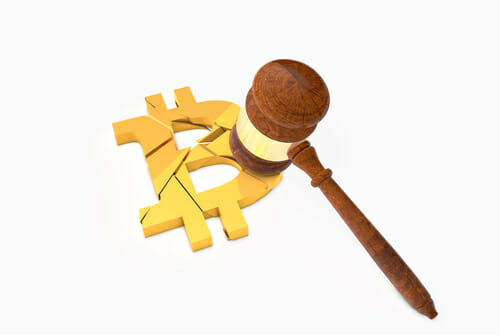
An Important South Korean Exchange Announces it Will Close

The decrease in operations on its platform, as well as losses caused by computer errors, forces Coinnest to an unavoidable closure

On Tuesday, April 16th, the important South Korean exchanges company, Coinnest, announced, through a publication on its official website, that it will conduct a technical closure of all its operations as an asset rescue measure.

The announcement of Coinnest is a process that has already started. According to the official publication, this will take a while to materialize. In the document, the company detailed step by step the final actions for its official closure; this timeline was published in order to inform its creditors, customers and partners about the completion of their procedures. However, it is clear that it is an inevitable move that will allow the company to safeguard the assets of all its customers.

About the reasons why the company is going to close, it is known that a Coindesk Korean journalist interviewed a company executive, in order to know the main reasons. The executive answered that the decision is largely due to the sudden fall in the number of operations and the decrease in active clients. “It is a natural result of a decrease in the volume of operations. Both regulatory issues and commercial decisions have served as the basis for this decision”.

Coinnest was considered the third largest crypto-exchanges company in South Korea and reached the sixth position in the ranking of the best cryptocurrency exchange platforms in the Asian country, according to the reports  made last year by different media specialized in these technologies. Despite these achievements, the company began to suffer problems in its financial stability processes. This does not happen because of the fall of the cryptocurrency exchange market.

Kim Ik-hwan, who was one of the most important executives of Coinnest, was arrested last year, on suspicion of having carried out significant third-party fraud and embezzlement.

Sometime later, it was officially announced that Ik-hwan was found guilty of all the charges against him and sentenced to prison. He will pay a fine of approximately 3,000 million, approximately US $ 2.5 million.

Despite these links that may have negatively affected Coinnest’s finances, one of the executives of the company played a major role in this altercation and mentioned that the company lost much of its strength due to some mistakes that decreased them a lot of money.

About this aspect, he cited the example of a misplaced release last January, which ended up generating $ 5 million in losses. The problem was originated due to a computer error that processed the uncontrolled sending of cryptocurrencies to all of its clients.

Due to the difficulty that caused the loss of around 5.3 million dollars in full process of development of its own app, and the considerable decrease in the number of operations in its platform, it ended up unbalancing its financial status, which eventually forces Coinnest to this forced closure. The community is waiting for more news about it.

By María Victoria Rodríguez

Transnational Hotel Will Accept Tokens from Brazilian Football Clubs

Corinthians, Fortaleza and Atlético Mineiro fans would enjoy discounts in the multionational chain

Accor, the multinational chain of French origin, signed an agreement with the Brazilian startup Footcoin, in order to accept the criptoactives of different soccer teams in Brazil and in the rest of South America.

The specialized magazine in the hotel world, HotelierNews, announced the news on Tuesday, April 16th, through a special publication on its website.

As it is detailed in the article, with this new mechanism the association seeks to benefit the fans of the first division teams Corinthians, Fortaleza and Atlético Mineiro, which recently launched their own tokens, thanks to the support of Footcoin.

Discounts for Amateurs

The Accor hotel corporation manages resorts and vacation properties in 100 countries. This company also manages more than 4,200 hotels worldwide. From now on, with this exchange, soccer fans who acquire the crypto-active of any of these teams will be able to exchange the tokens for discounts in the different hotels of the French chain, reported the media.

In this way, fans of these teams who travel across the continent to attend matches of their favorite clubs, and also have GaloCoin, LeãoCoin and TimãoCoin tokens, will receive discounts up to 20% in the chain of budget hotels (Ibis Styles and Ibis Budget), whilst reservations in the luxury area (Grand Mercure, Pullman, MGallery and Sofitel), will have a 30% discount in these hotels located in any region of South America.

Fernanda Zupo, Marketing Manager, spoke about the alliance. According to the representative of the company, this initiative will allow them to provide greater positioning to the hotel. “It will be an opportunity to welcome fans who travel with the team in our hotels”, Zupo said.

José Rozinei da Silva, CEO of Footcoin, believes that having a partner like Accor will help them to promote the credibility of the platform. The initiative will invite more people to venture into the world of cryptocurrencies and collect tokens related to the sports world.

The work began last year, when the Brazilian football clubs Fortaleza and Atlético Mineiro decided to launch their tokens developed by the startup. After these releases, the Corinthians club joined in March 2019.

Since the end of 2018, some sports clubs began to show greater interest in cryptoactives. Juventus of Turin signed an alliance with Socios.com for the creation of a token focused on its fans, as well as the Parisian club Paris Saint-Germain.

Avaí, the second division of the Brazilian national team, also signed an agreement with SportyCo to create an ICO that will push the team to the first division. Even UEFA, the highest body responsible for coordinating football activities in Europe, said it would also use distributed accounting technology, according to a statement posted on its website.

Many teams and professional players have announced both projects to create tokens, and to implement this technology to raise funds. As Footcoin has reported, it is expected that more soccer teams will join the platform during 2019 to provide their fans with different benefits to.

By María Victoria Rodríguez

France Approves a Bill That Allows Insurance Companies to Invest in Cryptocurrencies

Service providers will offer life insurance policies in cryptocurrencies, as well as professional capital investment funds

The France’s National Assembly has approved a bill which allows insurance providers or markets in that country to invest in cryptocurrencies, according to what the badge news agency FXStreet announced on Thursday, April 11th.

The French Parliament granted its approval to the so-called “Action Plan for the growth and transformation of companies”, also known as “Le Pacte”, which obtained 147 votes in favor and 50 against it.

This bill tries to stimulate the development of local businesses, including the reorientation of private savings to the businesses ones, according to what the local news agency Les Echos details.

The measure comes after Eric Woerth, Head of the Finance Committee of the National Assembly, proposed to ban the Monero and Zcash cryptocurrencies, which happened last March.

Now, with this new announcement, insurers will be able to make investments in cryptocurrencies and tokens without having any limitations on the amount or type of cryptoactive to be used for the transaction.

Another of the great advantages of this new law is that it will allow individuals to redirect their savings as an investment in business. In addition, the law allows French insurance providers to invest in cryptocurrencies such as Bitcoin (BTC) with no limit on the amount of the investment. Thus, the law is designed to stimulate the development of local businesses and the use of cryptocurrencies to attract new investors.

A double provision of this legislation will allow service providers to invest in cryptocurrencies through specialized professional funds. Similarly, they can offer life insurance policies that customers can pay with cryptocurrencies, as well as professional investment funds (or Professional Capital Investment Funds, PCIF), in order to achieve a variety of services which would be as complete as possible.

Olivia Grégoire, a member of the French parliament who participated in the writing of the project, gave more details about the project, according to the Les Echos report this April 12th.

“Two types of transfers will be possible: from a life insurance policy to a contract subscribed subsequently, in the same insurer, and, until January 1st, 2022, from a life insurance policy to a new saving plan for retirement, in the format foreseen by the same provisions of the pact, he said.

It was also known that the law points to the privatization process. This includes the sale of the State’s participation in the group of airports ADP, which would raise funds for the creation of a new fund for innovation.

Joel Giraud, Deputy Director and budget manager of Emmanuel Macron’s party La République En Marche, confirmed the news, but he affirmed that the new crypto initiative “was not the main objective of the Pacte”.

The debate about the measures for the use of cryptoactives in France continues, whilst every day it opens new doors to the world of cryptoactive, which are immediate, electronic payments, smart contracts and the benefits blockchain technology offers in different fields of development.

By María Victoria Rodríguez

Samsung Partners with an Indian Giant to Expand the Use of Blockchain Nexledger

The intention is to increase the use of the platform mainly in India, the United States, and Europe

Samsung SDS teamed up with the Indian Giant Tech Mahindra, a multinational provider of information technology and business process outsourcing, looking for its blockchain platform, Nexledger, to enter the foreign market, South Korean press reported last Sunday, April 14th.

SDS, the systems integration arm of the Korean technology giant Samsung, plans to expand the use of its Nexledger blockchain platform, launched in 2017, mainly in India, the United States, and Europe.

Nexledger is a blockchain security platform that has been used in finance (for financial institution authentication), full digital economy, manufacturing, logistics, and other areas. The Korean Customs Service used the blockchain solution in export customs logistics with 48 organizations, including public agencies, shipping, and insurance companies, which joined the test.

Nexledger’s Benefits

“Samsung SDS’s experiences from consulting to operating the entire blockchain system will be invaluable for more organizations to realize the technology’s potential”, Analyst Simon Piff says.

As it is described on www.samsungsds.com, Nexledger is a blockchain solution “used to manage the authentication and authorization of customer information sharing between affiliates with user agreement”.

The page also invites: “Get the Blockchain solution optimized for your business and keep transactions on track using a Blockchain platform. Offering infrastructure and services that can be deployed across all industries, including the finance sector, Nexledger TM is a blockchain platform built for enterprise, empowering your organization to take control of distributed transactions securely and conveniently”.

The platform analyzes for efficiency and identifies the right course of action with Samsung SDS’s unique Blockchain Value Assessment (BVA). It offers speed and efficiency with the exceptional scalability of Nexledger.

Another possibility is to build an easy and secure system “with high performance and detailed management” monitoring features with its blockchain platform. “Designed and developed for enterprise, Nexledger gives you a no-limits approach to grow your business”, it highlights.

Important Partnerships

Recently, Samsung SDS announced it will launch its own blockchain accelerator technology, Nexledger Accelerator, after a successful test with Hyperledger Fabric. The solution would improve the speed of transaction processing. The company also partnered with a Dutch bank for the development of a shipping platform.

On the other hand, Mahindra has also used blockchain technology to create a solution that would allow it to efficiently handle the invoices of its automobile division and its suppliers. In addition, it partnered with Microsoft to use blockchain technology to avoid Spam calls.

It should be noted that the new series of smartphones Galaxy S10 will feature wallet for Bitcoin (BTC), Ethereum (ETH) and two tokens, one of which will serve to support decentralized applications, the company announced last month.

Blockchain can be applied to a variety of fields, from logistics to manufacturing and finance. For this reason, the journey has begun.

By María Victoria Rodríguez

World Bank and IMF Develop “Quasi-Cryptocurrency” Named Learning Coin

When it comes to financial matters and two of the world’s most prominent organizations[  are eager to experiment with blockchain, you know that the technology is not only effective, but also widespread. After all, the model has proven its worth at enhancing transparency and trust levels across several applications and fields, and economics is not an exception.

The Financial Times (FT) published a story on April 12th, reporting that the International Monetary Fund (IMF) and the World Bank are teaming up to develop a private blockchain initiative and an alleged quasi-cryptocurrency (that is the term used by the two organizations.)

It isn’t a Real Token

The specialized publication stated that the digital asset, dubbed as “Learning Coin,” will only be accessible through the two organizations, namely the IMF and the World Bank. However, and since it holds no monetary value whatsoever, it cannot be viewed as a real token, as the FT explains.

The intention of the World Bank and the IMF at the moment of launching the Learning Coin was to achieve a better understanding of emerging technologies that underlie crypto assets, since they have taken over as prominent and valuable resources. The project’s associated app will serve as a platform that will be able to store blogs, videos, research, and presentations of all kinds.

At the moment of testing the initiative, the IMF and World Bank’s workers will earn coins for accomplishing specific educational goals and milestines, and the two institutions will let them redeem the earned tokens for particular prizes. That is how the Learning Coin will have real-life worth.

The IMF has emphasized the importance of learning about crypto technologies as a way to keep up with modern times, as they are developing at an accelerated rate indeed. The first bodies that have to adjust are, according to the Monetary Fund, banks and regulators across the planet.

“The development of crypto-assets and distributed ledger technology is evolving rapidly, as is the amount of information (both neutral and vested) surrounding it. This is forcing central banks, regulators and financial institutions to recognize a growing knowledge gap between the legislators, policymakers, economists and the technology,” the IMF stated.

Future Plans

After the test, both institutions will, purportedly, use the blockchain technology as a tool to launch smart contracts and therefore earning more tools to fight against one of the most critical threats associated with the financial landscape: money laundering. Blockchain holds the potential to increase transparency.

This month, Christine Lagarde, who is currently performing duties as the Managing Director of the IMF, stated that blockchain innovators are changing the industry and breaking paradigms when it comes to the traditional financial world, with an evident impact on all the actors and players.

The executive also highlighted that blockchain initiatives and associated assets’ potential is highly regarded by regulators and central banks. As a whole, they tend to accept that it can have a positive effect. The World Bank is a little more cautious about its approach towards blockchain, saying that high expectations exist as a consequence of excessive hype.

By: Andres Chavez

Can Blockchain Technology Save Venezuela?

Daniel Jiménez, an expert in Bitcoin and Blockchain technology, explains the effect of cryptocurrency and Blockchain technology on Venezuelan depressed economy

Desperate times require desperate measures, and the creation of Venezuelan cryptocurrency, which is supported by oil, undoubtedly is the result of desperation. Beyond the credibility that this currency might or might not generate, due to its bad management, its success will be hindered by the issue of the million-percent inflation issue.

Hyperinflation is disastrous for the economy of any country. Two examples are last millennium’s Zimbabwe and the fall of Weimar’s Germany in 1920 by the hands of the Nazis, where the governments spent money that they did not have and the population had cash that they could not use.

What is currently happening in Venezuela is not only an economic collapse; it is also a social collapse. The shortage of food and medicine has plagued the country as it enters its ninth year of hyperinflation.

Last year the International Monetary Fund (IMF) estimated that Venezuelan inflation rate would reach 1,000,000% by the end of 2019. The President chose Blockchain technology as an emergency solution to reactivate the economy of the country.

The Petro

Venezuelan new digital currency, the Petro, was announced in 2017 as an attempt to complement the Venezuelan fiduciary currency and overcome sanctions from the United States.

According to Aljazeera, Venezuela has assigned 5,000 million barrels of oil to support the Petro, which is linked to the price of a barrel of Venezuelan oil. Therefore, the Petro acts more as a security token than as a useful cryptocurrency. Moreover, Petros are mined to allow the government to produce and control the supply.

However, the success of this digital currency is uncertain, since its display until now has shown limitations. Some reports suggest that this cryptocurrency and the oil reserves that support it may not exist.

A document on the Petro, which was published by the Venezuelan government, shows a surprising similarity between this cryptocurrency and DASH. Also, according to a report by CoinTelegraph published a couple of months ago, the currency still has not been listed by any exchange and it is undergoing difficulties to be accepted by Venezuelan allies.

Cryptocurrencies in Emergency Economies

Maybe what is more important than Blockchain creation is technology adoption. The fall into the fiat has provoked flourishing in the cryptocurrency world for Venezuelans.

In fact, Bitcoin reached All Time High (ATH) trading volumes during the first quarter of 2019, and saw the government announce new tariffs in an effort to regulate the remittances of cryptocurrecies. Besides, DASH considers that Venezuela is the second largest market of payments with customers, among which are also included brands like Subway and Calvin Klein.

As it is an unexplored economic terrain, the role that the cryptocurrency plays in Venezuelan emergency economy is not clear. Time will tell if Blockchain technology can save this economy, which has been tormented by a bad financial management. Probably, the Petro will become the greatest example of the impact of Blockchain on the entire country.

The cultural impact of turning to Blockchain may last longer than the economic one. In the middle of this crisis, Venezuelans have resorted to cryptocurrency and Blockchain technology for its usefulness.

It will be interesting to see how this technology evolves once the country’s fortune changes. However, the creation of the Petro is a fascinating experiment that will, undoubtedly, provide a future case study for other nations that are undergoing hyperinflation.

By Willmen Blanco