Former British Regulator Sued TikTok for Allegedly Exposing Children’s Private Data

They accuse the company of collecting data about users under the age of 13 and selling it to third parties. In 2019, a similar lawsuit forced TikTok’s parent company ByteDance to pay a fine of USD 5.7 million.

At the moment, TikTok and its parent company ByteDance are facing a lawsuit from a former British regulator. The latter accused them of allegedly illegally collecting millions of private data about its young users. According to a website supporting the legal claim, the video app extracts the information and shares it with unknown third parties for profit. This action would violate the European Union General Data Protection Regulation (GDPR).

According to Anne Longfield, TikTok lacks transparency about the amount of data that it collects and the destination of this data. The former Children’s Commissioner for England launched the lawsuit, which cost the company billions of US dollars.

The Company Had to Pay a Fine for Collecting Data without Users’ Consent

The lawsuit states that the platform collects data such as phone numbers, device locations, uploaded videos, and biometric or facial recognition data, among others. They allege that the company uses this information to generate advertising revenue, thus violating various articles of the GDPR.

There are currently more than 800 million TikTok users and more than two million people downloaded the app two billion times in 2020. One of the main characteristics of this social media platform is that it has one of the youngest audiences. “TikTok may have illegally collected private information about over 3.5 million children that use the app in the UK alone. The same may have happened to millions more in the European Economic Area,” the website tracking the legal progress notes.

TikTok faced a similar lawsuit before the US Federal Trade Commission in 2019. On that occasion, the company received a fine of nearly USD 6 million for collecting data about children and teenagers without their consent.

Privacy on TikTok and Social Networks Is a Right Rather Than a Privilege

Social Networks have significantly changed the way of collecting, storing and communicating information. In recent days, WhatsApp recently raised questions about the use and protection of personal information. The platform also revealed the need to conceive the right to privacy as synonymous with data protection.

In January, WhatsApp required users to share their private data by integrating with Facebook products. The changes did not include the territory of the European Union and the United Kingdom. However, millions of users decided to protect their private information and migrated to other platforms offering greater privacy.

The same as in 2020, social networks, political control and COVID-19 tracking apps have kept privacy under threat. The famous Zoom app also raised concerns for a growing group of world citizens. They are aware of the dangers that personal data face in cyberspace. According to an investigation, TikTok would be spying on users of the iOS operating system by accessing the clipboard. Various sources ratified that the action still to date.

The privacy of personal data is essential when dealing with the use of social networks such as TikTok and Facebook. In the case of decentralized cryptocurrencies, they seek to ensure the privacy of users’ transactions. That characteristic has allowed Bitcoin to gain strength since Satoshi Nakamoto created it in 2009.

By Willmen Blanco

Bitcoin Becomes More Attractive Thanks to Its Decreasing Volatility

The volatility of the pioneering cryptocurrency has gone from 25% at the beginning of the year to 8% today. Bitcoin’s volatility highs of 101% and 74% in 2011 and 2013 did not repeat in 2017.

Bitcoin has been following a decreasing trend for ten years, according to an analysis of its price and the evolution of its volatility. In the bullish cycles of 2011 and 2013, the volatility highs of the first cryptocurrency were near or above 100%. However, renowned analyst Willy Woo says that its volatility is currently below 10%.

In April, US bank JPMorgan sent a communication about this decrease in the volatility of Bitcoin to its customers. They said that it would be improving the perception of Bitcoin in preparation for institutional investors.

Bitcoin’s volatility has often been against its narrative as a store of value or as a hedge against inflation.

For example, there has been a quite noticeable growth in Bitcoin’s volatility from 2010 to the present. It has reached peaks that exceed 100% while the volatility of traditional assets remains in much lower ranges.

Bitcoin’s Sustained Growth Proves that It Is the Best Store of Value

In the last 11 years, the evolution of Bitcoin’s price has responded to a sustained growth, which confirms its attribute as a store of value. There has also been a sustained decrease in volatility when the evolution of volatility has gone through successive upward cycles.

Bitcoin’s volatility reached its all-time high of 101% in June 2011. In April 2013 and December 2013, there were also local volatility peaks above 60%. These increases coincide with respective all-time highs in the price of the pioneering cryptocurrency.

Two other local highs in volatility occurred at the peak of the bullish cycle in 2017 and the low in December 2018. However, the maximum values are increasingly lower, of 39.8% and 38.9%, respectively.

The last two local highs in Bitcoin’s volatility occurred in March 2020, after the markets fell, recording a 28% volatility. In January 2021, Bitcoin’s volatility reached 25% and it has been decreasing this year. At the time of writing this article, the volatility of Bitcoin is 8.11%.

The Volatility of Bitcoin Has Remained Relatively Low

Except for the peaks in 2020, Bitcoin’s volatility during the last twelve months has remained at levels close to or below 10%. Even during a bullish trend, these relatively low volatility levels are reflected in extended periods of lateralization, which are not attractive to traders.

Last year, the explosive development of decentralized finance (DeFi) platforms compensate for that decline in Bitcoin price action.

Concerning assets such as gold and the US dollar against the euro, their volatility remains below 10%.

Even the increase in volatility of Bitcoin has been limited below 30% in the last year, it encourages traders’ bets. However, the trends sometimes change and there are large liquidations.

According to Spanish bitcoiner and financial analyst Manuel Polavieja, “the volatility of Bitcoin is a blessing.” He says that it gives the cryptocurrency publicity, drives its price higher, and stirs up interest in the market.”

By Willmen Blanco

Sporklin, the Developer of Dogecoin, Passed away her Last Message: “Elon Musk has nothing to Do with DOGE”

The Dogecoin team said their last goodbye to the developer and invited the community to keep alive the flame of her legacy. The latter highlighted at the time that Elon Musk is only playing with DOGE through his social networks.

The Dogecoin team extended their last goodbye to the developer and invited the community to keep their legacy alive. Sporklin clarified before passing away that Elon Musk is only playing with DOGE through the internet.

Billy Marcus, the creator of the Dogecoin (DOGE) protocol, informed the community of followers of the digital currency about the death of the leading developer of the project, who knew under the alias of Sporklin.

Dogecoin Team Say Goodbye to Sporklin

Marcus gave the bad news through his Twitter account, on which he published a farewell message where he informed the community about the unfortunate event. In this regard, he indicated that Sporklin was battling a very aggressive cancer she suffered. Unfortunately, she passed away on April 24, and her legacy and efforts will always be present both in the Dogecoin community and in the cryptocurrency environment.

In addition to thanking Sporklin for her efforts and contributions, Marcus invited all those interested in keeping her memory alive on behalf of the team, whether by donating to cancer foundations, making memes or simply keeping in mind all the work the developer did for Dogecoin.

However, Sporklin’s health problems worsened, and although she went through a series of radiation therapy and chemotherapy, she sadly lost the battle with cancer a few days ago.

 Sporklin Thoughts about Elon Musk and Dogecoin

In the framework of Sporklin’s departure, various media and communities have echoed her contributions, comments and most essential collaborations within the Dogecoin ecosystem. But one of the most relevant events was precisely her statements concerning the CEO of Tesla and SpaceX, Elon Musk, who currently figures as one of the most reputed enthusiasts and influencers for the digital currency, and which has been constantly sharing a lot of memes and info regarding DOGE.

At the time, speaking in detail about the weight of Musk’s statements and the commercial evolution of the digital currency, Sporklin indicated that the businessman “has nothing to do with Dogecoin”, something in which he was very emphatic in the original statement.

There Sporklin said that Musk was only playing with Dogecoin on social media, so his statements should not be worthy. She also added that although Musk’s tweets had a significant effect on the price of the digital currency, he did not hold any position within the project, so his ideas or projections did not represent the DOGE’s goals.

Finally, in said statement, Sporklin invited Dogecoin enthusiasts to see the project beyond the price of its digital currency, as this was more of a decentralized software project.

By: Jenson Nuñez

The State of Louisiana Praises Bitcoin and Satoshi Nakamoto

The motion is promoting the use of cryptocurrencies by state and local governments. The move also highlights that bitcoin is an essential tool for companies and a supportive asset for citizens.

The House of Representatives of Louisiana in the United States of America approved a project to praise bitcoin and its creator, Satoshi Nakamoto, for considering cryptocurrency as essential for individual and institutional economic development.

The resolution of the state legislative entity became a subject of praise to a Twitter user, who published a screenshot of the paragraphs in question. “The House of Representatives of the Louisiana State Legislature recognizes Satoshi Nakamoto for his contribution to economic security” can be read at the beginning of the quoted passage.

The resolution received approval on Thursday, April 22. Also, it highlighted that the House recognizes bitcoin for playing an essential role as the first decentralized asset with a capitalization of two trillion dollars.

This resolution encourages local and state governments to find better ways to enjoy the list of advantages and benefits of using this technology.

The Louisiana legislators stressed that bitcoin “has not only proven to be a vital tool for companies but also for citizens around the world to protect themselves from possible devaluations shortly.

Republican lawmaker Mark Wright introduced the bill. Among the arguments supporting the presentation, it stands out that the leading cryptocurrency “can potentially replace gold as a monetary reserve.”

The measure was also posted on Twitter by Senator Cynthia Lummis, a Republican and Wyoming, who also presents herself as a bitcoin fan and promoter on her social network profile. In the post, Lummis mentions Senators John Kennedy, and Bill Cassidy, both from Louisiana, and invites them to “make this a national issue.”

The different States are Now Including Bitcoin on their Agenda

The US state government has been interested in cryptocurrencies before. Recently, the state of Georgia tried to include bitcoin in the educational curriculum. This inclusion is intended to train young people about its operation.

Similarly, other US officials besides Lummis, Kennedy and Cassidy have voiced their support for developing crypto assets. Some examples of this are Gary Gensler, current chairman of the Securities and Exchange Commission; Sunayna Tuteja, Head of Innovation at the Federal Reserve; and Hester Peirce, Securities, and Exchange Commissioner 2018.

Congressman Patrick McHenry is the Republican leader of the House Financial Services Committee. His bill for eliminating barriers to innovation received approval last week. This law intends to expand and promote innovation in the digital assets environment the same way bitcoin made it in the United States of America.

Biden and his Considerations about Cryptocurrencies

The Biden administration is considering raising the capital gains tax to 39.6% for those who earn more than $ 1 million a year. That was enough to cause the most significant drop in US stocks in five weeks.

American investors in Bitcoin, which has advanced more than 70% this year despite its recent setback, are already facing a capital gains tax if they sell the cryptocurrency after holding it for more than a year.

By: Jenson Nuñez

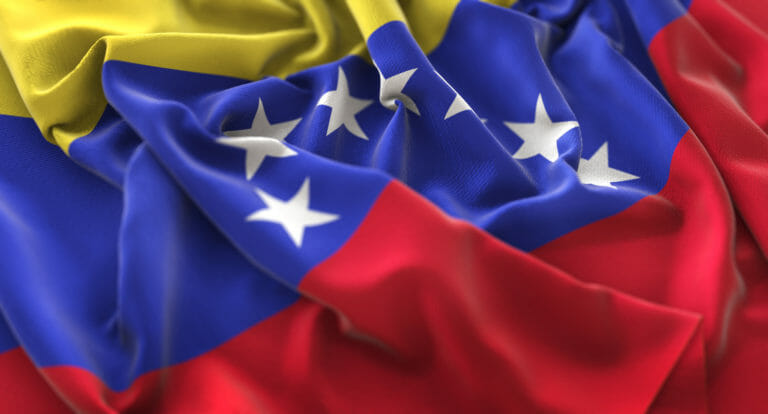
There Are Stricter Regulations on Transactions with Bitcoin in Venezuela

The guidelines that Sunacrip issued will take effect on July 19th. The rule seeks to combat the risk of money laundering and terrorist financing.

In recent days, the National Superintendency of Crypto Assets and Related Activities (Sunacrip) of Venezuela issued regulations for virtual asset service providers (VASP). These guidelines are in line with the recommendations that the Financial Action Task Force (FATF) has previously given.

According to the Official Gazette, the regulation seeks to control the risks of money laundering, terrorist financing, and the “proliferation of weapons of mass destruction.” The provisions that Sunacrip issued will take effect on July 19.

“This rule will apply to people and entities, both public and private that provide products and services with crypto assets. These will include transactions in (or from) the Venezuelan territory,” according to the ruling that National superintendent of Crypto Assets, Joselit Ramírez, signed.

All VASPs in the country must have a “comprehensive risk management system”, a fixed budget for their operations, and a designated “compliance officer.” The latter is the official who is in charge of approving the policies and internal controls to combat potential crimes.

In the case of Bitcoin exchanges, they must keep track of the operations that their users conduct. If they detect suspicious transactions, they must “inform the competent authorities in a timely manner”, according to article 10 of the regulation.

The reports that these companies must send to the competent authorities cover two aspects. First, they have to complete the form called the Suspicious Activity Report (RAS). Second, they need to submit the information to the National Financial Intelligence Unit (UNIF), which will conduct the corresponding investigations.

Application of the “Travel Rule” to Transactions with Bitcoin

One of the most striking aspects of the regulation is the application of the “travel rule” to transactions with Bitcoin. That rule is one of the many FATF recommendations to reduce the risk of money laundering worldwide.

According to the rule, transactions with cryptocurrencies above USD 1,000 must include the personal data of the sender and the recipient of the funds. In the case of Venezuela, Sunacrip requires the design of “effective processes for Due Diligence to know the Customer (CDD).”

The VASPs must collect the following data: the name of the sender and the beneficiary, the account number or virtual wallet of each (or the reference number of the transaction) to be able to track it, the physical address of the sender, the national identity number, the customer’s identification number, as well as his date and place of birth. Likewise, service providers must also track the IP addresses that their customers use and examine the history of their transactions.

The Financial Action Task Force recently issued an update to its guidelines for Bitcoin and other cryptocurrencies. The rules of the international organization would come into effect in June, a month before the regulation that Sunacrip issued.

The relevance of cryptocurrencies to the world economy has led several countries to adopt strict measures for their control. The Venezuelan government is just one of those who consider that these types of assets favor money laundering. South Korea, the United States, and China have also shown their intolerance towards the privacy that decentralized cryptocurrencies provide.

By Alexander Salazar

Vitalik Buterin Donated 100 Ether and 100 Maker to Fight COVID-19 Situation in India

Vitalik Buterin donated after the Polygon co-founder organized a charity drive to help alleviate COVID-19 amid India’s second wave.

Ethereum creator Vitalik Buterin has contributed 100 Ether (ETH) and 100 Maker (MKR) tokens to a COVID-19 relief fund as the country faces the second wave of the virus. Buterin contributed to a “crypto-COVID” relief fund established at the cryptocurrency custody platform called Gnosis Safe.

A series of Public transactions on the Ethereum blockchain had shown two transactions from one of Buterin’s wallets on April 24. Ethereum’s creator sent 100 ETH and 100 MKR to the relief fund, representing dollar values ​​of $ 220,000 and $ 400,000, respectively.

The donation drive’s organization goes by Polygon (MATIC) co-founder Sandeep Nailwal. On April 24, Nailwal’s Twitter account exploded after he raised a rallying cry to help the COVID-19 situation in India. The Polygon co-founder tweeted:

“I cannot bear this anymore. I am going to carry out a Covid relief campaign for what is happening in India. You need help from the global crypto community. I will take full responsibility for transparency, use of funds, and regulatory compliance if you want to donate.”

A Google Form Aimed at Finding Potential Donors

Nailwal then set up a Google form aimed at potential donors and asked for help from India’s largest crypto exchanges and institutions, such as WazirX, CoinDCX, and Bitbns.

Concerns started to rise when Nailwal revealed that he had found a bit of resistance from people who wanted to donate but were concerned about regulatory obstacles. Nailwal later said that he had been receiving assistance from India’s leading CPAs, who had agreed to take over the campaign’s regulations and proper audits.

“Arguably, India’s top crypto CA @Vacpad has agreed to take the lead on the regulatory and auditing side for this campaign. Support is pouring in from everywhere. The founders of Indian Crypto are reaching out personally to help. The next step is to deploy the funds in the group. People need help RIGHT NOW,” Nailwal tweeted.

The second wave of COVID-19 in India might peak in the third week of May. The Indian government recently removed all customs duties on essential relief materials, especially items related to the storage and deployment of oxygen.

Buterin and His Efforts to Combat the Network’s Rising Transaction Fees

Ethereum developers recently proposed to build a network change called EIP-1559, which aimed at combating the network’s rising transaction fees. It would take effect in July this year and intends to send a portion of each transaction fee to the Ethereum network itself. The Ether allocated in this way would burn down, reducing the number of coins in circulation.

This change would also apply a considerable reduction to the number of rewards going to network miners, prompting some to protest the move. Since then, a group of participants has started advocating for a demonstrative takeover of the network, representing a threat to its security.

The group does not appear to intend to topple Ethereum, insisting that they only wished to demonstrate the viability of such an attack.

By: Jenson Nuñez