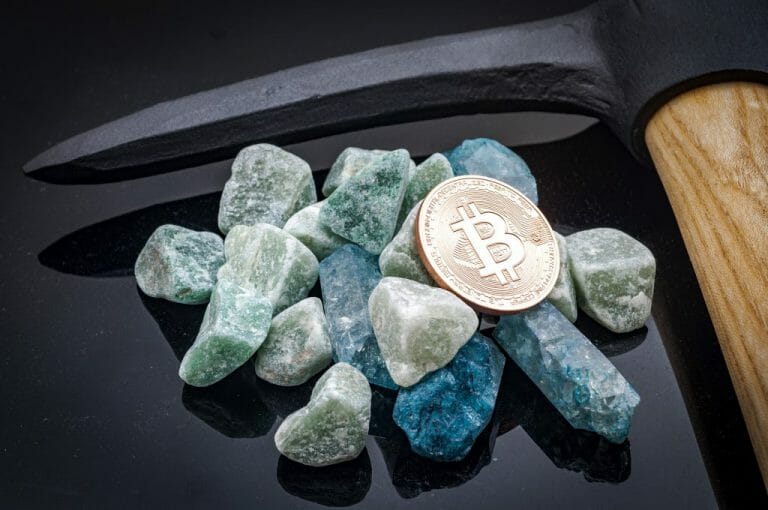
Bitcoin Hits USD 30,000 and Marks its Highest Price since mid-June 2022

Bitcoin, the world’s largest cryptocurrency by market capitalization, has experienced significant price movements in recent weeks.

One of the most notable bull runs occurred last month following the collapse of several major US banks. As traditional financial institutions went bankrupt, investors turned to alternative assets, including Bitcoin.

The price has risen steeply, with some reports showing that the value of the cryptocurrency has increased from 35% to 40% in just one week. Although the price of Bitcoin has stagnated at times since then, it remains within an overall uptrend.

Bitcoin is back to the USD 30,000 Level for the First Time since June 2022 and Has Set a new Yearly High

Bitcoin has hit record price levels not seen since mid-2022, with the largest cryptocurrency by market capitalization reaching $30,000 and setting new highs in 2023, amid recent regulatory measures by the United States authorities and other countries for cryptocurrencies and the uncertainty hitting the global economy.

According to data from CoinGecko, Bitcoin has risen above $30,000 and is currently nearing $30,200, a price that has not been reached since June 10, 2022. 

DiPasquale pointed out that “Bitcoin is likely to find resistance at $30,000,” in an email to CoinDesk. He argued that from a technical analysis perspective, the current move is “a retest of the high-end set in March after the initial push below $20,000. Success in this test would see the price recover $30000, while failure here should see BTC drop to $25000, followed by $2300.

Following the recent release of US jobs data, numerous BTC traders have anticipated a significant upward move. In recent days, the Bitcoin price has shown an unstable movement, which has left investors anxiously awaiting a possible breakout in the coming weeks.

However, several data points on the chain are now directing to bullish indicators, which may soon restore investor confidence and push the price above the $30K threshold.

In the past 30 days, BTC posted gains of nearly 46%, rising to its highest level in ten months on April 11.

Some analysts predicted that it would regain its price of USD 30,000, considering that traders are waiting for the US consumer price index (CPI) report on April 12, which will give an insight into the Federal Reserve’s battle against inflation.

Since last week, the Crypto Fear and Greed Index has remained firmly within “Greed” territory, with its most recent update on April 11 showing a score of 68 out of a possible 100 which is the highest score.

In turn, the Crypto Fear and Greed Index is a numerical indicator that measures current “emotions and feelings” towards Bitcoin and other major cryptocurrencies, and has been turning towards greed in recent days.

The index also reached a score of 68 on March 21, marking its highest level since it recorded a score above 66 on November 16, 2021, a few days after Bitcoin’s all-time high above USD 69,000 was recorded on November 10, 2021.

Due to the pressure on the traditional financial system, the demand for Bitcoin is increasing. Average daily transactions have reached their highest level since April 2021. Glassnode analysts have noted that Bitcoin network indices have abandoned their downtrend and this could indicate that its price will continue the rising tendency.

By Marina Meza

Bitcoin Price Poised for Explosive Move as ADA, XLM, AAVE, and CFX Turn Bullish

0

Bitcoin price’s tight trading range suggests that a breakout is possible and ADA, XLM, AAVE, and CFX are likely to follow.

The long weekend produced no changes in Bitcoin price, the coin continued to trade in an increasingly tight range.

Bitcoin’s inability to break above $30,000 has attracted profit-taking in several altcoins, but some have posted shallow pullbacks. This shows that traders are holding their positions in anticipation of an upward move.

Then, it is basic to analyze some altcoins behavior that could rise and start an uptrend if Bitcoin price moves higher.

Bitcoin Price Analysis

Bitcoin has been trading within a narrow range for the past two days, indicating indecision between bulls and bears

If the price bounces from the 20-day EMA strongly, it will suggest that sentiment remains positive and traders are buying during dips. A rally above USD 29,200 could improve the prospects for a rise to USD 30,000 and subsequently to USD 32,500.

Cardano Price Analysis

Cardano has not fallen below the 20-day EMA (USD 0.37), indicating demand at lower levels. ADA/USDT could first rise to the neckline of the inverse head and shoulders (H&S) pattern. A break and close above this resistance would signal a possible trend reversal. After that, the pair could rally towards the pattern’s target at USD 0.60.

Conversely, if the price faces rejection of the downtrend line, it will imply that the bearish are active at higher levels. Selling could accelerate below USD 0.37 and the pair could plummet to the 200 simple moving average (SMA).

Stellar Price Analysis

Stellar broke down from USD 0.12 upper resistance level, and the price is approaching the 20-day EMA (USD 0.10). Bulls are likely to buy on dips toward the 20-day EMA.

Equally, if the price turns lower and breaks below the 20-day EMA, it will suggest that the bulls are losing their grip. Then, the pair could fall to the 200-day SMA (USD 0.09). This is a decisive level for the bulls because if it is broken, the pair may fall to USD 0.07.

Aave Price Analysis

AAVE has turned down from USD 82 upper resistance level, which indicates that the bearish are fiercely protecting this level. They have taken the price below the immediate support of the 20-day EMA (USD 75).

If the bulls break above this barrier, the pair will complete an ascending triangle pattern. This setup has a USD 100 target. This bullish view will be invalidated if the price continues to decline and breaks below the uptrend line. The pair could drop to USD 68 and subsequently to USD 64.

CFX Price analysis

Conflux (CFX) has been in a corrective phase over the past few days, but one small silver lining is that the bulls are trying to defend the 20-day EMA (USD 0.36).

If the price bounces from the current level, the CFX/USDT pair could reach the downtrend line. This is an important level for bearish traders to keep an eye on, as a break above it could open the door for a possible rebound to USD 0.44 and subsequently to USD 0.49.

On the other hand, if the price breaks down and holds below the 20-day EMA, it will suggest that bulls are rushing to exit. That could attract more selling, driving the price towards the next support at USD 0.30.

By Marina Meza

StarkNet [STRK] Increases Activity: Are Merchants Preparing for A Public Launch?

0

The number of active addresses on the StarkNet network increased by 1168% in the last 30 days. The StarkNet Foundation remained undecided on how to distribute the rewards, though merchants have taken a position.

Ever since StarkNet [STRK] deployed its token on the Ethereum [ETH] Mainnet, there has been an incredible amount of focus on the ecosystem. Although the tokens are not yet for sale or publicly traded, contributions within the StarkNet network have been steadily increasing.

According to Token Terminal, active StarkNet addresses, which represent the number of unique users interacting with a project, exceeded 55,000 at press time. From this rise it can be inferred that the addresses had increased by 31.3% in the last seven days. Furthermore, this was an increase of 1168.7% in the last 30 days.

Taking Steps Toward Compensation for Entry

The abovementioned rise implies that the crypto community sees StarkNet as one of the most promising projects. Moreover, the buzz around the Ethereum scaling solution could also be related to the distribution of a possible incentive by the StarkNet Foundation.

StarkNet prides itself on a platform that can significantly increase the speed and efficiency of transactions on the Ethereum network. There are already projects engaged in this, such as Arbitrum [ARB] and Optimism [OP].

The focus is on StarkNet, though, because many merchants and investors are eagerly awaiting the rewards of being an early adopter, as Arbitrum and Aptos [APT] did. In fact, a few weeks ago, many users participated in bridging tokens on the StarkNet network, less than 24 hours after the Arbitrum Airdrop. So this walk means there’s still strong enthusiasm for the rewards.

Although STRK would have a total offer of 10 billion, investors would only get 17%. The main contributors would get 32.9%, while the foundation itself would receive 50.1%. However, the creators of the Zero-Knowledge (ZK) protocol have yet to confirm what early adopters would get, though the first round of applications for incentives ended on April 6.

Vitalik Buterin in the Cities of StarkNet Cairo and Sierra

An additional reason why traders seem to be interested in making STRK publicly available is Vitalik Buterin’s involvement in the project. In a publication through the StarkNet medium on April 8, it was revealed that the adoption of the Cairo 1.0 system was due to the recommendation of the Ethereum co-founder.

StarkNet reported that the Cairo assembly would help simplify the deployment of smart contracts on the network. On the other hand, the inclusion of the Sierra a Cairo 1.0 language would guarantee the security of the scaling solution.

Before that, StarkNet had also explained how their solution would unleash the potential of Ethereum, thanks to its accumulations. The blog post noted the following:

“As we embark on this great journey, rollups pave the way for a more powerful, more secure and decentralized Ethereum, elevating the platform without sacrificing its core values.”

By Audy Castaneda

Will Russia Overtake the US as the Leading Bitcoin Mining Country?

0

In the first three months of 2023, Russia was the second largest Bitcoin miner after the United States. US-based crypto mining companies are facing increasing pressure from regulators and tax authorities. The Russian government, on the other hand, recently agreed to tax breaks, as well as subsidies, for a major new mining facility in the east of the country.

Russia has risen through the ranks to become the second-largest Bitcoin mining sector in the world after the United States. Will it close the gap with the favorite?

China was once the world’s leading crypto mining hub; however, since the government essentially banned the practice in 2021, shutting down some of the world’s largest facilities, the global landscape of crypto mining has evolved.

On the one hand, new mining centers have emerged, such as Kazakhstan. On the other hand, miners in the United States have increased their capacity to meet demand, helping the country reclaim the top position.

According to BitRiver, a Russian technology company that operates hydropower-powered cryptocurrency mining facilities, Russia’s mining capacity reached 1 gigawatt in January-March 2023, placing it in second place for the first time.

Kommersant BitRiver CEO Igor Runets claimed that Russia’s rise up the rankings comes as the pace of US mining slows down due to rising electricity prices, as well as the abolition of tax incentives.

Runets further stated that “the vast majority of the equipment was purchased by American miners on credit, so many over-leveraged companies are in the process of bankruptcy or have already gone bankrupt.”

US Miners Face Higher Taxes

In general, the tax and regulatory environment in which US crypto miners find themselves has become significantly less friendly recently. From the exemptions that allow qualifying large-scale computing facilities to pay a reduced rate of tax in Montana, for instance, the tide has now turned in favor of additional taxes targeting crypto miners.

The “Greenbook”, published by the Department of the Treasury in March, argues that the growth of digital asset mining has a negative environmental impact, and it can also increase energy prices. The measure makes it clear that the tax is intended to reduce the growth of mining. The document adds that an “excise tax on electricity usage by digital asset miners could reduce mining activity along with its associated environmental impacts and other harms.”

Federal lawmakers are considering raising taxes as a means of reining in the industry. Meanwhile, some states have taken a more direct approach to stop crypto mining. One example is taking place in Buncombe County, North Carolina, where there is a plan to grant a one-year moratorium on all mining activities, with the goal of giving the local government time to rewrite its zoning policies to accommodate crypto mining facilities.

While local, state, and national authorities in the United States move to reign in crypto mining, in Russia recent developments suggest that the country may further close the gap between the two largest Bitcoin miners in the world.

By Audy Castaneda

Venezuela Fires Employees of State Cryptocurrency Division

According to former employees, a case of corruption in the public body led the government of Nicolás Maduro to reorganize SUNACRIP’s attributions.

The National Superintendence of ‘Cryptoactives and Related Activities’ (SUNACRIP, by its acronym in Spanish), Venezuela’s state cryptocurrency division, has intensified its layoffs of staff following a recent corruption scandal.

With the news, employees were not at risk of losing their jobs, however, in practice, this was not the case. In the last few days, a significant number of employees, who didn’t even know about the corruption case, ended up losing their jobs. The information was disseminated by TalCual, a local Venezuelan portal that spoke with some of the dismissed.

Venezuela Fires State Cryptocurrency Division Officials

In the midst of SUNACRIP’s reorganization after the corruption scandal, everything indicates that Maduro’s government removed the immobility of the institution’s public servants.

The employees reported that they received a communication informing them that they did not need to return to work after Easter, that is, starting next Monday (April 10) they should not return to work.

“Anything we call you back,” the statement to employees says. Several former public servants did not understand the measures adopted by the government, but they fear denouncing the case and suffering reprisals from a regime with various international accusations of being authoritarian.

As will be recalled, on April 7, through the social network Twitter, some workers spoke out about this fact, which appears to be an indirect dismissal of SUNACRIP employees in Venezuela. In the tweets they highlight that they are innocent employees, without involvement with the corruption plot; In addition, they affirm that, according to the SUNACRIP restructuring decree, this is not how the process of moving personnel should be.

It should be noted that SUNACRIP dismissed not only ordinary employees but also coordinators and other positions. However, many now believe they are in labor limbo and have not been told if they will receive their salary normally, or if the government will come up with an agreement with everyone.

SUNACRIP Symbols Are Being Removed from Buildings

What has drawn even more attention, in addition to the layoffs of officials in Venezuela’s cryptocurrency division, is that SUNACRIP’s symbols are beginning to disappear from buildings.

As the cryptocurrency body has been associated with a corruption scandal and undergoes drastic changes, it is not yet clear whether the government intends to change the name of the body or simply extinguish the past.

Compounding the problems surrounding SUNACRIP is the fact that Venezuela’s national cryptocurrency, the Petro, appears to hold users’ values ​​in its wallet. On social networks, many users regret having trusted the government system, but now they have not been able to access their own money since March.

The Venezuelan situation involving the cryptocurrency market has escalated towards increasing authoritarianism, which has even imposed the suspension of cryptocurrency brokerage and mining services. It is not yet known for sure what may happen in the future, but the community fears that the country will close the doors of cryptocurrencies again, after years of taking advantage of the technology.

By Audy Castaneda

Binance.US Cannot Find a Partner Bank after Signature Bank’s Collapse

According to the Wall Street Journal, the recent Silvergate and Signature Banks collapses had left Binance.US without banking services, relying on intermediary banks to store funds on its behalf.

In the case of Signature, it was intervened by New York state authorities to “protect depositors,” according to the Department of Financial Services (DFS). While Silvergate was voluntarily liquidated in accordance with applicable regulatory processes, facts reported by CryptoNews.

This scenario has left Binance and other cryptocurrency companies without banking partners in the United States, so they have had to turn to other intermediaries that slow down the processes.

Binance’s problem has affected the process of sending and moving its users’ funds, since users’ dollar deposits were sent to Signature Bank or Silvergate Capital, both of which were declared bankrupt last March, according to a Wall Street Journal source.

At the moment, Binance.US holds customer funds through the financial technology company Prime Trust. A Prime Trust spokesperson indicated that all funds received from customers are deposited through its banking partners.

Binance Has Sought to Partner with other Banks in the US but It Has Been Rebuffed

The search of finding a bank to help Binance’s streamline processes and transactions has been unsuccessful. The company has knocked on various banks’ doors such as Cross River Bank and Customers Bancor that provide services to some cryptocurrency companies, but there has been no positive answer to its request.

One of the major difficulties that this cryptocurrency exchange with the largest trading volume globally, is to find a bank to directly hold its customers’ dollars, as this is a must that should be accomplished sooner.

A Binance.US representative had said that “We work with multiple U.S.-based payment and banking providers and continue to bring on new partners as we upgrade our internal systems to create a more stable fiduciary platform and offer additional services.”

Binance.US is operating in an environment similar to what cryptocurrency companies are experiencing in the UK, where banks are moving away from accepting customers from the cryptocurrency sector.

Binance Faces Legal Problems in the U.S.

The regulatory crackdown on banks with cryptocurrency customers is also another factor contributing to the exchange’s difficulties.

The U.S. Commodity Futures Trading Commission (CFTC) filed a lawsuit on March 28 against Binance along with its CEO, Changpeng Zhao, and former chief compliance officer Samuel Lim.

The lawsuit alleges that Binance violated U.S. derivatives law by offering its derivatives trading services to U.S. customers without registering with the appropriate market regulators. The CFTC accused Binance of prioritizing commercial success over regulatory compliance.

The U.S. regulator has also charged Binance and its CEO with seven violations of the Securities Exchange Act and controlled foreign company rules.

Changpeng “CZ” Zhao Binance Holdings has been sued for allegedly violating several regulations, among those, he is accused of manipulating the market for his convenience. This cryptocurrency exchange has been under investigation by the CFTC since 2021.

On the other hand, Binance exchange CEO and founder, Changpeng Zhao (CZ), rejected the allegations and said that the company cooperates with regulators and law enforcement, so the complaint was “unexpected and disappointing” to him.

By Marina Meza