Saudi British Bank Launches its Instant Cross-Border Transfers Service with Ripple Technology

The objective of this agreement is also to allow Indian citizens who do not live in the Asian country to transfer money to their families in India in real time

The Saudi British Bank (SABB), a banking institution from the Saudi territory, launched its new special service, which allows making possible instant cross-border transfers. To launch this platform, the financial entity counts with the support of Ripple.

The announcement was made through a press release published on the official website of the Saudi bank. SABB announced, during the Financial Sector Conference, held on April 24th and 25th, the launch of the Instant Cross-Border Transfer Service through the Ripple’s blockchain payment system, says the letter.

Representatives of the bank commented that the technology presented during the conference was part of its strategic plan towards digital transformation and the enrichment of the customer experience, whose objective is to achieve better results, thanks to efficient transactions in real time.

In the press release, SABB representatives recalled that this is one of the first banks in Saudi Arabia that joined the Ripple network in January 2018, more than a year ago. After executing the respective development tests, this technology was successfully activated through a pilot transaction conducted in December 2018, using Indian rupees.

Majed Najm, Chief Executive Officer of Corporate and Institutional Banking at SABB, commented that the platform will offer faster and more transparent cross-border payment services, which will allow transactions to be made and remittances sent instantly.

“This step is part of the bank’s efforts to provide the best services to customers, make use of the latest technology and global banking products available, and create methods and means to save time and effort for our customers”, Najm said.

The official also clarified that, although the Rupee is the first currency available through the platform, SABB plans to add to its system more currencies and countries in the near future, in order to achieve a greater reach and benefit users who need to make cross-border payments.

In the statement, representatives of SABB stressed that this institution is a pioneer in providing the local market with advanced financial services through its integrated digital channels. As they said, these channels adapt to local and global market changes. In fact, in September of last year SABB became the first Saudi bank to join a blockchain ecosystem operated by R3.

New Alliances

Recently, Ripple partnered with the Indian private bank Federal Bank to facilitate cross-border payments through RippleNet technology. The objective of this agreement is also to allow Indian citizens who do not live in the Asian country to transfer money to their families in India in real time.

On April 24th, 2019, Ripple revealed that it sold XRP worth USD 169.4 million in the first quarter of 2019, an increase of 31% in the last three months of 2018. Ripple’s growth continues and development of the SABB is just beginning.

By Maria Rodriguez

Government of India Seeks to Prohibit Cryptocurrencies Again

A part of the Government sees cryptocurrencies as a fraud, whilst another group supports cryptographic and new technologies as a way to invest money

Since some months ago, different departments of the Indian Government have been discussing about cryptocurrencies. There is not an agreement about if these digital assets could be allowed or not in that country.

According to local press, the Government of India started the consultations to its Ministries about a bill to ban cryptocurrencies and regulate official digital currencies. This action could mean that the Government is renewing its efforts to completely ban public cryptocurrencies.

Government officials say they are aware of the new bill details. They affirm that several government departments in the country support the idea of ​​a complete ban on the issuance and trade of cryptocurrencies in that territory.

The prohibition of making transactions with cryptocurrencies is reflected in a bill whose name is Banning of Cryptocurrencies and Regulation of Official Digital Currencies Bill 2019, as it was detailed by government sources to the Indian local media.

Officials said that the Department of Economic Affairs (DEA) of India, the Central Board of Direct Taxes (CBDT), the Central Board of Taxes and Indirect Customs (CBIC), and the Investor Education and Protection Fund Authority (IEPFA) are in favor of the ban.

In the next weeks or months, it could be known if the bill was approved or not. This final bill, which will be based on the comments of the departments consulted, would be proposed to the next government in May, after the national elections, according to what the sources indicated.

“Protection” for Investors

The country’s Ministry of Corporate Affairs recently provided comments to the Department of Economic Affairs against the use of cryptocurrencies. This government department alleged that “the majority” of cryptocurrencies are executed as Ponzi schemes to defraud investors.

Also, Anurag Agarwal, CEO of the Investor Education and Protection Fund Authority (IEPFA) said: “When it comes to investor protection, the IEPFA has to take a position against certain things. Against the Ponzi schemes we are taking a position. We believe that cryptocurrencies are a Ponzi scheme and for that reason they should be prohibited”.

Contradictions

In April 2017, the Government of India established an interdisciplinary committee to investigate about the cryptocurrencies topic, their use and way of operating. As a result of that investigation, in October of last year, the decision about prohibiting private cryptocurrencies emerged and some government departments decided to be against cryptocurrencies.

However, by then the committee was not in favor of a total ban, but it was considering the possibility of legalizing cryptocurrencies with strict rules. Even Indian banks were banned from operating with cryptocurrencies.

In this way, there is evidence of a lack of consensus until the moment. Even when there is a warning of a possible ban to cryptoactives, the Government of India also showed interest in developing its own official digital currency. This is an initiative contemplated in a bill.

But the situation with blockchain technology is different. Last Thursday, April 18th, The Reserve Bank of India (RBI) announced a test environment for new platforms. Its main objective is to encourage the development of blockchain technology in the country. Despite this, cryptoactives were not taken into account. Any cryptocurrency, exchange or investment service will be left out of the proof. The road to the final decision continues.

By Maria Rodriguez

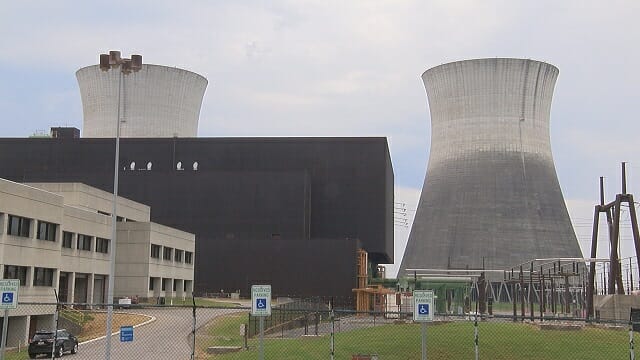
Belarus Could Become the First Country to mine Bitcoin with Nuclear Power

The nuclear power plant will have a total capacity of about 2,400 MW and would be fully ready in the summer of 2020

The new nuclear power plant that is under construction in Belarus, which seeks to generate more electricity, could bring new projects such as the expansion of Bitcoin mining, according to the President of that country, Alexander Lukashenko.

During a meeting with representatives of the digital and technological sector of Belarus, President Lukashenko announced his plans to develop cryptographic mining farms, which will receive electricity from the new nuclear plant that is being built.

In this way, Minsk, the capital of the country, will have more low-cost energy to mine Bitcoin and open new cryptocurrencies farms. With this announcement, Belarus demonstrated that it maintains its intentions to develop digital economy and its policy of “friendly crypto-mining”, in order to attract more investors.

Mining and Bitcoins Sails

President Alexander Lukashenko reaffirmed his intention to promote the country’s digital sector. The President presented this announcement to representatives of the technology industry at High Technologies Park (HTP), an economic zone of Belarus that has a special tax and legal regime to contribute to the favorable development of the national technology industry.

“We will launch the atomic station and there will be surplus energy. I left a little space there. We are going to build mining farms and we are going to be mining and selling those bitcoins”, he said.

The head of State also spoke about the new nuclear power plant that the country is building in the district of Astravyets, in the region of Grodno, border with Lithuania. This new atomic power plant will have two nuclear reactors. As it is expected, the first unit would start operating at the end of this year and the second one would start generating electricity in the summer of 2020. The nuclear power plant will have a total capacity of 2,400 MW.

The Belarusian president promised the High Tech Park (HTP) community to maintain its support to make the so-called special economic zone possible. “We will move in the same direction. They wanted cryptocurrencies, crypto-exchanges, mining farms and together we will continue on this path”, he said.

During his conversation with the Belarusian community of young specialists in information technology, Lukashenko reiterated his desire to maintain this course. “If you need anything, let me know and we will solve any problem”.

Belarus, an old Soviet republic and now an allied of Russia, legalized the activities related to cryptocurrencies last year during the HTP. With the aim to facilitate the application of the digital economy, the Minsk’s government adopted new cryptographic accounting standards and extended the regulatory framework.

This back to cryptoactives is contemplated in the special presidential decree number 8, called “Development of the Digital Economy”, which entered into force on March 28th, 2018. The decree includes a holiday and incentives for cryptography companies until 2023.

The “friendly cryptography” policy is part of the country’s effort to become a global center of Information Technology. The objective of these regulations is to attract companies and entrepreneurs from all over the world with a friendly digital economic environment.

Finally, the Belarusian leader invited interested parties to send their proposals and recommendations to promote the project that his government is conducting.

By Maria Rodriguez

Bitfinex and Tether label Accusations from New York Prosecutor as “Bad Faith”

The Bitfinex exchange house was accused of trading securities without a license in New York, but the companies involved claim that the accusations from the prosecutor are false

The exchange house Bitfinex and its subsidiary Tether, responsible for the token anchored to the dollar of the same name, labeled the accusations from New York Attorney General’s Office as “bad faith”. Both companies were accused of trading securities without complying with regulations in the State of New York.

In a public statement Bitfinex responds to accusations from Attorney General Letitia James, assuring that the documents presented in the prosecutor’s office “were written in bad faith and are plagued with false claims.” The official position of the exchange house, which is also the position of Tether, explains that the accusation made by the auditing body occurred “without a previous warning or hearing”.

Bitfinex has denied the loss of US $850 million belonging to its clients with the company Crypto Capital, as the prosecution documents claim. “We have been informed that these amounts of Crypto Capital are not lost, but they have actually been seized and safeguarded,” they explain.

The alleged loss of customer funds of Crypto Capital was announced by WSJ reporter, Paul Vigna, through his Twitter account. According to him, the reports state that Bitfinex used its mooring reserves to hide the loss of US $850 million.

“We are (and have been) actively working to exercise our rights and remedies and release those funds. Unfortunately, the New York Attorney General’s office seems to be trying to undermine those efforts to the detriment of our clients,” he said.

Bitfinex and Tether’s Response to New York Prosecutor’s Office

The crypto companies claim that the order of the New York Prosecutor’s Office constitutes an “attempt to force Bitfinex and Tether to provide certain documents and seek a certain precautionary measure.” Similarly, both companies declare that they have cooperated with the Prosecutor’s office, since they are classified as crypto companies that are on the side of regulators.

However, toward the end of their statement they indicate that both Bitfinex and Tether are financially strong companies, which will vigorously challenge this and any other fiscal action of Attorney General James.

Bitfinex and Crypto Capital

The accusation against Bitfinex, which is extended to Tether, establishes that the exchange house was operating through third parties in New York without having a license granted by the Department of Financial Services of New York that is known as BitLicense.

The investigation, conducted by the Assistants of the Prosecutor’s Office, alleges that Bitfinex crossed its funds with those of its clients through Crypto Capital so that it would cover the requirements of the US clients related to its funds. This occurred despite the fact that Bitfinex stipulated not to provide more services for natural persons in the United States since late 2017.

In this way, Crypto Capital, a Panama-based company, is listed as one of Bitfinex’s payment processors in the investigation of Attorney General James. However, in the documents the Prosecutor’s Office details that, as part of the irregularities, there is no formal contract signed by Crypto Capital and Bitfinex.

Officially, Bitfinex is based in the Virgin Islands. However, on many occasions, US regulators have shown that companies that operate on their borders must comply with their regulations, regardless of their place of residence.

By Willmen Blanco

Spanish Company Creates a Blockchain-based Voting System

This project will make possible the elimination of voting by e-mail and decreasing the cost of printing ballots

The company Gfi Spain is working on the development of a digital voting system based on blockchain technology. The name of the platform is Smartvote and it uses Oracle Blockchain Cloud technology, this is, a comprehensive distributed ledger cloud platform, with the aim of avoiding the falsification and manipulation of system data.

The procedure for holding elections will work through a platform that has already approved the first phase of development and testing. “The digital vote is an idea that, until the arrival of blockchain technology, was very difficult to carry out due to the impossibility of guaranteeing the immutability of the results”, explains an article by the specialized media Esmart City.

Alfonso Dopico, Strategic Consultant at Gfi Spain, explained that the use of blockchain technology in voting systems would prevent third parties from altering the results. “Users are not identified and the platform does not retain their identity. It respects anonymity. This helps to improve the quality of the electoral process and allows getting immediate and transparent results”, explained Dopico.

The company highlighted that the use of blockchain technology in electronic voting systems offers other benefits, such as the increase in the levels of citizen participation, the possibility of voting even from the mobile phone, the elimination of voting by e-mail and the possibility of decreasing the cost of printing ballots.

Dopico said that this new platform will speed up other procedures. “This technology is not only applicable to elections, but it is easy to adapt to all types of procedures of any size such as those of citizen consultation”.

The official site of Gfi Spain also disseminated information about the project. “Oracle Blockchain Cloud Service provides numerous technical features such as the implementation of Hyperledger Fabric. This makes possible a better transactional performance of business solutions, its interoperability with any other blockchain platform, a completely open platform for the development of applications or totally predictable costs and performance”, said Jesus Guerra, Oracle’s Presales Director.

According to Guerra, Oracle’s strategy is to add these functions in its catalog of business solutions (ERP, CRM) in order to make these solutions a broader service and minimize the costs and effort of development of blockchain applications.

This news was published before the electoral campaign that takes place in Spain’s general elections (Sunday, April 28th). Until now, electronic vote is the protagonist of these elections; thus, ensuring the effectiveness of electronic votes could be another step to the future adoption of blockchain technology.

Since March 2018, different countries have begun to adopt distributed accounting technology, which offers transparency and security. Among these are Thailand and The United States.

In West Virginia, in The United States, primary elections of May 8th, 2018, blockchain technology had small but important participation to show that it is possible to direct blockchain-based voting. Only a select group, such as the military, participated in testing this system.

At the beginning of 2019, the National Center for Electronics and Computer Technology of Thailand announced the development of an electronic voting system also supported by blockchain technology.

The advantages of blockchain technology, such as the inalterability of data and public access to information, continue to demonstrate their potential in the prevention of corruption on electoral systems.

By Maria Victoria Rodriguez

Chinese Government Promotes the Creation of a “Blockchain City” in Malaysia

The plan seeks to use DMI for the payment of government services in the city, as well as to implement an exchange system between fiat currencies and DMI coins

The Chinese Government supports the construction of a “blockchain city” in the Malaysian Strait of Malacca, according to an announcement released on April.

The construction and engineering company China Wuyi and the investment network SWT International Sdn Bhd jointly launched a project whose objective is to turn the city of Malacca into a blockchain city that could be called “City of The Strait of Melaka”.

According to the statement, the Chinese Government supports the project in order to make the initiative a reality. The information adds that the founders of the project plan to raise 500 Malaysian Ringgits (USD 120 million) during the initial stage.

The objective of this company is to ensure that the entire infrastructure of the city is based on blockchain technology, with a DMI platform that offers its native DMI currency.

The plan contemplates that DMI could be used to pay for government services in the city. In addition, the development will have an exchange system that will allow tourists in the city of Melaka Straits City to exchange their fiduciary currencies for DMI currencies. This is to guarantee different payment options and the acquisition of the asset.

“Our company is using the most recent blockchain technologies and integrating them into the traditional industry to make Malaysia a world-class tourist destination. We have Government approval to remedy this land and we came up with great plans for the area”, said the Director Project Executive, Lim Keng Kai.

Towards More Smart Cities

During the past few months, China has been expanding its presence in the Pacific region through investments in infrastructure and other projects. According to local media, in the last seven years, China has injected USD 6 billion in loans and other types of aid in the port of Papua New Guinea of Moresby, with the objective of exploiting its resources of natural gas, minerals, and timber.

In June of the current year, South Korea announced that it planned to launch a blockchain center in the city of Busan based on the Crypto Valley of Zug, an independent association for the development of cryptocurrencies and blockchain technology. For this, it would have the support of the Government of Switzerland. Oh Jung-Geun, President of Korea’s ICT Financial Convergence Association, said they need a place to “focus on crypto-industry in Korea, like the Crypto Valley in Switzerland”.

In February, the Norwegian autonomous city Liberstad adopted a native cryptocurrency to its smart city platform, supported by a chain of blocks, as its official means of exchange. The private city was founded in 2015 as part of the Libertania project, which avoids taxes and government regulations and looks for self-management.

Blockchain technology also begins to be applied as a system to pay taxes and even in other areas of public administration. A recent report from the International Data Corporation (IDC) indicates that investment in the so-called smart city technology is expected to grow to USD 135,000 million by 2021.

By María Victoria Rodríguez