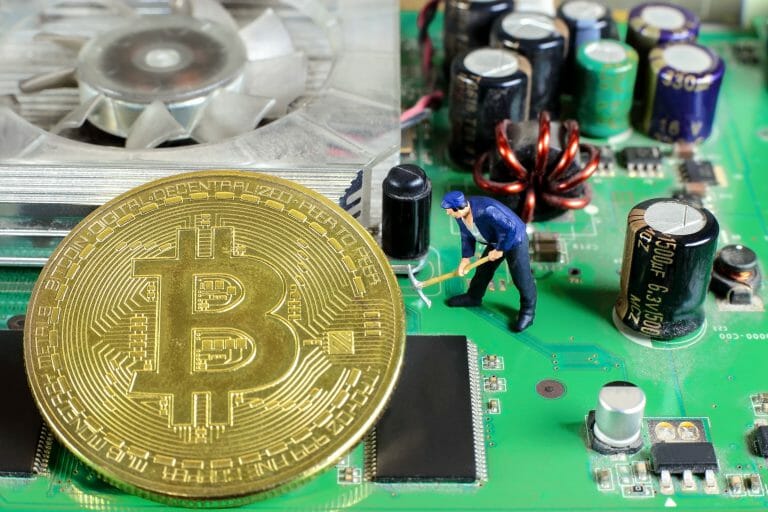
According to Study, China Is No Longer a Bitcoin Mining Paradise

The company ARK Invest published a document assessing the profitability of Bitcoin mining. The study estimates that mining 1 BTC could cost up to USD 5,000.

In early March, the ARK Invest Team released a report assessing the way mining works on the Bitcoin network and highlighting the cost of the activity. This last aspect is fundamental to understand the reason why China is no longer a Bitcoin mining paradise. The company started from the analysis of Bitcoin’s historical hashrate and advances in mining equipment since 2013.

In this sense, the study indicated that, since that year, miners have spent around USD 17,000 million to continue to operate and expand. Meanwhile, profitability varies based on the capital and available hardware, along with operating costs related to electricity, cooling, and equipment maintenance.

To help better understand the cost of mining on the Bitcoin network, the researchers give the example of a miner with a 16 TH/S hash rate that costs USD 750. The device consumes 1 kilowatt of electricity that costs 5 cents an hour, which incurs maintenance, leasing and cooling costs of 3 cents per kilowatt an hour. At a cost of 3 cents per kilowatt an hour, mining 1 BTC costs USD 5,000.

Geography of Mining Changes

As mining profitability can vary, depending on the cost of hardware and electricity, ARK Invest also focuses on geography. In this regard, it should be remembered that China is home to several of the world’s largest mining farms.

From the start of the activity, the infrastructure of the country allowed miners to scale rapidly as several producers of most mining chips are there. They explain that this feature of the Asian giant allowed miners to save time, shipping costs and general costs, given the short repowering cycles of the equipment.

Besides, they say that the owners of Chinese mining farms were able to enter into agreements with power plant owners to access cheaper electricity. In this way, the two aforementioned aspects made China, for a time, the preferred destination to do Bitcoin mining.

However, a series of changes currently cause Bitcoin mining to be profitable in other countries of the world. The life cycles of mining equipment are growing as competition in the market leads to an increase in the quality and reliability of products. A long life cycle of the mining equipment has the potential to reduce the overall maintenance costs.

Inconvenience to Chinese Government

Besides, the study takes into account the Chinese government’s increasing pressure on mining and mining equipment manufacturers in the country. The regulation on electricity prices and land use in China has caused a geographical diversification of the industry. Countries like Thailand, Canada, and the USA are currently offering miners competitive rates for electricity costs.

In this regard, the miner manufacturer, Canaan, states that an increasing portion of its income has derived from sales to customers outside the People’s Republic of China. Furthermore, they consider that the changes in policies and laws related to the holding, use or mining of Bitcoin could harm their business operations.

By Alexander Salazar

Despite Failure of Globalism, Cryptocurrencies Can Help People Survive

The coronavirus pandemic has affected the lives of people all over the world. However, it could help find a way for humanity to survive.

The global coronavirus pandemic has forced people to stay at home and avoid direct contact with others. This disease has taken away the rights and freedoms of more than 1,500 people worldwide, who are struggling to survive. The situation has led to the closure of businesses and the dismissal of employees, which gives signs of an uncertain future.

CEOs are resigning all over the world, risk capitalists are pulling their strings, and banks are running out of money. There are no groceries at shops and supermarkets, and people cannot even request anything through platforms like Amazon.

A growing number of patients are overwhelming hospitals, and the countries’ supply chains are broken. Some politicians are trading privileged information and investing millions of US dollars in stocks, which affects the economy in their countries.

The future consequences of the world recession and the depression due to the effects of the coronavirus seem to be much worse than the virus itself. There have been changes in people’s lives that nobody had imagined before. The reestablishment is occurring right now, but not in the way that the cryptocurrency community had expected.

This terrible pandemic has demonstrated how fragile and weak world economic systems are. Panic and fear have already destroyed some powerful economic systems that once seemed invulnerable.

However, the world can re-emerge from the ashes of the coronavirus disease and change old decadent systems, which have proven to be failures, and start rebuilding.

Best Moment for Cryptocurrencies

This is the opportunity for cryptocurrencies to show the world that there is a new and better path to follow. As the shackles of slavery stretch to save lives, the rules of past generations do not apply any longer. In this regard, some systems still struggle to keep hold of their little remaining power to continue to control the world.

This is the best moment for a decentralized future that rewards people for being efficient, doing quality work, creating value, and favoring freedom. It is time to end the economic slavery of centralized systems, which have led to destroy the potential of generations on a global scale.

It is necessary to build sustainable decentralized systems that support local communities, at the same time as they connect to the whole world. To solve this situation, blockchain technology, and cryptocurrencies can help build new and better systems that adapt to the needs of humanity and not only to those of a small group of people.

The cryptocurrency community has been waiting for an opportunity to put itself to the test, and they believe that it is possible to overcome this attack against humanity. In other words, the globalists’ agenda must end to give way to a decentralized future that will help everyone.

Blockchain technology is the solution to this current collapse in the world economy. It is time to take a step ahead to co-create and build a better and decentralized future.

By Alexander Salazar

Decred Continues to Develop During Its Bearish Market

During a bearish market the problems that cryptocurrency projects face become obvious. Chávez, from LatAm Project Development, explains how Decred continues to develop during this kind of situation.

Ana Dalia Chávez states that during a bearish market problems grow or emerge, adding great stress to the communities and teams that work or collaborate on its development. Currently, millions of users operate with and exchange cryptocurrencies, but they expect the functionalities that are still under development or exist as an idea to become a reality.

The community builder added that in decentralized communities certain developments, ideas or activities seem to be of greater value or urgency than others, conflict emerges, and the difficulty to make decisions becomes chaotic. This is the reason why it is important to have a governance model that allows consensus between the different individuals participating in a community.

Chávez considers that consensus is probably more important during a crisis. She explained that having it implies putting all the resources and efforts into execution.

Governance Platform Politeia

In this context, she stated that Decred is an adaptable cryptocurrency and that it is possible to solve conflicts through voting, thanks to the governance system included in its protocol.

She said that users must take a series of steps to make on-chain and off-chain decisions. In Decred, the community makes decisions related to the projects through Politeia, where they publish, discuss and vote for the proposals.

She also said that, despite the crisis over the COVID-19 disease, governance in Decred is red-hot. She mentioned that there are two proposals under discussion and two more under voting, all of which are receiving great attention and comments from the community.

The community focuses on improving and refining the proposals that will receive funding from the Treasury, through feedback to adjust them to the current crisis. Politeia is where the members of the community record and legitimate their points of view, all of which remain anchored to the Decred blockchain.

Sample Proposals

For example, in a proposal for marketing in the USA, and antagonistic stakeholder stated that 2020 has not yet shown any signs to be a good year for cryptocurrencies in general. He said that this is due to the macro situation, which seems to indicate that the end of the bearish market is still far away. The community considers that making any effort in this regard is a waste of time to

On the other hand, a stakeholder in favor explained that marketing continues to be a key contribution to the price and the performance of the project. Regardless of the current market situation, that member believes that Decred is still in too early stages to dispense marketing costs.

Previous proposals that have undergone a similar process and have received approval are now providing the necessary funding to continue with the development of ambitious projects. Among these are a Decentralized Exchange (DeX), the scalability of transactions on the Lightning Network, and the increase in privacy through CoinShuffle..

From its beginning, the design of Decred aimed to face any crisis or unexpected event. This adaptability, apart from its security and sustainability, make Decred an important reserve of value, according to Chávez.

By Alexander Salazar

Second Biggest Fall in Bitcoin’s Mining Difficulty

In October 2011, the record decrease in mining difficulty was 18%, to remain in 1.20M. On the evening of last March 25th, the difficulty of the Bitcoin network showed its second-biggest fall, after a decrease in hash rate and congestion of transactions in the mempool had occurred in the afternoon.

Bitcoin’s mining difficulty had its second steepest fall in the history of this platform. The first big fall occurred in October 2011, with an 18% reversal rate, in which it recorded a decrease from 1.41M to 1.20M. This fall appears in the BTC.com chart, which shows all scheduled changes in Bitcoin’s mining difficulty.

According to data from blockchain.com, a total of 59,841 transactions accumulated in the mempool last March 25th at 15:30 UTC. At 14:30, there had been a decrease to 26,790 transactions, which then increased to reach 51,560 at 16:00 UTC.

Subsequently, the number of transactions to confirm gradually decreased to around 2,000 pending transactions. This coincided with the expectation of the fall in Bitcoin’s mining difficulty, scheduled at 3:00 UTC on March 26th.

Mempool and Fees

This situation generates an increase in the fee per transaction, which is currently around an average of 1 US dollar, according to BitInfoCharts. The average price of fees marked its monthly high last March 20th, fluctuating between USD 1.7 and USD 1.5 per transaction.

Some Twitter users have expressed their opinion regarding this delay, pointing to the possibility that a group or entity has been deactivating their equipment. Supposedly, the idea is to cause a scenario where the average transaction fee tends to increase since their activity has stopped being profitable due to the recent fall in the market.

Likewise, user @Nic_Carter noted that the time to issue each Bitcoin block during the last two weeks has been 14 minutes, which is under the average and generates delays.

During the whole month of January, Bitcoin’s hash rate has had a bearish trend. Besides, despite a little increase since March 19th, the hash rate marked 77.1 Eh/s on March 25th at 16:00 GMT, reaching its lowest point in less than 30 days.

Regarding the difficulty of the network, it remained stable at 15.5T in February, to show a jump to 16.5T between March 8th and 10th, according to data from CoinMetrics.

User @NotQuiteMaximal commented that the congestion in the mempool could be related to miners’ strategy to intentionally delay mining to raise the amount of the fees temporarily. This user said that Bitcoin’s mempool is exploding now since a primary miner seems to have stopped mining to increase the value of fees.

It is less than 2 months until the reduction of block reward or halving, which leads to thinking that some members are afraid to be out of the game and want to be more profitable during these months. However, if they kept their devices connected, they could collect higher fees per transaction and obtain efficient long-term performance. Even so, there are alternatives to prevent mining equipment from becoming completely obsolete after the halving event.

By Alexander Salazar

Over Half the Processing Power in Bitcoin SV Is Done by Unknown Miners

ViaBTC, the largest identified pool, has mined 25% of the blocks in the last few days. In Bitcoin, only 5.2% of the blocks mined in recent days correspond to unidentified miners.

Unknown, or unidentified, miners have control over most of the processing power on the Bitcoin SV network. Data from the Bitcoin SV blockchain, available on the Coin Dance site, reflect this.

According to that platform, unidentified groups solved more than 52% of the blocks mined between March 24th and 25th on that network. Among the recognized pools, which solved just over 25% of the blocks at the same period of time, the main one on the network is ViaBTC.

The activity on the network, according to Coin Dance, shows that the percentage of blocks mined by “other pools” is growing. Between March 18th and 25th, unidentified miners mined up to 54.2% of the blocks created on the Bitcoin SV blockchain. At that time, the contribution from ViaBTC was 22.2%.

When reviewing the hash rate graph, it is possible to see that the combined processing power of Bitcoin SV miners is almost 3,000 PH/s or 3 EH/s. Between March 18th and 25th, data from Coin Dance indicated that 1,687 PH/s belong to groups of unknown miners.

Bitcoin SV is a creation of Craig S. Wright, the Australian businessman that claims to be Satoshi Nakamoto, Bitcoin’s creator. Bitcoin SV resulted from a fork of the Bitcoin Cash blockchain, which in turn had forked from the original Bitcoin chain.

Comparison with Bitcoin and Bitcoin Cash

The percentage of unidentified pools in both Bitcoin and Bitcoin Cash is considerably lower than in Bitcoin SV. In the first two cases, the percentage reaches just over 5%.

Regarding Bitcoin Cash, this occurs according to the records of the last 24 hours. However, an extension of the range to 7 days allows seeing unknown pools only mined 2.8% of the blocks. In the case of Bitcoin, the 7-day graph shows 5.2%, while the percentage is 2.08% for the last 24 hours.

The centralization of processing power on networks that use Proof of Work (PoW) causes concerns. Among them are the vulnerability to 51% attacks and the power to reverse transactions or perform forks arbitrarily. No one knows whether the domain belongs to a single Bitcoin SV mining organization or multiple unidentified groups.

The truth is that, according to records from Coin Dance itself, it is not the first time that unknown pools have controlled the processing power of the network. For example, in the second week of January, there were levels close to the current ones.

According to data of June 2019, Coin Dance indicates that unknown groups approached 50%. Closer to the beginnings of the network, it occurred on several occasions, showing peaks above even 80%.

Concerning the future of the network, it is just over two weeks until the reduction of mining rewards in Bitcoin SV. That halving will allow each block solved in Bitcoin SV to create 6.25 BSV, in contrast to the 12.5 BSV that each mined block currently creates.

By Willmen Blanco

Hospitals Receive Respirators from Bitcoiners to Face Coronavirus

Bitcoiner Bruce Fenton volunteers by producing ventilators for Covid-19 patients. The Giving Block receives donations in cryptocurrencies to fight the spread of the virus.

Mechanical ventilators or respirators are pieces of equipment that can save the lives of patients with coronavirus pneumonia. This reality has motivated organizations and individuals to produce such devices on a low budget, an initiative in which bitcoiners and cryptocurrency companies also collaborate.

Displays of empathy and altruism in the community have emerged in recent weeks when the coronavirus began to wreak havoc in Europe and raised alarm in the USA. One of the leading supporters of this movement has been Bruce Fenton, renowned bitcoiner and CEO of Chainstone Labs.

Fenton has been a prominent volunteer in the non-profit organization End Coronavirus, a project that seeks to inform about the pandemic and find solutions to the disease. Under the auspices of the New England Complex System Institute and scientist Yaneer Bar-Yam, the organization plans to make cheap mechanical ventilators that are easy to produce in large numbers.

The idea behind ​​the project is to equip hospital emergency rooms with enough breathing machines to treat the numerous cases of coronavirus. In this way, doctors would not have to face the difficult decision about which patients should live and which should die. Due to the lack of respirators and the increase in cases, doctors are forced to impose this policy in Italy, where they privilege young people are over the elderly.

Fenton noted that it is necessary to produce these respirators as soon as possible and legally to save the most lives. He also noted that the organization is seeking manufacturers that can mass produce these devices as a donation.

End Coronavirus would also require voluntary doctors and engineers to test the equipment, lawyers to guide them on how to legally introduce these implements, and writers to disseminate this information. Similarly, the design of mechanical ventilators is public information so that other organizations or individuals contribute to producing this equipment.

A Historical Moment

Bruce Fenton considers that the fight against the coronavirus is a great test for humanity, which requires that everyone play a part to save people’s lives. He stated that the coronavirus is a break in society and life as everyone knows them, a reason why some say that earth will have to rebuild earth.

Nobody knows what havoc the coronavirus pandemic will cause to the world, but the truth is that the tragedy has mobilized people to cooperate for the good of all. For example, bitcoiner Hector Rosekranz also joined End Coronavirus to provide information on how to develop cheaper ventilators. Besides, investor Balaji S. Srinivasan informs the community about all the details of the pandemic, following its progress and setbacks.

In addition to these cryptocurrency-related projects, there are other particular initiatives to manufacture mechanical respirators or ventilators with 3D printers. For instance, entrepreneurs Colin Keogh and Gui Calavanti have created a prototype of these devices, which can be produced for hospitals in Ireland in a few hours. On the other hand, another non-profit team, called ReesistenciaTeam, is developing low-budget ventilators.

By Willmen Blanco