Blockchain-Registered Diplomas Are Issued by Colombian Universities

Blockchain-based digital badges are beginning to be issued in the South American country. This method allows for certifying professional talents and skills.

Three percent of Colombian higher education institutions are issuing blockchain-registered diplomas. Universities such as Rosario, Externado, El Bosque, Universidad Pontificia Javeriana, Universidad Autónoma de Bucaramanga, and Universidad de la Costa are already using this method to validate the requirements that their graduates must meet to conduct their professional work.

Tito Crissien, President of Universidad de la Costa, stated that digital badges with blockchain security are something new in universities, particularly in Latin America. Few are using them in Colombia, where possibly no more than 10 out of a total of 300 educational institutions are already actively using the badges, according to local media.

Anabella Laya, CEO, and Co-founder of Acreditta noted that EAFIT University will soon have digital badges, as well. Blockchain-registered diplomas or digital badges allow highlighting professional skills, regardless of whether graduates acquired them as part of an education program in progress or a short course. These documents can certify talents, professional skills, or achievements and are awarded on specific skills so that potential employers can easily identify them.

The Colombian company Acreditta provides this service to some educational institutions in the country, through Credly’s Acclaim platform. In turn, Acclaim is connected to the IBM Talent Match Service, which enables employers around the world to find talent or verify the achievements of people with a digital credential registered in the system.

The National University, which administers its system, launched last year a pilot plan to validate the certification of academic documents. For its part, the EAN University in Colombia implemented the system more than four years ago. From then until last year, it granted blockchain-registered diplomas to more than 2,000 graduates, with the support of the firm Thomas Signe S.A.S.

Blockchain-based digital badges are the future, rather than physical or scanned certificates. The latter will be somewhat obsolete when applying for a job, according to a report that the ICDE Working Group published in 2019 regarding the present and future of alternative digital credentials (ADC).

The document notes that blockchain technology will mark a before and after in the market regarding student information systems. The adoption of blockchain technology in the area of ​​certification of skills and learning outcomes is at an early stage. However, the ICDE Working Group agrees that blockchain technology will become the basic underlying technology for ADC.

A growing number of universities in Latin America, Spain, and the rest of the world are issuing blockchain-registered digital diplomas. There still seems to be a gap between their implementation and adoption in Colombia, taking into account that few graduates of the National University validate their diplomas in a blockchain.

At that institution, only 29.1% of last year’s graduates completed the process to obtain their digital diploma despite the simplicity of the process. Higher education institutions that issue digital certifications still grant diplomas on paper, since the process for issuing the digital document is not mandatory.

By Alexander Salazar

P2P Platforms Record All-Time High in Bitcoin Trading Volume

Bitcoin trading has recovered from the significant drop that it suffered in March of this year. According to UsefulTulips, the volume of Paxful was higher than that of LocalBitcoins in recent days.

In recent days, Bitcoin trading on peer-to-peer (P2P) platforms has reached its highest point since the beginning of 2020. For the first time during that period, the combined trading volume of the LocalBitcoins and Paxful sites exceeded USD 84,000,000.

According to data from UsefulTulips, a site that tracks this type of business, the total of both exchange sites was USD 84,471,629 during the first week of June 2020. The period with the highest trading volume until June 7 was by the middle of May, barely exceeding USD 78,000,000.

The graph shows that there had been a relatively sustained increase since the last week of March when there was the lowest trading volume recorded since 2017. At the end of March, Bitcoin’s trading volume was below USD 50 million.

By contrasting these data with those of Coin Dance, another site that tracks the behavior of these markets, the conclusions that they reach are different from those of UsefulTulips. Coin Dance does not display a combined chart, but the sum of the trading volumes of LocalBitcoins and Paxful that the site reported does not reflect the same total.

The main difference is that UsefulTulips covers the figures closing on June 7th, while those of Coin Dance close the period on June 6th. The difference totals about USD 6 million between both calculations.

Paxful Outperforms LocalBitcoins

Another fact reflected in the data that UsefulTulips shows is that Paxful exceeded the weekly trading volume of LocalBitcoins. According to data from the site, the volume of LocalBitcoins in recent days was slightly higher than USD 41,600,000, while Paxful users traded around USD 43,000,000.

In this respect, the data shown by Coin Dance do not match those of UsefulTulips either. Once more, the difference could be the days comprising the weekly period for each of those sites. According to data from Coin Dance, the difference between LocalBitcoins and Paxful does not even reach USD 1 million.

It is important to remember that the volumes of LocalBitcoins have been decreasing in recent months. Before the general drop in the economy in March, trading figures had already dropped to 2017 levels in November.

One of the reasons could be the growing demand for personal data and documents through the know-your-customer (KYC) policy. For that reason, the volume could be increasing on other sites, such as Paxful, compared to LocalBitcoins.

Recently, there was a controversy that involved LocalBitcoins, in which they decided to freeze customer accounts in various countries, including Latin American countries such as Panama and Puerto Rico.

Latin America has been precisely the third with the highest combined volume in recent days, with more than USD. 11,500,000 traded between both platforms. Regarding the increase in percentage terms between the last week of May and the first week of June, Latin America is second behind the United States.

By Alexander Salazar

Venezuelan Students Are Motivated through Bitcoin

In times of crisis like the current one, teachers resort to various ways to motivate their students. That is the case of a Venezuelan teacher, who uses Bitcoin to give hope to her students.

Teaching is one of the fields most affected by the economic crisis in Venezuela. The average teacher’s salary is just over the minimum wage (VES 800, equivalent to USD 4), due to hyperinflation. However, a Venezuelan teacher uses Bitcoin in her classes as a way to give hope to her elementary school students.

Isabela, 49 years old, with a teaching experience of more than 30 years, was heartbroken by the current reality that most Venezuelans must face every day.

She left behind her best years in teaching, which took many of her coworkers and students away. Children stopped going to school as their parents were not able to pay for their school tuition. Her coworkers resigned, saying that they needed jobs that paid them in US dollars.

However, Isabela holds firm to her idea of ​​teaching her students with dedication, values, ​​and quality. She was determined to regain the motivation of her students, opposing and fighting the difficulties that Venezuelans are undergoing.

After doing hard research, she found a somewhat strange but promising name in a way: Bitcoin.

Jobs with Payments in Bitcoin as an Option in Venezuela

The concepts of “cryptocurrency” and “BTC”, among others, filled her with unknowns, but she realized that this virtual currency was exactly what she needed. It is a decentralized, anti-inflationary, and secure currency, which may become her escape from the difficult financial situation in the country.

In Venezuela, banks cannot receive transactions in other currencies except for the bolivar (VES). This makes Bitcoin particularly attractive to the population. It does not require a bank account to conduct transactions. Everything is done from wallets disconnected from any government entity.

Use of Bitcoin and Other Cryptocurrencies as a Teaching Method

Sometime later, Isabela received an opportunity to perform a freelance job paid in BTC.

This work has allowed her to earn enough money to support her family and, little by little, take her students back to school.

Bitcoin says that she only needs to see her students’ eyes, full of desire to progress, and the light of hope. She says that her classroom is full and she does not plan to leave it.

This teacher states that she does not doubt that Bitcoin represents freedom, regardless of its price or although major regulators say that it has no value. She invites everyone to go to her classroom to talk to her students since Bitcoin is in each of them.

This daring Venezuelan teacher uses Bitcoin and the world of cryptocurrencies to teach her students. She thinks that they can learn, from a young age, that there are alternatives to ordinary money that they did not know before.

She tries to provide them with this tool to increasingly motivate them to overcome the adversities that affect them.

Isabela has succeeded in adapting to the field of cryptocurrencies, even going so far as to teach her students the advantages of these assets.

By Alexander Salazar

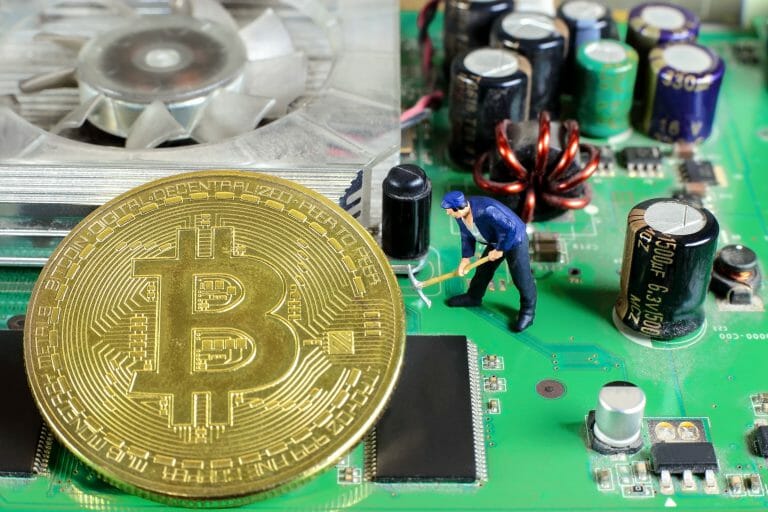
China Loses Dominance in Bitcoin Mining Industry

China could be losing its power regarding the concentration of the Bitcoin mining industry. Meanwhile, the USA is becoming increasingly interested.

The epicenter of the Bitcoin mining industry in the world is in China. However, there seems to be a decline in its dominance in this area. At the same time, nations like the USA and Kazakhstan are rebounding.

A series of factors could be affecting the hash rate power of China, which is reflected in the drop in electricity consumption in the mining industry in recent weeks.

According to a recent study by the data analysis company TokenInsight, the decrease in mining electricity consumption has been noteworthy. It would be a 10% drop, which could be considered positive for the greater decentralization of Bitcoin mining.

Bitcoin Mining Industry after Halving

Many people consider halving as the most important factor regarding the loss of China’s concentrated mining power. Distributing the most powerful equipment is easier abroad than within the Asian country.

In China, there are consolidated and stable farms, which use obsolete equipment. However, in countries like the USA, this industry is just emerging and is establishing itself with the latest-generation equipment. Besides, the cost of electricity in China is very low, particularly in the winter, so the renewal of the ASIC is not urgent.

After the halving on May 11th, the Bitcoin mining industry had a reduction in its rewards per block mined. Although the impact is widespread, China has felt it particularly strongly, due to the amount of old mining equipment that remains active. Many farms have disconnected their mining devices, influencing the loss of hash rate in the country.

Electricity Cost and State Pressure

The pressure by Beijing against the Bitcoin mining industry has dropped since they announced that there were no more short-term plans to outlaw it. However, the siege episodes have not completely disappeared, keeping farm owners concerned.

Local authorities in Yunnan province recently ordered the removal of 57 mining projects. They allege that their installation occurred without proper regulation. Likewise, the local government is trying to link the explosion at a hydroelectric plant with illegal mining activities.

The Sichuan province, which is near Yunnan, is another great focus of virtual mining. Between both provinces, there is a large part of the mining power of the country as the low costs of energy in the winter are notable.

However, some analysts think that it is useless for mining farms to have advantages in terms of electricity if they must use their profits to cover debts. However, it is not only a matter of debt but also the pressure from the authorities in some regions like Yunnan.

Searching for New Horizons

All these complex events in China have led the Bitcoin mining industry to seek more comfortable places. This is observed in the drop in electricity consumption from 75.63% in September 2019 to 65.08% last April, according to data from TokenInsight.

Meanwhile, in the USA, where the industry is becoming increasingly attractive to investors, the relationship is reversed. In the same period, the consumption in the sector went from 4.06% to 7.24%, which represents an increase of 78.33%.

According to data from the Cambridge Center for Alternative Finance, China’s dominance in mining is still overwhelming. However, there is already a decentralizing trend. As the shipment of new-generation equipment begins to massify, China’s loss of dominance will expand.

By Willmen Blanco

Central Bank of Saudi Arabia Uses Blockchain ​​Technology to Transfer Funds to Local Banks

SAMA explained that it already uses blockchain channels to make fund transfers.

The Central Bank of Saudi Arabia informed that it would be using blockchain technology to conduct funds transfers to banks in the country. This information was public in a recent statement that the Saudi Arabian Monetary Authority (SAMA) issued.

According to an official SAMA statement, the central bank is transferring these funds as part of an effort that the institution makes to enhance “the capabilities to continue its role in the provision of credit services.”

Although the bank informed that it conducts this type of transaction, it did not offer further details of the approximate amounts that it transfers through this route.

SAMA and its Interest in Using Blockchain ​​Technology

According to some studies on blockchain technology adoption, the Middle East is experiencing a growth in the use of blockchain technology, especially in the use of these platforms for the financial and commercial sectors. In this way, in recent times, SAMA has managed to have a significant impact regarding the use of blockchain technology in remittances that circulate between banks in the United Arab Emirates and Saudi Arabia.

Previously, SAMA would have already defined its interest in the use of these platforms in different areas. During 2018, the Arab authority achieved a partnership with the Central Bank of the United Arab Emirates (UAE) to create a type of digital currency that would serve to make transfers between countries, using blockchain technology. The plan would work with a single currency that would serve only between the two countries.

In a comment that SAMA published, the authority highlighted its interest in blockchain technology. SAMA also explained that this is part of a plan to innovate in the development of first-class financial tools.

“SAMA is one of the pioneering Central Banks to experiment with blockchain technology for money transfers. At the moment, it is one of the key innovative initiatives launched by SAMA in its program to enable and develop Fintech in the Kingdom.”

According to spokespersons of these financial institutions, blockchain technology could open up a full field of skills that would help both institutions maintain sustained and secure growth in various areas. Security, speed, and the opportunity to reduce costs are some of the most attractive benefits for the adoption of new technologies.

Although the use of cryptocurrencies is not clearly defined, banks rely on unique token technology for transactions between institutions. This is because this technology could accelerate and improve financial processes that were previously difficult to achieve with the traditional system.

Currently, there is a greater relationship between financial institutions and governments, this is to establish methods that strengthen the economic sectors of the countries. These relationships reinforce the need for blockchain adoption in today’s finance.

There is a recent example of the importance of the relationship between financial institutions and governments. A bank of Turkish origin made its first transaction to finance the use and development of blockchain technology in international trade.

In this way, financial institutions around the world are showing more and more interest in technologies like blockchain to accelerate international payments, something that would boost, even more, the adoption of Distributed Ledger Technology (DLT).

By María Rodríguez

Partnership between Nasdaq, IBM, and Microsoft to Give Stability to the Tokens-Based Crypto ecosystem

The alliance established 3 different areas to achieve the objectives.

An alliance between the companies, IBM, Microsoft, Nasdaq, and 29 other firms is now a reality. The main objective of this alliance is to create an ideal environment for the operation of token-based systems. The group will receive the name of the InterWork Alliance (IWA)and will function as a catalyst to keep stable a new ecosystem that will be fundamentally working with tokens.

The companies that participate in the project announced the alliance last June 2nd. This announcement revealed that the companies will register the group with a non-profit organization and design it to keep stable the value of the tokens used in exchanges.

The IWA group commented that these distributed property applications are strong enough to change important aspects of the global economy. They added that the current number of platforms that have different characteristics have hit the adoption of this type of tokenized assets.

In a press release that IWA issued, the group gives more details about what it hopes to accomplish within the industry. The main intention of the group is to create a stable market for token trading and the use of these assets.

“What is required is standardization at the commercial level, which would allow companies to agree on distributed business models without first choosing a platform. The InterWork Alliance will set the standards for creating distributed applications, including appropriate frameworks for tokenization of items of value, drafting contracts on those tokens, and analyzing the preservation of the privacy of multi-party data.”

Among the goals that the alliance hopes to achieve is to promote a guiding status for companies that have not been able to create their tokens. Besides, they will focus on developing a unique concept of what tokens are and the technology that makes them up. This action will help facilitate adoption among companies that want to enter the crypto ecosystem.

Three Different Areas for Tokens Standardization

According to the announcement, IWA mentioned that it is working to divide the processes into 3 different areas. Doing this will help maintain control over the contracts made with tokens and the exact definitions of the aspects of the technology.

The alliance also explained that the developers of the ecosystem will receive more information about these areas. In this way, the developers will be able to create the areas within the platform that the company chose to start using tokens.

The name of the first area for ​​platform standardization is token taxonomy. This framework will seek to define concretely and uniquely, the basic concepts of the ecosystem. In this way, the group will define what a token is, how the exchanges will be made, or what its value is.

Working issues at InterWork is the name of the second area, which will seek to establish a set of standards and steps of a global nature. This will deal with aspects such as communication between peers, among other forms of action for commerce.

Finally, the third area is the analytical framework, which will conduct studies on the evolution and changes in the crypto-market. This area will make available to the participating companies a complete analysis that they can use to establish performance and privacy.

Other companies that are part of the Alliance include Hyperledger, Digital Asset, and the World Economic Forum (WEF). These organizations give more relevance to the project that seeks to reinforce the current crypto-ecosystem.

By María Rodríguez