Bitcoin Could Reach USD 3 Billion Thanks to These Strengths, According to Ark Invest

According to an Ark study, the market capitalization of Bitcoin could increase 14 times by 2025. The trading volume and the liquidity of Bitcoin are beginning to attract institutional investors.

Ark Invest says in the introduction to its study “Bitcoin as an investment”, published on December 17th, that the cryptocurrency has been “the highest performing asset in the 21st century”. This research says that this crypto asset has four strengths that allow the efficiency and predictability of a financial system.

Bitcoin’s market capitalization still has plenty of room to grow from its current level (around USD 220 million) if its adoption increases in four main aspects: a global settlement system, a protection against confiscations, a form of digital gold, and a catalyst for demonetization in emerging markets.

Bitcoin as a Global Settlement Network

According to Ark Invest, users must settle all international payments in US dollars through the Federal Reserve’s Real Time Gross Settlement (RTGS). “Bitcoin obviates the need for intermediaries to mediate and settle transactions and is capable of settling high-value transactions.”

If Bitcoin only captured 10% of settlement volumes in the United States, which total USD 1.3 trillion, it could escalate 7 times, from USD 200 billion to USD 1.5 trillion.

Bitcoin as Protection against Asset Confiscation

In the face of capital confiscations that some governments have conducted, citizens often have no protection, the study states. Instead, Bitcoin allows for personal sovereignty. “We believe that, with good management of public and private keys, it is impossible to confiscate Bitcoin,” say the authors.

If Bitcoin received the allocation of 5% of the fiat currency assets of emerging countries, its value would go from USD 200,000 million to USD 2.5 trillion.

Bitcoin as a Form of Digital Gold

When comparing Bitcoin to gold, the study highlighted several advantages of the main cryptocurrency over the precious metal. For example, Bitcoin is more efficient in terms of portability, divisibility, verification, and transferability attributes that protect against centralization.

Regarding the potential for expansion of the value of Bitcoin, Ark Invest argues that, if it managed to grow to occupy 10% of the gold market, it would reach almost a value of USD 1 trillion, which is equivalent to a multiplication by 5.

Bitcoin as Catalyst for Demonetization in Emerging Markets

Concerning countries with high inflation rates or hyperinflation, Ark Invest notes the lack of confidence in the monetary authorities. They say that this leads investors, as well as those who want to save, to seek safe haven assets like gold or Bitcoin.

Since Bitcoin is not subject to capital controls, it can become an important savings vehicle in emerging markets. That would occur to such an extent that businesses could demand payment in Bitcoin instead of in fiat.

If Bitcoin could capture 5% of the global monetary base outside of the largest fiat currencies (US dollar, yen, yuan, and euro), its market capitalization would multiply by six, and it could reach USD 1.2 trillion.

Bitcoin is Measured against «FANG»

Ark Invest proposes FANG, acronyms for Facebook, Amazon, Netflix and Google, which lead the web, the birthplace of Bitcoin. With this, they seek to measure Bitcoin against comparable companies, according to its trading volume.

The Ark Invest study highlights that the trading volume of Bitcoin, compared to the shares of “FANG”, exceeds those of Netflix, and Google, but is less than those of Facebook and Amazon.

According to the authors, Bitcoin’s trading volume has grown exponentially. “Since early 2013, the compound annual growth rate has been 215%, which means that volumes triple every year,” says the study.

The rapid growth of Bitcoin as a monetary asset has positioned it for inclusion in diversified investment portfolios, the study concludes. By offering the most attractive risk/reward profiles in the market, “it should escalate from USD 200 billion, to between USD 1 trillion and USD 5 trillion in capitalization over the next 5 to 10 years.”

By Alexander Salazar
Chile and Venezuela show a record of transactions in Localbitcoins with national currencies

0

Again, two Latin American countries beat their records of Bitcoin transactions through Localbitcoins, calculated in their national currencies.

These are Chile and Venezuela. Two things happened in both: they achieved the highest number of transactions calculated in pesos and bolivars and, at the same time, the number of Bitcoin (BTC) exchanged rose compared to previous weeks. In each case, the reasons are very different.

Chile, Bitcoin, and Pension Withdrawal

The week that closed on September 5 saw the highest record of transactions in Chilean pesos, with 580.7 million pesos (USD 760 thousand approximately) exchanged for bitcoins. However, if we look for the highest bitcoin exchange figure in that country, it goes back to July 2015, when 143 BTC were exchanged for just $25 million ($ 32,000 at current values).

Those who live in Chile can clearly understand the reasons why BTC purchases rose in that country. And it is that, due to the economic crisis and unemployment caused by the coronavirus pandemic, in Chile, as in other nations, measures have been carried out so that the population can access the income that allows them to sustain themselves. One is that people can withdraw 10% of their pension funds from the AFPs.

Many citizens ultimately made these early withdrawals of their old-age savings to solve immediate problems of food, payment of rent, or cancellation of debts. On the other hand, others who keep their jobs and do not have emergencies have sought ways to invest that amount. We certainly see that cryptocurrencies are one of the instruments used by Chileans.

From the beginning of August, when the AFPs began to deposit the first amounts, the number of pesos invested in cryptocurrencies began to rise. In the first week of August, it was 42 BTC, and the second week it was 52 BTC.

Venezuela and the hyperinflation that eats everything

The number of transactions in bolivars, as is known, rises week by week in Venezuela. But that happens with everything in that country. According to data from the National Assembly, galloping hyperinflation already exceeds 1000% so far this year. Hyperinflation causes prices to double on all products in a matter of days and, of course, the purchase of cryptocurrencies suffers the same effect. For the first week of September, 1.9 trillion bolivars, equivalent to $5.3 million at the current value, were invested in the Localbitcoins platform, for which 521 BTC were bought.

By: Jenson Nuñez.

SUNACRIP Legalizes Bitcoin Mining in Venezuela and Imposes Creation of National Pool

Venezuelan miners will work legally under license and the authorities will supervise them. The latter will also inspect ASIC manufacturing, farm construction, and importation of miners.

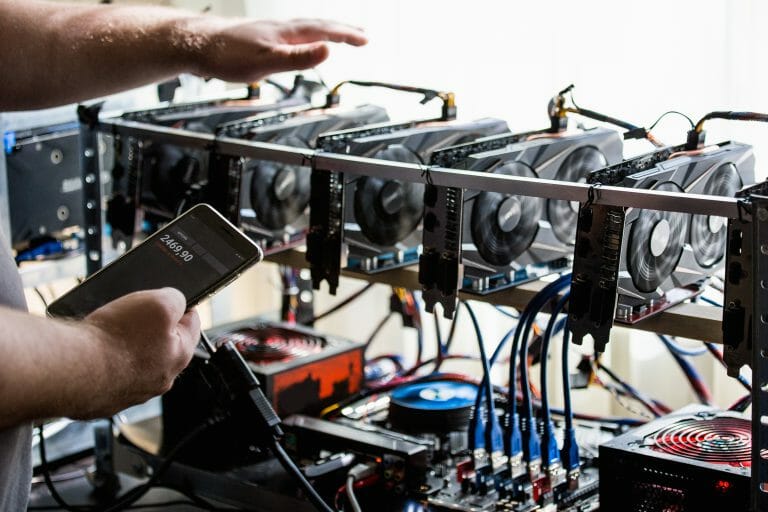
According to a recent decree from the National Superintendency of Crypto Assets and Related Activities (SUNACRIP), Bitcoin mining in Venezuela is now fully legal. The new law will regulate the use, commercialization, importation, and creation of mining equipment in the country.

After appearing on September 21st in the Official Gazette of the Republic, the decree recently entered into force, under file number 41,969. SUNACRIP superintendent Joselit Ramírez signed the document, which stipulates that those residents interested in mining Bitcoin and other cryptocurrencies must legally apply for a license from the entity.

For this reason, they have decided to create a Comprehensive Registry of Miners (RIM), which will facilitate the processing of these licenses through the Internet. Users must inform the authorities about the type of mining activities that they do, which include marketing, importing, and using mining equipment. Likewise, those who wish to manufacture ASIC equipment or build mining farms in the national territory will obtain special licenses.

The decree does not specify the cost of managing these licenses but emphasizes that the RIM web application will publish the prices of these legal procedures. Besides, the document indicates that people involved in national mining must keep their documentation and records of mining activities for 10 years.

The creation and importation of mining equipment will be under the supervision of the authorities. Likewise, mining farms of Bitcoin and other cryptocurrencies will receive state support, only if SUNACRIP inspects them. The decree reveals that the Venezuelan authorities will be involved in all sectors that constitute national cryptocurrency mining.

Mandatory National Pool for Mining Bitcoin in Venezuela

The creation of a National Digital Mining Pool has the objective of bringing together all the miners that are in the Venezuelan territory. In other words, those who are operating ASIC equipment for mining Bitcoin and other cryptocurrencies must connect to said pool to be able to work legally.

If miners operate outside the pool, they will be subject to “the measures, infractions, and sanctions that the Constituent Decree on the Comprehensive Crypto Asset System” provides, citing Article No. 19 of the document published in the Official Gazette.

The operators that manage these pools (or nodes) are in charge of receiving the unconfirmed transactions, distributing the work to miners, monitoring the activities, recording the confirmed blocks, and claiming the rewards. Besides, they are committed to distributing the profits among the miners who have collaborated in the confirmation of blocks.

In this centralized system, a group of individuals is responsible for distributing the workload and rewards among the connected miners, to increase the predictability of payments. If the Venezuelan authorities control and manage the national pool, then the government will be the one who will distribute the reward bitcoins to Venezuelan miners.

Venezuela is one of the ten countries with the largest Bitcoin mining presence and the first in Latin America, according to the University of Cambridge. For more than a year, the Caribbean nation has had its law and an agency that regulates the national crypto asset market. However, the authorities continue to introduce new decrees to supervise and control mining.

By Alexander Salazar

Buy cryptocurrencies in Venezuela: more than 15 platforms available, here you will find the most relevant ones.

0

With the constant evolution of the ecosystem and the escalating crisis, there are more and more options available to buy cryptocurrencies with bolivars. A few days ago, the suspension of operations of the P2P Paxful platform in that country was of concern to many.

A recent report by the firm Chainalysis ranked Venezuela as the country with the highest adoption of cryptocurrencies, only surpassed by Ukraine and Russia. One way to corroborate this is by reviewing the large number of options that Venezuelans have for buying and selling cryptocurrencies. It is no secret to anyone that carries cryptocurrencies in Venezuela got a large-scale adoption.

P2P exchanges

The most popular option to buy cryptocurrencies in Venezuela is p2p exchanges. Within the options of this category, there are several exchanges, with a lot of demand on their sides. The first one to mention is undoubtedly LocalBitcoins.

LocalBitcoins is the most used platform in Venezuela to buy and sell bitcoins. It is a p2p exchange where users make purchase and sale operations with the execution of a smart contract that is released once the parties agree and settle the payment.

All p2p exchanges work similarly as it is always a transaction between two equal parties (buyer and seller), LocalBitcoins is not the only one. Another strong option is LocalCryptos, former LocalEthereum, which works similarly with the difference that Litecoin and Ethereum can be bought and sold in addition to Bitcoin on this platform.

The third option among the p2p is Binance. With p2p.Binance Venezuelans can buy and sell Bitcoin, Tether, Ether, Binance Coin, and Binance USD. This is one of the most used, and its large volume of offers makes it possible to access liquidity at practically any time of the day.

Hodlhodl is also another P2P option for Venezuelans who love the foremost cryptocurrency. This exchange, not so popular compared to the others, has the peculiarity that it does not hold funds but rather blocks them in a multi-signature escrow deposit and also does not request any type of documentation related to KYC policies. Like LocalBitcoins, it only works with BTC.

Finally, there is Cryptoway, another p2p exchange through which you can buy or Bitcoin, Ether, Litecoin, Bitcoin Cash, Dash, Zcash, and even Dogecoin using bolivars and without major inconveniences.

Users must register following the KYC procedures of each platform and look for the offer that best suits their needs to buy or sell cryptocurrencies on these exchanges. Also, users have to consider the rate, the amount of the crypto to buy or sell, and/or the bank through which the payment will be made.

Once this is done, when the exchange is already opened, the smart contract is generated, so that holds the cryptocurrencies in an escrow until the buyer indicates with a click notifying that the payment was completed and the seller verifies the funds are already in their bank account. Afterward, the seller releases the contract, and the coins are transferred directly to the buyer’s wallet.

The AirTM

AirTM is a digital exchange through which you can buy cryptocurrencies, dollars, euros, and even gift cards from Amazon, also, you can buy and sell balance from payment processors such as Neteller, Paypal, Payoneer, etc.

A wide variety of cryptocurrencies can be purchased at AirTM including Bitcoin, Bitcoin Cash, Litecoin, XRP, Litecoin, Zcash, Ethereum, Ethereum Classic, Dai, Monero, Tether, and Dogecoin, unlike the previous two, on this platform you do not interact directly with the seller, nor do you make payment directly to him. To purchase any currency, a balance must be debited from the AirTM account.

By: Jenson Nuñez.

Cheaper Electricity is Available to Bitcoin Miners in Iran

The event is part of a national plan to create new sources of income. The three power plants together have a potential of 5,483 mW/h.

New farms and power plants in Iran have been adding to Bitcoin mining since the country began granting permits for this activity, thus providing more security for the network. According to local media, three power plants will sell surplus electricity for Bitcoin mining, which has grown exponentially thanks to low electricity costs.

Thermal Power Plant Holding Company (TPPH) will start auctioning electricity from the Ramin, Neka, and Shahid Montazeri plants for Bitcoin mining. “The three plants already have the necessary equipment,” said Mohsen Tarztalab, the CEO of TPPH. “They will upload the auction documents to the SetadIran.ir website in the near future,” he added.

There is an estimated potential of 5,485 mW/h between the three TPPH power plants that will start auctioning electricity to cryptocurrency miners. However, no one knows yet how much of this energy they will contribute to this activity.

Tarzatalab said that that the turbines generating the energy that they will sell to Bitcoin miners do not supply the national grid, but provide the facilities themselves with electrical potential instead. The Neka and Ramin plants operate on natural gas, a by-product of oil extraction, the surplus of which burns in the atmosphere. On its part, the Shahid Montazeri plant uses oil from a nearby refinery.

This project is part of a national plan to create new sources of income in Iran and would also help the company to remain profitable, according to the CEO of TPPH.

He stated that, due to constant price increases and the obligation to supply electricity at stable prices, there is a large gap between income and expenses in the electricity industry of the country. For that reason, they need new sources of income that allow them to fill this void.

Benefits for Bitcoin Miners Require Regulation

The Cambridge Center for Alternative Financial’s Bitcoin mining map shows that Iran contributes 3.82% of the global Bitcoin hashrate. The reason for this activity is the low prices of electricity, estimated at USD 0.005 kW/h.

In the first half of 2020, the Iranian authorities granted 1,000 licenses to mine Bitcoin, including power plants that seek to achieve profitability through this activity. Up to fourteen mining farms that consume 300 MW received their licenses at the time, with the benefit of a 47% reduction in the electricity fee.

Even though the Iranian government is trying to regulate Bitcoin mining in the country, its decentralized nature makes the activity hard to control by the State. However, they have closed 1,100 farms dedicated to Bitcoin mining, which has seriously affected the community.

The authorities stated that these miners did not have the license to operate in the country. The agreement to be able to mine cryptocurrencies includes full statements about the miners’ activities and the payment of a fee of USD 0.07 per kW/h.

Amir Hossein Saiedi, an official with the Iranian ICT Guild Organization, said in January that cryptocurrency mining has the potential to add USD 8.5 billion to the economy of the country. The community considers that the addition of more miners has the potential to provide the Bitcoin network with greater security.

By Alexander Salazar

More than 73% of Argentine respondents believe that investing in cryptocurrencies is the most effective way to save money.

0

Argentines are willing to venture into new forms of investment given the need to protect the value of savings and the economic crisis.

This was revealed by a survey, where 73.4% of the participants considered that in the current economic scenario, cryptocurrencies are the most effective way to save. The study was commissioned by Paxful – the global peer-to-peer Bitcoin market – and executed by the specialized site Crypto 247.

The survey that allows us to understand the current situation and prospects for the use of cryptocurrencies in the country measured the consideration of Argentines about the most effective currencies to save, their investment habits, and their perception of crypto, with a focus on Bitcoin.

Out of a total of 1,113 responses, 69.5% of those surveyed said they had invested at least once in cryptocurrencies, stating as the main reason their ability to shelter value from the depreciation of the local currency due to inflation (42, 7%).

However, 30.5% of those surveyed stated that they had not yet invested in digital currency, to a greater extent as a consequence of ignorance about its operation and applicability (24.2%), followed by the lack of funds to invest (12, 8%), and fear in this type of currencies (7.7%). Undoubtedly, cryptocurrencies allowed citizens to regain control of their finances and guarantee security in their operations so that more than half of those surveyed (67.8%) consider that this type of investment is widely safe.

When asked about Bitcoin, those who have chosen to make investments in this digital currency said they had done so by assessing its global dimension (53.9%), decentralization (50.6%), and, finally, its security (49, 1%).

“At Paxful we consider that cryptocurrencies are a great investment opportunity that is becoming more and more consolidated among Argentines. We are proud to be part of this peer-to-peer financial revolution that creates a more collaborative economy and offers a profitable option to maintain the value of local currencies, ”claims Magdiela Rivas, the management consultant at Paxful.

The research was carried out by Cripto 247 on behalf of Paxful in July 2020. The data obtained through an online survey, and the sample consisted of 1113 respondents; they were between 18 to over 55 years old with a predominance of the male gender.

About Paxful

Paxful is a people-driven marketplace that enables peer-to-peer money transfers, anywhere, anytime. Its mission is to empower the 4 billion unbanked and underbanked people around the world to take control of their money through peer-to-peer transactions. The company, founded in 2015, has more than 3 million customers around the world who can instantly buy and sell bitcoins, using more than 300 different payment methods.

As part of its mission, Paxful also launched #BuiltWithBitcoin, a social responsibility initiative that aims to build 100 schools funded entirely by Bitcoin in all emerging markets. Paxful was co-founded in 2015 by Ray Youssef, CEO of Paxful, and Artur Schaback, COO of Paxful.

By: Jenson Nuñez.