Hacking BancoEstado in Chile: data hijacking is not ruled out

0

Due to the unprecedented cybercrime events, the Chilean Government’s Computer Security Incident Response Team (CSIRT) issued an alert for possible threats to the computer security of private entities in the country, especially those in the financial sector.

BancoEstado, Chile’s state bank and the largest in terms of several users, suffered a cyberattack that negatively affected the operation of the web platform and forced the closure of all customer service offices nationwide. The relevant authorities investigating the case established that a ransomware attack was perpetrated, so they do not rule out that the user database is at risk.

During the afternoon of Sunday, September 6, BancoEstado reported through its Twitter account about the detection of malicious software that infected the operating systems of the entity.

Hacking BancoEstado in Chile

As a result of the attack, on Monday the bank was forced to close all its branches nationwide, while its online banking platform also presented failures. Other bank services such as the mobile application and the physical services of ATMs and CajaVecina did not present problems.

The Minister of the Interior and Public Security, Víctor Pérez, indicated that the attack on BancoEstado “should be a matter of special concern for everyone […] it was a very deep cyber-attack, through a virus that has penetrated the operational issue. According to the newspaper La Tercera, the chief of staff also added that it had been possible to avoid that “the accounts of the people of the State bank, which are not the accounts of the richest people in the country, but are of vast sectors of the middle class or vulnerable, were not transferred”.

For his part, the president of BancoEstado, Sebastián Sichel, communicated in response to the widespread fears of users that the entity is working to find the person responsible for the events. To which he also assured that there had been no “impact on customer funds or BancoEstado’s equity”; and added that the opening of branches would be done progressively.

According to information provided by the local media BioBio Chile, the reason behind the magnitude of the attack was related to the ransomware (data hijacking) techniques applied by hackers. The Interior Undersecretariat also confirmed the information in a report, which does not rule out that the attackers may have hijacked data from the system and proceed to request a ransom.

Possibility of Rescue in Bitcoin or another Cryptocurrency

After an analysis “from multiple sources”, Csistorgob reported that it had identified the Sodinokibi ransomware with the person responsible for the attack. In a statement, the security team explained that this cyber virus, which had been detected for the first time in a campaign in 2019, operates by exploiting vulnerabilities, collecting basic system data, and then encrypting the information.

In many cases, criminals often request a ransom in exchange for releasing the information, which is often requested in cryptocurrencies due to its private nature. A recent report highlights that Monero (XMR), a digital currency focused on anonymity, was preferred among the traders behind that ransomware after Bitcoin.

Meanwhile, in the face of the massive hacking against the renowned Chilean bank, various users went to the Twitter social network to highlight the decentralized nature of Bitcoin. “With Bitcoin, you are your bank and you take control of your savings,” wrote user Felipe Undugarra, while others referred to the financial independence that cryptocurrency offers.

By: Jenson Nuñez.

New Goldman Sachs Director Reveals Bank Is Exploring Stablecoin Creation

0

The new global head of digital assets at Goldman Sachs spoke in an interview about studies of creating a stablecoin. His vision for the future of finance is that they involve Blockchain technology.

For US banking giant Goldman Sachs, issuing its digital currency could be a reality in the not-too-distant future, the investment of the bank new global head of digital assets suggested. In a recent interview with CNBC, Mathew McDermott, who became Goldman Sachs’ global head of digital assets last month, revealed on behalf of the bank:

We are exploring the business feasibility of creating our fiat digital token, but it is still early days as we continue to work on potential use cases.

New director envisions a future Blockchain

McDermott is not new to Goldman Sachs. According to his LinkedIn profile, he has been with the company for almost 15 years. While it was only in June that he became the Global Head of Digital Assets bank, before that, for almost 10 years, he was its Global Head of Cross Asset Finance.

But more important, is McDermott’s vision of the future of finance. The recent appointment of the director appears to be leading the bank towards a future based on Blockchain technology, where all financial assets reside on distributed ledgers.

Goldman Sachs Considering Stablecoin Creation

Although McDermott told CNBC that it was still too early to advance the development of a Goldman Sachs digital currency, the new director seems to be advancing in a strategy that contemplates the study of creating a stablecoin or stable coin that would be linked to money. trust.

As reported by news channels, Goldman Sachs’ new global head of digital assets is working to expand his team by “doubling his workforce with hires in Asia and Europe.” Among one of his first hires is Oli Harris, who was previously JP Morgan’s chief strategy officer and helped the financial company launch its cryptocurrency, JPM Coin.

This is not the first time that reports on Goldman Sachs have revealed the possibility of the renowned bank following in the footsteps of JP Morgan in developing a digital currency. As DiarioBitcoin reviewed in June of last year, the president and CEO of the bank, David Solomon, highlighted that the entity was conducting a “very extensive” investigation concerning tokenization.

At the time, Solomon also highlighted the value of stablecoins. He assured that stablecoins backed with real money would set the tone for “the direction in which payment systems will go from now on.”

Innovate or die?

However, although Goldman Sachs expressed significant interest in Blockchain technology and cryptography for a long time, the bank’s executives are often skeptical of Bitcoin. During a call with its clients at the end of May, the bank claimed that “cryptocurrencies, including Bitcoin, are not an asset class”, indicating that they did not represent viable investments.

For the time being, the comments from Goldman executives generated a notable controversy, especially after several arguments of the bank for disqualifying cryptocurrencies also applied to traditional assets, including gold.

With recent series of announcements of a possible stablecoin creation by Goldman Sachs, crypto enthusiast, and Morgan Creek Digital co-founder Anthony Pompliano commented in a tweet that innovation was necessary so that traditional banks and financial institutions were not stuck.

By: Jenson Nuñez.

Fraudulent websites mimicking Binance, Poloniex, and Gemini stole $ 17 million worth of cryptocurrencies

0

Users of three well-known exchanges lost several thousand dollars in cryptocurrencies when entering fraudulent websites that mimicked the exchange platforms. The “sophisticated” fraudulent scheme was allegedly operated by two criminals of Russian origin between 2017 and 2018.

The US Department of Justice revealed last week the accusations of Russian citizens Danil Potekhin (alias Cronuswar) and Dmitrii Karasavidi (also known as Dmitriy Karasvidi) for allegedly being responsible for a sophisticated campaign of phishing and money laundering. Their actions resulted in the theft of $ 16.8 million in cryptocurrencies and fiat money.

According to the information, both defendants created fraudulent web domains that mimicked three legitimate cryptocurrency exchanges: Binance, Gemini, and Poloniex. Using phishing techniques – identity theft – the criminals managed to obtain the personal information of about 350 users of the three exchanges.

Sites Mimicking Legitimate Exchanges to Steal

After hijacking that information, which included login credentials to the platforms (email, passwords, and other data), the attackers were able to access the victims’ real accounts and steal funds in Bitcoin (BTC) and Ethereum (ETH).

As highlighted by ZDnet, Potekhin and Karasavidi transferred the stolen funds to different exchange platforms using false identities. The authorities note that the defendants “tried to hide the nature and origin” of the funds by transferring the cryptocurrencies “in layers and in a sophisticated way” through multiple accounts.

However, according to a statement from the US Treasury Department, despite efforts to launder stolen funds on different exchanges, the FBI was able to track down and seize the funds. Currently, the authorities of that department have also imposed economic sanctions and have frozen all the property and interests (subject to the jurisdiction of the United States) of both suspects.

“The actions of Potekhin and Karasavidi underscore the growing threat facing global financial institutions from cybercriminals, who employ a variety of sophisticated schemes to profit at the expense of their victims,” ​​Treasury Department officials wrote in a statement.

Market Manipulation Charges

The identity theft and subsequent crypto theft were not the only illicit actions by both defendants. According to the security forces, Potekhin and Karasavidi were also involved in crypto market manipulation.

In what the indictment document describes as “a sophisticated market manipulation scheme that began in July 2017”, both criminals allegedly used the identities of different users to buy and manipulate the price of the GAS cryptocurrency (the GAS token is used to pay the cost of executing transactions on the NEO Blockchain, an open-source platform from China).

Using funds valued at more than $ 5 million from the accounts of three victims, they purchased a large quantity of GAS, causing its price to skyrocket. But then, in a speculative move, the pair quickly converted their tokens into bitcoins and other cryptocurrencies, causing the price of GAS to plummet, disrupting the market for that altcoin.

Potekhin and Karasavidi were charged with conspiracy to commit computer fraud and abuse, computer fraud, conspiracy to commit wire fraud, money laundering conspiracy, and two counts of aggravated identity theft, the Department of Justice detailed. For his part, the federal prosecutor for the northern district of California, David Anderson, reported that the two citizens of Russian origin face up to 59 years in prison for their crimes.

In the meantime, it remains unclear whether the victims of these attacks will be able to access a refund of their funds after the police seized some of the stolen capital. In 2017, security forces seized more than $ 6 million in dollars and $ 12.62 million in ETH and BTC. Now, the prosecutor seeks the confiscation of cryptocurrencies and dollars allegedly attributable to the crimes of the accused.

By Jenson Nuñez

PayPal will enable cryptocurrency payments, Aspiriant manager told CNBC

0

Bragar revealed that the giant Fintech Company is currently working to make it possible for merchants (sellers and stores) to accept cryptocurrencies as a payment method.

The Aspiriant manager said that as the use of cryptocurrencies by mainstream masses increases, PayPal’s effort will be significantly vital in spearheading this process. As more people become interested in cryptocurrencies the number of merchants interested in accepting payments with this tool will undoubtedly grow. PayPal has stepped in to facilitate crypto integration in online businesses.

He also stated that this makes the company’s shares more attractive to investors. He mentioned precisely that PayPal’s openness to crypto is one reason Aspiriant sees it as a favorable move in benefit to new and regular investors. The other reason is the impact of the COVID-19 pandemic on trade, he added:

“It is at the forefront of all e-commerce and digital payments, and we think there has been a high demand as people have stayed home, trading from their sofa, from their beds, wherever they are passing the time little while. And we think that is going to continue as we overcome this pandemic, ultimately as people get out there and move more and start resuming more normal lives. “

Charging customers in Bitcoin can be beneficial to business in several ways. First, accepting credit card payments can be expensive, with payment processors and banks typically taking a 3-5% cut. Cryptocurrencies can reduce these fees to less than 1%, most of the time. Additionally, receiving cryptocurrency payments can also considerably streamline international transactions and minimize commissions, which is ideal for merchants.

Many of the relevant companies are studying the prospects for crypto assets and therefore ventured into the industry. While social media giant Facebook is one of the closest examples with its Libra project, several other relevant companies grew an interest in making use of cryptocurrencies.

PayPal was the last company to announce its intention to offer the sale and purchase of cryptocurrencies. In its letter to the European Commission in March 2020, the payments giant confirmed that it is actively working to bring crypto capabilities to its platform.

Furthermore, in July this year, a report came to light according to that PayPal intended to announce a partnership with New York-based trust company Paxos to manage the supply of crypto-assets once it launched crypto services. Paxos is not only the foremost issuer of regulated stablecoins but also the financial company legally authorized to hold Ethereum and Bitcoin on the benefit of institutional investors. Aspiriant is a company that specializes in wealth planning and investment management services.

By: Jenson Nuñez.

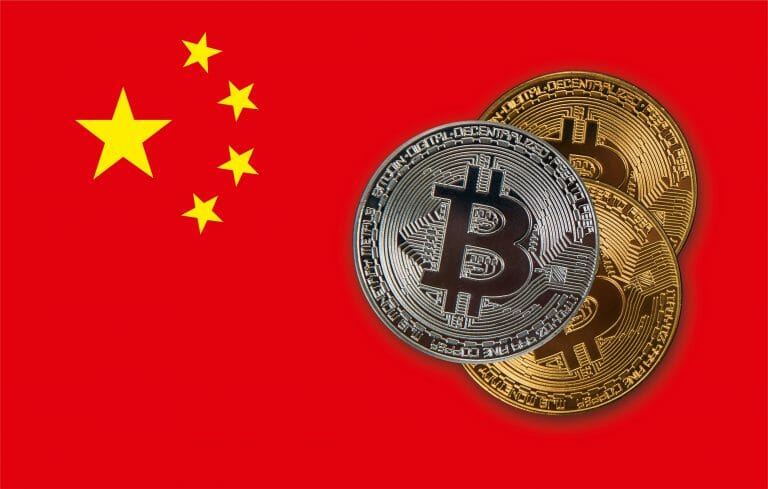
China prioritizes the issuance of digital currency as a strategy in a global ‘battle’.

0

The People’s Bank of China began researching and developing the digital yuan six years ago, and although the project has advanced significantly in 2020, the official launch date is still unknown.

For China, being the first country in the race to issue a central bank digital currency (CBDC) is a necessity and a national priority. A recent report from the People’s Bank of China (PBoC) shows that the country is placing a strong emphasis on a geopolitical strategy when considering the development of its digital currency.

Over the weekend, in China Finance, in a magazine run by the People’s Bank of China, the central bank said that China needs to break the hegemony of the US dollar and internationalize the yuan.

China ‘Needs’ to Be the First in Global CBDC Competition

The world powerhouse and the main competitor of the United States does not seem to be neglecting what is at stake in the issuance race of a CBDC. For China, which relies on US payment systems like SWIFT, a digital yuan could cause significant shifts in the geopolitical status quo within international finance, as well as an opportunity to break the supremacy of the dollar and internationalize its national currency.

Additionally, it is added to this the possible benefits that digital currency provides for national monetary policy, an issue that is even more crucial in a post-pandemic panorama defined by economic challenges. In a sustained effort, China appears to be fast approaching the launch of the digital currency. This year, state-owned commercial banks and companies have started testing a digital yuan wallet. According to Reuters, at the end of April 2020, the PBoC research unit has filed 130 cryptocurrency-related patent applications, covering the range of issuance, circulation, and implementation.

Currently, the Asian nation expanded its test program to ten regions of the country, including several of the big cities, such as Beijing. It has also been rumored that the PBoC plans to use the digital yuan at the 2022 Winter Olympics.

United States, China, and a List of other Countries

China and the United States have been in close competition in recent years in the field of research and technological development and there is no doubt that the advancement in CBDC is included in that global rivalry.

With countries such as France, the United Kingdom, Brazil, South Korea, the Bahamas, and others announcing progress on CBDC this year, it appears that the coronavirus pandemic is accelerating the global battle for digital payments. Among all of them, the United States does not seem to be lagging, although none has shown a state as advanced as that of China.

The PBOC is researching, and developing digital currency since 2014, but its official launch date is unknown. Meanwhile, throughout 2020, the Asian country announced various advances in its development. According to previous reports, the digital yuan is already under test in Suzhou city as part of a transportation subsidy scheme for the local government.

Likewise, important banks and companies in the country reported their participation. As previously reported by DiarioBitcoin, the Chinese transport platform DiDi and the delívery company, Meituan Dianping, are some of the foremost companies in the country that are in talks with the PBoC to add the digital yuan to their payment mechanisms. More recently, China’s major state-owned commercial banks announced that they were conducting large-scale internal testing of a digital wallet application for the yuan.

By: Jenson Nuñez.

Andreas Antonopoulos and Bitcoin Guardians are Compared to Bitcoin Maximalists

0

Andreas Antonopoulos has received criticism for not being radical about his opinion on Bitcoin and other cryptocurrencies. Some Bitcoin fans consider that refining political conviction would be beneficial to Bitcoin adoption.

Andreas Antonopoulos has been talking about Bitcoin, blockchain, and other cryptocurrencies for years, becoming a spokesperson that every first-time user normally turns to. This cryptocurrency expert has been opening the gateway to new bitcoiners for a long time.

He uses friendly terms, gives concrete explanations, shows consistency and discipline, offers consultancies, and speaks at conferences around the world. That has led to Antonopoulos becoming one of the most recognizable promoters in the Bitcoin ecosystem.

Supported by donations, he has struggled to make sense of the information that he provides about Bitcoin and other cryptocurrencies. From the beginning, Antonopoulos focused on spreading knowledge about Bitcoin, but he has never shown a radically maximalist tendency towards the original cryptocurrency.

Antonopoulos has helped spread a lot of information, but some personalities in the ecosystem consider that he has diverted his attention to Ethereum and DeFi, which could be controversial for Bitcoin fans.

For example, Pierre Rochard, investment consultant, and Bitcoin maximalist, has shared his impressions of how Antonopoulos, McCormack, and others have become the anti-maximalist gatekeepers of the space.

This consultant wryly notes that maximalists defend Bitcoin tooth and nail, but argues that individual experience is decisive for the learning of new users. He believes that a maximalist is the best to help new users focus on the first cryptocurrency rather than on other projects in the ecosystem.

Political Convictions and Bitcoin

When talking about decentralization, free exchange, private property, sovereignty, limited and deflationary issuance, proof of work (PoW), and freedom, it seems obvious that Bitcoin has political, philosophical, and ethical implications.

By taking these elements as the highest requirements, it is possible to see that the other cryptocurrency protocols frequently fail to comply with them and that Bitcoin continues to be the best example of this ethos.

Regardless of perspectives, the sum of individual experiences will determine the success of Bitcoin. However, people will always see this success from a relative point of view, unless it is a hypothetical event.

The diversity of ideas ensures that each individual has an enriching and educational experience about Bitcoin for their economic benefit. Many experts agree that there is no single gateway to Bitcoin.

Since Bitcoin presents itself differently to each person, the path that brought them closer to this brilliant invention will define the resulting vision. Their personal path will allow the individual to discover new data, functionalities, and tools, with which they can make better decisions.

This is possible thanks to the fact that Bitcoin does not have guards at the gate, monitoring and controlling who is worthy of having this experience or not. No one is in a position to play such a difficult role as a guardian of the authenticity of a bitcoiner, not even big personalities like Andreas Antonopoulos and Satoshi Nakamoto.

The Bitcoin experience is reduced to two key mottos: “Do not trust, verify” and “Do your own research.” In other words, before buying the cryptocurrency, the investor must learn as much as possible.

By Willmen Blanco