Yield Farming Could Be Seriously Affected by Ethereum Fees

High gas fees hinder the work of smaller farmers, CoinGecko indicates. Forty percent of investors do not know how to audit or read smart contract codes.

Crypto farmers who make life on Ethereum’s decentralized finance platforms (DeFi) may expect to pay around USD 100 in fees per day. A recent report from the CoinGecko platform indicates that 10% of a yield farming practitioner’s wallet may go solely on gas fees.

A survey of 1,347 people last August served as the basis for calculating these numbers. Several individuals involved in yield farming participated in the interview.

With this new investment strategy, users seek to make profits based on the interest rates and incentive tokens that DeFi platforms grant. By accumulating both benefits, investors can multiply the return on their assets and achieve annual profits of up to 100%.

This has managed to seduce a large number of investors, but the high gas fees in Ethereum can hinder the work of the most novice and small farmers. According to the CoinGecko report, those who have invested less than USD 1,000 in yield farming typically do not achieve as good a return, since transaction fees significantly decrease their profits.

In this way, gas fees become one of the main concerns of investors, since 73% of them are not willing to pay a fee above USD 10 per transaction. However, these expectations may be unrealistic for the reality of Ethereum. This blockchain tends to become congested by the overflow of transactions and scalability limits, which raises the fees of the network.

Cryptocurrency Farmers Claim to Understand Risks that They Do Not Understand

The CoinGecko report highlights that most of the farmers making life on Ethereum claim to know about the financial risks of yield farming, so they remain cautious about them.

However, 40% of them say that they do not know how to audit or read smart contracts. In other words, they do not know if there is a code error that makes the contract vulnerable to scams or hacker attacks. That technical knowledge is relevant in decentralized finance since these protocols base on the principle that money is programmable.

Thirty-three percent (33%) of investors do not know what an impermanent loss is; this makes things even more critical. An impermanent loss refers to a risk that DeFi liquidity providers face due to the volatility of the cryptocurrency market.

In contrast to the financial benefits that holding a cryptocurrency provides, when users deposit assets in a decentralized finance platform, they usually balance the value of all the deposited tokens.

For that reason, if the price of a token increases considerably, investors will surely not receive the profits of that token, but they would be balancing the difference in losses that the other deposited tokens generate. Likewise, if the price of any of the assets decreases too much, the user may have negative returns.

Users need to know the tokens that comprise the portfolio of the platforms where they do yield farming. If one of these assets is very volatile, it is best not to deposit any money on said platform.

Yield farming is a very new practice, which also works in an ecosystem that is still experimental and has not reached its maturity. For that reason, crypto farmers should be even more cautious when conducting these investment strategies since they could lose more money than they expect.

By Alexander Salazar

If Bitcoin Operations Comply with Regulation, Colombian Banking Sector Will Accept Them

0

Entrepreneurs avoid operating in Colombia due to a lack of regulation of the cryptocurrency sector. The government follows a strategy including blockchains that handle crypto assets.

In recent days, the president of the Colombian Banking and Financial Entities Association (Asobancaria), Santiago Castro, said that the country’s financial sector is currently open to participate in the world of Bitcoin and other cryptocurrencies.

Regarding the regulation of crypto assets and projects for the use of blockchain that the Colombian government is implementing, he said that banking entities operate in a highly regulated sector. “Now we have expectations about the approval of the regulatory sandbox,” he said about the pilot scheme that the Executive recently approved.

Castro recalled that the Bank of the Republic of Colombia has not yet recognized crypto assets, so they cannot yet accept them as currency.

“The Financial Superintendency says that we cannot operate with cryptocurrencies and does not allow the use of our infrastructure to conduct operations with this type of assets,” emphasized the president of Asobancaria.

Mauricio Tovar, from the Colombia Blockchain Foundation, recalled the situation that exchanges have experienced in Colombia due to these limitations and the lack of regulation. “This problem has caused the country to lose many opportunities for investment, innovation and jobs,” he said.

According to Tovar, although Colombia is one of the 5 countries in Latin America with the highest number of transactions with crypto assets, many platforms have decided to operate in other places in the region.

Asobancaria and Ideas to Regulate Bitcoin Exchanges

Vice president of Asobancaria, José Manuel Gómez, reaffirms that banks are open to the entry of new competitors. Among these, cryptocurrency companies could complement and strengthen the system, as well as offer new services. However, the manager says that “this entry must follow a regulation.”

According to Gómez, they could take South Korea or Japan as a reference, since their rules seem very clear, particularly in the handling of Know Your Customer (KYC) measures and anti-money laundering regulations. That leads him to think that the draft regulation, currently under review in Colombia, should establish minimum requirements for exchanges to operate.

In addition to the above ideas, the manager says that they should make adjustments to the regulation on exchange platforms that they adopt. Besides, he believes that the current bill should establish tax regulations. It concludes that the ecosystem needs strong regulation to protect the consumer.

Concerning the closure of bank accounts for projects with cryptocurrencies, Gómez said that it is not a specific policy against these companies. “These closings only respond to risk assessment, based on which we can decide to suspend.”

Colombian Government Is Already Thinking about Crypto Assets

Considering the above approaches, the presidential advisor, Jehudi Castro, spoke about the government strategy on blockchain and crypto assets. In that sense, he noted that the government is focusing on public blockchains that handle crypto assets, specifically Ethereum.

The advisor states that “bankarization has become an important issue”, since the situation that COVID-19 has generated made clear the importance of having new forms of digital payments available to all audiences.

Castro believes that the controlled space that will open with the sandbox will allow having a new approach to the regulation process of crypto assets and opening the doors for their official use. “However, it is also possible to conclude that regulation is not necessary,” according to Castro.

Álvaro Delgado, from MinTIC, said that the Colombian government is interested in providing higher levels of connectivity to Colombian households. With this, they plan to give more comprehensive momentum to the use of blockchain and the development of the digital economy of the South American country.

By Alexander Salazar

According to Russia’s Draft Law, Those Who Do Not Declare Their Bitcoins Will Spend Three Years in Prison

Any person or entity that receives more than USD 1,300 worth of BTC per year must declare that income. Russian users reported difficulties accessing the LocalBitcoins website.

The authorities of the Russian Government are lobbying for the Digital Financial Assets (DFA) law to become increasingly strict. The Ministry of Finance proposed an amendment that includes fines and even prison for those who do not declare the ownership of Bitcoin (BTC) and cryptocurrencies in general.

The modification of the recently enacted law would force any natural or legal person to notify tax authorities whether they receive more than RUB 100,000 (USD 1,300) worth of cryptocurrencies per year, according to local media.

A person or entity that operates amounts of over RUB 1 million (USD 13,000) and does not declare them would face up to three years in prison and a fine of RUB 300,000 (USD 3,900).

Those traders who receive or trade more than RUB 5 million (USD 65,000) per year and do not declare them will be in a worse situation. The draft amendment suggests a fine of RUB 500,000 (USD 6,500) and prison for up to three years. Furthermore, the offenders could also perform forced labor for these last two cases.

In the case of those operators who record around USD 1,300 but decide not to report their transactions to the tax authority, they could receive a fine equivalent to 30% of the cryptocurrencies that they own. The penalty would never be less than RUB 50,000 (USD 650).

There would be such strict control of cryptocurrency funds that users should also submit an annual report on the transactions that they have conducted on the blockchain. The intention would be to determine amounts and balances in the different Bitcoin and cryptocurrency wallets that a person may be using.

According to local media, the representatives of the Ministry of Finance will meet to formalize their proposals before the law goes into effect on January 1st, 2021. The Ministry of the Interior, the Federal Tax Service, the Attorney General, and the Central Bank are among the agencies that are already aware of the draft amendment.

All those operations that users could conduct with Bitcoin in the country interest the Ministry of Finance. The agency also seeks to modify the DFA to legalize Bitcoin mining, but without the miners directly receiving the incentives that the activity creates.

Blocking LocalBitcoins in Russia

In recent days, the platform for the P2P exchange Localbitcoins announced on its Twitter account that access to the website for local users was not available. The company suggested that users in Russia should use a VPN to access it and apologized to them for any inconvenience.

According to local media, the Federal Service for Supervision of Communications, Roskomnadzor, authorized the blockade.

The decision by courts in the Arkhangelsk region, in which they argue that Russia’s national currency is the ruble and that there is a ban on any issuance of money, might have led to the restriction. However, it remained unclear whether the suspension is temporary or permanent.

It is important to remember that, to evade government restrictions, Russian users had access to the P2P market through an alternative URL, that of localbitcoins.net.

By Alexander Salazar

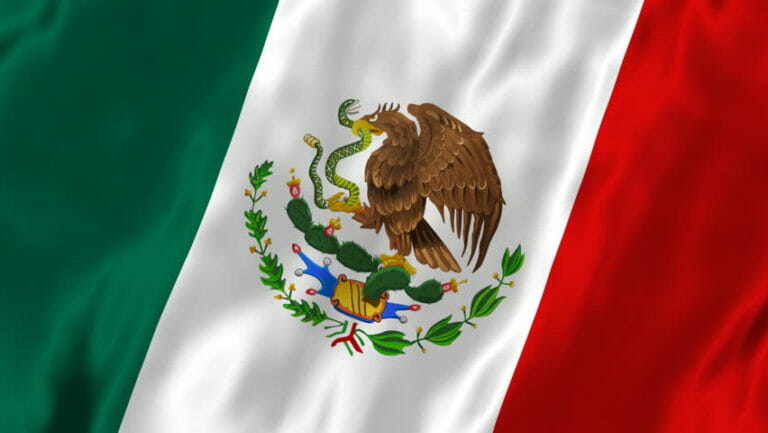
Mexico: Bitcoin Exchanges Reported Over 2,000 Suspicious Activity to the FIU

0

Bitcoin exchanges have reported around 2,400 cases of suspicious activity to the Financial Intelligence Unit (FIU) of Mexico. They did so in compliance with the recommendations of the Financial Action Task Force (FATF) and the legislation in force in that country.

Of those 2,400 reported cases, only two corresponded to illicit activities that the FIU was able to detect. The director of this entity, Santiago Nieto Castillo, indicated in statements to the press that one of them was related to human trafficking and the other a group of hackers who wanted to hit the financial system. In both cases, the criminals used cryptocurrencies as a tool to carry out their illicit activities.

Fintech Law Regulates Bitcoin Exchanges in Mexico

Those who operate in a regulated manner in Mexico must report the authorities about the exchanges before making movements in their platforms. This requirement is established by the Law to Regulate Financial Technology Institutions, better known as the Fintech Law.

Due to this regulation, since September last year, exchanges had to implement new measures to identify their customers. Since April 2020, they have started reporting to the FIU. Among other red flags, it raises suspicions, and any operation that is equal to or greater than 645 UMA should be reported, which is equivalent to around MXN 56,000 (USD 2,500).

This is because trading with Bitcoin and other cryptocurrencies are considered an “emerging risk”. That means that, for the FIU, they meet the conditions to be considered suspicious of money laundering or terrorist financing.

As a consequence, Mexican exchanges must register as a vulnerable activity, integrate the files of their clients, present notices of their operations, safeguard and protect their information (which means that they can only share it with the State agencies that request), receive verification visits and have an internal policy manual.

The Fintech law was criticized by recognized members of the Mexican bitcoiner community, among them Manuel Flores, who organizes the Bitcoin Day meeting. In July of this year, he held a dialogue with CriptoNoticias in which he assured that this law is an obstacle to the development of new projects with cryptocurrencies.

Mexican regulations could be further toughened if the latest FATF recommendations were adopted. These establish, among other things, that they will be considered “red flag indicators”, among other activities:

Immediately Transfer Funds to Multiple Exchanges.

Users can make multiple high-value transactions in less than 24 hours. Besides, users can structure transactions, in small quantities, below the record-keeping or report thresholds, make a cryptocurrency exchange to fiat, or vice versa with a potential loss.

Also, users can receive transactions from many unrelated wallets with subsequent transfer to another wallet or exchange for fiat currency.

Owning Most of the Wealth as a Product of Investments in Crypto Assets.

It is relevant to clarify that the member countries of the FATF (among which is Mexico) should not comply with its recommendations to the letter. The regulatory entities of each jurisdiction can adapt them to apply to their respective legal and constitutional schemes.

By: Jenson Nuñez.


MpleFX is the First Forex Broker to Offer Chainlink

0

The award-winning mobile app and trading platform SimpleFX has just added the crypto rookie of the year: Chainlink to its already broad asset offering. SimpleFX traders will now be able to buy or sell Chainlink (LINK / USD) or make deposits in LINK and take advantage of surprise movements in its price. Join the Simplex Chainlink $ 1,000 promotion for exciting surprises.

Following an unexpected surge in crypto followers, Chainlink managed to position itself in the top 5 of the largest cryptocurrencies by market capitalization, just behind Bitcoin, Ethereum, Tether, and Tron. The LINK / USD pair started trading at just $ 4.12 in January and has hit a high of $ 20 this year, an increase of 588%, before recently falling back to around $ 12.

Chainlink and its token LINK

LINK is the digital asset that users use as the exclusive payment currency on the Chainlink network. There are 390 million LINK tokens in circulation today with a total limit of 1 billion. Thus, everybody expects the LINK token is expected to increase in value over time.

Chainlink is a decentralized oracle network that links smart contracts on blockchains with applications in the real world. The Chainlink network carries any necessary input or output to smart contracts on any blockchain to reproduce the life cycle of a contract. Chainlink has the potential to expand the functionality of DeFi smart contracts, expand the variety of products, and attract more regulated players to join the DeFi ecosystem.

LINK all-time high

On August 16, the LINK / USD pair recorded an all-time high of $ 20 per token, with daily active addresses increasing to 15,600. On the other hand, way before this, on August 8, a massive contraction of small contracts in the futures market pushed up the price of LINK to rise 25% in one single day, causing it to be the first significant increase to the date.

Chainlink’s strong performance amounted to a whopping 99.61% only in August. The growing interest in DeFi just provided enough support for the recent rally.SimpleFX Chainlink Promotion of 1000 USD. SimpleFX seems to be the most straightforward online trading platform, making it possible to buy or sell LINKUSD and other popular crypto assets from desktop or mobile devices.

Chainlink is defined as a system of oracles built upon the Ethereum blockchain that supplies data to decentralized blockchains. An example of this is if two users bet on the outcome of a binary event, the oracle will announce the smart contract the user won, so it is possible to pay the winning bettor.

By: Jenson Nuñez.

LINE messaging app launches token rewards program

0

A mobile messaging app with over 84 million users in Japan, LINE, announced the launch of a cryptocurrency rewards program.

Users of LINE’s digital services will now be able to receive rewards in LINK, the platform’s native token (which has no relation to Chainlink, although they share a name). The company will grant remuneration in token to users who connect their accounts to three LINE applications: LINE Pay for remittances and settlement, LINE Securities for personal investment, and LINE Score for credit evaluation.

LINE has been in the world of Blockchain technology for several years. In 2018, the company began developing its proprietary LINE blockchain and issued the LINK (LN) token, which users can trade with various crypto assets such as Bitcoin.

LINE’s new bounty program is an effort to boost the company’s crypto services.

According to the information, the program began on September 18 and contemplates that 10,000 users holding LINE family credit cards, issued by LINE Pay, receive tokens worth USD 20 in local currency.

For their part, LINE Securities users will get up to 500 yen (about $ 5) in tokens for opening an account and completing a questionnaire. LINE Securities was started in collaboration with Nomura Holdings, one of the largest stock brokerage firms in Japan.

Users will then also be able to exchange the cryptocurrency for the fiat currency on LINE’s crypto exchange service Bitmax, based in Japan. The company’s goal is to encourage users to participate in an economy with the LINK token so that more people trade and use the token to increase its utility.

The initiative comes a few weeks after LINE launched its digital asset wallet, Bitmax Wallet, as well as a development platform for decentralized application developers (Dapps) called LINE Blockchain Developers.

In recent years, various messaging app companies have expressed plans to develop their own tokens to take advantage of their large customer bases. While platforms such as Kik and Telegram have faced lawsuits from the U.S. Securities and Exchange Commission for their collection processes, the Facebook giant’s project appears to be stalled in the face of significant regulatory challenges.

The Global Messenger.

LINE is the fastest growing mobile messenger app in the world. This app is quick and creates stable bonds between friends and significant relatives, getting them the closer they could ever be, messaging is for free, as well as voice calls and video calls anytime the user wants to. LINE is available on smartphones, including iPhones and Android devices, and also PCs and Macs.

LINE family apps also include a webcomic app, a security app, and many more that will bring fun daily routines. LINE is also ideal producing wondrous decor for phones, a helpful app to have on the phone for entertaining, and as a network to get closer to family, friends, and even teams at works.

By: Jenson Nuñez.

.