
VanEck Re-Files the Application to Launch Bitcoin ETF with the SEC

There would be a greater likelihood of approval thanks to the changes in the SEC directive. The ETF would reflect the performance of the MVIS CryptoCompare Bitcoin benchmark rate.

VanEck Associates Corp. re-registered the application to launch the Exchange Traded Fund (ETF) with the US Securities and Exchange Commission (SEC). This fund will track the world’s largest cryptocurrency, Bitcoin (BTC).

The global investment manager made a presentation to the SEC, in which they stated that the new ETF will be known as VanEck Bitcoin. That financial instrument would reflect the performance of the MVIS CryptoCompare benchmark rate, an index that VanEck launched in 2017 in partnership with CryptoCompare.

This action would prove that VanEck is betting that the change in leadership of the SEC, whose chairman Jay Clayton recently resigned, will contribute to a greater likelihood of approval of its ETF proposal.

According to Nate Geraci, president of investment advisory firm ETF Store, “all indications from the SEC suggest that a Bitcoin ETF still faces an uphill battle.” He says that “VanEck’s confidence in filing a Bitcoin ETF could indicate some shifting views within the SEC. A key to watch is who President-elect Joe Biden appoints as the leader of the SEC.”

The VanEck Vectors and VanEck Mutual Funds ETFs represent the flagship investment offerings of New York-based Company VanEck Associates Corp. Assets Under Management (AUM) were valued at USD 49 billion until 2019.

SEC Has Rejected ETF

An Exchange Traded Fund (ETF) includes a collection of securities, such as stocks, which an underlying index typically tracks. The proposal is to offer an index to track the price of Bitcoin as a stock investment option. Stock exchange participants could buy Bitcoin shares without having to trade cryptocurrencies on a Bitcoin exchange. Of course, the SEC is the agency in charge of approving an ETF in the US market.

VanEck has already tried several times to launch an EFT after filing with the SEC, but they have yet to be successful.

On another occasion, VanEck, in conjunction with SolidX, applied for an exemption to offer the shares of its VanEck SolidX Bitcoin Trust to institutions such as hedge funds and banks, but not to retail investors. This allowed them to achieve the consolidation of the project.

The Winkelovoss twins also previously tried the possibility of creating an ETF (BATS BZX), but the SEC denied it twice. The Commission claimed that there are not enough tools to identify and prevent Bitcoin fraud and manipulation. For that reason, they consider it a risk, from which they must protect investors.

However, Commissioner Herster M. Pierce, a member of the SEC’s Decision-Making Committee, publicly stated her disagreement with this decision to deny BATS BZX’s proposal as an ETF.

She believes that she would ignore the decision and approve the application in scenarios where the proposals are under the established norms, there is a good opportunity to institutionalize Bitcoin, and the certainty that the rejection of the request would hinder innovation.

By Alexander Salazar
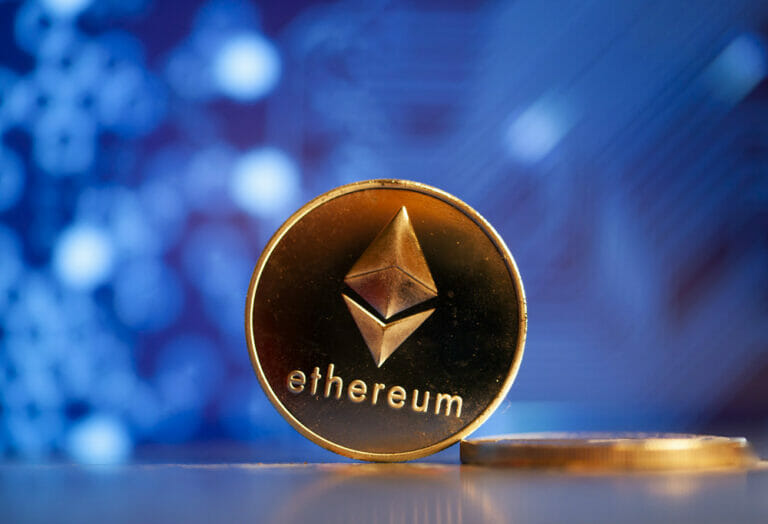
Fees on the Ethereum Network Skyrocket as Ether’s Price Exceeds USD 1,100

0

The cryptocurrency of the Ethereum network had not reached this price and market capitalization since January 2018. The increase in US dollars of the price of ETH causes concern about the value of fees.

The price of Ether (ETH) exceeded USD 1,100 for the first time since 2018, approaching the all-time high (USD 1,300) that it had reached two years ago.

Private users seem to have halted trading due to high transaction fee prices. The price of Ether reached USD 1,138 but fell back to stabilize at USD 1,000, according to data from CoinMarketCap. That may have occurred due to a halt in investments to wait for lower fees.

Ether not only approached its highest all-time price, but it also reached a capitalization above USD 100 billion for the third time in its history. These are levels not seen since January 2018 when ETH marked USD 1,300 in price and USD 120 billion in total market capitalization.

Cryptocurrency market data portal CoinMarketCap indicates that Ether’s capitalization recently reached USD 121 billion, achieving dominance close to 13% of the total cryptocurrency market. In that way, Ether becomes the second-largest cryptocurrency on the market, only after Bitcoin, which encompasses 68%.

However, the price of Ethereum has moved away from that of Bitcoin to such an extent that this is one of the moments where this relationship has become most uneven, similar to that of the initial years of the project. In June 2017, it was possible to buy 1 ETH for 0.1 BTC. Now when BTC exceeds USD 30,000, it is possible to buy 1 ETH for 0.03 BTC.

Increased Fees Raise Doubts about the Future of Ethereum

This price rally and the demand to use the network led the transaction fees to soar.

Ethereum’s fees stood at about 568 Gwei or USD 12 for confirmed transactions within a standard time frame, according to Larry Cermak, a researcher for The Block and an investor in DeFi.

Cermak refers to a transaction of more than 5 ETH, for which it was necessary to pay the equivalent of more than USD 100. However, the high prices make smaller transactions impossible, leaving out retail investors.

According to data from Etherscan, fee prices have already fallen, which may contribute to the increase in the price of Ethereum over 24 hours, depending on the activity of traders on both ETH exchanges and DeFi platforms.

DeFi platforms such as Uniswap contribute to increasing the network’s average fees since these contract transactions are often more expensive than Ethereum on-chain transactions. Uniswap is the Ethereum contract that generates the most fees, taking in 31,700 ETH in fees in the last month, according to EthGasStation.

In August 2020, Ethereum reached its all-time high in fees spent. According to data from the Blockchair portal, the average reached 0.026 ETH per transaction. The same source indicates that the fees have a current average of 0.018 ETH per transaction.

If the price of Ethereum continues to rise, the value equivalent to fees will also do so. For that reason, many wonder if this situation is a barrier to seeing the cryptocurrency break new barriers in its market.

Due to this, developers are keeping busy and are possibly considering the implementation of several practical solutions by 2021. That is the case of the proposal EIP-1559, which proposes to burn part of the fees and handle the calculation of these more efficiently.

Vitalik Buterin and the other developers in the community support the proposal, aiming to implement it as a prerequisite to the Ethereum 2.0 launch. However, miners do not agree with the idea of implementing EIP-1559, threatening to leave the network if this occurs.

By Alexander Salazar

Liquidations for Traders on Binance Hit Record Due to a Drop-in Bitcoin’s Price

The price of Bitcoin fell from USD 33,148 to USD 28,130 in 4 hours. In mid-December, the peak of liquidation was below USD 50 million.

The liquidation of more than USD 190 million in positions for traders on Chinese exchange Binance occurred because of a sudden drop of more than 15% in the price of Bitcoin. Specifically, there was the liquidation of long positions in the futures market of the exchange platform.

In long positions, traders bet on a price increase, with a profit if the price reaches specific levels. Those positions that go for a bearish bet are called “short”. When the price goes in the opposite direction to the “bet” or prediction and touches a particular lower level, the liquidation of the operation occurs with the consequent loss for the trader.

The figure that the brief price drop recently caused represents a record of liquidations in such a short period, according to data from Glassnode. This company’s chart for liquidations on Binance shows a previous peak just below USD 50 million.

In just a few hours, the price of Bitcoin (BTC) went from USD 33,148 to USD 28,130, which caught those who were betting on the rise in the exchange’s derivatives market by surprise.

A rise of around 82% in the price of Bitcoin in a matter of weeks, after it broke its all-time highs, seems to have caused bullish sentiment to take hold of traders who turned to long positions (bullish bets). Furthermore, the correction that brought BTC to the USD 28,000 level again caused the losses described above.

Despite the downturn that seems to have sounded the alarms of a major correction, the price of the main cryptocurrency in the market rebounded above USD 28,130 and is currently around USD 30,000 again.

Bitcoin Trading Volumes Also Skyrocket

The rate of exceedance of Bitcoin price marks remains constant and the overall cryptocurrency market capitalization exceeds its all-time high of 2017. At the same time, the trading activity has risen in recent days.

At the time of writing this article, Bitcoin’s trading volume has been above USD 83 billion for around 24 hours. It had previously broken USD 85 billion for the first time in that time.

Even though there has been such strong bullish momentum in recent weeks, not all cryptocurrencies have seen significant price increases. However, the total capitalization is already above USD 840 billion, according to CoinMarketCap.

The breaking of the milestone has occurred with the top two cryptocurrencies breaking relevant price levels. Bitcoin exceeded USD 30,000 and set a new all-time high (ATH).

For its part, the price of Ethereum’s cryptocurrency Ether (ETH) exceeded USD 1,000 for the first time since 2018. In this way, this cryptocurrency is close to its ATH above USD 1,440, which it reached in 2018, according to data from CoinGecko.

By Alexander Salazar

Citizens Are Operating Their Lives at a Loss Using the US Dollar, According to Jack Mallers

0

The executive questioned the inflationary phenomenon in the United States. He believes that Russell Okung was correct in requesting his salary as an athlete in BTC.

According to the founder of the Bitcoin startup ZAP, Jack Mallers, the people in the United States and around the world who use the US dollar are operating their lives at a loss. The executive believes that the inflationary phenomenon is affecting the wealth of citizens.

Before 2020 ended, Mallers pointedly said that the US fiat currency loses value every year. This is more evident today due to the deterioration of economies that the COVID-19 pandemic has caused.

“People in the United States and around the world are operating their lives at a loss due to the exponential inflation of assets. This is becoming increasingly evident due to the pandemic and what is happening with the US Federal Reserve, which needs to print money,” said the executive regarding the “aid” packages that high government officials have authorized.

He stated that people who support themselves on US dollars alone would be losing between 15% and 20% of the value of their money each year. This is due to the annualized inflation that is occurring in the country. He believes that citizens would gain an annual advantage against the US dollar if they migrate to Bitcoin and hold 100% of their positions.

The entrepreneur highlighted that Bitcoin is a scarce digital asset that people can use from any smartphone. He considers that the monetary future depends on the main cryptocurrency in the market.

Mallers explained that this would happen mainly because anyone can adopt it. He said that there would be two possible scenarios: those which are operating at a loss with the US dollar due to the decisions of the Federal Reserve and those which maintain their value by operating gains with Bitcoin.

Russell Okung’s Decision to Use Bitcoin

Jack Mallers also defended American NFL player Russell Okung’s decision to receive half of his salary as a Carolina Panthers player in Bitcoin. The football player said that he is “not going to risk [his] health or [his] body on the field and operate [his] life at a loss.” The athlete added that he “will put [his] money in a harder asset that protects [him] from inflation because of its scarcity,” by which he alluded to Bitcoin.

Okung made it known through ZAP that he would voluntarily trade up to USD 6.5 million of his salary with the Carolina Panthers for Bitcoin. Neither the team nor the league uses the cryptocurrency to pay the player.

An increasing number of commercial establishments in the United States are accepting other payment methods such as PayPal and Square, but not Bitcoin. In that regard, Mallers said that “all” people will be the next big step for Bitcoin. He also defended the decision of Michael Saylor, CEO of MicroStrategy, to invest part of the company’s treasury in Bitcoin.

The price of the pioneering cryptocurrency recently reached a new all-time high at USD 31,435 per unit. The various factors that may be influencing the price include the entry of a growing number of institutional investors and the SEC’s decision to sue Ripple for its XRP crypto asset, which is why traders are trading their tokens for Bitcoin.

By Alexander Salazar

It is Inappropriate to Label Dash as a “Privacy Cryptocurrency,” According to Dash Core Group CEO

0

The CEO of Dash Core Group explains that transactions with Dash are “completely transparent.” The price of Dash, and the other cryptocurrencies withdrawn from Bittrex decreased by 10% in just 24 hours.

According to Dash Core Group CEO Ryan Taylor, “the ‘privacy cryptocurrency’ label is inappropriate for Dash.” The executive sought to clarify that matter after the Bittrex exchange announced that it would stop trading that crypto asset, along with Monero (XMR) and Zcash (ZEC).

As far as anyone knows, Bittrex’s decision did not follow the direct request of any state entity. However, Taylor is confident that the exchange did so “to mitigate the perceived regulatory risk of cryptocurrencies that US government agencies labeled ‘anonymity-enhanced cryptocurrencies’ (AEC).”

On his Twitter account, the executive explained that the cryptocurrency that his company developed is “a literal fork of Bitcoin.” For that reason, he considers that “all Dash transactions are completely transparent.” He added that “all inputs, outputs, addresses, and amounts are recorded on the transactions and anyone can view them on the public blockchain.”

Dash has the PrivateSend function, which hides “the sources of the amounts traded for the financial privacy of its users.”

In a recent argument, Taylor sought to separate the Dash code from PrivateSend, which he called “a non-custodial implementation of CoinJoin.” Also, he referred to a report from the Chainalysis Company that indicates that it is possible to pass other cryptocurrencies through mixers to gain privacy.

The head of Dash also mentioned that “from a technical point of view, Dash’s privacy function is not greater than that of Bitcoin.” With this, he referred to a report from the Perkins Coie law firm that reached this conclusion in September 2020.

Finally, Taylor said that he expects Dash to trade on the aforementioned exchange again. “We will try to work with Bittrex to allow them to trade again, assuming that they are willing to work with us,” he posted on his Twitter account.

“This is not in the same league as the enforcement action that the SEC took against Ripple. As far as we know, Anonymity Enhanced Cryptocurrencies (AEC) are not subject to a ban from US regulators. Even if they were, Dash is NOT an AEC at all and should legitimately be excluded from such action,” said Taylor.

Community Reactions and Impact on Dash’s Price

The CEO of the Kraken exchange, Jesse Powell, said that they would not take any similar action against privacy-focused cryptocurrencies. He said that he had “not heard of anything in the regulatory arena. It seems to be something specific to the business [of Bittrex].”

Many join the Dash CEO’s speculation and believe that there are state agencies behind Bittrex’s decision. “The attack on XRP is just the beginning. Now they went for anonymous cryptocurrencies (XMR, ZEC, and DASH). The problem is that in many cases we depend on exchanges and that is the weak point of cryptocurrencies,” @PibeGeek wrote.

Ricardo Spagni, identified as “Fluffypony”, who is the main maintainer of Monero, also spoke about the specific case of Dash. He agrees with Taylor about his theory on why Bittrex was withdrawing it, but he disagrees on the virtues of that cryptocurrency.

Bittrex’s announcement upset those investors owning Dash, Zcash, and Monero. The price of these crypto-assets dropped by an average of 10% in just 24 hours. This is contrary to the general market trend, which is a bullish thanks to the new all-time high that Bitcoin recently reached.

By Alexander Salazar

Colombian Peso Is Worth Less Than 1 Satoshi as a Consequence of Bitcoin’s New All-Time High

The price of Bitcoin in Colombia doubled in a month and a half. In only 3 Latin American countries, the local fiat currency is worth less than one satoshi.

After reaching a new all-time high and remaining upward, Bitcoin broke a new record in Colombia. Its minimum unit, the satoshi, is now equivalent to more than 1 Colombian peso (COP), the legal tender fiat currency in the South American country.

On December 31st, 2020, the Colombian peso reached 1:1 parity with Bitcoin. However, due to the new price increase of Bitcoin (BTC) above USD 32,000, Colombia’s fiat currency is worth less than 0.00000001 BTC. In the international market, each satoshi is equivalent to about USD 0.000323.

The current price of Bitcoin is higher than COP 107 million, according to the rate in the local market of Colombia. This has been possible through the combination of the strength of Bitcoin and the weakness of the Colombian peso against the US dollar (USD).

During the last year, the Colombian peso has depreciated in such a way that its exchange rate against the US dollar went from COP 3,200 to COP 3,400 per US dollar. In 2020, the US fiat currency also peaked above COP 4,000, in March and COP 3,800, in early November.

Taking into account the value of the US dollar in Colombia in December 2017, when the previous all-time high (ATH) occurred, the equivalence was COP 2,982 per US dollar. The increase in this rate, as well as the depreciation of the Colombian legal tender fiat currency, has been almost 15%.

Upon breaking its previous ATH last November, BTC was still 17% below its 2017 all-time high in US dollars. Regarding the price in Colombia, its all-time high was at COP 54.5 million before the bullish run with which it closed 2020 and began 2021. That value has doubled in just over a month.

Bitcoin and the Depreciation of Latin American Fiat Currencies

Most of the legal tender fiat currencies in Latin America broke their respective Bitcoin ATHs before their US dollar ATH occurred.

It is possible to highlight Brazil, Argentina, and Chile among them. The case of Venezuela is exceptional since the bolivar (VES) depreciates so quickly that Bitcoin constantly breaks all-time highs, even when it does not have significant rises in the international market.

Only the Mexican peso (MXN) resisted, and Bitcoin failed to break above the 2017 high before the US dollar breakout. Even though there was already a new ATH on some exchanges before last December, the milestone had not yet arrived in Mexico.

It is not very common for a local fiat currency to have a value below the minimum unit of Bitcoin. Adding Colombia, only 3 Latin American countries are in this situation.

To buy one satoshi in Venezuela, it is necessary to pay VES 350. The thing is different in Paraguay and Colombia, where people would require only 2.27 guaranis (PYG) and 1.08 pesos (COP) per satoshi, respectively.

By Alexander Salazar