Data from 1.5 Billion Facebook Users are for Sale on the Dark Web

A prospective buyer reportedly offered at least $ 5,000 for 1 million profiles. Facebook reported that their team is working hard to restore the platforms.

The personal data of 1.5 billion Facebook users is for sale on the dark web, exposing them to a series of possible attacks, such as identity theft and account takeover. It is, perhaps, the most relevant data breach of the social network to date.

Hackers claim that they have names, emails, phone numbers, locations, gender, and the ID or unique identifier of millions of users. The data appears to be authentic and up-to-date, reported the Privacy Affairs medium this Monday, October 4.

The post adds a series of screenshots presenting an alleged offer of personal data of Facebook users on the dark web. These spaces can only be available by using anonymous networks, such as the Tor browser. Tor Browser does not appear in search engines such as Google.

A potential buyer would have quoted $ 5,000 for every million accounts on the social network. Therefore, the data set would be worth around $ 7.5 billion. Then, in a later post, the seller claims to represent a large company that works on “Facebook data scraping,” the note adds.

Coincidentally, Facebook, Instagram, and WhatsApp collapsed on Monday worldwide. Facebook apps like Messenger and Facebook Workplace also don’t work, and the problem seems global.

Privacy Affairs subsequently reported that the timing of this news release and the Facebook outage constitutes an unfortunate coincidence that leads many users to assume a connection between the two.

The official Facebook account on Twitter reported that it was working to get everything back to normal as soon as possible.

It was until 5:30 p.m of that day that Facebook returned to report on social networks and apologized to users and companies worldwide that depend on the services of its platforms.

In addition, the platform asserted that the team in charge worked hard to reestablish access to the application services and announced that the platforms would work again.

However, even though the company reported that there would already be access to the platforms, it did not mean that they all worked well, especially in the web version of WhatsApp.

For their part, Facebook and Instagram are still struggling with some images and commenting on the publications. Although, in the case of the first, the problems in functions such as reactions and notifications persist.

Failures in the internet connection in the messaging app and the two social networks, and a common error of the massive failure included the message 5xx server error, indicated that when the server does not comply with the required requests, either due to an internal error, an invalid response, a bad link or temporary unavailability of the program.

By: Jenson Nuñez

US’s 5th Largest Bank, Launches New Bitcoin Custody Service

The escrow service got designed so that fund managers can store their cryptocurrencies. US Bank decided to launch the initiative due to high customer demand.

The race to provide Bitcoin services to the wealthiest is heating up as more financial institutions lead efforts in the crypto sector.

US Bank, the fifth-largest bank in the United States of America, has become the latest banking institution to join this list after revealing a new digital currency custody service.

CNBC reported on Tuesday that the service would help fund managers store their funds in three cryptocurrencies (Bitcoin, Bitcoin Cash, and Litecoin)

The escrow service is now ready to fund managers and makes it easy to manage digital currency private keys through a partnership with NYDIG. This service got announced exclusively by Gunjan Kedia, vice president of the investment services and wealth management division of US Bank.

More than a century and a headquarter in Minnesota makes US Bank one of the top ten banks in custody with more than $ 8.6 trillion in assets under custody and management, according to Federal Deposit Insurance Corp data reported by CNBC.

US Bank Is Now into Custody of Cryptocurrencies

Although it would allow the custody of three digital assets, there would also be a support to encourage other cryptocurrencies such as Ethereum, according to Kedia. The representative also added that the attack on this asset class is a general trend among institutional investors.

During the interview, the US Bank representative expressed that the initiative started in parallel with a new survey.

The results revealed the growing interest of its clients. The bank carried out the consultation shortly after the Office of the Comptroller of the Currency (OCC) issued a letter in July 2020 authorizing regulated banks to protect digital assets.

The service finally flourished due to high demand from users, who are already waiting for the bank to help them protect their funds. Some investors have strong positions regarding bitcoin.

Other investors are still waiting for custody services to start, according to Kedia. In addition, the representative assured that US Bank is one of the first institutions in the American nation to have a live custody product available.

Bitcoin ETF Could Increase the Demand

While US Bank’s custodial product is available only to institutional managers of private funds based in the United States of America or the Cayman Islands, Kedia noted that the bank expects demand for cryptocurrency-related products to increase shortly.

According to the vice president of the equity division, this interest among clients could increase if the country’s Securities and Exchange Commission (SEC) approves a Bitcoin exchange-traded fund (ETF).

There are many expectations around the approval of the first cryptocurrency ETF in the US, and some experts highlight that the regulator could approve this year.

Kedia said there is a lot of funds to start a massive investment. Some investors want custody contracts to get signed the day the SEC approves an ETF.

By: Jenson Nuñez

Spain’s CNMV Asks Influencers to be “Responsible” When Encouraging the Use of Cryptocurrencies

Buenaventura affirmed that digitization brought layers of the Spanish population closer to the financial system. The CNMV prepares a statement regarding the regulation of advertising in cryptocurrencies.

The president of the Spanish National Securities Market Commission (CNMV), Rodrigo Buenaventura, suggested public figures and influencers in his country promote “responsible” investment in cryptocurrencies, with the intention of preventing those who want to be part of the ecosystem to get scammed.

Buenaventura said, during the closing ceremony of the Financial Education Day that took place at the headquarters of the Bank of Spain that there must be a collective responsibility as a society, including people who encourage the use of cryptocurrencies as a method of investment, such as influencers or public figures.

There must be a responsibility to prevent investors from falling into the wrong or even fraudulent offers. The commission representative also acknowledges that digitization has brought strata of the population closer to the financial system, especially those citizens who previously had zero interest or means to participate.

The representative also assured that digitization has generated a proliferation of new financial risks and that cryptocurrencies have turned into an «investment phenomenon», with the greater aim at certain segments of the Spanish population.

Therefore, the economist also invited the entities and institutions that take part in the financial education of the Spanish, as well as the citizens themselves who use crypto assets; to work towards a healthy use of these currencies to avoid every possible danger.

The CNMV is already preparing a statement regarding the regulation of advertising in cryptocurrencies that expects to get published very soon. This activity needs to become responsible before the regulation reaches its end in the Old Continent.

Regulation has been a matter of discussion in Spain before. In August, the CNMV warned of 12 unregistered entities that were offering bitcoin (BTC) investment and trading services.

Through a statement, the CNMV highlighted that the platforms are not following the regulation policies imposed by them and that they are not authorized to set their activities in Spain.

CNMV Encourages Financial Education in Spain

Rodrigo Buenaventura also highlighted that a trained and studied investor is a protected investor. He points out that a careful investment requires the work of several actors and not only of some institutions.

Therefore, the representative also welcomed that the Ministry of Economic Affairs of Spain becomes part of the agreement (13 years ago) between the Bank of Spain and the CNMV.

The agreement seeks, precisely, to promote financial education. In this sense, he announced that a new education plan would appear in the coming weeks or months.

This institutional or political support is as vital as the support of civil society and organizations that play a role in the dissemination of financial education content, according to the representative

Buenaventura ended up his dissertation by highlighting that financial education programs must change and even adapt to the world and finance as a whole.

By: Jenson Nuñez

The Bans by the Chinese Authorities Do Not Prevent Bitcoin from Strengthening

Analyst Willy Woo expects the price of Bitcoin to stay sideways for a few weeks. The accumulation of BTC in the hands of long-term holders is reaching maximum values.

The price of Bitcoin (BTC) recently recovered at a level above USD 47,000 after two weeks of retracement. The undesirable effects of the collapse of Chinese real estate firm Evergrande and the ban on Bitcoin by the People’s Bank of China remained behind.

What the president of the US Federal Reserve, Jerome Powell, expressed may have contributed to the rise in the price of Bitcoin. He told the US Congress that the government does not plan to ban Bitcoin and other cryptocurrencies. The United States takes a position contrary to China since it does not contemplate strict regulatory policies on crypto assets.

Those investing in cryptocurrencies consider that Powell’s statements suggest that the US government would not veto Bitcoin, as China has done. In that sense, the former US federal prosecutor, Katie Haun, stated that China’s decision is an example that no one should follow.

The Price of Bitcoin Will Maintain Sideways Movements Before the Bullish Breakout

Willy Woo recently predicted that the price of Bitcoin will maintain sideways movements between USD 39,000 and USD 47,000 for a couple of weeks. The downward trend in recent weeks coincided with further accumulation by long-term investors.

Woo argues that the current level of accumulation is reaching its peak. In the past, accumulation highs have usually preceded a Bitcoin cycle high. That process could occur by the end of the year and lead to a bullish breakout that would continue in 2022.

The Supply of Bitcoin in the Hands of Short-Term Holders Is at a Low

Long-term holders usually retain a maximum amount of the supply of Bitcoin. The latest weekly chart shows that most coins are in the hands of short-term holders. The volume of BTC that they have held is at a minimum of 20%.

Historically, the regions where a low correspond to bearish periods of the price precede a bullish breakout. Less supply in the hands of short-term holders means that they have been selling their BTC to long-term holders.

The Cumulative Supply of BTC in the Hands of Hodlers Reaches an All-Time High

The accumulated supply of BTC in the hands of long-term holders reached an all-time high as those investors grew in number. Around eighty percent of the total supply of Bitcoin, or more than 15.4 million BTC, is in the hands of those holders. Meanwhile, the remaining USD 3.6 million is in the hands of short-term investors.

Data from Glassnode reveals that 71.1% of the total BTC held by short-term holders is in profit. In other words, the pioneering cryptocurrency has a higher price than those investors had to pay. Long-term holders, who have almost 30% of the supply, are at a loss but remain convinced to hold onto their coins.

The SEC Is in Favor of a Bitcoin Futures-Based ETF

The president of the US Securities and Exchange Commission, Gary Gensler, prefers Bitcoin futures-based exchange-traded funds.

Gensler noted that the SEC is examining ETF applications seeking to invest in Bitcoin futures. The official said that the current legislation contemplates protecting investors interested in those purchase and sale contracts.

By Willmen Blanco

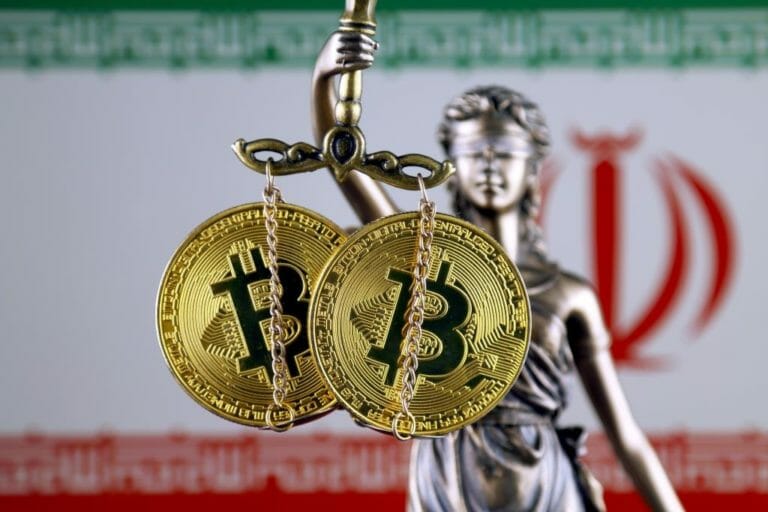
The Iranian Government Lifts a Four-Month Restriction on Bitcoin Mining

The resumption of Bitcoin mining will represent an increase in the hash rate, for which the mining difficulty will be more difficult. The authorities may have decided to suspend the ban on the activity as they solved the energy problems or needed the taxes from miners.

The temporary four-month suspension of Bitcoin mining in Iran recently came to an end. In this way, the licensed miners of that country will be able to resume their activities.

The Iranian authorities decided to implement that measure due to problems with the power supply. Many cities began rationing periods, but the issue had already reached the industrial sectors. For that reason, the government decided to suspend cryptocurrency mining, as it requires consuming large amounts of electricity.

The resumption of the operations of Iranian farms will represent a significant increase in the hash rate. That country is in the top 10 countries with the highest Bitcoin computational power. In other words, the addition of Iranian farms will make mining more difficult for the following adjustment of difficulty.

The Authorities Accuse Bitcoin Mining of Causing the Blackouts in Iran

Bitcoin mining is legal in Iran, but some politicians frown upon such energy-intensive activity. That situation becomes worse when the country is experiencing severe shortages in supply. In May, the government led by former President Hassan Rouhani decided to ban the activity.

Many representatives of the authorities consider that this business is the culprit of the blackouts in Tehran and other large cities. For that reason, the government called on duly registered companies to collaborate by turning off their equipment. The owners of those firms disconnected the farms for four months without suffering persecution or seizure of equipment.

Some illegal miners, a significant percentage in Iran, turned off their equipment during the abovementioned period.

Anyway, the Iranian authorities ended the official ban on Bitcoin mining within their borders. No one yet knows whether they solved the energy problems or need the taxes from miners to finance themselves.

How Tehran Leverages the Bitcoin Mining Process

The bloc by the United States against Iran has prevented that nation from accessing much of the international trade. As there are few buyers, large oil reserves remain partially inactive, which has reduced the volume of foreign exchange entering the country.

That leads to the deterioration of the overall living conditions of the population, as has happened in Venezuela. However, Iran has a higher degree of industrialization, which allows it to suffer less from the shortage of imports.

Bitcoin miners have to hand over their production to the Central Bank in exchange for the local fiat currency equivalent. That allows the authorities to exchange the cryptocurrency for foreign currencies or to trade directly with it.

For that reason, the authorities’ decision not to extend the banning of the mining activity could mean two things. First, the Iranian government has already solved the energy problems. Second, those problems are still there, but the authorities need foreign exchange for their economy.

By Willmen Blanco

These Are Some Reasons Why China Bans Cryptocurrency Mining

The shortages of coal and its rising prices have made the generation of electricity in China increasingly difficult. The Chinese government has attacked Bitcoin for years without placing much importance on mining until now.

For years, the Government of China has attacked the trading, mining, and everyday use of Bitcoin. Although they have caused many crises in the ecosystem, the cryptocurrency has managed to win all the battles.

On September 24th, the People’s Bank of China declared all cryptocurrency-related activities illegal. That was the last thrust that the Chinese authorities have made towards Bitcoin.

Since the first veto in 2013, the Chinese government has imposed measures to prevent the use of cryptocurrencies on at least eight occasions. The bans initially covered the trading of cryptocurrencies and their use as money. At the time, the authorities did not attach much importance to data mining.

China has claimed that Bitcoin cannot be a legal tender because no central bank, government, or federal entity endorses it. That led them to prohibit its use as money since they could not control it.

Another reason the Chinese government has given against Bitcoin and its use is the volatility of its price. They believe the ups and downs in the cryptocurrency market are radical, which represents a high-risk investment. However, BTC has performed better than the shares of many companies in the stock market in the long term.

Although There Are More Excuses, the Reason Seems to Be the Same

Although the energy crisis seems like a valid argument against Bitcoin mining, the primary purpose may be expelling decentralized cryptocurrencies. The Central Bank of China continues to work on its central bank digital currency (CBDC), the digital yuan, which uses blockchain technology.

The electricity consumption of Bitcoin mining is not as high as that of other non-banned industry sectors in China. Many mining farms used hydroelectric power, which they generated on many occasions.

The most likely cause for China’s ban on cryptocurrency mining is the resilience of Bitcoin. Although the authorities have done many things to prevent the use of cryptocurrencies among the population, they have not achieved that goal. People still manage to buy, sell and use Bitcoin and other cryptocurrencies.

The migration of miners due to government measures is allowing further decentralization of Bitcoin mining. For years, China exceeded 60% of the total Bitcoin hash rate worldwide.

Data from the University of Cambridge indicates that China currently has an average of 46% of the global Bitcoin hash rate. Although it is a large portion of the mining power, it is encouraging that there is less than 50%.

The last update to that data occurred in April, but the massive migration of miners outside China started in May. For that reason, the percentage of hash rate in the country is lower.

The existence of Bitcoin and its increasing decentralization will continue to be a powerful tool in the hands of its users. Many analysts consider that the first cryptocurrency on the market is a better asset than gold and other precious metals. Besides, it has proved able to recover from its worst all-time lows until exceeding its all-time highs.

By Alexander Salazar