The Benefits and Risks of the Bitcoin Law of El Salvador One Month after Its Entry into Force

Individuals and civil society organizations insist on the failures of the Chivo Wallet. Some Salvadorans say that citizens need time to understand the advantages that Bitcoin offers.

The President of El Salvador, Nayib Bukele, has stated that Bitcoin can help send remittances faster and at no cost. For that reason, the Chivo Wallet does not generate a payment of fees for the transactions that users conduct.

When transferring BTC with the government wallet, Salvadorans do not pay fees as they would do with Western Union or MoneyGram. Calculations by Bukele indicate that those cross-border payment service companies could lose around USD 400 million in fees a year.

The Salvadoran head of state wants Bitcoin to boost the economy and restore dynamism to productive activity. Remittances are essential since the Salvadoran population receives a volume of resources equivalent to 20.22% of its Gross Domestic Product.

Some Salvadorans See Bitcoin Adoption as a Mirage and others as a Reality

Amid the controversy about the Bitcoin Law, Bukele said that approximately 3 million Salvadorans had downloaded the Chivo Wallet. Data from the World Bank reveals that the country had a population of 6,453,553 in 2019, suggesting considerable adoption of Bitcoin.

Salvadoran citizens like Carlos Palomo have reported that there are huge lines at Chivo ATMs. He says that people go there to collect the USD 30 bonus that the government gives when downloading the app.

Some companies have enabled methods to receive payments with BTC, but paying with Bitcoin is not yet possible in all businesses. Fast-food chains such as Pizza Hut, KFC, and Wendy’s, besides large establishments, receive the cryptocurrency as a form of payment. However, the same does not happen in small retail shops.

The Salvadoran cyber activist Mario Gómez has a different position as he believes that the adoption of Bitcoin is just a mirage. He finds that many people download the Chivo Wallet to receive the government gift bonus. However, he says they are not doing it because they want to use Bitcoin, but because they want to exchange it for US dollars in cash.

Bitcoin Changes the Lives of Those Who Decide to Adopt It

A month after the Bitcoin Law entered into force; the lives of some Salvadorans have changed. César Borjas, a clothing merchant, considers himself a winner since he understands and takes advantage of the benefits of the cryptocurrency.

To experiment, he kept his balance in Bitcoin and, a short time later, earned USD 2 as the price of the cryptocurrency had risen. He then traded that small surplus and was back in USD 30 worth of BTC, which gave him a higher return days later.

Borjas has learned that today Bitcoin can have a price of USD 50,000 one day and go down 10% the next. However, its value can increase by 100% in a year, which has never happened with fiat money. He said that he would keep his money in Bitcoin as it is giving him a profit. Besides, he believes that it will continue to do so after not using it for six months.

By Alexander Salazar

The market Capitalization of Bitcoin Once Again Exceeds USD 1 Trillion

Only four companies in the world exceed the market capitalization of Bitcoin. The pioneering cryptocurrency displaced Facebook and Tesla in market value.

The price of Bitcoin recently exceeded USD 54,000, bringing the market capitalization of the cryptocurrency back to USD 1 trillion. The pioneering cryptocurrency had already gone above that important milestone between March 9th and May 11th.

The local maximum that the market capitalization of BTC reached after exceeding USD1 trillion was USD 1,046 trillion. Right now, Bitcoin is trading at around USD 54,094 while its capitalization is approximately USD 1.019 trillion, according to CoinGecko.

The market capitalization of Bitcoin first exceeded that milestone on February 19th. However, it fell back and then rallied to stay above USD 1 trillion for two months.

This new rally allowed Bitcoin to rise again to eighth place among the most valuable assets in the world. The cryptocurrency exceeded the market capitalization of Facebook, which is USD 941.94 billion. Only Apple, Microsoft, Saudi Aramco, Google, and Amazon are above the value of the creation of Satoshi Nakamoto.

October Looks Auspicious for Bitcoin Price

When the price of Bitcoin exceeded USD 47,000 on October 1st, the rally became more noticeable. In September, the value of BTC registered a decline of more than 7%, while it appreciated by 22.8% in October.

The cryptocurrency would need an additional 25% rally to match the market capitalization of silver. For that reason, its price should rise to USD 67,696. Analysts also raised those hypotheses in mid-April, when the price of Bitcoin exceeded USD 64,000 to hit its all-time high.

However, various predictions suggest that the price of Bitcoin could exceed USD 100,000. In that way, a capitalization above 2 trillion would lead Bitcoin to measure itself on the same terrain as Microsoft and Apple.

The New Market Capitalization of Bitcoin Reaffirms Its Leadership

The dominance of BTC declined as altcoins like ETH, BNB, and ADA rose sharply in price. However, the latter is far from exceeding a market capitalization of USD 1 trillion.

The high market capitalization of Bitcoin has only reaffirmed the strength of the pioneering cryptocurrency. New and different cryptocurrencies have gained popularity, but BTC will remain the leader for much longer.

As Bitcoin has steadily grown since its inception, that change is unlikely. People think of it when they hear about cryptocurrencies and will continue to do so as long as their adoption grows.

Interest in gold as a hedge against inflation has waned due to the growing role of Bitcoin. Its price has remained with modest variations this year, according to JPMorgan. The first cryptocurrency has shown a rebound of 87% this year, while gold has registered a loss of 7.39%.

The importance of the pioneering cryptocurrency in the economy of the world is increasingly evident. The growth of its market capitalization back to above USD 1 trillion is proof of that. Its ability to recover from its worst all-time lows will allow it to reach above USD 60.000 again.

By Alexander Salazar

Economists do not Believe that Bitcoin Makes Digital Payments and Remittances Easier with Chivo

Nayib Bukele, president of El Salvador, revealed that Chivo already counts on at least 3 million users. Economists believe that Chivo does not bank the Salvadorans and will be helpful after taking the USD 30.

One month after the official release of Chivo in El Salvador, President Nayib Bukele tweeted that this bitcoin and USD wallet has already reached at least 3 million users. It also involves people without a bank profile into the formal market to make digital payments and remittances.

This figure appears to be a success, but some financial experts doubt that several records would not represent the long-term use of the application. Through Twitter, Salvadoran economists Luis Membreño, Carlos Acevedo and Tatiana Marroquín discussed the prosperity of the system.

The statistics presented by Bukele highlight that almost 50% of the country’s population has already faced a registration procedure.

6.4 million people, according to the World Bank, and a percentage that will continue to grow and will make the opposition “look ridiculous” once they start experiencing the benefits, according to declarations from the government

Economists Said: The Numbers Mean Nothing

The economists Membreño, Acevedo, and Marroquín agree that this impressive number of records does not imply success in the plan.

They believe that it symbolizes only the interest in withdrawing the USD 30 that the government gives away to promote the system. According to statements shared by ElSalvador.com, once the gift voucher gets withdrawn, users would stop using the wallet.

The truth is that it remains to see what happens in the coming weeks to verify the wallet’s lifetime. So far, it appears that the Chivo system has become a solution for Salvadorans who are unbanked and need to make money transactions.

The wallet allows users to send and receive bitcoin and dollars without experiencing any commission. Transactions could be possible between users of the platform and could also happen to/from bank accounts and exchanges of the bitcoin ecosystem. It also works to save money and make digital payments.

Advantages for Salvadorans Outside the Country

The system also allows users to deposit or withdraw cash at ATMs. This feature highly benefits Salvadorans out of the country that desire to take advantage of it by transferring money to their relatives in El Salvador as remittances.

In The United States of America, there are already 50 official Chivo ATMs. These ATMs are in San Francisco, Chicago, Atlanta, Dallas, Houston, Doral, El Paso, McAllen, and Laredo.

El Salvador allows digital payments and remittances with bitcoin and USD without a bank profile. According to Abansa (the Salvadoran Banking Association), there are almost 5 million savings banks and checking accounts in the country’s banks.

At least the remaining 23% of the population is outside the formal banking system, a problem that has harmed the economy for decades.

In contrast, Marroquín highlights that the financial inclusion of people who operate in the informal market goes through another more complex side. According to the economist, the use of Chivo requires resources that several Salvadorans do not have, such as the internet on their mobile device.

By: Jenson Nuñez

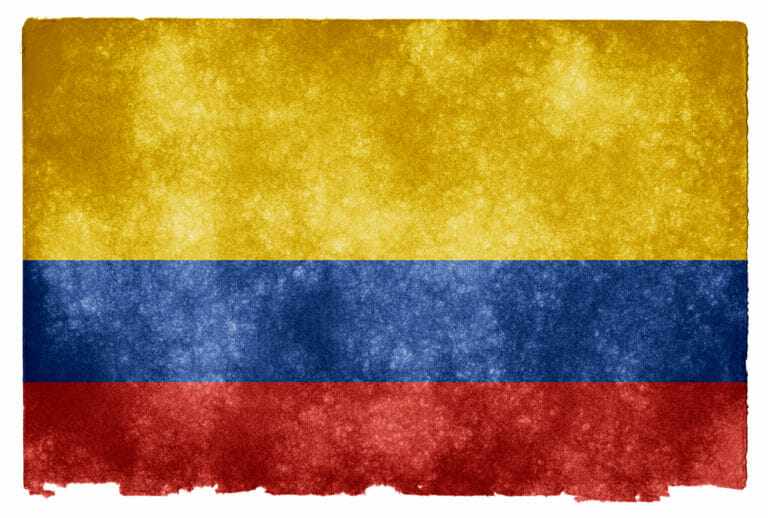
Colombia’s Presidential Candidate Gustavo Petro Suggested Following El Salvador’s Footsteps to Mine Bitcoin

In a tweet, the Colombian presidential candidate hinted that mining Bitcoin could help tackle the country’s cocaine crisis.

The senator and presidential candidate of Colombia, Gustavo Petro, suggested in a tweet that the South American country should follow in the footsteps of El Salvador to mine Bitcoin.

Petro proposed that the nation could tackle the hydroelectric energy generated by the rivers of the western mountain range. This tackle would serve to extract the flagship cryptocurrency.

The politician also explained that Bitcoin mining could also be the best alternative to face the cocaine crisis that the Colombian region has been experiencing.

The comment of the Colombian economist, who is a current candidate for the 2022 presidential elections, came after the start-up of crypto mining operations in El Salvador powered by geothermal energy from volcanoes.

Mining Bitcoins Could be an Option for Colombia

The Central American nation launched its plan on Wednesday of last week. Its primary intention is to carry out a Bitcoin mining operation with energy from volcanoes.

Salvadoran President Nayib Bukele, who had already advanced the plans in June, revealed a video on Twitter when they were carrying out the installation of the mining machines.

Then, at the end of the week, the president highlighted the extraction of the first bitcoins with volcanic energy.

The leader said in a tweet that his team is still testing and installing, but this is officially the Volcano’s first Bitcoin mining. The president also expressed that they would begin complete operations for their new bitcoin mining revenue stream.

Even though the Bitcoin adoption project encouraged by Bukele has received a lot of criticism, the Colombian candidate seems to acknowledge the potential of said cryptocurrency.

While Petro did not show a formal proposal, he hinted that he is not against digital currency. Specifically to the extraction of Bitcoin as an alternative to diversify the country’s income in the face of the economic problems linked to the cocaine market.

El Salvador became the first nation in the world to convert Bitcoin into legal tender after the president presented a proposal in June. The country’s Assembly approved the legislation, which took effect in early September, shortly after the president’s first announcement.

The launch of the Bitcoin mining plan in El Salvador with volcanic energy arrives amid the discussion about the high consumption of carbon energy.

Crypto industry leaders, including billionaire Elon Musk, have been encouraging the mining of Bitcoin with clean energies, such as hydroelectric power.  Hydroelectric power is a source that is already used by many miners worldwide.

Petro is Not Against Bitcoin

The Colombian politician Gustavo Petro has mentioned digital currencies on his Twitter channel before. According to  Panam Post, the current senator from Colombia had already shared a position in favor of Bitcoin in 2017.  He admitted that Bitcoin could take power away from the state.

By: Jenson Nuñez

Pandora Papers Revealed How Politicians Evade Taxes

At least 330 politicians got involved in one of the biggest financial scandals of 2021. A prominent owner of bitcoins also made an appearance in the Pandora Papers.

According to different government authorities, Bitcoin is a financial tool that supposedly paves the way for money laundering and tax evasion.

However, while resources and time get wasted in attacking the cryptocurrency market, politicians and relevant figures of the world take advantage of the loopholes of the traditional financial system to evade taxes.

This conclusion is now evident due to a journalistic investigation recently revealed as Pandora Papers, which has shaken the world of politics, entertainment, and even sports.

The International Consortium of Investigative Journalists (ICIJ) carried out the investigation. It revealed a series of articles published yesterday highlighting the action of more than 300 politicians and public officials. These public officials raised companies and properties in tax havens.

The involved persons keep part of their finances secret abroad through a commercial figure known as an off-shore company. This practice is not illegal because it is the sole creation and registration of companies in nations where these involved persons do not own a business.

A person may decide to distribute his wealth in different nations to avoid the total theft of his capital. However, some individuals use this legal figure to set themselves up in tax havens, evade taxes, or even do money laundering.

According to the journalists behind the Pandora Papers investigation, some people acquired more than 11.9 million financial records from the most influential people in the world for at least two years.

The World Elite Creates Fake Companies

The data arrived from 14 off-shore service providers (off-shores) based in regions such as Belize, Panama, and the British Isles. The documents also pointed out that the world elite used these services to close deals outside their countries and create fictitious companies.

Many national leaders are part of these practices, including three Latin American presidents and several former presidents.

In addition, 130 billionaires worldwide, including 46 Russian oligarchs, bankers, terrorism funders, pop stars, and even athletes got splattered by the scandal.

The documents covered at least five decades of business and commercial operations of these individuals. Many accounts got created between 1996 and 2020.

Which Politicians and Celebrity Stars are on the Pandora Papers

Although the more than 11 million business records have not yet come to public light, thanks to Pandora Papers, several world-class personalities would be enjoying the minimum tax rates of tax havens.

Among those personalities mentioned is the president of Russia, Vladimir Putin, whose executive train recently classified his presence in this scandal as nonsense accusations.

King Abdullah II of Jordan also made an appearance in the Pandora Papers. He mobilized more than $ 100 million to consolidate a UK real estate empire.

The Prime Minister of the Czech Republic, Andrej Babis, and the President of Kenya, Uhuru Kenyatta, and his family are also other international leaders whose business records are part of the investigation.

By: Jenson Nuñez

Central Bank of Uruguay Would Launch a proposal to Regulate Cryptocurrencies by the End of 2021

The Central Bank of Uruguay would dedicate this last quarter of the year to creating the proposal to regulate cryptocurrencies. The entity would talk with actors and companies in the sector while reviewing the experiences of other international regulatory bodies addressing these issues.

The Central Bank of Uruguay (BCU), the state entity that regulates and establishes the provisions applicable to money in the South American country, revealed the creation of a work plan for a possible regulation that includes Bitcoin, the first digital currencies, and companies that offer services associated with these assets.

This news came from the Central Bank of Uruguay in a statement published on October 1. Various steps got contemplated in its agenda concerning digital currencies in the nation.

The Central Bank of Uruguay will Prepare a Regulatory proposal

One of the BCU’s plans is to show a regulatory proposal before the end of 2021 to express some changes to the legal frameworks currently in force applicable to digital currencies. Another plan is the study of the commercial and operational features of these assets to present laws that best fit this environment.

According to the BCU, this process will go in parallel with vital representatives and companies of the industry to pay attention to the sector’s needs. But this process will take effect without losing sight of the intentions that other regulatory entities and international organizations have had regarding this subject before.

The bank already has a team to monitor these assets from an interdisciplinary perspective. This move allowed the development of a conceptual framework that adds the different activities related to digital currencies.

There is a Lot of Work to do these Upcoming Months

BCU would get ready these last three months of the year to adjust everything and start working hard on this regulatory proposal. Once this proposal gets ready, it would also go to the regulators to receive their consideration.

The BCU will also apply some activities from 2022 that will take part in a highly detailed roadmap. These activities would aim at advancing the institutional definitions that cover this subject.

A Regional Overview

The announcement by the Central Bank of Uruguay comes when the region begins to take digital currencies much more seriously, seeking to streamline regulatory activities to address the commercial and operational considerations of said assets effectively.

For analysts, the interest came after the actions encouraged by the government of El Salvador, which made Bitcoin an official currency as of September 7 once the legislative measure that made this possible came into force.

Despite the criticism and operational struggles, some reports reflect that there is interest on the part of residents in the digital currency.

Deputies and assembly members in the surrounding countries have tried to push regulatory proposals to the use and inclusion of cryptocurrencies into the regional market.

By: Jenson Nuñez