Engineers Earn Over €4 Million through Cutting-Edge Use of Bitcoin Mining

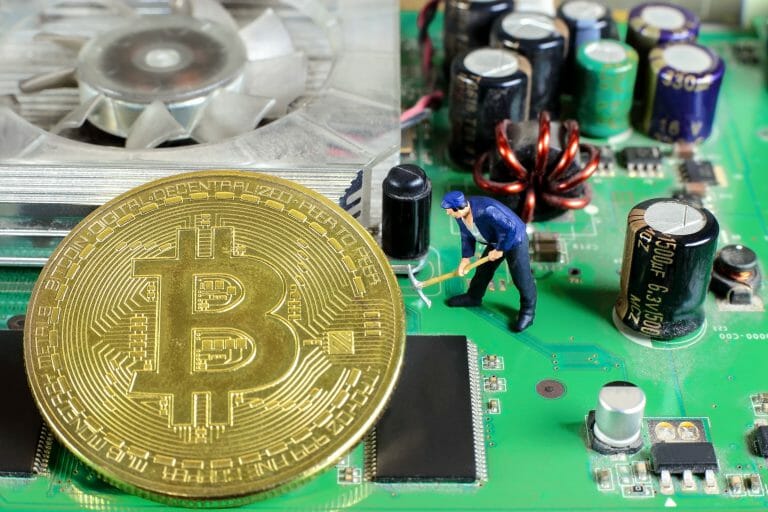
Brent Whitehead and Matt Lohstroh, two University of Texas alumni, are building their fortunes by mining Bitcoin (BTC) from oil drilling flue gas, previously considered a waste with a huge environmental impact.

When Brent Whitehead and Matt Lohstroh were sophomores at a University of Texas, they decided to get into the business of mining Bitcoin in the eastern oil fields of the state. Back in 2019, people considered the idea of ​​oil and gas companies joining forces with Bitcoin miners as cutting-edge.

Whitehead is an engineer who comes from a family with a long history in oil and gas production, while Lohstroh, is a finance student with a passion for Bitcoin. They decided to use all the money they had saved at Giga Energy Solutions, a company that mints Bitcoin from stranded natural gas.

For years, oil and gas companies have wrestled with the problem of what to do when they accidentally collide with a natural gas formation while drilling for oil. While the companies can easily truck the oil to a remote destination, gas supplies require a pipeline. If a perforation is right next to a gas pipeline, the gas pours through it, and the money that the buyer on the other side is willing to pay that day is accepted. However, if it is within 30 kilometers of a pipeline, drillers often burn it.

Gas is the Key Element

Unlike gas which is commonly referenced in the crypto world, (e.g. the price of gas on Ethereum), these entrepreneurs work with physical gas, which comes naturally from the geophysical characteristics of the earth, and oil companies extract it by drilling. This case usually occurs accidentally, since this gas does not bring greater benefit to the oil companies due to its expansion; not to mention its high environmental impact. In other words, the modification of gas reserves reports economic and environmental losses. It is here that this pair of entrepreneurs came up with a solution to both problems, with the help of the Bitcoin ecosystem.

Whitehead and Lohstroh’s Solution

Using the resources of Giga, the engineers have designed a transfer container in an oil well, which diverts natural gas to electric generators, responsible for converting the gas into electricity, used then as a source to feed energy to thousands of Bitcoin miners. The process reduces CO2 equivalent emissions by approximately 63%, as compared to burning gas, a traditional mechanism prior to innovation. This is according to the results of the research reported by Crusoe Energy Systems, based in Denver.

Shortly after learning about its success, Whitehead decided to give some statements to the CNBC medium regarding the factors that most motivated the design and implementation of his idea: “As I was growing up, I kept seeing flare-ups, just being in the oil and gas industry. It made me know how wasteful it was.”

Agreements with other Companies

Whitehead stated that they have signed agreements with more than 20 oil and gas companies. Giga also says that they are also in talks with sovereign wealth funds and that their opportunities are expanding rapidly. The entrepreneurial duo is part of a growing movement of people making big bets on the potential of Bitcoin mining to transform the economics of the energy industry. In addition, Giga executives strongly believe in the power of Bitcoin to create a kind of financial freedom.

Opinions external to the company have also been positive. According to Lee Bratcher, president of the Texas Blockchain Council, “they are generating revenue for their customers through Bitcoin mining, with energy that was previously wasted, while also solving the environmental challenge caused by flared gas.”

In most cases, if a gas well is not already near a pipeline, it will not be large enough to justify the time and expense of building an entirely new line. With this, Bitcoin makes it economically sustainable for oil and gas companies to burn their methane, rather than burn it externally.

By Audy Castaneda

BlockFi Arranged an Agreement with the SEC: Accounts that Acquire an Interest Valued in Bitcoin are still Enabled

BlockFi is registering a new item that will work for users to receive interest but will be under regulation. Accounts capable of receiving interest valued in bitcoin get classified by the SEC as securities.

An agreement reached with SEC will allow the accounts opened in BlockF to receive interest valued in bitcoin. The information got revealed by the CEO of BlockFi, Zac Prince, who highlighted in a Twitter thread that already existing clients of the BIA or BlockFi interest account would achieve interests as usual.

On the other hand, the agreement sets up that, as of February 14, 2022, citizens residing in the United States of America will not be able to include new funds in their accounts or open new BIAs. In this way, the resolution will not be helpful to clients outside that nation and only works with BIA accounts.

Prince explained that the company has just begun a registration procedure with the SEC for a new item, called BlockFi Yield, which will be a substitute for the current BIA of the US users. The strategy is that once the registration gets ready to go, the BIA accounts will get exchanged for BlockFi Yield unless a client desires otherwise.

Once the strategy reaches its approval, new advanced payments and customer registrations in the US will operate through BlockFi Yield. Therefore, these new accounts would bring a service that will share similarities with the one in the BIA; they will allow receiving interests based on Bitcoin, but it would only work as an item regulated by the SEC.

BlockFi Gives at Least $100 Million to the SEC

The news appeared last weekend, highlighting that BlockFi would give the SEC at least a $100 million fine for carrying out activities with the BIA profiles. Although this information did not appear in the statement, the SEC assured the current situation on Monday. The agency highlights that the network counts on at least 60 days to get businesses to adjust to the Investment Company Act of 1940.

Gurbir S. Grewal stated that cryptocurrency lending platforms bringing securities like BlockFi’s BIAs should learn everything they need about the rules and adjust their policies to federal securities laws.

BlockFi operations faced a prohibition status in at least four US states, the SEC stated that the accounts that generate interest valued in bitcoin can get classified as securities and the firm does not have the required permission to bring these types of features.

This interpretation arrived due to the interest rate that users could receive by depositing assets on the network. By considering these profiles as securities, the state governments assure that it is an activity that must receive the required approval and get regulated by the authorized entity.

In its recent news, BlockFi assures that BIAs did not get registered at the Securities Act and might not get offered in a region like the United States of America to US persons.

BIAs does not have the permission required to get offered as a bringer of benefits to a regular citizen residing in the United States of America or in any region in which such proposal got prohibited.

By: Jenson Nuñez

The European Union is Moving Towards Its own Cryptocurrency, a Digital Euro, Despite Certain Associated Risks

The popularity of cryptocurrencies and the growing interest from traditional banks and institutions have set off alarm bells at central banks, which are working to create these digital versions of their own currencies.

The European Commission is working on the idea of ​​regulating a digital euro that arrives by early 2023, although this year the development of the first prototype of this cryptocurrency should begin. Having a digital euro seems clearly relevant for the Eurozone and the European Central Bank (ECB), which carries out internal tests. That cryptocurrency could hit the market in 2025 and would compete with China’s official cryptocurrency and the one under development in the United States.

Christine Lagarde, director of the European Central Bank announced in July 2021 that 80 central banks were interested in creating virtual currencies. Now the European Commission is preparing the legislation that will affect the digital euro. If they fulfill these plans, this regulation will be ready by the beginning of 2023 to start work on the prototype at the end of that same year. The legislation will have to go through a negotiation process with all the member states of the European Union.

Doubts about whether it could destabilize the European financial system

The EU is planning to launch a public consultation process in a few weeks that will seek to confirm, for example, how European citizens would use the digital euro. Mairead McGuinness, the EU’s chief financial officer, announced those plans Wednesday at a conference.

After the public consultation, the EU will make an assessment of the impact that this digital euro could have on a potential destabilization of the financial system. The digital euro could considerably alter the role of conventional commercial banks: they would lose their leading role, causing a possible decrease in liquidity if people trade their money to this digital currency regulated and managed by the ECB.

There are central banks that want to prevent the cryptocurrency boom from becoming a threat to their official currencies. That digital euro “would complement the cash, it does not come to replace it,” they explained at the ECB.

The digital euro would be the answer to the appeal of cryptocurrencies such as Bitcoin or Ethereum, which people rarely use for daily trading operations, but have derivative or alternative cryptocurrencies that seek to become protagonists in these areas.

Although it is the Governing Council of the ECB that has the last word on the need for a digital euro, policymakers at the Commission and across Europe are convinced, according to Politico.

Last year, Germany and France urged the ECB to speed up the process, fearing the Eurozone would be behind. It is worth remembering that the People’s Bank of China began its journey towards a digital Yuan in 2014. The Indian Ministry of Finance, likewise, has committed to having a virtual version of the rupee by the end of this year.

Eurogroup President Paschal Donohoe has also included the digital euro on his political agenda for finance ministers to discuss.

How different the digital euro is in comparison to other cryptocurrencies

The digital euro will allow families and companies to deal directly with this currency, by using an account opened at the ECB, which is currently reserved for commercial banks.

There will be the protection of that money from all risk of loss, a strong argument at a time when the deposit guarantee project in Europe is stalled.

Moreover, the ECB promises fast, easy, and secure use when paying in a supermarket or online through a mobile phone application, for example.

According to the AFP agency, the goal will be “to persuade consumers to switch to a new means of payment that does not differ much from the existing ones in terms of treatment “and range of services,” said Heike Mai, an economist at Deutsche Bank.

“Consumer payment habits will not change with the launch of the digital euro,” predicted Guido Zimmermann, an analyst at LBBW. However, the system could evolve in a few years, when the number and forms of digital currencies have increased, he said.

The risks of a digital euro

The ECB must seriously consider the concerns of Europeans about the risks to the protection of their privacy, a priority that emerged from a recent consultation of the institution.

Data must be more protected with the digital euro than with the equivalents proposed by private borrowers, says the ECB.

The main risk is the flight of savers towards this new form of currency, which makes it possible to avoid the rates of a classic deposit account, which could weaken banks in the euro area.

For this reason, the ECB is studying taxing currency deposits above a certain amount, for example, 3,000 euros, said Fabio Panetta, a member of the ECB’s board of directors, in an interview with the Financial Times.

In addition, there is no intention to widen the existing digital gap within societies. “We are going to continue to issue cash,” Panetta said.

By Audy Castaneda

Venezuela Comes out of Hyperinflation, what would happen with Bitcoin now?

Economists believe that an unstable period of regulations will come. Investment and savings aside, bitcoin counts on other features that might result attractive for Venezuelans.

With at least five months suffering sub-double-digit monthly inflation, it seems that the worst is reaching an end for the Venezuelan economy. The South American nation appears to have left hyperinflation behind.

That situation lasted for at least three years and was the main cause of the emergence of bitcoin (BTC) as a form of protection among Venezuelans. The economic crisis made many Venezuelans migrate to other nations searching for better salaries because the Bolivar is too devalued.

Various Bitcoin and tech enthusiasts believe that the recovery of the Venezuelan economy does affect the adoption of bitcoin. The currency will still have strength, but it does present a slight decay in its importance, especially regarding the level of dollarization that the transactional economy approached recently.

According to these Bitcoiners, these influences grow so fast that people have now seen how bitcoin decayed and stopped being a rail as it was at the time. In previous years bitcoin had approached solid positions in the foreign exchange market through networks like LocalBitcoins or Binance.

Dollarized digital options grow steadily fast, and this growth started to be visible on the street in the form of stable coins, synthetic dollars, pseudo dollars, crypto dollars.

All these new options have caused the creation of an extension of the offer to access the dollar in the routine life of Venezuelans. One could say that this situation would find a balance at Bitcoin market share, but the market demand is now targeting the dollar.

Bitcoin and its Role as an Investment While Facing Dollar Inflation

Venezuela managed to reach a balance in economic terms due to increasing demand and circulation of dollars, both in its traditional form (cash, accounts abroad) and its digital alternatives (Zelle, PayPal ).

On the other hand, these adoptions reduce the requirement of bitcoin as a foreign exchange intermediary. But cryptocurrency is still an interesting investment tool. Daniel Arraez recalled it is an asset that would always have value.

In various nations, inflation is running above the central bank’s target range, so relaxing prices get tied to the policy credibility in zones with institutions that seem to be too fragile. Some analysts say rising interest rates will preserve the recovery by securing inflation expectations, shoring up credibility, and offsetting what some investors feel is the excessive reaction.

Wall Street is always a critical point for a region like Latin America, where sovereign bonds and currencies can suddenly jump at the first advise of political turmoil that could shake American economic policy.

By: Jenson Nuñez

Digital Ruble Trial Goes Live as Bank of Russia Insists on Bitcoin Ban

Russia is preparing digital rubles, while rumors say that several banks in Russia have tested transactions using the digital currency. The Central Bank of Russia is preparing to expand this digital transaction in rubles.

Russia is following in the footsteps of China, which launched the Digital Yuan last year. Despite its recent ban on cryptocurrencies, Russia says it will not act as a crypto miner as China does.

The Central Bank of Russia (CBR) completed a prototype of the digital ruble platform Bitcoin.com in December and is now beginning to experiment with transactions. There are 12 banks invited to join in the pilot phase of the project. Monetary authorities are gradually expanding the scope of participants to include providers of financial services and other types of transactions.

Currently, most Russian banks are preparing to test a new central bank digital currency (CBDC), according to Tass, the Russian News Agency. One of them, Promsvyazbank (PSB), is currently processing C2C payments, Maxim Khrustalev, adviser to the bank’s deputy chairperson, reported.

Three banks out of the 12 financial institutions that are part of the digital ruble pilot group have already integrated the CBDC platform, and two of them have completed a “full cycle of digital ruble transfers between clients using mobile banking applications,” the bank said. .

In the first phase of testing, users will open their wallets on the digital ruble platform via a mobile app, converting non-cash fiat money into CBDC and transacting using the latter tokens.

In the second stage, the bank plans to test the digital ruble as a payment for goods and services, as well as other possible implementations related to smart contracts and interaction with the Federal Treasury. In the future, the central bank also plans to introduce digital ruble payments in offline mode and provide the opportunity for transactions by non-resident customers, the announcement said.

Other banks participating in the first phase of the trial are Ak Bars, Alfa-Bank, Dom.rf Bank, Gazprombank, Rosbank, Sberbank, Soyuz Bank, and Transcapitalbank. The Federal Treasury, together with financial intermediaries, will join the second phase when conducting transactions between individuals and corporate entities, including consumer-to-business (С2B), business-to-business (B2B), and business-to-government (B2G).

For and against stakeholders’ views

There are supporters and opponents to this initiative. On the one hand, Olga Skorobogatova, first deputy governor of the Bank of Russia, declared that the digital ruble is a “new opportunity for citizens, businesses, and the state,” adding that such transactions will be free and available in any region of the country.

The Bank of Russia also noted that the digital ruble would be unique in that it will be accessible through a “mobile application of any bank serving the customer.”

The announcement by the Bank of Russia comes amid local reports claiming that it has officially opposed the concept of crypto regulation introduced by the Ministry of Finance on February 8 this year.

According to Vitaly Kopysov, Director of Innovation at SKB-Bank, the digital ruble will be a driver for the development of new national payment services for citizens and businesses. Speaking with Tass, he explained, “The digital ruble will provide an additional boost to the creation of offline cashless payment services for businesses without Internet access at the point of sale, which is very important given the geography of the Russian Federation.”

The digital ruble, on the other hand, has its detractors. In a press conference on Friday, Bank of Russia Governor Elvira Nabiullina stated that the authority would continue to fight the adoption of crypto in Russia by all means, saying, “We will spare no effort to convince the government and deepen our arguments because we see significant risks. I am counting on common sense here.”

By Audy Castaneda

The Performance of BTC Allows for Accurate Predictions about the Price of Cryptocurrencies

Various metrics and indicators such as the reduction in BTC reserves on exchanges show long-term bullish signs. If the price breaks through the resistance at USD 43,000, there could be an increase in selling in the short term.

A bearish tendency has fueled short-term fear sentiment, replacing volatility in the cryptocurrency market. That factor played a significant role in making this weekly forecast.

BTC is currently trading at around USD 44,232 and has accumulated a 3.9% gain in the last 24 hours. Its trading volume is above USD 20.50 billion, and its market capitalization is about USD 838.60 billion, according to CoinGecko.

The price of most cryptocurrencies follows that slightly bearish trend. ETH, BNB, ADA, and SOL have accumulated losses of between 1% and 13% in the last week.

The cooling of the cryptocurrency rally may put recent gains at risk. Unless the bulls come back with force, the bears would again drive prices lower in the coming days.

Various long-term metrics and indicators have shown bullish signs for the price of cryptocurrencies. That information includes the decline in BTC reserves on exchanges, the increase in the reserves of stablecoins, the hash rate, and the mining activity.

However, the lack of determination of buyers and the taking of profits by the whales create high uncertainty in the short term.

The Behavior of BTC Helps Predict the Prices in the Crypto Market

Undoubtedly, the behavior of the price of Bitcoin considerably influences the general trend of the cryptocurrency market. For that reason, it is convenient to conduct a weekly review based on an analysis of the pioneering cryptocurrency.

The BTC/USDT weekly chart shows the selling pressure has wrapped up almost all of the gains in the last week. The attempt of the price to break through the resistance at USD 43,000 could lead to increased sales in the short term.

The most bullish thing that could happen would be significant buying pressure above USD 40,000. That would create a possible inverted Shoulder Head Shoulder pattern to make way for a trend reversal.

If the opposite happens, there could be a further drop towards the USD 35,000 level. In that case, the price would touch the current most significant support zone, which extends to USD 30,000.

A breakout of the area around USD 30,000 would signal confirmation of potential crypto winter. However, fundamentals indicate that such a scenario is not very likely.

Crucial Levels in the Price of Cryptocurrencies in the Short Term

The daily BTC chart allows for a more accurate weekly forecast, as it serves to confirm where the next relevant movement will be.

The 8-day EMA and 18-day SMA confirm that the short-term trend has remained bullish.

Currently, there is a pullback after the strong rally to the upside, and sellers are yet to show any signs of exhaustion.

The closest support on the chart is at USD 41,200, an excellent point to resume the trend. If the price of BTC lost that level, the bullish intention in the short term would be at risk, causing a further drop to USD 35,000.

A bit of volatility could lead to USD 40,000, but buyers could remain confident about a bullish scenario.

As the price broke through the immediate resistance at USD 44,500, it is clear that the bulls have regained control. Therefore, a rally to USD 50,000 is possible.

By Alexander Salazar