
Decentralized Finance: The Best Ways to Participate and Operate

Breaking down the concept of DeFi and its ecosystem, as well as the strategies and risks for private and professional investors planning to allocate capital to the decentralized space.

Decentralized finance (DeFi) is a concept that has received a lot of attention since the so-called DeFi Summer of 2020 because its use, often measured in total value locked (TVL), has increased dramatically since then. In the last year alone, TVL increased by more than 240% to reach the current $209 billion in “value locked” within DeFi projects, according to DefiLlama. It has not only become interesting for investors to enter promising DeFi projects through their tokens (in the hope of gaining capital gains), but also to use these platforms to generate regular and constant income through various activities. Moreover, it has been even more attractive in bear markets.

How can you make money with DeFi?

In simple terms, you can invest in the DeFi projects/protocols by buying the respective tokens like SushiSwap (SUSHI), Aave (AAVE), or Maker (MKR) expecting capital gains through price increase based on superior platform offering, growth of users, and assets. Alternatively, you can use these platforms as a “trader” and generate income from the various activities available.

You can also have your cake and eat it too, by buying into high conviction projects and earning some extra income through some of the activities listed below:

Staking. With staking, you gain rewards for participating in the consensus mechanism process, or decision-making process, of a Blockchain using your staked tokens like Tezos (XTZ), Polkadot (DOT), or ETH, becoming a de facto stakeholder network validator. This is a proof-of-stake mechanism used by Blockchains like Tezos, Polkadot, and soon, Ethereum 2.0 to secure transactions and the network. With the rise of tokens being staked and therefore “locked”, new concepts have emerged such as “liquid staking”, which basically creates a derivative of the staked token, which then becomes “liquid” again and can be redeploy while earning staking rewards.

Loan. Instead of receiving a loan from the bank, you can obtain it from a DeFi protocol, by having other investors put up the funds or, in essence, a peer-to-peer loan. In exchange, investors receive part of the interest on the loan as a return. Keep in mind that when you, for example, hold shares in your bank, they are most likely lending those shares, for which you are paying a deposit fee, to some financial institution such as a hedge fund, also in return for a commission, which can then be used for short selling and other leveraged trades. Obviously, you do not see any of that money.

Liquidity provision. When you buy and sell shares on a traditional exchange, financial institutions act as intermediaries in coordinating the operations, in addition to providing liquidity through shares or cash. In the world of digital assets, automated market makers (AMMs), which function as decentralized exchanges with automated code, have disrupted these activities. Other investors, who will receive income in the form of commissions generated by these liquidity pools, provide the missing liquidity. The pools consist of a variety of trading pairs such as crypto vs. crypto like BTC/ETH, crypto vs. stablecoins like DOT/Tether (USDT), or stablecoins vs. stablecoins like USDC/Terra (UST).

Yield farming. Imagine that you have lent money to a liquidity fund, such as SushiSwap, and have started receiving your first SUSHI rewards. You do not want them to stay there. You could put them to work again through one of the various opportunities and rack up more rewards. In short, yield farming is the activity of constantly putting your tokens to work – money does not sleep, but it goes chasing higher, compounded returns through protocols, pools, and others.

To conclude, if you are new to this field, start with a little play money, testing, and learning as you go. Alternatively, if you want to get involved but not deal with the hassle, you can also invest in professional managers who design, execute and monitor these strategies in an institutional environment. However, you should use the same nuanced evaluation approach provided above in your due diligence process to select a manager.

By Audy Castaneda
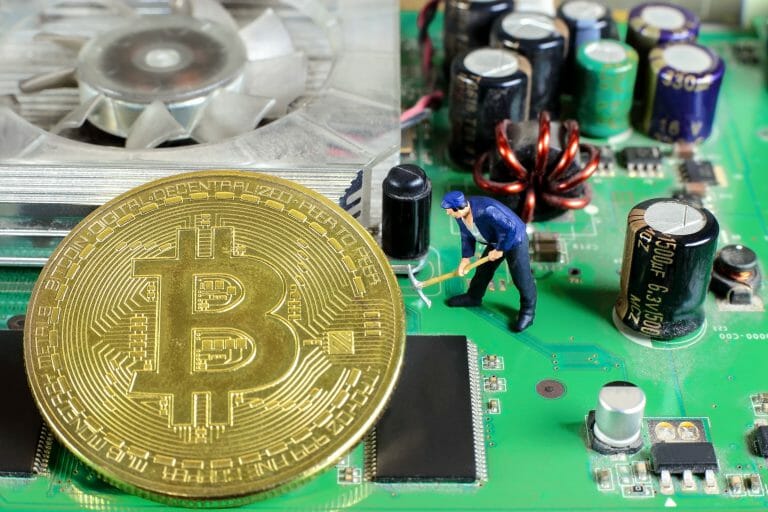
Lucky Miner Achieved to Solve an Entire Block of the Bitcoin Blockchain and won a Huge Award in BTC

0

Despite the slim chances, these situations are still happening in the Crypto environment.

Although this situation has happened in the past on three other occasions, it is pretty surreal to see a single miner getting to solve an entire block on the Bitcoin network. The first day of February 2022 happened for the fourth time in a short time.

Currently, the prize intended for miners who get to solve the required math issue amounts to 6.25 BTC, which has a value registered at $240,000. Individual mining is not so easy, but it can undoubtedly bring a huge benefit in the form of well-deserved bitcoins that go as a prize for those who achieve a new block that will get included in the blockchain.

Considering how extensive the bitcoin network is, a single miner is simply a tiny piece of the computational power of the web, and the chances of achieving the 6.25 BTC reward get exponentially minimal.

This activity requires many devices to compete as equals with the hash rate of the mining pools worldwide and therefore, the chances of an individual miner solving a block on their own are minimal.

According to a software engineer with a vast experience in bitcoin pools, the chances of solving the block are less than 20%. The lucky miner works through Solo CKPool, a service that offers anonymous bitcoin mining for a fee and has at least 1.14 PH/s of computing power. While this miner is considered a whale to be an individual and not a group of miners, the feat is still curious.

To better understand ​​the computing power of this user, 1.14 PH/s appears to be a remarkable power. Still, it is less than a room full of S19 Antminer, so it got presumed that a single machine could solve that block, making the event even more unlikely as few as 264 or the equivalent of 0.037% have been resolved by CK solo Bitcoin miners.

Despite the low probability, mining Bitcoin is an operation that usually has beautiful moments, and each year, individual miners and entities explore this financial activity with improved devices.

Miners with low processing power join a pool or mining groups to offer their hash rate in exchange for the profits that this activity could collect. By adding computing power collectively, the participants split the prizes according to the hash rate.

Cryptocurrency mining relies on how complex mathematical problems get solved to enable transactional operations on a blockchain and generate new currencies.

By: Jenson Nuñez

BTC Could Drop to $30,000 in 2 Weeks, Trader Warns, as Gold Goes for $2,000 Peak

The precious metal is stealing the spotlight as Bitcoin languishes below $40,000 after the Easter weekend.

Bitcoin (BTC) and most major altcoins have been relatively quiet over the holiday period since Good Friday. This suggests that cryptocurrency traders are not initiating big bets during the period that US stock markets are closed. The reason could be the close correlation between the price of Bitcoin and the S&P 500, as well as the uncertainty about the behavior of the stock market in the coming week.

While some analysts expect short-term weakness, others believe the Bitcoin price could be in a consolidation phase, with much of its four-year halving rally yet to come. Josh Olszewicz, head of research at alternative asset management firm Valkyrie, said that, “it’s interesting. Maybe we never capped the blowout…because it hasn’t happened yet.”

Bitcoin (BTC) is nearing a relief bounce but is still at risk of falling as low as $30,000 before May, a new analysis warned on April 18.

Data from Cointelegraph Markets Pro and TradingView showed the BTC/USD pair hovering around $39,000 on April 18, as bearish forecasts for the pair increased.

After losing support at $40,000 overnight on April 18, Bitcoin faced tight liquidity in the absence of US and European stock trading, thanks to the Easter weekend.

The Drop to $30,000 is April’s “Risk”

For popular Crypto Ed trader, a short-term pullback should bottom at $37,500 before a bounce occurs.

“First we have to get back to $40,000, if we do that it will certainly give the market a bullish push,” he said in his latest YouTube update.

Should that happen, the $43,000 level could be the local high, but going forward, the picture looks bleak. Using Elliott Wave analysis, Crypto Ed predicted a repeat of recent moves lower interspersed with a brief relief bounce. The target, he concluded, was $30,000.

“That’s the risk for the next, say, two weeks,” he added.

The popular Bitcoin Jack Twitter account also called for the coming weeks to be a time of reckoning for long-term price action: “Room for a squeeze up but then heading to the monthly level below in due time is where my thinking is at. Guessing early May to decide major trend into summer time.”

As Cointelegraph previously reported, $30,000 as a target for May or June is nothing new.

Gold Strikes Out as Cryptocurrency Correlation Declines

Even though Bitcoin is under pressure, there was no sense of pain for the safe haven of gold on April 18.

After rallying for the entire past week, the XAU/USD pair approached the $2,000 mark again, approaching the $2 resistance level before pulling back around $1,990.

However, the pair traded at its highest level since March 11, turning its back on the US dollar’s own strength.

“A 50-day correlation coefficient for Bitcoin and gold is around minus 0.4, the lowest since 2018,” noted journalist Colin Wu on the implications of divergent price behavior for gold and Bitcoin.

“For now, Bitcoin remains closely correlated to the Nasdaq 100 Index. The Nasdaq 100 is down around 15% this year, while Bitcoin has shed 16%.”

By Audy Castaneda

Pro-Ukrainians Leaked Private Data from Conti Hacking Group, Organization Operating from Russia

The Conti group became famous in 2021 and 2022 for ransomware attacks. The division funded by the ongoing warfare led to pro-Ukrainian people leaking confidential reports about the criminal team, just after the latter openly highlighted its Sympathy for Russia.

The armed conflict encouraged by Russia in Ukrainian territory has undoubtedly created a visible division among many citizens and entities since. At the same time, a large part condemns the actions led by the Soviet nation; other citizens back up the incursion and even support the geopolitical reasons behind it.

These differences led to one of the most prolific hacker teams that appeared in 2021, called Conti, recently suffering a series of leaks that unveiled many aspects of its anonymity and its criminal behavior.

Various revealed reports detail the actual size of the entity, information about its leaders, business activities they lead, and the source code of the ransomware implemented to attack their victims.

The information got revealed by the CNBC news agency. The cybersecurity researcher for Cyberint, Shmuel Gijon, highlighted that the viral reports got unveiled as an act of revenge against Conti since the group made public its sympathy for the Russian invasion of Ukrainian territory. This situation made them aware and received many criticisms regarding their operations.

Detailing the events, Gihon expressed that the leaks appeared precisely four days after Russia’s invasion of Ukraine started to unfold. An anonymous person opened an anonymous account on Twitter and began to reveal thousands of internal messages from the group, in which they detailed a lot of crucial data.

The leaks came along with statements favoring the Ukrainian side and ended on March 30 with a powerful and decisive message.

How Significant was the Leakage?

About the size of the leak, Gihon highlighted in the interview conducted by CNBC that the impact this had on the Conti group was appalling. In recent weeks, the reports have had many investigative agencies operating inquiries, carefully studying all the documentation leaked by the anonymous account.

Both Cyberint and other agencies agree that Conti operated and was organized similarly to a technology company like any other company since they had precise management functions, financial reports, and even a section dedicated to human resources. The organization has a specific hierarchy and establishes that leaders manage teams, who must report achievements and progress to the upper echelons that direct the organization.

Other details highlight that Conti has physical headquarters based in Russia. Given these details, the Moscow authorities denied that the state had taken part in cyberattacks.

Gihon stressed that although the leak has been vast. Its operations got harmed, it does not rule out that Conti will continue to work at least partially and that if forceful actions do not get achieved against the criminal organization, they will most likely recover their strength after what happened and counter strike with much more force than before.

By: Jenson Nuñez

An NGO Considers the Regulation on Cryptocurrencies by the SEC Would Be Unconstitutional

The new regulation would demand those trading on exchanges to register, which is against the nature of those decentralized platforms. The bill has not yet become official but has already led to rejection and public explanations.

Non-profit organization Coin Center, which focuses on analyzing cryptocurrency regulations, commented on the new amendment by the US Securities and Exchange Commission (SEC).  They stated that it includes sensitive changes hidden by complex language that make it unconstitutional.

Through a letter, Coin Center presented its position on a bill by the SEC to modify the regulation on the Alternative Markets System. That organization questions how they define the term exchanges, the platforms where people can trade crypto assets.

The new SEC bill violates the First Amendment of the US Constitution, which protects the right to free expression and meeting. It demands a registration obligation for using cryptocurrency exchanges, according to Coin Center.

The conceptual trap that Coin Center observed in the bill is the change in the definition of an exchange. It replaces the concepts of gathering orders and using methods with those of bringing together buyers and sellers and providing communication protocols.

Coin Center considers that the SEC does it covertly, appealing to legal technicalities based on legal background. In addition, the former said that the Supreme Court of Justice would rule against the new regulation as soon as the government agency introduced it.

The letter sent by Coin Center also highlights that the terms cryptocurrencies and decentralized finance do not appear in the SEC bill.

The definition proposed by the SEC would affect developers or distributors of decentralized exchange (DEX) software if they did not register. Those platforms precisely operate without intermediaries and do not require their users to provide personal data.

The SEC May Not Have Changed Its Position on Cryptocurrencies

In early 2022, the SEC seemed to be more permissive toward cryptocurrencies after Gary Gensler became its Chair. That was evident in the lower number of legal actions against cryptocurrency projects compared to previous years.

However, the amendment to the current regulation could mean the SEC is taking a step in the opposite direction. If they introduced the bill questioned, it could be an attempt to adjust the current regulation on cryptocurrencies.

Decentralized Exchanges Provide Users with More Privacy

Decentralized exchanges often fall into the decentralized finance (DeFi) category, as they connect users directly, without intermediaries.

That allows them to trade on them directly, without registering or providing personal data, from their wallets.

While traditional/centralized exchanges (CEX) subject their users to the determinations of the companies controlling them, DEXs provide users with more privacy. They use multi-signature transactions and smart contracts, among other methods, to offer security when operating.

Since cryptocurrency regulations have increased, the services providing greater freedom when managing funds have grown in popularity.

Between 2019 and 2021, DEX users conducted much larger transactions than centralized exchanges. The average amount traded on those platforms was over USD 26,000 worth of cryptocurrencies, compared to USD 12,000 on CEXs.

By Alexander Salazar

A Russian Bill Gives the Go-Ahead for the Sale of Bitcoin but Imposes Restrictions

After modifying the bill, the Ministry of Finance of Russia submitted it to the government. The approval of the law may occur during the second quarter of 2022.

The Russian Ministry of Finance has already prepared the bill to regulate the cryptocurrency sector in the Eurasian country, said the local newspaper Kommersant.

The government agency recently said it had revised the bill following recommendations received from other departments in February. Once they made the corrections, they submitted the draft law to the Government of the Russian Federation for approval.

The team of Kommersant stated they had access to the bill, pointing out that it establishes strict regulations. They explained that the draft law seeks to impose tight control on transactions with Bitcoin.

It authorizes the trade with cryptocurrencies but requires identifying the users involved in the transactions. Russians may carry out operations linked to digital currencies only through banks, using an account.

The Bill Allows Using Bitcoin as Payment in the Russian Territory

The bill establishes the acceptance of cryptocurrencies as an investment will continue alongside their use as a payment means.

That measure may be controversial due to the provisions established in the Digital Financial Assets Act in 2020. They prohibit using cryptocurrencies as payment for goods and services, as Ksenia Yudaeva highlighted. The first deputy president of the Bank of Russia said that when expressing her rejection of turning to Bitcoin to evade sanctions.

The document introduces the concept of professional and non-professional buyers and the requirements to get a license as a service provider.  Foreign exchanges have to establish an economic entity in the country if they want to receive authorization. Local companies must follow many identifications, accounting, and certification procedures, such as digital currency ownership records and data storage.

In that regard, blockchain expert and lawyer Mikhail Uspensky considers the requirements for operators as overestimated. He argued that only the leading financial and credit organizations in the country would be able to comply with them.

Uspenky commented that those provisions could push investors into the illegal market due to the excessive criteria.

Bitcoin Mining Might Have an Experimental Regime in Russia

Among the proposals in the bill, the possibilities open for Bitcoin miners are the most prominent. The figure will leave the gray zone in legal matters when the authorities recognize mining as an economic activity.

The Ministry of Industry and Commerce and the Ministry of Construction, Housing, and Public Services recommended implementing an experimental legal regime for miners.

In that regard, the Russian Ministry of Economy proposed to allow Bitcoin mining in regions with surplus energy at affordable prices to benefit miners. They also contemplated not censoring home mining for individuals to improve their finances through that activity.

It is relevant to remember that the Central bank of Russia is still against regulating cryptocurrencies and supports their prohibition.

Even so, most government members see the regulation of Bitcoin as a beneficial escape valve for the economy. They think it can help circumvent the sanctions imposed on the country due to its invasion of Ukraine.

By Alexander Salazar