Exchange Gets Punished for Suspending its Ethereum 2.0 Validators

Validators receive punishments if they get disconnected from the platform. The penalties, in this case, are usually light due to the short time off-line.

Poloniex suffered a disconnection of all its Ethereum 2.0 validator nodes. They got inactive for at least 30 minutes on this June 22. This situation led to a loss in the returns of the exchange in parallel with a series of punishments.

These validator nodes got intended for the private use of the exchange since Poloniex does not give Ethereum 2.0 staking among its investment items. It means that it is not a staking pool; therefore, any loss goes as the sole and unique responsibility of the company.

The Ethereum 2.0 network did not face struggles due to the few nodes that got shut down. There are currently more than 400,000 validators, and Poloniex nodes only represent 0.1% of the total.

Each Ethereum 2.0 validator node gets generated by housing 32 ethers in a special contract, which cannot get withdrawn until the final launch of this platform takes effect. As the goal is to maintain a more transparent network, system validators could get punished for taking actions that may impact the said network.

These penalties are discounts in ETH. The fines might vary according to the activity executed by the node, which can range from inactivity due to a poor internet connection, carrying fewer penalties, to double-spending attempts, which can become the loss of a total of 32 ETH.

 The Nodes of the Staking Pools

Although Poloniex’s Ethereum 2.0 validator nodes are private, there are many exchanges in the crypto space that could currently bring the possibility of taking on this network, such as Coinbase, Kraken, and Binance, which are in the top 5 holders of the most significant amount of validators.

The service offered by these exchanges is popularly known as staking pools. Users can invest in staking without the urgent need to count on the 32 ETH to become a validator.

Any staking pool has not received the penalties mentioned in the report. In that case, in theory, the company or organization should take complete responsibility for the losses, even though recent events show that entities sometimes transfer these consequences of their bad decisions to their users.

By: Jenson Nuñez

According to Experts, there is an increase of up to 50% in the Probability of a Global Recession

A global survey highlighted that 60% of CEOs wait for a recession by 2023. JPMorgan has a more pessimistic scenario, with an 85% chance of an imminent recession.

According to a Citigroup report, the probability that the world will go through a recession is 50%. Especially at a moment when central banks strengthen monetary control bills and demand for goods weakens, along with the acquisition of essential services.

Similarly, the CEO of Deutsche Bank, Christian Sewing, explained this Wednesday at a financial congress in Frankfurt that the global economy is walking the pathway to a recession while central banks redouble their efforts to keep inflation under control.

According to Sewing, while Deutsche Bank had highlighted raising interest rates as its first strategy to restrain inflation, the pace of increases observed from central banks has surprised it.

Sewing said that at least they have a 50% chance of a recession globally. In the US and Europe, on the other hand, there is a slight chance of experiencing a recession in the second half of 2023, while at the same time, there might be high peak interest rates, a higher rate than the forecasts experienced before the conflict would break out in Ukraine.

Other Entities are Observing a Difficult Outlook

Sewing’s comments run in parallel with claims by a team of Citigroup economists, who spoke about a prediction citing supply shocks and an increasing trend for interest rates.

Previous phenomenons in history highlight that disinflation often carries considerable costs to growth and the probability of recession which is now approaching 50%,” the Citigroup economists also expressed that Central banks can still build up the soft landings. However, this action will need supply shocks to sustain itself and demand to remain enacted.

A global survey of CEOs and other managers, published last Friday the 17th, highlighted that 60% of these senior managers wait for a recession before the end of 2023.

An even more pessimistic prediction got provided by JPMorgan economists, who think that the probability of a recession is 85%, much higher than that expressed by Deutsche Bank and Citigroup.

Regarding the historic crashes in the S&P 500 index, the portfolio manager at the GPM firm, Hugo Ferrer, expressed that the fall of more than 20% of the said index on June 13 was a clear demonstration that the world is already in the middle of a recession. So far this year, both bitcoin and other digital currency stocks have experienced negative returns.

By: Jenson Nuñez

The Drop in Bitcoin Reminds of the Knowledge of Warren Buffett, According to Mark Cuban

Cuban advised betting on innovation, considering that stocks and cryptocurrencies, among other businesses, would always find a market and succeed. He admitted that tough times lie ahead for most financial markets, but it will be all right if the crypto space produces new technology.

American investor and businessman Mark Cuban is the Dallas Mavericks owner and an Ethereum investor. The billionaire recently said that the drop in cryptocurrencies highlights Warren Buffett´s wisdom.

Warren Edward Buffett is a 91-year-old American investor and businessman considered one of the largest investors worldwide. He is also the largest shareholder, chairman, and CEO of Berkshire Hathaway, a company where he became a majority shareholder in the mid-1960s.

Curiously, the community knows him as the Oracle of Omaha as they closely follow his investment choices and market feedback. Additionally, he lives and works in that city in Nebraska.

The Market Crash Reminds Cuban of Advice from Warren Buffett

Mark Cuban recalled a piece of advice by Warren Buffett for the collapse of cryptocurrencies. The latter said anyone could see who was swimming naked when the tide went out.

Warren Buffett, who has long criticized cryptocurrencies, predicted in 2018 that they would come to an alarming end. He also stated that Berkshire Hathaway would never invest in them.

In an interview with Fortune magazine, Cuban expressed what he saw as incorrect business models in some crypto projects.

Concerning stocks and cryptocurrencies, he pointed out that companies supported by cheap and easy money but with no reasonable business prospects would disappear.

Referring to the proverb by Warren Buffett, Terra, Celsius Network, and Three Arrows Capital seem to have been swimming naked. Terra (now Terra Classic) crashed by mid-May, Celsius Network has struggled to stay solvent, and Three Arrows Capital (3AC) has faced liquidation.

However, Cuban said that it was advisable to bet on innovative applications and technologies launched during a bearish tide. The investor considers that stocks and cryptocurrencies, among other businesses, would always find a market and succeed.

Warren Buffett Gives Some Reasons Not to Invest in Bitcoin

Warren Buffett gave three reasons why he and his company never invested in Bitcoin. He said that the value of Bitcoin comes from optimism, it is not a store-of-value asset, and he does not understand it.

He stressed that he would only invest in what he could touch, like precious metals, and understand well. He considers that something intangible, like crypto assets, does not have a real value.

To conclude, cryptocurrency investor Mark Cuban admitted that tough times lie ahead for most financial markets. However, he stated it would be if the crypto space produced new technology.

Bitcoin is trading at around USD 20,308 and has accumulated a 0.6% gain over the last 24 hours. While its daily trading volume is above USD 22.54 billion, its market capitalization is around USD 387.55 billion, according to CoinGecko.

By Alexander Salazar

Do-Kwon Believes that his Team will Rebuild the Terra Blockchain Space

In an interview for The Wall Street Journal, Do Kwon highlighted that they are working to make Terra 2.0, a much more robust network than its predecessor. The leader firmly believes that it will recover its previous status.

The CEO of Terraform Labs, Do Kwon, highlighted that despite everything that has happened in recent weeks with the project he leads, he still feels very confident that the Blockchain network will recover and once again be one of the most prominent platforms out there.

Do Kwon Believes in Terra 2.0

This information got highlighted by Kwon during an interview for The Wall Street Journal. He claimed to have great confidence that his team will recover the Blockchain and make it much more solid than its previous version, which they are currently working on.

The team hopes to awaken the interest of a considerable number of projects to carry out their activities on the new network.

Regarding his expectations with Terra 2.0, Kwon explained that they are currently waiting for many teams and developers to re-release their services which some of the most solid entities on the old network now implement.

Kwon also expressed his commitment to the project, so he will carry out all the measures under his power so that the new version of the Blockchain regains the lost glory that its predecessor had.

Kwon and his team presented the proposal to release the Terra network with a new token, which received a green light last May. After this event, Terra 2.0 got released, while the old Blockchain got renamed Terra Classic, which is still working today.

Those Impacted After the Crashdown in Terra Ecosystem

However, the new boost of Terra does not seem to have been enough for the public to regain trust in the project. Consider that the most affected were the users of LUNA and the stable coin UST, tokens that faced losses of more than 99% of their value.

Regarding the fall of Terra, Kwon highlighted that he got emotionally crushed after what happened with the previous version of the network and expressed the following words to those affected:

“I hope that all the families who have been affected find comfort for themselves and their loved ones.”

Kwon also said that the network and the token crash also impacted him as he was also an investor in the UST-based programs. In this regard, he said he encouraged these offers because he believed in [UST’s] resilience and its value proposition.

Effects beyond Terra

According to experts, the fall of the Terra ecosystem caused significant damage to the crypto space, leading the market to experience a fall in the price of many of its most significant exponents.

For their part, both Kwon and the Terra team are currently facing a lot of lawsuits, legal complaints, and investigations. Some members have a legal measure that stops them from abandoning the South Korean region.

By: Jenson Nuñez

Ethereum will Close Various Test Nets once the Merge Gets Activated on Mainnet

0

The Ethereum development team clarifies that the measure is due to the difficulty associated with the execution and maintenance of nodes. The Ropsten, Kiln, and Rinkeby networks will be closed, with only Goerli and Sepolia remaining active.

The Ethereum core development team revealed that the team would shut down the Ropsten, Kiln, and Rinkeby test nets once The Merge occurs on the main net.

Ethereum developers would shut down various test nets

This information got revealed by the Ethereum development team on its official blog. There, they highlighted that the procedure would only leave two currently existing test networks active, Goerli and Sepolia, these being the spaces where developers would carry out their projects before launching them on the main net.

A test network is a clone of the first Blockchain, which intends to serve experimental purposes. In the case of Ethereum, there are currently various platforms of this type for developers to test their applications and determine possible flaws, which they can do without dealing with higher costs.

But once projects get released on the main net, test nets lose their purpose as they are not needed. Therefore, given the number of these currently active ecosystems, the Ethereum team suggested suspending various test spaces and leaving only a few enacted.

Schedule for the Closure of the Networks

While there is still time to go before The Merge comes to the main net, the development team has already highlighted a possible schedule for the closure of the test networks.

The Kiln test net, released earlier this year to test factors linked to The Merge, will be the first to close its doors once the main net gets transitioned. The team warns stakeholders not to use this space for long-term trials.

As for Ropsten, the platform that The Merge managed earlier this month will close by the last quarter of this year. Finally, the Rinkeby test net will get substituted by Sepolia, and the changes given by The Merge will not impact here. Therefore, this environment will see its closure between the second and third quarters of 2023, so developers received suggestions to migrate to Sepolia or Goerlich.

The Merge Arrives on the Main Net this Year

The news about the closure of the test networks arrived during expectations about the arrival of The Merge on the Ethereum main net, which would take effect in September this year.

The Merge will be the point at which the change from Proof-of-Work (PoW) to Proof-of-Stake (PoS) will become effective by implying a consensus algorithm focused on staking funds to pick validators instead of the traditional use of graphics cards to create more HASH.

This change would bring a significant evolution to the Ethereum platform, among which are a relevant reduction in the electricity consumption caused by the network, more speed in the processing of blocks, and a reduction in the commission margin for trading activities.

By: Jenson Nuñez

The Iranian Government Suspends the Power Supply to Authorized Cryptocurrency Miners Due to Electricity Crisis

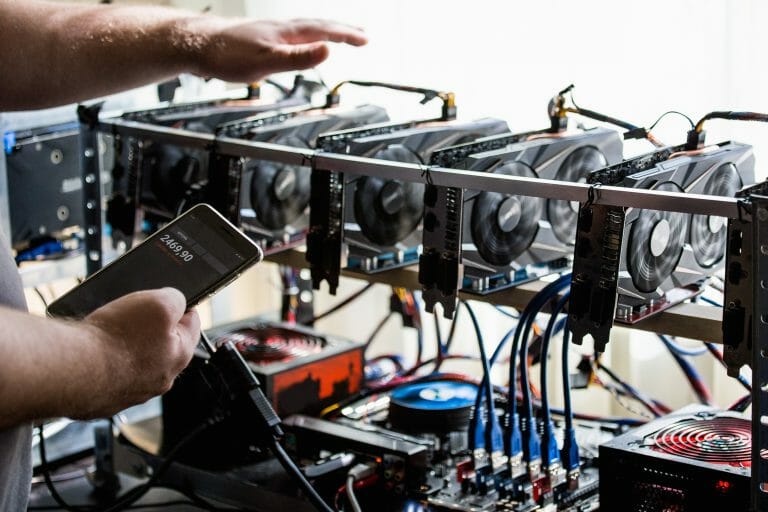
Iran decided to temporarily disconnect crypto mining operations due to the high demand for electricity due to the weather conditions. The energy industry will suspend the electricity supply to legal crypto mining centers before the seasonal increase in the energy demand.

One of the countries that explored the mining of crypto assets the most was precisely Iran. However, they recently announced that they would cut off electricity to cryptocurrency miners.

The government of the Mid-Western nation decided to temporarily disconnect crypto mining operations due to the high electricity demand.

Anyway, one of the primary reasons the Iranian authorities gave for taking that measure was the weather conditions. They argued that the country has a terrible drought, which has worsened with the high temperatures in the territory.

In 2020, the Iranian Ministry of Commerce granted licenses to 1,000 cryptocurrency miners as Iran intended to become a world mining hub. In addition, in 2021, the official introduced a bill to regulate cryptocurrency mining in the country.

Iran uses crypto mining to reduce the impact of the restrictions imposed by the West. It is relevant to remember that the territory is under extensive US sanctions preventing them from accessing the international financial system.

Iran to Suspend the Power Service to Licensed Crypto Miners

The Ministry of Energy of the Islamic Republic of Iran recently announced the disconnection of crypto mining farms from the electricity grid.

As a result, legal crypto mining companies will stop their operations due to electricity shortages. For that reason, they must unplug their equipment temporarily.

Mostafa Rajabi Mashhadi, a spokesman for the energy industry, talked about that situation in an interview with the Iranian state television. He said they would suspend the electricity supply to 118 legal crypto mining centers in Iran. He explained that this would happen before the seasonal increase in the energy demand.

He warned that the country should prepare for energy shortages since the demand might exceed 63,000 MW in the coming days.

They Had Taken that Measure on Previous Occasions

It is not the first time the Iranian authorities have taken that measure to suspend the electricity supply. They argued that the high energy demand increases during the summer months.

Over the last two years, the Iranian authorities have closed around 6,914 unregistered crypto companies.

In 2020, the Tehran Power Company began blaming cryptocurrency mining for depleting the energy supply. That has led the government to take strong measures against illegal crypto mining. For example, they seized 7,000 crypto mining devices in June l2021.

Iranian miners may expect three months of energy shortages, but Mostafa Rajabi Mashhadi did not provide details.

The suspension of the electricity service to legal Iranian miners will affect their income significantly. However, they must have anticipated that as the authorities had previously taken similar measures.

Meanwhile, Bitcoin is trading at around USD 20,308 and has accumulated a 0.6% gain over the last 24 hours. While its daily trading volume is above USD 22.54 billion, its market capitalization is around USD 387.55 billion, according to CoinGecko.

By Alexander Salazar