Rayne Steinberg Believes the Crypto Winter Will End in the Short Term

Although the bears still control the market, the community hopes the 2022 crypto winter to end soon. According to Rayne Steinberg, nobody can predict the next move of cryptocurrencies, but he thinks the bottom is close.

In 2022, the crypto winter caused leading cryptocurrencies like Bitcoin (BTC), Ether (ETH), and Cardano (ADA) to lose bullish momentum. The capitalization of the overall crypto market also dropped from a high of USD 3 billion to below USD 1 billion.

While early adopters are already familiar with that volatility, new investors and traders are learning about it. Analysts have called that consecutive decline in the prices of crypto assets the crypto winter.

The crypto market capitalization is about USD 922.5 billion and has dropped by around 1.33% over the last 24 hours.

That indicates that the bears still control the crypto market as the community hopes the 2022 crypto winter to end. The macroeconomic events directly impacting the pioneering cryptocurrency are the primary factor leading to a lengthy crypto winter.

Over the last few months, several macro events have harmed the market, particularly US stocks. Since Bitcoin correlates with the S&P 500 index, it has dropped sharply, attracting other cryptocurrencies.

The CEO of Arc Investments Thinks the Crypto Winter Will End Soon

The current situation in the crypto market has attracted optimistic and pessimistic forecasts for Bitcoin. According to Jurrien Timmer, global macro-manager at Fidelity, the price of BTC will drop by nearly USD 16,000 if it maintains its correlation with stocks.

Rayne Steinberg believes it is almost impossible to predict the next move in the crypto market. Although the CEO of Arc Investments thinks the bottom is close, he said it is difficult to know when it will occur.

Bitcoin is trading at around USD 19,183 and has accumulated a 0.4% loss over the last 24 hours. If the price recovers the USD 20,000 level and holds it, the cryptocurrency rally might soon attract a bullish run.

Mike McGlone Believes Low Prices Precede a Significant Increase

According to Mike McGlone, the price of the pioneering cryptocurrency will rise to USD 100,000 if it trades at a discount. The senior commodity strategist from Bloomberg Intelligence supports Bitcoin as it still undergoes a bearish trend. He said he has faith it will eventually recover and exceed its previous highs.

McGlone estimates BTC is at its lowest price on a 100-200 week moving average (MA). That leads him to predict t it will trade at USD 100,000 within the next ten years. The expert thinks the ideal catalyst might be the growing adoption of the crypto asset.

The analyst recently said that the Federal Reserve (Fed) affects Bitcoin negatively, causing its price to plummet. However, he added that it would eventually fall into a bullish market before regaining its full glory.

He also points out that Bitcoin has only dropped after experiencing a significant move to the upside. The strategist considers the crypto asset is building a base of around USD 19,000, an opportunity to resume the 2018/19 pattern. At the time, BTC dropped to USD 3,000 after trading at USD 5,000.

By Alexander Salazar

Why Governments Cannot Stop Bitcoin

Cryptocurrencies like Bitcoin can provide excellent alternatives to state currency monopolies like digital money.

Many governments are concerned about Bitcoin and have continually tried to suppress its growth. Despite these attempts, it has been relatively impossible to suppress Bitcoin and ban the general public from using it.

There are multiple reasons why central governments would seek to control, or even potentially stop, cryptocurrencies in general. The most common reason for federal organizations to take a keen interest in Bitcoin is to regulate money laundering, among others. Should You Worry That Governments Can’t Stop Bitcoin?

Despite significant concerns about the illegal use case of Bitcoin, the cryptocurrency was created to solve fundamental problems facing fiat currencies since the introduction of paper money.

The Blockchain is meant to provide immutability, preventing Bitcoin interference in all regions. The power is essentially transferred to the owners of the digital currency, who then collectively determine how much a single unit is worth based on supply and demand.

BTC is the most common and largest cryptocurrency; all others are often referred to as ALT coins, an alternative to Bitcoin.

Why Most Governments Like to Stop Bitcoin

Governments thrive on three main aspects that seem to be severely violated by the invention of Bitcoin: the ability to regulate capital, control capital, and prevent illegal activity through transaction monitoring. Central banks, along with investment banks, commercial banks, and other financial institutions, are responsible for monitoring transactions.

Conventionally, it was difficult for criminals to use banks and any form of digital transaction to transfer funds to their associates. Since Bitcoin cannot be regulated or controlled, criminals freely transfer funds to anonymous addresses and governments cannot monitor these transactions.

Despite the availability of the public ledger, which means transactions are open and transparent, determining the actual owner of addresses is challenging. This feature of Bitcoin technology is highly undesirable for governments, which creates a strong motivation to ban it outright.

Furthermore, Blockchain technology is immutable, which means that once data is entered, it cannot be changed. According to Satoshi Nakamoto, the creator of Bitcoin, the feature was designed to build trust within the Blockchain. Transactions are also open and available to everyone within the network. These are arguably undesirable for secretive regimes and governments that are often involved in dubious deals hidden from the public.

Bitcoin allows people to transact across regional borders without taxes, which hurts the government. For these reasons, it is doubtful that governments will embrace Bitcoin as it is; instead, most governments will continue to find ways to regulate it or ban it outright.

Can Governments Stop Bitcoin?

Various movements have attempted to regulate Bitcoin with no real success. The regulations have cited the large carbon footprint contributed by the proof-of-work consensus mechanism used by the Bitcoin network.

The government is interested in controlling Bitcoin transactions as it is a threat to the economy of any country and the power of the government.

Considering the infrastructure of Bitcoin, governments cannot stop Bitcoin. Many governments can ban Bitcoin, as they have, but complete eradication of the projects seems far-fetched.

Given the evidence, since Bitcoin is evolving on its own and people are willing to adopt the technology, there is nothing that movements can do to stop the revolution. Needless to say, however, regulations can be put in place to limit the use of Bitcoin within a specific jurisdiction in a country’s efforts to maintain control of fiat currency.

By Audy Castaneda

Some Latin American Countries Have Already Legalized the Use of Crypto Assets

0

Latin American governments do not generally consider the cryptocurrency mining activity illegal. The region is in a gray area, as only Bolivia and Ecuador prohibit and criminalize the use and mining of cryptocurrencies.

The global economy constantly changes and fluctuates, which relates to the social conditions of each nation and the emergence of technological advances.

That is especially true when dealing with cryptocurrencies and their economic and financial phenomenon. The acceptance of those currencies has increased in finance for businesses, banking entities, and individuals.

The movement, acquisition, and acceptance of cryptocurrencies like Bitcoin (BTC) and Ether (ETH) vary depending on each country. While some Latin American nations welcome the progress in the legislation standardizing the management of crypto assets, others resist it.

How the Cryptocurrency Mining Activity Has Evolved since Is Beginning

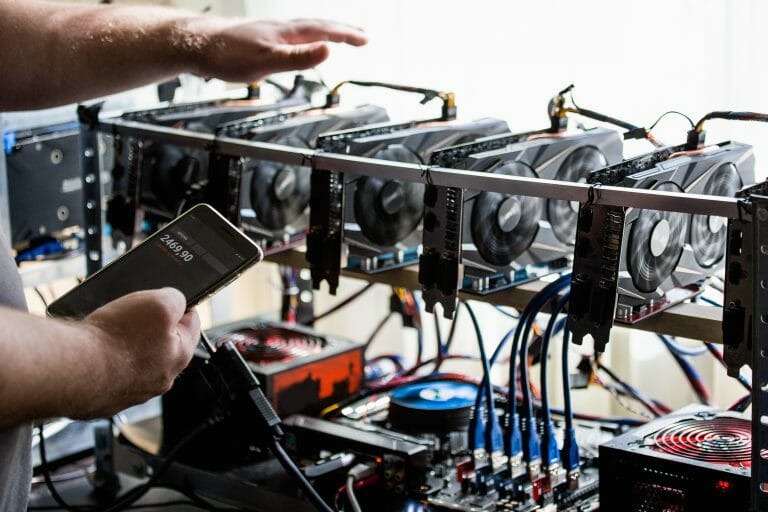
Bitcoin mining consists of generating blocks for the network in which miners compete. Miners struggle to solve a crypto puzzle of their current block through a Proof-of-Work (PoW) system after several repetitive attempts.

The computational power that a miner contributes to the overall network allows the system to work in a decentralized way. Once miners have obtained the numerical solution to the crypto puzzle, they transmit it to the other nodes.

In the early days, individuals could mine using a standard CPU to get a block and its rewards frequently. However, technological advances led to the emergence of specialized software adapted to work with graphics cards.

As the cryptocurrency mining process evolved, this alternative financial method has become part of the daily lives of millions of people worldwide. The emergence of wallets and the acceptance of crypto assets by financial institutions has allowed using them to pay for goods or services.

The Legal Situation of Cryptocurrency Mining in Latin America

Latin American governments do not generally consider the cryptocurrency mining activity illegal. While some countries have encouraged using crypto assets, others still work on laws and regulations to control them.

El Salvador is a pioneer in that regard, as its government fully legalized and encouraged the use and mining of cryptocurrencies. In 2021, it became the first country to adopt Bitcoin as a legal tender, which led its financial institutions to include it.

The Venezuelan government has promoted various measures to regularize and control the cryptocurrency industry. Likewise, Argentina does not expressly prohibit using crypto assets, but they still lack legal support.

In that regard, the Central Bank of Cuba allows using cryptocurrencies for commercial transactions throughout the territory. For its part, Panama approved a bill that enables the use of cryptocurrencies as a payment means. Similarly, Mexico enacted in 2018 the Law to Regulate Financial Technology Institutions, known as the FinTech Law.

Bolivia was the first Latin American country that expressly banned the use of cryptocurrencies. Ecuador is in a similar position but has not passed a law against crypto assets.

Latin America is in a gray area since no country strictly prohibits or criminalizes using or mining cryptocurrencies, except for Bolivia and Ecuador.

By Alexander Salazar

Kanye West Acquires Parler and Now Competes against Elon Musk, Peter Thiel, and Donald Trump

Kanye West, now known as Ye, joins a string of moguls who have been buying up social media platforms to avoid canceling culture.

Kanye West, now known as Ye, acquired the social network called Parler, which markets itself as a free speech platform where no one can be censored for their thoughts. And now, it’s a shiny new toy in Ye’s treasure chest. But what has led the ex-Mr. Kardashian to make such a large purchase?

Ye had his Twitter and Instagram accounts closed this week due to statements deemed anti-Semitic by those platforms.

Ye maintains that there is a “secret cabala of Jews who conspire to control the media, governments and world banks.” He shared such thoughts on his social media accounts.

Kanye West and other Recent Controversies

This news is hot on Ye’s heels in a “White Lives Matter” T-shirt at Paris Fashion Week.

Ye told conservative media personality Tucker Carlson that the T-shirt sparked a lot of backlash because he was acting in a way that the media disapproved of.

“Because the very people who have stripped us of our identity and labeled us as one color, have told us what it means to be black.”

Of his social media bans, Ye says Zuckerberg and his friends “have toyed with me and tried to censor anyone who opposes their agenda.” In fact, instead of being very angry about it, Ye has decided to take action.

Parler CEO George Farmer does not appear to support Ye’s ramblings about a Jewish cabala. However, he thinks that people should be allowed to express potentially flawed opinions.

Farmer said that, “in all worlds, the only cure for wrong ideas is more ideas. It is more speech, not less speech. Censorship in any format is never a good thing. And this is what we and he agree on.”

Media Buys by Tycoons

It seems that Ye is not alone in wanting to say any thought that comes to mind without censorship. Many enormously wealthy tycoons have been buying up social media platforms as if they were about to face a shortage. Elon Musk has taken over Twitter, after being upset by its censorship and what he sees as a plague of bots.

Donald Trump has decided to launch his own platform, called Truth Social, currently not available for Android phone users, thanks to Google not allowing it in its app store.

Other moguls are in on it too: Peter Thiel and JD Vance have acquired Rumble, an alternative to YouTube.

Thiel, a German-American billionaire, was a co-founder of PayPal. He was also the first outside investor in Facebook. Therefore, he has had an interest in social media for a long time. James David Vance is an American lawyer and venture capitalist, and a critic of Donald Trump.

At the End of the Day

Will Ye be the voice of Bitcoin and cryptocurrencies for the foreseeable future? Just like every industry as a whole, cryptocurrency has a lot of rubbish strewn about it. There are some amazing cryptocurrencies with amazing uses. There are also some cheats and scams.

While celebrity stories can be seen as superfluous and unnecessary, they are a microcosm of the world’s problems and solutions. For anyone who believes in the promise of cryptocurrencies and their potential freedom, Ye’s struggles are the struggles of all of us, whether left, right, center, or without any interest in politics.

By Audy Castaneda

According to Larry Lepard, the Price of Bitcoin Might Reach USD 2 Million in 2028

0

Lepard considers it risky not to own Bitcoin as a hedge against a sovereign debt crisis as it might reach a seven-figure price. He commented that its following maximum value should be as high as USD 200,000, preceding another 70% decline.

Many have wondered where the price of Bitcoin (BTC) might head next after it reached its all-time high and started to drop. However, Larry Lepard is among those optimistic about its future, as he predicts it might reach USD 2 million in the next six years.

Lepard, an asset management guru and the founder of Equity Management Associates, recently expressed that bullish view on the pioneering cryptocurrency.

The Factors Leading Larry Lepard to Be Optimistic about Bitcoin

According to Lepard, the price of Bitcoin might rise 100 times, which is curious given the current market situation. It is relevant to remember that the pioneering cryptocurrency has undergone a downward trend for nearly a year.

Lepard said he still did dollar-cost averaging in BTC, purchasing the same amount weekly, irrespective of the price. Therefore, he has become one of those daring to predict a seven-figure BTC price in the current crypto market.

He also believes it is risky not to own Bitcoin as a hedge against a sovereign debt crisis.

The investment manager explained that he was not suggesting people should invest all their money in Bitcoin. However, he highlighted that those without a position in it faced more risk than necessary due to the bullish optionality.

He thinks the pioneering cryptocurrency may achieve the above figure in five or six years.

The Expert Has Made Other Predictions about the Bitcoin Price

Larry Lepard also commented that the next maximum value of Bitcoin should be USD 200,000, followed by another 70% decline. That prediction is consistent with a recent emerging price base, which puts the bottom of the following bearish market cycle at USD 35,000.

Lepard is not the first analyst who makes those claims, of which only a few happen, and almost no one sees them coming. Cathie Wood and Tim Draper, among many other personalities, have also made risky or optimistic predictions about Bitcoin.

Meanwhile, Bitcoin is trading at around USD 19,300 and has accumulated a 5% gain over the last 24 hours. While its daily trading volume is above USD 18.54 billion, its market capitalization is about USD 380.67 billion, according to CoinGecko.

Investors should research the all-time high, behavior, and possible future price of Bitcoin before buying it. That will help them find the most convenient investment opportunity to reduce the risk of losing money.

Bitcoin has become an increasingly relevant factor in the global economy, which experts like Larry Lepard know well. However, the current bearish trend in the crypto market has made it difficult for their prediction to come true. It is only a matter of time before seeing where the price will head next.

By Alexander Salazar

Aptos (APT) Price Plummets 50% amid Criticism for Tokenomics

0

Venture capitalists and team control majority of APT token supply.

The Aptos Blockchain network, developed by former Meta employees, has launched on the mainnet, but critics have been questioning its tokenomics and TPS claims. Just hours after it began trading on major exchanges, APT’s price had already plummeted by 50%.

After four years of development from Facebook’s failed crypto project Diem, Aptos hit the mainnet.

Aptos is the latest in a long line of Layer 1 Blockchain networks launched, claiming to be a “killer” of the ones already up and running.

Its goal is to compete directly with Solana. Earlier this year, when the project was unveiled, CTO Avery Ching commented that, “current Blockchains are simply not as reliable as existing financial rails; we have seen downtime issues and outages lasting hours”

Initial Problems: Aptos and their Transactions per Second

Aptos uses a programming language called Move, which has been “natively integrated for secure asset management, as well as fast and secure transaction execution.”

The team hopes to move developers away from current networks, and aims to support a wide range of web3 applications. “We are proud to support a wide variety of use cases across NFTs, gaming, trading, social media, and media and entertainment,” they stated in an announcement on Oct. 18.

Aptos claims that its transactions per second (TPS) reach 130,000. However, engineers have reported that it is nowhere near that, and not even close to the Bitcoin network.

Software engineer @ParadigmEng420 tweeted that the current network is unusable and added the following:

“Aptos knows something is wrong. Between genesis and 1:30 PM PT, the Aptos Discord was disabled: users couldn’t chat or ask questions.”

Huge Support from Exchanges despite Tokenomics

Major exchanges including Coinbase, Binance, and FTX (all of which were Aptos investors) were quick to list the APT token. The move came despite the fact that it does not have a transparent tokenomics or issuance schedule, but that does not seem to worry those who have invested heavily in the project.

It was noted that a prerequisite for listing should be that users have basic information about what they are buying.

@cobie, an engineer who researched TPS, tweeted that, “It’s not great that FTX/Binance, etc., are all listing Aptos without any tokenomics transparency at all. Surely, it should be a prerequisite to listing something that users can have the basic information on what they’re buying.”

He also looked at tokenomics, and revealed that up to 80% of the APT supply is owned and controlled by the team and investors.

“The point is that almost all of the token supply goes to private entities, there was never a public sale or another method where users could have earned tokens,” he explained.

The sentiment was shared by other prominent members of the crypto community.

Aptos Price (APT) Experiences Pump and Dump

As expected, token prices increased when they hit exchanges a few hours ago, reaching a high of $13.73 during the morning of Oct. 19, according to CoinGecko.

However, typically and as market analysts predicted, APT has already plunged nearly 50% to $7.30 at press time.

This could be a massive dump by venture capitalists and investors, and retail trading will take a hit once again.

By Audy Castaneda