Amid the Bearish Market, the Price of Ether Might Suffer a Further Decline

The return of Ether close to the USD 1,000 support would force the bulls to break beyond the USD 1,400 resistance. Since a pullback to USD 1,000 is likely, the bulls will have to get out of the USD 1,400 level.

After the collapse of FTX, many wonder whether the price of Ether (ETH) may imitate Bitcoin (BTC) through new year lows. Recent technical analyses indicate that it might return to the standards of 2018 in terms of a percentage decline.

The scenario of a new wave of correction continues to grow, as the engines that allowed it to straighten temporarily may be insufficient.

Amid a confidence crisis that affects the crypto ecosystem, the weekly and daily charts compare the price action of Ether with Bitcoin.

The Price of Ether Remains Trapped in the Bearish Cycle

Since mid-June, the rise in the ETH/BTC ratio has given a slight advantage to Ether against Bitcoin. The former could quickly return to test some resistances, not to mention there has been no new all-time high.

However, the news of the FTX collapse caused Ether to fall into the trap of the bearish cycle. At that time, Bitcoin, the leading cryptocurrency in the market, might have had the last word.

If the ETH/BTC pair breaks the support at 0.066, it will return to its 0.055 level in mid-June 2021. However, Ether is facing more difficulties than Bitcoin this time.

The Price of Ether Moves toward the Fourth Week of Decline

Last mid-August, Ether was close to USD 2,000, but now it could move toward a fourth consecutive week of decline. It has faltered below the USD 1,700 resistance again as it approaches the USD 1000 support. The situation regarding Ether against the various curves of the Ichimoku could deteriorate if the bulls do not do their work.

First, the thickness of the Kumo future increases much, complicating the prospects of a favorable trend change. Second, the bearish synchronization between Tenkan and Kijun could indicate that resuming the bearish run would only be a matter of time.

The return of Ether close to the USD 1,000 support would be in the offing. Since the bulls have received a hit on the nape, prices would have to break beyond the USD 1,400 resistance. However, that scenario looks unlikely due to the great size of the collapse of FTX.

Ether Might Drop to USD 1,000 or Rebound to year Lows

Since the value of Ether and the Chikou Span are below the Kumo, momentum degrades in daily units. First, Tenkan rejects the price where the problems of FTX started, but the USD 1,200 has given way since nothing has happened.

To the dismay of the bulls, the unfavorable signals mean the bearish move might resume more strongly. Therefore, USD 1,000 or the year lows would benefit the bears, allowing the new wave of correction to extend toward the USD 7,000 support.

However, nobody should rule out the possibility of a pullback to USD 1,000 or an immediate rebound from year lows. Besides, the bulls will have to get out of the Kumo and the USD 1,400 level to exit the crisis.

By Alexander Salazar

According to Vitalik Buterin, Many Consider the Centralization of FTX to Be Suspicious

Although Buterin recommends using DeFi and self-custody to guard against centralization, he warns about possible errors in the smart contract code. The programmer considers that the approach to distinguishing between using blockchain and cryptocurrencies adopted by Singapore is bizarre.

Vitalik Buterin, the co-founder of Ethereum, recently expressed his opinion about the collapse of FTX and its former CEO, Sam Bankman-Fried. After referring to the situation as a tragedy, he said many Ethereum community members view the centralization of the exchange as suspicious.

The Russian-Canadian programmer commented that blockchain-based and decentralized finance (DeFi) protocols work flawlessly. He highlighted that it is essential to trust open and transparent sources over individual humans.

Buterin recommended using DeFi and self-custody, reiterating that anything centralized is negative by default. However, he also advised investors to guard against possible errors in the smart contract code.

Additionally, he warned that it would be wrong to downgrade everything Bankman-Fried believed. He considers it necessary to know what contributed to the fraud to prevent similar situations from happening.

He also mentioned the case of TerraUSD (UST) and Terra (LUNA) cryptocurrency, now called Terra Luna Classic (LUNC). Although he pointed out the Terra (Luna) crash was necessary for the ecosystem, he would have liked it to be ten times smaller.

The co-founder of Ethereum also warned against the approach to cryptocurrency regulation adopted by Singapore. He stated that struggling to distinguish between using blockchain and cryptocurrencies is a bizarre idea.

Neel Kashkari Comments on Crypto Assets and the FTX Collapse

Neel Kashkari, the president of the Federal Reserve Bank of Minneapolis, recently expressed his views on the FTX collapse.

He said it was not the case of a fraudulent company in a serious industry, referring to crypto assets as nonsense. He argued that they do not allow paying, as they have no inflation hedge, shortage, or tax authority.

Since Kashkari dislikes Bitcoin and other cryptocurrencies, he has called them a giant garbage dump. Last year, he said they were 95% fraud, hype, noise, and confusion, alleging they only serve to finance illicit activities.

After the collapse of FTX, several US Fed officials called for tighter regulation on crypto assets. Lael Brainard, the vice-chairwoman of the Federal Reserve, considers it crucial to supervise cryptocurrencies. She said it is worrying to see how seriously those losses affect retail investors.

Michael Barr, the vice chairman for supervision of the Federal Reserve, said they are concerned about unknown risks in the non-banking sector. In that regard, he said the crypto activity could pose risks that affect the financial system they control.

Meanwhile, some people have pointed out that the collapse of FTX is not specific to cryptocurrencies. For example, the bankruptcy case has drawn comparisons with the Enron fraud and the Bernie Madoff Ponzi scheme.

Finally, Mark Cuban, the owner of the Dallas Mavericks NBA team, explained that those failures are not exclusive to the crypto space. He mentioned bank collapses, where runs on depositors follow lending to the wrong entity, wrong collateral valuations, and arrogant arbitrages.

By Alexander Salazar

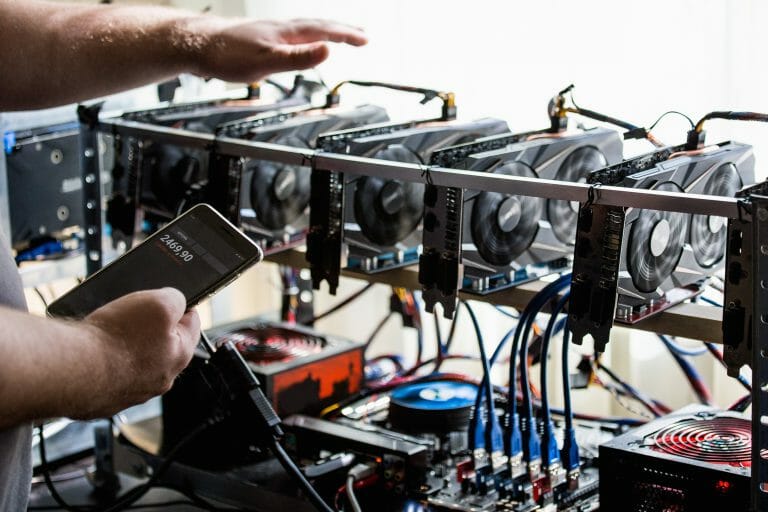
BTC Mining Company Iris Energy Defaults on $100 Million Loan

0

According to one analyst, the sale of Bitcoin miners has increased 400% in the last three weeks, posing a problem for the mining industry as the continued sale depletes a key source of revenue.

Australian Bitcoin miner Iris Energy will lose 3.6 Exahashes/second of mining power after defaulting on a $108 million loan.

Iris Energy will not repay loans taken against equipment operated by two wholly-owned company vehicles, choosing instead to develop its other business operations.

Iris Energy – Entities Do Not Provide Much Cash Flow

According to the Nasdaq-listed miner, the two entities are not providing enough cash flow to service the credit lines, after other subsidiaries using the equipment pulled out of hosting agreements. Pursuant to a security agreement with the creditor, Iris Energy will close operations at these two facilities.

Consequently, Iris Energy will look to acquire mining equipment from Bitmain to self-mine, and may also leverage its data center capacity for other hosting companies.

In addition to the mining machines used as collateral, Iris Energy operates 1.1 EH/s of mining power and expects to implement another 1.3 EH/s.

Mining is the process of securing any Blockchain network that uses the Proof-Of-Work consensus model. A consensus model is a set of rules that govern the transition of a Blockchain from one state to another.

Miners accumulate “confirmed” transactions into a transaction block, and then “mine” the transaction block to add it to the Blockchain. Included in the mined block is the solution to a complex mathematical problem, for which the miner needed to use significant computing power to solve.

Miners earn coins by showing that they spent computing power. Multiple miners compete for the right to post a new block of transactions. It becomes more and more difficult to mine cryptocurrencies like Bitcoin, as the number of miners on the network increases.

Iris Energy Among the Heavyweights Fighting for Profitability

Mining has more or less moved into the realm of large corporations operating specialized data centers. While these companies benefit from economies of scale, rising energy prices caused by the war in Ukraine and falling Bitcoin prices have made it difficult for several miners to pay down debt.

The price of producing new BTC, also known as the Minimum Cost of Production, has also been rising, meaning that it is becoming increasingly difficult for miners to remain profitable.

Crypto market analyst Charles Edwards predicts that if the price of Bitcoin falls below the minimum cost of production, many miners will become unprofitable and unable to pay their debts.

Edwards added that the sale of Bitcoin miners had increased by 400% in the last three weeks. The increased sales will put further downward pressure on the BTC price and deplete a key source of revenue.

After news of Iris Energy’s default hit the wires, its share price fell more than 12% in intraday trading, to $1.64.

By Audy Castaneda

A Report Indicates the Biggest Victims of the FTX Collapse Are South Koreans and Singaporeans

Since there are an average of 297,229 monthly FTX users, the South Korean government has accelerated its regulatory framework. Meanwhile, the shutdown of Binance in Singapore brought the number of Singaporean investors on the exchange to 241,675.

CoinGecko recently published a report on the countries most affected by the collapse of the international exchange FTX. As expected, most are in Asia, as US investors were using FTX.US.

However, the report ranked the top 30 countries by monthly users, not the capital that the customers in each country lost.

The Main Victims of the FTX Collapse Are Asians

However, there may be a correlation between the two factors, as the collapse of FTX affecting the largest user bases is logical.

According to CoinGecko, South Korea ranked first in terms of monthly users. With a traffic share of about 6.1%, it represents an average of 297,229 monthly users who visit FTX.com. The South Korean government is accelerating its regulatory framework, the Digital Assets Basic Law, and expects to finalize it in 2023.

The second country was Singapore, with 241,675 monthly users, equivalent to 5% of the total traffic to FTX.com. The report pointed out that many investors switched to FTX due to the shutdown of Binance in Singapore in December 2021.

The third largest Asian user base was Japan, with an average of 223,513 unique users visiting FTX.com every month. Softbank, a technology and investment conglomerate, invested USD 100 million in FTX earlier this year.

The report from CoinGecko also indicated that Asian stocks benefited from the collapse of FTX. For example, Binance gained a 7% market share while OKX rose between 1.1% and 13% overall.

The details on the bankruptcy protection filed by FTX became public knowledge over the weekend, causing further losses in the markets.

Leading Cryptocurrencies Plummet Due to the FTX Crash

During the recent Asian trading session, cryptocurrencies tumbled again. The total capitalization of the crypto market has fallen by around 3.8% to USD 838 billion, according to CoinGecko. It has thus approached its cycle low point since November 10th.

The price of Bitcoin has dropped by 2.9% to USD 16,000 over the last 24 hours. Meanwhile, the value of Ether (ETH) has plummeted by 6.9% to USD 1,137. The latter happened because the account of the hacker who stole FTX converted the looted ETH into BTC.

Cryptocurrencies are in a red sea, with many altcoins falling toward new lows amid this bearish cycle.

The collapse of FTX has affected the global crypto market, leading many of its Asian users to suffer the highest capital losses. Likewise, the trading price and market capitalization of Bitcoin and leading altcoins have fallen considerably.

Investors should research crypto assets before buying them to learn about their all-time highs, behavior, and possible future prices. That allows them to make better investment decisions and avoid losing money due to market uncertainty. It is a matter of time before seeing that the value of cryptocurrencies goes up again.

By Alexander Salazar

Despite Uncertainty in the Crypto Market, Bitcoin Might Rally in December

Although the odds are leaning slightly toward sellers, the signs seem to indicate there might be a Christmas Bitcoin rally. The price might rebound slightly on volatility, but it should first break through the support level at USD 16,000.

The bulls are struggling to defend the support zone of the indecisive Bitcoin (BTC) price to avoid further losses. That suggests that the pioneering cryptocurrency might have a bullish rally next Christmas.

The Christmas season has generally proven positive for the price of Bitcoin throughout its history. Although there is now a very uncertain scenario, some signs indicate that a relief rally might be in the offing soon.

A survey conducted by Key Alerts reveals that 61.3% of the respondents believe there will not be a bullish rally in December. However, the bears will continue to control the market if there are no clear confirmations.

Bitcoin is trading at around USD 16,022 and has accumulated a 4.2% loss over the last 24 hours. While its daily trading volume is above USD 22.90 billion, its market capitalization is about USD 307.83 billion, according to CoinGecko.

The Weekly Analysis Indicates the Possibility of a December Rally

After the sudden drop in the crypto market, the weekly chart shows a bullish divergence. That situation indicates that the sellers are not strong enough to push the price further down.

The price of Bitcoin is in a relevant support zone close to USD 16,000. Furthermore, the divergence and lack of a sigh of relief would make a rally possible in the short term.

According to the weekly chart, the first resistance of the Bitcoin price is USD 21,000. The first support it should exceed to break out of the bearish trend is USD 16,188, followed by USD 14,000.

With no positive confirmations yet, the odds are leaning slightly toward the sellers. However, no one can rule out a Christmas Bitcoin rally in December, given the relevant signs observed.

The Crucial Levels of the Bitcoin Price in the Short Term

The value of Bitcoin reached the limit of a symmetrical triangle in which it remained locked for ten days. Since the space inside the pattern is becoming increasingly small, there may be a slight rebound in volatility in the short term.

However, the price must first break through the resistance at USD 17,600 or the support at USD 16,000 to expect a significant directional move. Since the trend remains down, so the odds are leaning that way.

If the price of Bitcoin resumes the bullish trend, the following levels would be USD 14,800 and USD 14,000. If a relevant bullish break occurs, confirming a relief rally, the target would be USD 21,000.

Investors should research Bitcoin before buying it to learn about its all-time high, behavior, and possible future price. That allows them to make better investment decisions and avoid losing money due to volatility.

Amid the collapse of the FTX cryptocurrency exchange, the price of Bitcoin has suffered a considerable drop. However, it is a matter of time before seeing where the pioneering cryptocurrency heads next.

By Alexander Salazar

Is KuCoin Safe from FTX Collapse?

The recent bankruptcy of the FTX Group and the “hack” have resulted in a “contagion effect” that has given rise to speculation as to which other crypto companies could collapse.

KuCoin, referred by itself as “The People’s Exchange”, has more than 20 million users worldwide and US$660 million in daily trading volume. This certainly puts them in the top 10 most popular exchanges on the market.

On November 11, 2022, FTX, FTX US, and Alameda filed for bankruptcy in the United States. This came after several days of suspension of withdrawals on the exchanges, in addition to rumors circulating that they were already having problems.

On the same day, a hacker, later identified as a former employee of the FTX exchange, was reported to have extracted more than US$600 million from FTX. It was also revealed that one of the reasons for the collapse of FTX was because Alameda Research, which was the trading house of FTX, had spent almost US$10 billion in cash belonging to its clients.

How the FTX Collapse Could Affect KuCoin

The FTX crash has brought the security of all centralized cryptocurrency exchanges to the fore. The revelations that FTX had been mishandling client funds have also sparked fear among cryptocurrency traders.

As a result, being a major exchange, KuCoin was the subject of rumors and questions about their solvency and whether they are safe from FTX contagion.

In this regard, KuCoin has expressly denied that it has exposure or has deposited funds in FTX. Also, to reassure its users, KuCoin has promised to launch its Merkle Tree Proof of Reserve (POF). The exchange is also awaiting the completion of an audit by third-party auditor Aarmanio LPP. Both are expected to be completed in one month, that is, at the beginning of December 2022.

KuCoin Addresses Exit Rumors Following FTX Collapse

On November 9, 2022, KuCoin CEO Johnny Lyu wrote a letter addressing the FUD (Fear, Uncertainty, and Doubt) surrounding the exchange. The buzz surrounding KuCoin originated from a stablecoin output chart from Nansen, a Blockchain analytics firm, whose flowchart showed that US$300 million had flown out of the exchange.

However, Nansen CEO Alex Svanevik was quick to clarify that the US$300 million was simply an exchange from the USDT network to Tron. Therefore, the funds had not in fact left the KuCoin exchange.

Lyu also clarified on Twitter that KuCoin does not have any exposure on FTX or FTT. This allayed speculation from Cobie, host of the UpOnly podcast.

In conclusion, it seems that the KuCoin exchange is safe from the FTX crash for now. However, users are still advised to keep their funds off of any exchange, and to consider storing their cryptocurrencies in hardware wallets, as it means that the cryptocurrencies are in their own custody.

By Audy Castaneda