
Could Metacade Be the Best Cryptocurrency to Buy in 2023? Experts Predict MCADE Tokens Will Soar This Year

Metacade, with its innovative P2E ecosystem, comprehensive rewards system, and strong market positioning, represents a potential game changer and attracts significant attention from experienced and novice investors alike.

The Metacade project aims to reshape the gaming landscape, by building the world’s largest P2E arcade, catering to gamers and cryptocurrency enthusiasts alike.

By leveraging the growing GameFi industry, Metacade plans to create a platform where gamers can not only enjoy a diverse selection of games but also generate income through their passion for gaming.

Metacade is on track to gain significant traction, as the project garners more mainstream attention, with an innovative approach to incorporating various game genres into its rewards system. With the increase in the user base, demand for the MCADE token, an integral part of the ecosystem, is expected to skyrocket, making it a valuable asset for investors and players alike.

The MCADE token serves as the primary means of exchange and powers the rewards system. MCADE includes the Metagrants initiative, which allows game developers to present their concepts to the Metacade community.

In addition, MCADE token holders can vote on which projects are funded, ensuring the platform continually delivers a new and exciting lineup of community-curated games, while driving user engagement and platform growth.

With Metacade’s imminent listing on renowned exchanges Uniswap and Bitmart, experts predict that MCADE tokens could skyrocket this year, making it a top contender for the most sought-after cryptocurrency investment in 2023, while becoming part of every list of the best cryptocurrencies to buy.

How High Can MCADE Go in 2023?

MCADE has become a primary focus for cryptocurrency enthusiasts and investors alike, as the GameFi sector continues to experience an unprecedented surge of optimism and interest. With many experts envisioning tremendous growth potential for MCADE, the question on everyone’s mind is whether the token can reach the long-awaited $1 target by the end of 2023.

The wide variety and innovation of gaming experiences that Metacade offers put it in a uniquely advantageous position when it comes to gauging its potential market capitalization. The vast base of potential users that the extensive library of games in the play-to-win (P2E) arcade could target suggests that investors could see the rapid expansion of the platform’s user base, as soon as the releases of the platform start later in the year.

Metacade, along with other early-stage, high-growth projects, has generated remarkable returns for early investors. For MCADE to reach the $1 milestone, it would require a market capitalization of just $2 billion. In this sense, the price predictions believe that surpassing this crucial threshold by the end of the year is within reach.

Is MCADE a Once-in-a-Generation Investment Opportunity?

The multifaceted utility of the MCADE token presents an opportunity that is hard to ignore for anyone looking to capitalize on the rapidly evolving GameFi industry. MCADE could become the golden ticket for investors seeking exceptional returns for years to come. Yet, it is always best to do your own research before making important investment decisions.

By Audy Castaneda
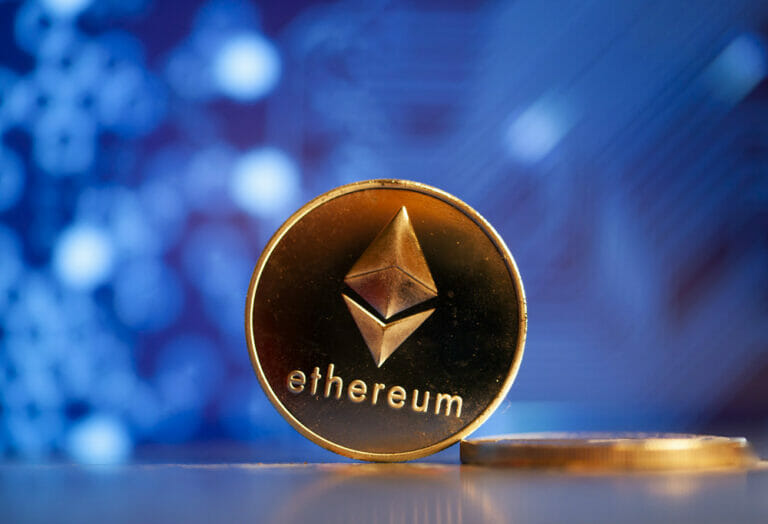
Will Ethereum [ETH] Cross $2,000 this Week? These Indicators May Provide an Answer

The Ethereum price increased more than 5% in the last 24 hours. Most market indicators and metrics supported the possibility of further growth.

Investors found out about the good news on April 5, when the cryptocurrency market turned quite bullish, allowing various cryptocurrencies to push their prices higher.

Ethereum [ETH] was capitalizing on the market trend, crossing the $1,900 mark. For the first time since August 2022, Ethereum was able to climb back above $1,870, giving hope for further growth.

On April 4, Santiment tweeted the following:

“Ethereum jumped back over $1,870 today for the first time since August 17, 2022. This near 8-month high comes as sharks have been accumulating steadily since last summer. Addresses holding 100-10k $ETH have accumulated $4.24B in the past 9 months.”

Ethereum Price Action Gained Attention

CoinMarketCaps data revealed that ETH managed to rise by more than 5% in the last 24 hours, and also in the last seven days. ETH was trading above the $1,900 mark at $1,910.97, with a market capitalization of over $230 billion. Taking market conditions into account, the crypto community expects Ethereum to breach the $2,000 benchmark soon.

Will ETH Get Over the $2k Hurdle?

Based on the daily chart of ETH, it is inferred that the bulls were ready to further push the king of altcoins higher. For example, the exponential moving average (EMA) ribbon revealed buyers’ advantage in the market, as the 20-day EMA was well above the 55-day EMA.

On the other hand, the ETH Money Flow Index (MFI) was moving higher from the neutral mark, which was also a bullish indicator.

However, the Chaikin Money Flow (CMF) did not behave in accordance with the will of the bulls as it recorded a decline.

Bollinger Bands also seemed problematic, when it was revealed that the ETH price was entering a less volatile zone, which may restrain the token’s price from rising exponentially in the short term.

Although Bollinger Bands suggested that investors can expect some slow days, Ethereum’s on-chain metrics told a different story. ETH’s net deposits on exchanges were low, as compared to the 7-day average, indicating that the token was not under selling pressure. Additionally, the total number of active wallets used to send and receive coins also increased by 25.83%, as compared to the previous day.

According to the Santiment chart, ETH-weighted sentiment has improved over the past month, reflecting investors’ confidence in the token. This was achieved despite the fact that the network was recently the victim of an attack, in which a substantial amount of ETH was stolen when the perpetrator interfered with MEV bot transactions.

Demand for Ethereum in the derivatives market was also high, which was quite evident from its Binance funding rate. Another optimistic metric was its offer on exchanges, which has dropped sharply in the past 30 days.

Therefore, considering all the metrics and indicators, it seems likely that Ethereum will cross the $2000 mark soon.

By Audy Castaneda

Shiba Inu: Towards Success, or Is It an Accident?

The rise of the Shiba Inu through playful branding and meme-based culture. Shiba Inu’s challenges include market volatility, regulatory hurdles, and competition. Could Shiba Inu reach the one-cent milestone?

Shiba Inu (SHIB) has captured the imagination of investors and enthusiasts alike as the cryptocurrency landscape evolves. From its inception, the decentralized nature of the Shiba Inu attracted many who were looking for an alternative to traditional financial systems.

Shiba Inu, as a decentralized meme cryptocurrency, quickly gained traction, with many early adopters enjoying astronomical returns. Additionally, its playful branding and meme-based culture resonated with a younger audience eager to explore digital assets.

Below is a description of the challenges and opportunities ahead for the meme-inspired token.

Meme Cryptocurrencies and Market Volatility

SHIB, like others, faces the challenge of maintaining momentum in a market characterized by its volatility. The meme tokens’ value is often dependent on public sentiment, making them vulnerable to sudden changes, as they lack the strong fundamentals that underpin more established cryptocurrencies.

In this regard, Shiba Inu must continue to evolve and demonstrate its usefulness beyond mere speculation. By expanding its reach and use cases, it can attract a broader range of investors and consolidate its position in the market. To do this, Shiba Inu launched ShibaSwap, a decentralized exchange.

ShibaSwap has already seen significant adoption, with millions of dollars in total value locked (TVL). This move not only diversifies SHIB token offerings but also promotes an ecosystem that fosters long-term growth. However, ShibaSwap faces stiff competition from established decentralized exchanges such as Uniswap and SushiSwap.

NFT & DeFi, and Community Support

The Shiba Inu NFT marketplace, dubbed “Shibarium,” aims to lower the barrier to entry for creators and collectors by offering lower transaction fees and a user-friendly experience.

In the DeFi space, Shiba Inu has introduced several staking and yield farming opportunities, which has attracted investors seeking passive income. However, the competition is fierce.

Shiba Inu’s vibrant community has been paramount to its success. Members of the so-called “ShibArmy” continue to promote the project, which attracts new investors.

Nevertheless, to ensure long-term success, Shiba Inu must continue to build on its strong community foundation, engaging members through regular updates, communication, and innovative initiatives. This approach will not only retain existing followers but will also attract newcomers to join the fold.

The One-Cent Dream: Realistic or just a Fantasy?

A lingering belief among some Shiba Inu investors is that the SHIB token will eventually reach a value of at least one cent, turning those holding billions of tokens into overnight millionaires. This idea has become part of many people’s imaginaries, fueling optimism and further investment in the meme coin.

However, it is necessary to elucidate if said aspiration is realistic or not. For the SHIB token to reach one cent, it would require a significant increase in its market capitalization, potentially rivaling that of well-established cryptocurrencies such as Bitcoin and Ethereum.

Although the Shiba Inu token has shown innovation and resilience, relying solely on the hope of a one-cent token value may not be a good investment strategy.

By Audy Castaneda

Bitcoin’s (BTC) Price Continues its Rally Despite Substantial Regulations

0

The long-term outlook for Bitcoin price is decidedly optimistic, but the short-term trend is still unclear. Daily time frame readings for Bitcoin price give mixed signals. On the optimistic side, the price broke out of the $24,800 resistance area. In addition, the daily RSI (Relative Strength Index) broke its bearish divergence trend line and validated it as support. However, the price also created a double top pattern combined with long upper wicks.

This was coupled with a new falling divergence on the RSI. Therefore, the contradictory signs do not make it clear whether the BTC price will rise to the next resistance at $31,800 or fall to the $24,800 support area. It is important mentioning that a negative newscast for Bitcoin occurred on April 4th related to the approval  “House Bill 1751” by Texas lawmakers which greatly restricts Bitcoin mining operations.

Bitcoin’s Weekly Price Projection Remains on the Rise

While daily time frame technical analysis does not confirm the trend course, a weekly viewpoint is decidedly optimistic. BTC’s price broke a long-term descending resistance line that had existed since the all-time high. It was validated during the 6 to 13 March week, creating a long lower position and a strong overwhelming rise the following week. An outstanding feature regarding the BTC price crusade has to do with the weekly RSI (Relative Strength Index) moving above 50 for the first time since June 2021.  

As a result, the weekly time frame indicates that the price is expected to move toward its long-term resistance at $31,500, which aligns with the shorter-term one at $31,800.

On the other hand, a weekly close below $24,600 would invalidate this rising forecast. If that happens, the BTC price could fall to $20,000.

Bitcoin Price Forecast for April: Rally or Improvement?

Bitcoin’s price prediction for April is still doubtful. The main reasons for this are the wave count and the bearish divergence described in the Relative Strength Index. The wave count has shown that the BTC price has completed a five-wave upward move. In it, the fifth wave has extended, reaching the same length as waves one and three combined. If the upward move is complete, a significant correction will soon follow.

The aforementioned is also supported by the bearish divergence on the 12-hour RSI. In this case, the BTC price could fall to the Fibonacci retracement support level of 0.382 at $24.065, very close to the long-term support area.

However, if the daily RSI (Relative Strength Index) breaks its bearish divergence trend line it will imply a possible generation of a price pump. Taking this into account the bearish Bitcoin price prediction for April will be invalidated, giving space for catalyzing a rally toward $32,000.

In concluding remarks, it is necessary to highlight that while most long-term Bitcoin price forecasts are on the rise, the short-term one has yet to be decided.

Focusing on BTC price behavior in the last weeks, there is no certainty on whether it will be capable of creating a new weekly high or will stay amount the current level, keeping pace and being aware of the Relative Strength Index unpredictable divergence that is the determining force and direction for any near-term move.

By Marina Meza

Cyberattacks Grow in Number, Complexity, and Amount: their Average Cost Rises to $4.62 million

0

A report reveals that the average time to detect and solve an ‘online’ security breach during 2021 was 287 days, compared to 280 in 2020.

A report prepared by Citi GPS, which collects information from different firms, reveals that cyberattacks have skyrocketed, both in number and in complexity, and cost, due to the geopolitical situation, which includes the war in Ukraine.

As companies go digital, their exposure to cyber threats grows. Added to this, the management of these risks is complex due to the investment “in equipment, software, and talent” that it entails.

The study points out that the average time to detect and resolve an online security breach during 2021 was 287 days, compared to 280 days in 2020 or 278 days in 2019, according to IBM data. This figure has been increasing since 2017, when the lowest figure in the last six years was recorded, 257 days.

Likewise, the average cost of cyberattacks has also skyrocketed in recent years to reach $4.2 million in 2021, 10% more than in 2020, when it reached $3.8 million, and well above the $3.62 million registered in 2017.

Affected Sectors

Regarding the sectors mainly affected by these cybersecurity breaches, the report reveals that, traditionally, the most exposed industries were those that handled valuable information, especially financial information. However, this has changed drastically as a result of digitization, and, today, “all companies in all sectors” are prone to attack.

The document also concludes that, until 2010, concern about cyberattacks came mainly from companies based in the United States. However, in recent years, this distribution has changed and, currently, cybersecurity has become a relevant topic for firms around the world.

Demand for Talent Increases

In this context, as virtual threats and the costs derived from them increase, companies are looking to increase their investment in cybersecurity personnel as part of their risk management strategy.

The report points out that, between 2015 and 2021, job offers related to this field quadrupled and the search for profiles with these types of skills is growing all over the world.

The authors of the study specify that there are four specific sectors that account for 80% of the job offers that are published (according to data from 2021), including those related to technical services (32%), followed by financial services. and insurance (18%), manufacturers (16%), and those that have to do with the information (14%).

Regarding talent, the report reveals that the average cybersecurity professional has around five and a half years of experience, indicating that “the workforce for these positions is relatively young” compared to other positions in the technological industry. In fact, only 11% have more than 20 years of experience, while in the IT sector this percentage increases to 21%.

The experts point out that one of the implications derived from these data is that there are fewer professionals who can assume high-level roles that require extensive experience, which, added to the shortage of profiles facing the industry, highlights the importance of insisting on employee retention.

By Audy Castaneda

Cryptocurrencies and Banks: A Toxic Relationship?

0

The relationship between banks and crypto companies continues to unravel following key market events. Banks are now more cautious when incorporating cryptocurrency companies, amid an environment that generates little trust.

Banks and crypto companies have been separating this year 2023, from events such as the collapse of FTX, Three Arrows Capital, and the Terra Luna accident. Likewise, banks seem to be fighting their own problems, as they try to distance themselves from crypto companies.

The truth is that there is a gradual reduction in bank support for crypto companies, which, along with the tightening of monetary policy, fed the narrative that the banking system could not be trusted and that investors could adopt crypto as an alternative monetary system.

Banks as a Crucial Link to the Fiat Money System

The idea of adopting crypto as an alternative monetary system has been highlighted and supported by former Coinbase executive Balaji Srinivasan. In a tweet, the executive predicted that Bitcoin would reach $1 million by June 17, 2023, an increase of more than 3,000% over the current price.

There is a whole generation of millennials, who are seen as torchbearers of an “unbanked” future, according to a recent report by Bankless. In the said report, it is explained that most demographic groups believe that Bitcoin will go mainstream in the next few years. This point of view was reinforced after the financial crisis in 2008.

Notwithstanding the foregoing, there is no doubt that banks provide a crucial link to the fiat money system, as without them most retail cryptocurrency traders would not be able to easily acquire cryptocurrency or participate in decentralized financial protocols.

One such example is Silvergate Bank, which filed for voluntary liquidation on March 8, 2023. The bank allowed traders to convert between fiat and crypto 24/7 using its exchange network, Silvergate.

Failed exchange FTX co-founder Sam Bankman-Fried said he could not overstate the role Silvergate played in the success of crypto exchanges.

“Life as a cryptocurrency company can be divided into pre-Silvergate and post-Silvergate,” the accused former CEO wrote on the Silvergate website. He further added that “It is hard to overstate how much banking has revolutionized for Blockchain companies.”

Even stablecoins pegged to the value of government-issued coins recently demonstrated that they were dependent on banks.

Banks and Crypto Could Make Business Profitable

After the collapses of Silvergate, SVB, and Signature Bank, stricter due diligence is being carried out by smaller institutions. Since this new approach, users have experienced longer wait times for approvals.

Banks want to avoid being targeted by US regulators for introducing systemic risk into the financial system. Attracting deposits, on the other hand, could boost bank balance sheets, as well as restore confidence in the banking system.

Non-crypto native banks also have the advantage of serving a broader range of industries. This diversified exposure will reduce the investors’ liquidity risk should a crisis occur in a specific industry, leading to massive withdrawals.

By Audy Castaneda