Central Banks Hoard Gold to Fight Inflation Despite Bitcoin’s Performance

Central banks around the world are buying gold to fight inflation, with 85 sovereign wealth funds and 57 banks managing $21 trillion. In 2022, central banks made record purchases of gold with net purchases of 1,136 tons, marking the 12th consecutive year of net increase. Despite Bitcoin’s performance, central banks remain wary of digital assets, opting for gold as a safe haven asset and inflation hedge.

Central banks around the world are betting on gold in an effort to beat inflation, according to recent research. People have long regarded gold as a store of value and a hedge against inflation, but Bitcoin has vastly outperformed it this year. According to a recently published report by the independent US investment management company Invesco, central banks are buying gold.

Central Banks Buy Gold

The Invesco Global Sovereign Asset Management Study 2023, published this month, revealed that 85 sovereign wealth funds and 57 central banks collectively manage $21 trillion: “Amid persistently high inflation and real interest rates, investors are recalibrating [investment] portfolios.”

Former Coinbase CTO Balaji Srinivasan also commented on the investigation that “they are buying gold, keeping it in vaults, and preparing for high levels of inflation.”

Invesco reported that in 2022, central banks made record purchases of gold with net purchases of 1,136 tons. That was the 12th consecutive year of a net increase in gold holdings for the world’s central banks.

Furthermore, the central banks of China and Turkey were very aggressive buyers and took 20% of that total. “However, other central banks, particularly in the Middle East and Emerging Markets, were also notable buyers,” Srinivasan added.

According to WGC data, the largest regional central bank gold holdings are in Western Europe, with 11,776 tons, 33% of all gold reserves within the EU and neighboring countries such as Great Britain.

North America ranks second with 8,133.47 tons, in the exclusive hands of the US Federal Reserve. Third are Asian central banks with total gold holdings of 5,704.22 tons. The last is the Latin America/South America and the Caribbean region, with gold reserves of only 614.57 tons.

The report added that managers identified inflation as a key risk. About two-thirds of central banks were seeking to protect their portfolios from global inflationary trends: “Increasing the gold allocation was the most prevalent method, with 69% of central banks offsetting global inflation through gold allocations.”

Central banks were unanimous in their reasons for buying gold, stating that it was a safe haven asset. A substantial percentage of central banks express concern about the precedent set by US sanctions. This makes gold even more attractive, they noted. Physical gold bars are more attractive than exchange-traded products such as futures.

Gold vs. Bitcoin

Srinivasan said that the “reserve role is being taken over by hard assets like gold and Bitcoin, as even BlackRock now admits,” adding that “Business functions are taken over by currencies like the Chinese yuan and Indian rupee as central banks de-dollarize.”

Central banks remain very cautious with digital assets. But there is no doubt that Bitcoin has vastly outperformed gold recently. Since the beginning of the year, BTC prices have risen more than 80%. Gold prices, on the other hand, have only managed 4.6% over the same period. Stablecoin issuer Tether has also recently touted its XAUT gold-backed asset as an inflation hedge.

By Marina Meza

Grayscale Says Its Spot Bitcoin ETF Is Less Risky Than Traded ETFs

0

A lawyer for Grayscale Investments has sent a letter to a US circuit court, challenging regulators’ refusal to allow Grayscale’s Bitcoin ETF to trade. The lawyer noted that regulators clearly see no problem in allowing the Volatility Shares 2X Bitcoin Strategy ETF to trade on exchanges, which, he argues, may even be riskier than product regulators won’t approve, as it is tied to CME futures contracts.

Grayscale Investments has taken a new step in its challenge of regulators’ refusal to allow its spot Bitcoin ETF to trade on exchanges. Donald B. Verrilli, Jr., an attorney at Munger Tolles & Olson, sent a letter to United States Court of Appeals Judge Mark Langer noting that the Securities and Exchange Commission (SEC) has allowed the 2X Bitcoin ETF strategy. of Volatility Shares (BITX) for trading.

Last year, Grayscale applied to convert its Bitcoin Spot Trust into a Bitcoin Spot ETF. The SEC said no. However, in Grayscale’s opinion, BITX is riskier than the product that regulators will not approve. Is it illogical to allow trading an ETF that carries higher risk, while saying no to insurance? Verrilli demanded answers.

Grayscale Investments Bitcoin ETF, Victim of a Double Standard?

The 2X Bitcoin Strategy ETF aims to double the performance of the S&P CME Bitcoin Futures Daily Roll Index every day, he noted. And, what is more important, it is leveraged. The letter continued:

“It exposes investors to an investment product that is even riskier than traditional Bitcoin futures exchange-traded products. . . covering risks related to the Bitcoin spot and futures markets.”

Verrilli quoted BITX’s June 15 registration statement, making it quite clear that the product could incur huge losses in the hands of people who don’t know what they’re doing. He admitted that the ETF in question is suitable only for “informed investors,” which clearly means investors who are paying close attention to the performance of their assets, the statement added.

Said sophisticated investors could see market turmoil wipe out the value of their investment. It could happen any time, the log statement adds. BITX invests in futures contracts whose value is based on that of Bitcoin, the underlying asset.

Thus, Grayscale’s attorney accuses the SEC of double standards in its regulation of exchange-traded products. The regulator allows the riskier leveraged product to be traded, while keeping the spot Bitcoin product off exchanges.

The solution that Grayscale seeks for this “unequal treatment” is for regulators to change course, as well as to allow Grayscale’s product to be commercialized.

The Industry Agrees

The publication of the letter sparked a flurry of responses online. Grayscale’s tweet quickly garnered more than 30,000 views. Many commentators wholeheartedly agreed with Grayscale and shared his disdain for the SEC’s inconsistent stance.

Bloomberg Senior ETF Analyst Eric Balchunas chimed in with a tweet:

“Grayscale’s lawyer just submitted a letter today to the judge in their case about the 2x Bitcoin Futures ETF $BITX being approved and how that just adds to their case about how the hell can that exist and not a vanilla spot ETF?”

A commenter who goes by the hashtag Bitcoin Bombadil agreed with Grayscale and Balchunas. But he doubted they would get very far in arguing with US regulators.

Bitcoin Bombadil retweeted Balchunas’ reaction, with the comment: “Reasonable objections and arguments will not be tolerated in Clown World.”

By Audy Castaneda

Circle CEO Suggests China Consider Yuan-Backed Stablecoins

Jeremy Allaire, CEO of Circle, suggested that China should consider yuan-backed stablecoins instead of CBDCs.

Jeremy Allaire, CEO of Circle, suggests that Beijing should consider allowing Chinese yuan (CNY)-backed stablecoins if it wants to internationalize its currency.

In a recent interview with the South China Morning Post, Allaire argued that stablecoins might be a better option for renminbi (RMB) internationalization than central bank digital currencies (CBDCs).

“The reality is that every other major financial market in the world is also embracing digital assets, and the biggest financial institutions in the world are embracing digital assets. So for Hong Kong to be relevant, it has to,” Allaire added.

Allaire sees stablecoins as a superior option to CBDCs, although he considers that the two can be complementary. In his opinion, if central banks decide to upgrade their systems away from legacy technology and towards more modern distributed ledger technology, that would be a positive. However, he sees this as very different from the work the private sector is doing to innovate on the public internet.

Other stakeholders support a different viewpoint, claiming that China would rather not challenge the dollar. Brat Setser, a former senior advisor to the U.S. trade representative during the Biden administration, for example, thinks that “there will be incremental moves to make greater use of the yuan to denominate China’s trade with commodity-exporting countries, (…) and then China will discover that it is difficult to fully go much further and to really radically change the structure of how it settles its trade.”

China’s position

The authorities in China may be reluctant to allow such a plan, since capital controls and a ban on the free convertibility of the yuan are pillars of its economic policy. Gita Gopinath, the IMF’s first deputy managing director, said in 2022 that China would need to open its capital markets and allow full currency convertibility if it wants to challenge the dollar.

Despite the restrictions, stablecoins have proven to be an effective tool for remittances, especially for Chinese companies that need to source resources from abroad. Companies like Circle and Tether have benefited from this situation, according to research by Chainalysis.

In Conclusion

The Chinese yuan internationalization could take a different path than expected. According to Jeremy Allaire, CEO of Circle, yuan-backed stablecoins could be a more viable and less risky option than central bank digital currencies.

Although China has maintained a cautious stance regarding the free convertibility of the yuan, stablecoins have proven to be an effective tool for remittances, especially for Chinese companies that need to source resources from abroad.

However, the adoption of this proposal will largely depend on the willingness of the Chinese authorities to adapt to innovations in the cryptocurrency space.

An example of China’s position regarding this issue is Bank of China Vice Governor Fan Yifei’s statement that stablecoins such as Tether are becoming a potential risk to the financial system.

“The so-called stablecoins of some commercial organizations, especially global stablecoins, can bring risks and challenges to the international monetary system and the payment and settlement system,” Yifei said, pointing out that the entity is designing new measures to deal with these risks.

By Audy Castaneda

El Salvador and its Ambitious Bitcoin Mining Project

El Salvador has announced a Bitcoin mining project with plans to scale it up to a capacity of 20,000 MW. Below are details of what one needs to know.

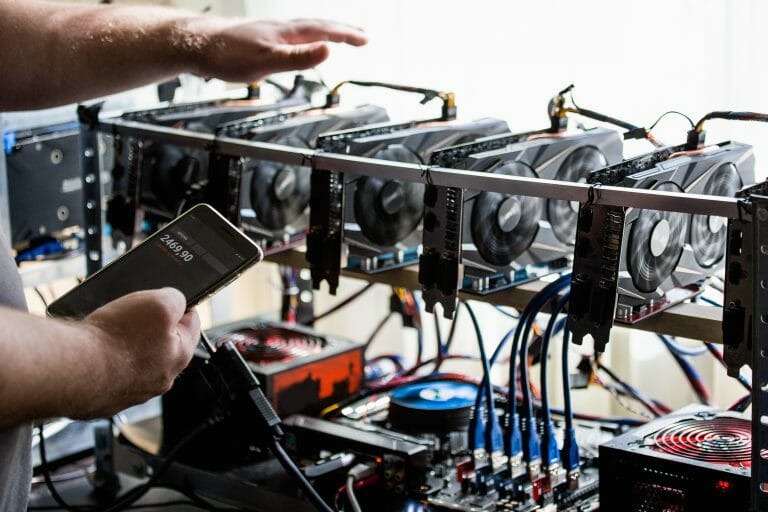
El Salvador is taking a big step towards financial independence with its large-scale Bitcoin mining plan. The government has announced a Bitcoin mining project that will reach an impressive capacity of 20,000 megawatts (MW), which makes it one of the largest and most ambitious projects in the world in the field of cryptocurrency and renewable energy:

“By mining our own BTC, Volcano Energy contributes to the economy of El Salvador. Fostering financial independence and paving the way to a prosperous future.”

The Bitcoin mining project in El Salvador has been the subject of controversy due to its environmental impact, since Bitcoin mining consumes a large amount of energy and emits greenhouse gases.

However, the government of El Salvador has stated that the Bitcoin mining project will be sustainable and use renewable energy to minimize its environmental impact.

As relevant data, El Salvador is positioned as a leader in the production of renewable energy, with 70% of its installed energy capacity coming from clean sources in 2022, according to the Salvadoran Association of Industrialists (ASI).

El Salvador and its Bet on Bitcoin Mining to Get Rid of Public Debt

“Human beings evolve and needs change. Technology must adapt to meet these new demands and facilitate our progress.” In fact, the Bitcoin mining project in El Salvador goes beyond the simple generation of cryptocurrencies, since its objective is to completely cancel the country’s public debt by the year 2030.

Volcano Energy tweeted the following on July 10:

“El Salvador’s path to financial freedom is paved with Bitcoin and Volcano Energy. By harnessing the power of renewable energy in Bitcoin mining, the country is setting a bold vision of being debt free by 2030.”

Said plan is based on El Salvador’s capacity to produce renewable energy, with 70% of its installed energy capacity coming from clean sources in 2022, making it one of the leading countries in this field.

By taking advantage of its capacity to produce renewable energy, El Salvador seeks to establish an innovative and sustainable model of Bitcoin mining that can not only generate significant income for the country, but also improve the quality of life of its citizens through job creation. and the development of clean technologies.

The company in charge of building the Bitcoin mining farm is Volcano Energy, backed by the national government and supported by companies in the crypto industry such as Tether Limited.

Notably, the farm will be built in phases and will start with a generating capacity of 241 megawatts (MW) using solar photovoltaic and wind power. The remaining capacity will be developed gradually, including the extraction of geothermal energy, a process that will probably take five years.

Is El Salvador Bitcoin Mining Project the Largest in the World?

The project aims to give the country the potential to attract investment and foster economic growth through Bitcoin mining and renewable energy generation.

With this initiative, El Salvador seeks to position itself as a leader in the adoption of innovative and sustainable technologies that can boost economic growth and improve the quality of life of its citizens. That it achieves such a purpose remains to be seen.

By Audy Castaneda

Crypto Code Commits to Fall Despite Rising Prices

0

Some may feel a thaw in Crypto Winter as Bitcoin flirts with its highest price in over a year. But tokens aside, the icy market that defined 2022 seems far from over when it comes to software development.

The number of active developers working on open source crypto projects has fallen 22% over the past year, according to a report by venture firm Electric Capital. Analysts found that there were 21,300 active developers in June, up from 27,200 a year earlier.

A decline in crypto developers over the past year could be attributed to more compelling opportunities elsewhere, self-described DeFi addict and crypto analyst Miles Deutscher said on Twitter:

“Even though prices have risen since January, developer activity has slowed down,” he said. “This can be attributed to […] developers switching to other booming tech sectors like AI.”

Electric Capital’s Report Highlights

The report defines those who have left the crypto space as developers who have not contributed to a project in more than two months. Compared to the total number of active open source crypto developers, 7,730 may seem substantial, but the report notes that newcomers are responsible for less than 20% of all code commits.

Most of the confirmations come from open source developers who have more than a year of experience working with crypto, according to Electric Capital, and that number has risen from 11,300 to around 13,100 in 2022, a gain of almost 16% among the most experienced crypto crew.

The report found that fewer developers are also exploring crypto projects for the first time. Last May, 2,900 developers entered the space compared to 5,900 that month a year ago, which was close to an all-time high for monthly entrants.

Deutscher pointed out that fatigue and less money from venture capitalists could also be at play:

“Despite prices rising since January, developer activity has exhibited a downturn. This may be attributed to:

• Developers switching to other booming tech sectors like AI

• Fresh VC funding declining

• Budget constraints/fatigue.”

Winds of Change in Crypto Developments

Institutional investors are also increasingly looking at AI. A survey by JP Morgan found a palpable shift in sentiment in February, with traders saying AI is likely to have more influence than cryptocurrency in the next three years.

A shift in preferences among venture capitalists from crypto to AI is well underway as well, according to Mysten Labs co-founder and CEO Evan Cheng. He said that products leveraging AI have greater appeal to consumers, unlike those in crypto, and are tailored to people already within the digital asset space.

However, an exodus of new talent from the digital asset space is not necessarily a warning sign, the report suggests. Newcomers have dominated the digital asset space after the previous two spikes in the crypto markets, only for that momentum to return to the veterans each time.

The report found that fewer developers are also exploring crypto projects for the first time. Last May, 2,900 developers entered the space, as compared to 5,900 that month a year ago, which was close to an all-time high for monthly entrants.

On July 6, Enrique Herreros, Software Engineer at Electric Capital in Madrid, tweeted the following:

“Market cycles also explain dominance between Newcomers, Emerging, & Established crypto devs. Newcomers dominate around market peaks:

• 6 months after Jan 2018 market peak (June 2018): 70% dominance

• 7 months after Nov 2021 market ATH (June 2022): 60% dominance.”

By Marina Meza

FTX Collapse Wiped Out Tom Brady’s $30 Million Investment: Report

The seven-time Super Bowl winner’s shares in FTX are now worthless following the company’s bankruptcy. Brady is also facing investor lawsuits.

The FTX collapse dealt a devastating blow to popular NFL quarterback Tom Brady, causing him significant financial losses. Known for his role as an ambassador for FTX, Brady frequently appeared in its commercials, endorsing the cryptocurrency company.

According to The New York Times, he had struck a lucrative deal with the now-defunct organization, receiving a hefty payment of $30 million. Most of this compensation was in the form of FTX shares, a risky but potentially rewarding investment.

On top of that, Brady’s former partner, supermodel Gisele Bündchen, also received a substantial $18 million worth of FTX stock as part of the deal. Unfortunately, their fortunes took an unexpected turn when the cryptocurrency exchange filed for bankruptcy in November.

Tom Brady’s Urgent Call in Turmoil

Brady reportedly made an urgent phone call to FTX’s head of partnerships, Sina Nader. The gravity of the situation was underscored by the fact that Nader told the NYT that “I would never have expected to turn down a call from Tom Brady.”

However, at that particular moment, Nader found himself embroiled in a crisis meeting along with FTX founder Sam Bankman-Fried and other key personnel. Recognizing the importance of Brady’s call, Nader promptly returned it after the crisis meeting concluded. During their conversation, it became apparent that Brady was deeply “concerned” by the unraveling events surrounding FTX.

A Wreaked Havoc Sports Association

FTX had tangled with numerous prominent sports leagues and athletes, including the renowned duo of Brady and Bündchen. The couple’s involvement with FTX extended well beyond endorsements, as they starred in a colossal $20 million ad campaign, showing their support for the company.

Brady’s connection to FTX became most apparent in his TikTok videos, in which he appears alongside FTX founder Sam Bankman-Fried at the company’s lavish Bahamas headquarters. However, these seemingly thriving connections would soon unravel, plunging both the athletes and the cryptocurrency company into deep crisis.

Recent events have taken a grim turn, as investors launched a class action lawsuit against Bankman-Fried. This legal action named not only Brady and Bündchen, but also other prominent sports figures such as Shaquille O’Neal, Stephen Curry, Trevor Lawrence, Naomi Osaka, David Ortiz and Shohei Ohtani as defendants. Investors are seeking liability for financial losses suffered due to the collapse of the crypto empire.

“None of these defendants performed due diligence before marketing these FTX products to the public,” according to the complaint obtained by the Times. The lawsuit was filed in federal court in Florida.

Before the collapse of FTX, the company was valued at $32 billion, including the $48 million in shares held by Brady and Bündchen, according to the Times. Nowadays, though, it has no value.

The 45-year-old Brady was ranked No. 50 on Forbes’ list of the world’s highest-paid athletes in 2023 with earnings of $45.2 million in football salary and endorsements.

The repercussions have been profound for Bankman-Fried himself, as his net worth plummeted from a staggering $30 billion to just $4 million in the wake of the crash. The founder’s fall from grace took an even more serious turn with the emergence of federal fraud charges, further exacerbating his dire situation.

By Audy Castaneda