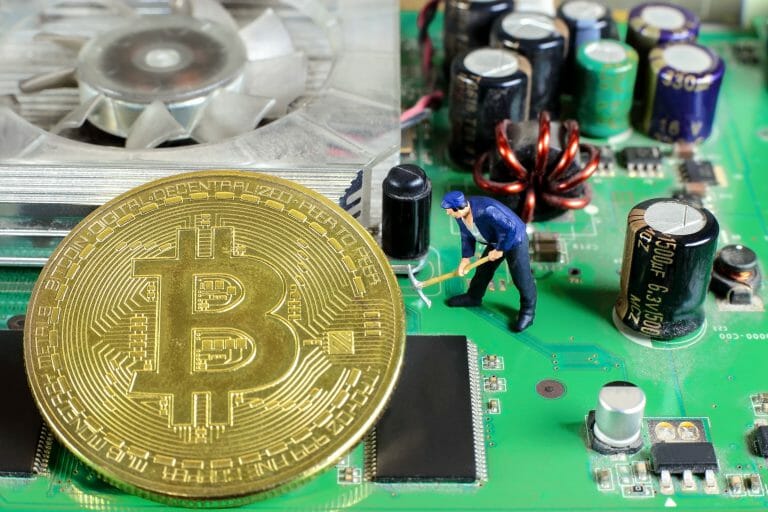
Bitcoin Mining: Summary of the Week’s Highlights

0

This is the summary of the most important news of the week in the Bitcoin mining world.

Genesis Hashrate Grows in Sweden

The most noteworthy news in this weekly summary is about Genesis Digital Assets’ expansion of operations in Sweden. The company’s computing power now consumes 8 megawatts and could continue to increase in the near future, the company itself reported.

It is important to note that Genesis belongs to a select group of industry heavyweights. The largest companies are in a race to expand operations in order to face the halving of 2024 on their feet.

Dropbox Eliminates Unlimited Storage Plan Due to Miners’ Guilt

One of the most eye-catching mining-related (albeit non-Bitcoin) news in this roundup involves Dropbox. As reported by CryptoTrendency this week, the storage services firm decided to destroy its unlimited space plan as a result of crypto activity.

Chia miners who call themselves “farmers” used to contract this storage service to generate coins. Different from traditional digital mining based on Proof-of-Work (PoW), Chia’s mining is based on a protocol called Proof-of-Space-and-Time (PoST). As the name suggests, instead of requiring computing power to move the network, it requires storage.

Either way, Dropbox considered this practice an “abusive use” of its services and proceeded to remove its unlimited storage plan.

BlackRock’s Investments in Digital Mining Revealed

In case any doubts remained about BlackRock’s enthusiasm for Bitcoin, its investments in the digital mining sector are now known. The world’s largest asset manager shared that it has numerous investments in publicly traded companies in the sector.

After generating noise with Larry Fink’s positive statements and the request for a spot ETF, this chapter is made official. It is worth mentioning that other major competitors of the firm also have investments in mining companies, as reported by specialized media.

Miners Face $2.8 Billion Drop in Monthly Income

Another of the starring news items in this Bitcoin mining summary has to do with the drop in revenues for companies in the sector. During the second half of August, mining companies’ revenues went to the floor following the decline in the price of BTC.

As reported by financemagnates.com, a group of five major mining companies retreated $2.8 billion on Thursday. Meanwhile, the overall market capitalization of listed companies retreated 30% from $9.5 billion to $6.7 billion. 

Some giants such as Riot and Marathon led the decline. The remarkable pullback in BTC price, as stated at the beginning, becomes one of the biggest punishments for mining firms at this time when they need liquidity to expand.

Bitcoin Difficulty Hits New All-time High of $55.62T

Bitcoin mining difficulty reached a new all-time high this week by standing at 55.62T. As reported by this media outlet, the level of complexity is poised to continue rising in the next adjustment.

It should be remembered that these adjustments occur automatically in the network every 2016 blocks. The purpose of these adjustments is to keep the processing time of each block within a margin of approximately 10 minutes. Thus, when the number of connected devices increases, the difficulty increases and vice versa.

During the last few months, large companies in the sector have increased their hashing power with the aim of receiving halving in the best way. However, the increased difficulty makes the business less profitable, which adds to other constraints such as the rising price of energy and the fall of BTC.

By Audy Castañeda

Stellar Lumen (XLM) Price Could Start Again Downtrend below $0.112

0

Stellar is an open-source cryptocurrency with a mission to build a global financial infrastructure that facilitates the circulation of traditional forms of money and access to new markets.

Stellar has succeeded in reinventing the currency and asset transfer market by creating a fast and inexpensive distributed network. In fact, its technology has been so adaptable that in 2023 it remains one of the fastest cryptos in the industry.

XLM has also experienced fairly robust growth and adoption. It has tried to position itself as a decentralized exchange of sorts, as its blockchain maintains a built-in order and order book, which keeps ownership of assets.

Stellar Lumen Price Is Struggling below the $0.125 Resistance Zone Against the U.S. Dollar

XLM price is now trading below $ 0.120 and the 55 simple moving average (4 hours). A key downtrend line is forming with resistance near $0.123 on the 4-hour chart (data via Kraken). The pair could start a new rally if it breaks above the $0.125 resistance.

The stellar lumen price is trading below $0.125 against the US dollar, similar to Bitcoin. XLM price could extend losses if it trades below $ 0.112 support. 

Stellar Lumen (XLM to USD) price analysis

Star Lumen (XLM) price

The chart indicates that XLM price now trades below $0.125 and the 55 (4-hour) simple moving average. Overall, the price could initiate a further rise if it breaks above the $0.125 resistance.

Technical Indicators

4-hour MACD: The MACD for XLM/USD is gaining momentum in the bearish zone.

4-hour RSI: The RSI for XLM/USD is now above the 50 level.

Key support levels: $0.116 and $0.112.

Key resistance levels: $0.125, $0.135 and $0.144. 

After a sharp drop below $ 0.112, the price of Stellar Lumen entered a bearish zone against the US dollar. The XLM/USD pair traded below the $0.105 level.

There was also a rise below the $0.102 support zone. A low formed near $0.100 and the price recently corrected upwards. There was a move above the levels of $ 0.115 and $ 0.120. However, the bearish seems to be active near the $ 0.135 area.

A high is formed near $ 0.1326 and the price goes back down. There was a move below the 23.6% Fibonacci retracement level of the upward move from the low of $0.100 to the high of $0.1326.

XLM is now trading below $0.120 and the 55 (4-hour) simple moving average. A key downtrend line is also forming with resistance near $0.123 on the 4-hour chart.

The next key resistance is seen near the $0.125 level. A clear bullish break above the $0.125 area could send the price towards $0.135. Any further gains could take the price towards the $0.144 level.

Initial downside support is near the $0.116 level. The next important support is near the $0.1125 area or the 61.8% Fibonacci retracement level of the upward move from the low of $0.100 to the high of $0.1326.

Any further losses could take the price towards the $0.105 level in the short term, below which the price could even retest $0.1000. The next important support is near $0.095.

By Leonardo Pérez

OnlyFans’ Parent Company Invested in Ethereum (ETH), According to Report

OnlyFans’ parent company, Fenix International, recently filed an accounting statement for 2022, which reveals that the company invested some of its working capital in ETH. While the company did not disclose how much Ether it held, it did imply that it had incurred a loss at the end of the reporting period (November 2022). OnlyFans sees a 21% rise in earnings despite ETH losses.

Fenix International owns the digital subscription service OnlyFans, a platform typically associated with adult video content. In a recent financial statement filed with Companies House in the UK, the company reported that during the year, the Group diversified part of its working capital into cryptocurrencies (‘Ethereum’ or ‘ETH’). There are no limitations or restrictions on the Group’s ability to sell cryptocurrency assets.

The statement does not provide details of Fenix’s holdings or disclose the exact value of its investment in cryptocurrencies. However, it does state that the asset has been impaired to fair value at year-end.

This suggests that OnlyFans ETH was worth less at the end of November than when it was purchased. However, this is not surprising. In the 365-day period covered by the recent filing, ETH lost more than 70% of its value, falling from $4,448 to $1,217. However, for the owner of OnlyFans, losing money on Ethereum seems to have done little to dent his revenue.

Overall, sales for the year rose 17% to $1.1 billion. Meanwhile, the company posted pre-tax profits of $525 million, a 21% increase over the previous year.

Why are companies investing in cryptocurrencies?

Apart from specialized investment firms and hedge funds, many companies have incorporated cryptocurrencies into their investment portfolios.

One remarkable example is Tesla, which became one of the first reputable companies to hold Bitcoin in its corporate treasury back in 2021. Then, the automaker dumped three-quarters of its BTC in the second quarter of 2022. And given the asset’s volatile price performance in the second half of the year, it was probably a smart move.

A January filing with the Securities and Exchange Commission (SEC) reveals that Tesla posted a $204 million loss on its Bitcoin holdings in 2022. But CEO Elon Musk has made no secret of his faith in cryptocurrencies.

Other companies that have made high-profile crypto investments include U.S. software firm MicroStrategy and Chinese digital technology giant Meitu.

MicroStrategy began investing in cryptocurrencies for the first time in 2020

MicroStrategy first began investing in cryptocurrencies in 2020, when it bought Bitcoin for $250 million. At the time, CEO Michael J. Saylor explained the reason for the company’s decision by indicating that their investment in Bitcoin is part of our new capital allocation strategy, which seeks to maximize long-term value for our shareholders.

Since then, the company has become one of the major corporate holders of Bitcoin in the world. It now owns more than 150,000 Bitcoin, worth around $3.91 billion at current prices.

As a result of a drop in the price of BTC earlier this month, MicroStrategy incurred a large $600 million loss in the value of its investments. However, the firm has not stated any intention to reduce its position.

Meitu, on the other hand, has favored ETH as a treasury investment. In its annual report for 2022, the firm reported holdings of Ether valued at $37.3 million and Bitcoin worth $15.6 million. Taking into account market gains since then, Meitu could currently hold more than $50 million in ETH alone.

By Audy Castañeda

US Crypto Startups Face Lower Adoption and Difficult Regulation

0

The United States, home to the world’s largest economy, Silicon Valley, and a vast supply of talent and investment has some appeal for promising crypto startups. But motionless local adoption, an uncertain regulatory climate, and an increasingly inflexible tax regime threaten to make the country less attractive.

Strengths of the U.S. Crypto Sector

The United States has dominated global markets for more than a hundred years. And from the mid-20th century onward, high-tech innovation centered in Silicon Valley and other tech business hubs has been a cornerstone of the country’s economic growth.

In the years since its inception, the U.S. crypto space has exploded. Today, the largest U.S. crypto company, Coinbase, has a market capitalization of more than $9 billion. And in the second quarter of 2023, the company reported revenue of $708 million.

However, despite the sector’s strong growth over the past decade, some members of the business community have identified growing challenges for cryptocurrency startups in the United States.

U.S. Crypto Adoption Is Outpaced by Other Countries

In many ways, the United States was a pioneer in the use of cryptocurrencies among businesses and consumers. But in recent years, the adoption rate has decayed. In 2022, the U.S. ranked fifth in Chanalysis’ global crypto adoption index, behind Vietnam, the Philippines, Ukraine and India.

And while faithful U.S. proponents of cryptocurrencies are as passionate as ever, holders remain in the minority. Certainly, it is difficult to identify exactly what proportion of the country owns cryptocurrencies.

The slowing growth in adoption rates could suggest that most Americans remain wary of cryptocurrency investments and unconvinced of the technology’s potential for payments.

Regulation Drives an Exodus of U.S. Crypto Firms

Beyond slowing adoption, a challenging regulatory situation also threatens to derail the U.S. crypto sector as several major crypto exchanges have already exited the U.S. market.

Facing a court battle with the Securities and Exchange Commission (SEC), Bittrex ended its U.S. operations in April. It is a similar story for Revolut. Earlier this month, the FinTech startup blamed “an evolving regulatory environment” when it withdrew its crypto trading service in the United States.

Leaders Question the Future of the U.S. Crypto Sector

In the middle of a SEC crackdown and a slowdown in growth in the space, business leaders have suggested that startups turn their attention elsewhere. In a statement on August 25th, Antonio Juliano, who founded the exchange dYdX, commented that Cryptocurrency creators should simply stop serving U.S. customers for now and try to re-enter in 5 to 10 years.

According to Juliano, the challenges of operating in the U.S. do not justify the rewards. Especially when there is plenty of appetite for crypto services elsewhere.

After all, dYdX is based in San Francisco but cannot legally offer its services in the United States. However, Juliano remains optimistic about the future of the U.S. crypto market.

For others, the future is less certain, Ryan Selkis, CEO of Messari, put his opinion bluntly in a recent tweet. As he put it: There is no future for cryptocurrencies in the U.S. if Biden is re-elected. In this respect, it is important to stress that few CEOs are as blatantly partisan or grandstanding as Selkis.

Nevertheless, fears remain high that the U.S. risks losing its edge in an area where it has all the ingredients for success. And crypto entrepreneurs face an uncertain future if they decide to set up shop in the country.

By Audy Castañeda

Toncoin up more than 8% in the Last Week: How High Can it Go?

0

In the rapidly changing world of cryptocurrencies, Toncoin (TON) has recently emerged as a focal point of discussion due to its remarkable price increase of more than 8% over the past week.

Toncoin (TON) is the native cryptocurrency of the TON Blockchain project, which is an initiative developed by the team behind Telegram. TON Blockchain aims to create a scalable and fast blockchain platform that enables not only cryptocurrency transactions but also a range of decentralized applications and services.

This surge of Toncoin (TON) has sparked renewed interest in cryptocurrencies and generated inquiries about the coin’s potential for sustained growth in the foreseeable future. Toncoin (TON) boasts an impressive price of $1.46, securing its position as the 14th largest cryptocurrency by market cap at around $5 billion.

Technical Analysis Toncoin

From a technical perspective, the Toncoin price chart reveals several interesting developments worth noting. The relative strength index (RSI) currently stands at 58.29, suggesting a balanced interplay between buying and selling pressures. This indicates that the market is in a relatively neutral state. However, the uptrend in the RSI over the past week suggests that bullish sentiment among traders is strengthening. This has been debated by TradingView.com

The MACD (12, 26) level at 0.0287 further supports the bullish sentiment with a buy indication. In addition, the Momentum (10) at 0.0417 reinforces the positive momentum, indicating an opportunity for further upside movement. From a short-term perspective, the moving averages paint a bullish picture. The crossover of the 50-day moving average (MA) above the 200-day MA suggests a shift in momentum from bearish to bullish. This crossover is generally considered a positive signal, adding to the bullish outlook for Toncoin.

Examining Toncoin’s performance in recent months reveals a nuanced story. While the cryptocurrency has shown resilience, posting a gain of 8.83% in the past week and 8% in the past month, it is crucial to recognize its prior downtrend.

Toncoin experienced a significant drop of 25.90% in the last three months and an even steeper drop of 40.74% in the last six months. These figures underscore the inherent volatility associated with Toncoin’s market movements.

More Gains Ahead?

In light of prevailing market sentiment and recent price action, investors are presented with multiple potential scenarios. The bullish momentum seen in the near term may persist, especially if the bullish crossover of the MACD indicator gains additional strength.

However, a cautious approach is warranted, given the cryptocurrency’s history of significant declines. Traders are advised to meticulously monitor critical support and resistance levels to make well-informed decisions.

Based on current technical analysis, Toncoin (TON) is experiencing a positive phase, with indicators such as RSI, stochastic, CCI, and moving averages reflecting a neutral to bullish stance. Market momentum and the MACD level also point to a possible bullish move.

Nevertheless, as with any financial asset, there are inherent risks and market conditions can change rapidly. Staying informed and employing risk management strategies is critical when navigating the cryptocurrency market.

By Audy Castañeda

Why do people collect NFT?    

0

Why do people collect NFT?    

The non-fungible token market is one of the most striking emergences within the blockchain world. Millions of people around the world turned to this sector that remains solid despite the winter in the cryptocurrency market.

It should be noted that there is no particular reason to motivate people to acquire these collectibles. In that sense, it can be said that there are numerous justifications for entering this market.

4 Reasons Why People Collect NFTs

Listing the inclinations that motivate people to collect NFTs (or anything else) is a complex task. However, there are trends that can be used to group people who are attracted to a particular market.  In the case of non-fungible tokens, these are the 4 main reasons:

1.- Support and empower artists

Since it became a business stolen by the most archaic monopolies, artistic creation lost part of its inspiration. Consequently, artists have long been subjugated by publishers, producers, and auction companies. All these forced them to sign contracts often contrary to the interests of the creators of works and other content.

These tokens mark the beginning of a more equitable model since they bypass the commercial sewers that control the art industry. Artists now have the ability to develop their own creations and sell them independently. The great advantage is that they retain their intellectual property and creative control. Investments to enter the market are eliminated and middlemen are avoided.

2.- Collecting rare pieces

This is where social conventions come in. People accept that a collectible album card from the 1978 Argentina World Cup has value; people’s subjectivity adds values that could even be worth millions of dollars depending on the rarity.

With this, it is patented that it is not about the card, but about what it represents: cultural relevance, rarity, history, and other attachments. Non-fungible tokens largely represent all of this but in a digital version. Thus, cards, artwork, and NFTs appeal to people because of the originality of some creations.

The fact that these tokens are unique is a reason for many people to accumulate them as a collection. This is a great opportunity to access digital assets that in the future will arouse admiration since they will be the first NFTs minted in this era and will be seen as relics.

3.- Investment and profit

There are the motivations of traders to profit from these tokens. Like collectors, some people stockpile these pieces. The difference is that they do so with the motive of waiting for them to appreciate in value so that they can sell them at a profit on their investment.

Thus, investment and profit are among the motives that drive people who collect NFTs. Currently, the trade of these pieces is in its early stages, which makes it a highly volatile market. Hence, it can be considered a high-risk/reward investment.

4.- Being part of a community

Although undervalued by outsiders, the sense of community is one of the strongest in this universe. Many holders are encouraged to become one in order to be part of clubs and feel surrounded by fellowship and exclusivity.

In other words, it’s not about economic, historical, or cultural value, but rather they create identity for many buyers. As a result, a considerable number of creators orientate their NFTs toward collections that generate community. Thanks to blockchain features, creators make exclusive environments for the holders of their collections. As this market develops and acquires new features; it will also generate new attractions for people.

By Audy Castañeda