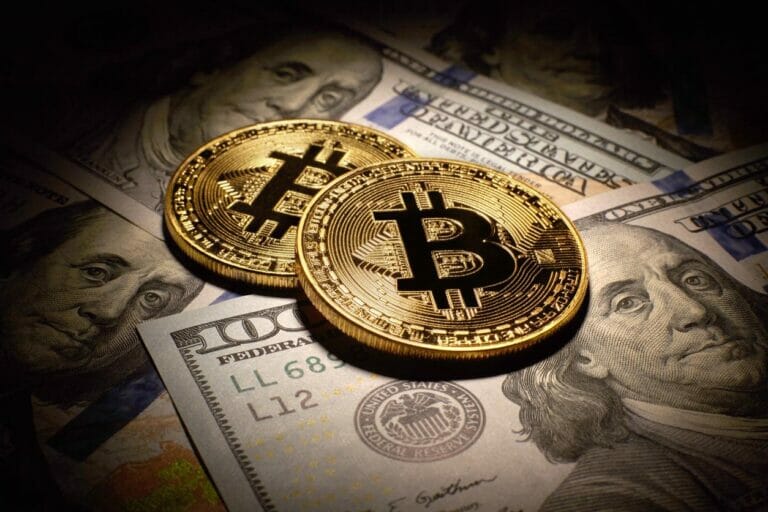
Peru Bans Sports Betting and Gaming with Bitcoin

Article 39 of the law in Peru states that it is prohibited to “carry out transactions using cryptocurrencies” such as Bitcoin. The recently approved text will come into force as of February 9 of the following year, in Peru. Peruvian law contemplates economic sanctions that could exceed 190 thousand dollars for those who fail to comply with the provisions.

Peru approved the regulations of Law No. 31557 that regulates remote games and sports betting with the same modality. The extensive document dedicates a specific paragraph to the prohibition of Bitcoin and cryptocurrencies for the payment of both activities. This implies that the online game or virtual casino will not be able to use crypto payments. The same fate for the so-called ‘Play-to-Earn’ games.

The new rule also reaches companies in that niche that are related to crypto assets in Peru. The regulation will begin to take effect in practice as of February 2024. Subsection ‘e’, ​​of article 39 of the law, resolves that “carrying out transactions using cryptocurrencies” is prohibited. The norm sees the light in the prelude to a legislative debate that aims to lead to the regulation of the activity.

What the Law Says that Prohibits Paying Sports Betting with Bitcoin in Peru

The recently approved text, whose application will begin on February 9, 2024, raises the request for authorization to work. The period will run the following 30 days from the entry into force of the rule, between February 10 and March 10, 2024.

During this period, all technological platform operating companies that offer these services must virtually present their request to the Ministry of Foreign Trade and Tourism of Peru (Mincetur) to be granted operating authorization. Those who do not comply with the procedure will be unable to continue operating.

In the case of the use of cryptocurrencies, however, the new law leaves no room for doubt:

“The Owner, without prejudice to the provisions of the Law, is prohibited from carrying out transactions using cryptocurrencies.”

The law contemplates economic sanctions that could exceed 190 thousand dollars for those who fail to comply with the provisions.

The Peruvian Foreign Trade and Tourism Speaks

The Minister of Foreign Trade and Tourism of Peru, Juan Carlos Mathews, said the following:

“The rule will allow the Peruvian State to collect close to S/ 162 million annually, to be invested in the reactivation of tourism, tourist infrastructure works, promoting sports and addressing mental health programs. Furthermore, we make it clear that it will not affect betting and prize payment. The money won as a prize will be collected in full. The tax will apply to national and foreign online gaming and betting companies.”

The official considered joining other jurisdictions where the activity is also regulated:

“It is the first time that this important economic activity has been regulated in the country. In South America, Peru becomes the third country to regulate it, after Colombia and Argentina (in the provinces of Buenos Aires, Córdoba and Mendoza).”

Online gaming is not new and its expansion in Latin America and the world is increasing. In that sense, Mincetur delivered the following numbers:

  • There are 50 online sports betting and gaming technological platforms operating in Peru, as of October 2023.
  • Global online gaming gross revenue in 2022 will reach $102 billion, according to an international study by H2 Gambling Capital.
  • It is estimated that the volume of bets made in Peru during 2022 was close to S/3,800 million.

By Leonardo Pérez

G20 Approved IMF and FSB Guidelines for the Regulation of Cryptocurrencies

In a recent meeting in Marrakech, it was learned that the G20 approved guidelines from the IMF and FSB to regulate cryptocurrencies.

Marrakech was the scene of a momentous meeting on October 13, where the Group of Twenty (G20), an international forum that brings together 19 sovereign nations together with the European Union and the African Union, made a decision of enormous relevance at the level global.

During this meeting, the G20 Finance Ministers and Central Bank Governors unanimously approved the “Communique of the G20 Finance Ministers and Central Bank Governors” that seeks to regulate cryptocurrencies.

This statement highlights the implementation of specific regulatory frameworks, the promotion of information transparency beyond G20 jurisdictions. As well as strengthening coordination, cooperation and information exchange at a global level. This decision marks an important step.

“In the spirit of #OneEarthOneFamilyOneFuture and following full consensus by the #G20 members, the Fourth #G20 Finance Ministers and Central Bank Governors Communique was adopted today in #Marrakech, Morocco,” reads a post on X by the Indian Ministry of Finance.

Report Indicates that Blockchain Gaming Investments Reach $2.3 Billion by 2023

Amid a year of fluctuations in the cryptocurrency market, blockchain-based gaming projects have achieved an impressive injection of capital, totaling $2.3 billion in investments during 2023.

These figures are particularly notable, as the third quarter of the year attracted an investment of $600 million. This, despite the apparent downward trend that affected cryptocurrencies throughout the year.

According to a report by DappRadar, a decentralized applications (DApps) tracking platform, the first quarter of 2023 witnessed investments worth $739 million, followed by $973 million in the second quarter and an additional $600 million dollars in the third quarter. In total, this adds up to an impressive $2.3 billion in investment in the blockchain-based gaming sector during the first three quarters of the year.

Tether Announced a CEO Change as well as the Expansion of Commercial Operations

Tether, one of the most influential companies in the world of cryptocurrencies, has announced a significant change in its leadership structure. In a statement issued on October 13, Tether reported that Paolo Ardoino, who has served in the role of chief technology officer since 2017, will take over as CEO of the company starting in December 2023.

This announcement marks a milestone in the company’s history, as Ardoino will take over as CEO at a crucial time. At the same time, Jean-Louis van der Velde, the current CEO of Tether, will move to an advisory role in the company while retaining his position as CEO of Bitfinex. A sister company of Tether.

Madeira President Considers Creating Bitcoin Business Center to Drive Innovation

During the second day of the Bitcoin Amsterdam 2023 event, the President of the Regional Government of Madeira, Miguel Albuquerque, unveiled ambitious plans for the creation of a Bitcoin business center in the region. This announcement came in the context of a fireside conversation with Prince Filip Karađorđević of Serbia, who expressed great interest in the initiative.

The main purpose of this Bitcoin business center, which will have the symbol BTC and a currently traded market value, is to drive innovation at a regional level. Prince Karađorđević highlighted the potential of this project in technological development. As well as on possible collaborations, while Albuquerque underlined the importance of the location in Madeira and the inclusive opportunities it offers.

By Audy Castaneda

Pro-XRP Attorney Deaton Considers Addressing Congress with Critical Letter

0

Deaton is candid about his belief in the “ETH Gate” theory, suggesting that the SEC has potential conflicts of interest, including connections to China.

John E. Deaton, an experienced attorney and notable figure within the XRP community, he turned to X (formerly Twitter) on Thursday, October 12 to signal his intention to write a letter to the Financial Services Committee (FSC), criticizing the lack of efficiency in addressing the United States Securities and Exchange Commission (SEC) through letters to its president, Gary Gensler.

On X (formerly Twitter), Deaton stated the following:

“I think I’m going to write a letter, addressed to the FSC, discussing the inadequacy of writing letters to @GaryGensler. True oversight is not about how many stern letters you write or how many warnings you give. It isn’t about voluntary compliance. True oversight is achieved involuntarily.”

This Enrages Pro-XRP Attorney Deaton

This tweet was a response to a post by Fox Business journalist Eleanor Terrett, who had highlighted that Oversight Committee Chairman Rep. James Comer was contemplating using subpoena power on Gary Gensler and the SEC, emphasizing the Committee’s exasperation at Gensler’s continued failure to comply with oversight requests.

Terrett quoted an anonymous former SEC source as saying, “I’ve never seen a request like this before, at least not at the SEC.” Highlighting Comer’s reputation, a Capitol insider chimed in, saying, “Comer is coming to play.”

In the letter to the SEC Chairman, the House Oversight and Accountability Committee expressed displeasure with the SEC’s apparent lack of cooperation on oversight requests. The Committee highlighted its fears about the SEC’s involvement in European social engineering schemes, citing them as transparency initiatives.

James Comer, Chairman of the Committee, noted that the documents provided by the SEC are already primarily in the public domain and are therefore ineffective in satisfying the Committee’s investigations. Reminding the SEC of its promise of collaboration made during the 118th Congress, Comer suggested that the Committee could turn to mandatory processes to ensure compliance.

He also drew parallels to the $6 million fine imposed on Goldman Sachs by the SEC for withholding data, indicating that the SEC should provide unobstructed access to its records.

What the Letter Could Be About

Although the specific topic Deaton wishes to address in his letter remains undisclosed, his defense of XRP and his criticism of both Gensler and the SEC are well known.

In another post yesterday, Deaton commented, “It seems blatantly clear that having a CCP connection provides a company with not only access to US regulators, but an investigative free pass. Where is Gary Gensler – the self-proclaimed cop on the beat? Does he and the SEC only investigate and sue non-fraudulent American companies like LBRY, Dragonchain, Kraken and Coinbase?”

He was referring to a comment by Marc Cohodes, who raised questions about ties between FTX’s Gary Wang and China, hinting at possible preferential treatments.

Surprisingly, in his recent hearing before the House Financial Services Committee, Chairman Patrick McHenry complained that SEC Chairman Gary Gensler had withheld documents requested from Congress for more than seven months, pointing to the refusal of the SEC to provide documents on the FTX collapse and the climate disclosure rule.

Recently, XRP was trading at $0.4817.

By Leonardo Pérez

What to Expect This Friday the 13th for Bitcoin

What to expect this Friday the 13th for Bitcoin when superstition pounces on an ecosystem that has received bad news?

Friday the 13th, shrouded in the mysticism of Western culture, stands as a day tinged by the superstition of bad luck. In this context, a disturbing question arises: what will this Friday the 13th hold for Bitcoin? Although the veil of the future does not allow us to spy on concrete answers, we will embark on a retrospective journey to unravel why this day is perceived as full of ominous omens.

The infamy of Friday the 13th does not arise from a single source; it is the result of a confluence of disparate events and beliefs. From ancient tales of Norse mythology to interpretations of Christianity and Jewish Kabbalah, various traditions have contributed to the day’s fearsome reputation.

Despite the varied roots of these superstitions, one thing is undeniable: the crypto ecosystem is immersed in an atmosphere of palpable anxiety every time this day appears on the calendar.

Friday the 13th: Bitcoin Under the Shadow of the Next Halving

With just 178 days left until the next Bitcoin Halving, the crypto community is in a state of effervescence, almost palpable, similar to the prelude to a great celebration. The impact of a Halving on Bitcoin is not limited to its own blockchain, but reverberates through other cryptocurrencies and ecosystems. Even in the absence of a bull market, Bitcoin continues to capture attention, largely due to growing interest from governments globally.

A recent post titled “Between Luck and Speculation: Bitcoin Analysis for Friday the 13th” captured attention and allowed us to delve into the enigmatic depths of Bitcoin expectations and dynamics in October.

The price of Bitcoin has remained stagnant in the last 24 hours, as if in a tense calm, anticipating the mysteries that Friday the 13th could reveal. Although it has retreated 3.2% in the last week, its 1.9% advance in the last 30 days suggests underlying resilience.

Historically, there is no evidence of a drastic drop in the value of Bitcoin just the day after; However, markets are notoriously superstitious entities. In fact, over the past 4 years, Bitcoin has experienced relatively neutral days on each of the 5 “Fridays the 13th.”

Although there is no clear pattern, trust has been breached this year, in part due to the rise of CBDCs and the recent case brought by the US Securities and Exchange Commission against Binance.

Although to many these events may seem disconnected, shocking and ecosystem-adverse revelations could undoubtedly set off a storm in the market, affecting cryptocurrencies beyond Bitcoin. This year could mark the first time that a Friday the 13th means a significant turning point for Bitcoin.

Difficulty and Profitability Become a Nightmare

In the twilight of superstitions, the reality is that Bitcoin faces constant challenges that seem straight out of an endless nightmare.

Miners, witnessing the erosion of their profits, face increasing adversity with increasing hardship, which has become a relentless source of consternation. At this time, Bitcoin mining difficulty persists on an upward trajectory that has shown no signs of slowing down over the last year.

The high difficulty that is presented seems to be at odds with the current circumstances. Although the profits for miners are not particularly attractive, the number of validators continues to increase. The more validators participating in the Bitcoin network, the greater its security. However, this robustness, paradoxically, seems to adversely affect the finances of some involved.

By Audy Castaneda

What Will Be the Impact of the Expiration of $640 Million in Bitcoin Options?

Approximately 24,000 Bitcoin options contracts, worth nearly $640 million, will expire on October 13. In addition to Bitcoin, 190,000 Ethereum options contracts will also expire, with a critical high of $1,600. The expirations are unlikely to significantly impact cryptocurrency spot markets.

Cryptocurrency markets have faced a challenging week, with major players experiencing a slowdown. Now the focus is on an impending derivatives expiration event, with market participants wondering whether it will bring much-needed change.

It’s Friday again, which means Bitcoin options expiration day, and today’s stretch could induce a small move in the market. This one has been on the defensive all week as big companies pull back: Will the derivatives expiration event make any difference?

On October 13, around 24,000 Bitcoin options contracts with a face value of around $640 million will expire. Additionally, this options expiration event is approximately 50% larger than last week’s expiration.

In addition to Bitcoin, approximately 190,000 Ethereum options are about to expire. These contracts have a Put-Call ratio of 0.71, a maximum critical point of $1,600, and a face value of $290 million. What is significant about Ethereum contracts is its put/call ratio of 0.71, which indicates that more call options are being sold as ETH remains under bearish pressure.

Bitcoin Options Expiration Day

The maximum pain point for the current batch of Bitcoin options is $27,000, exactly the same as last week. It is also slightly above current spot prices. The maximum pain price is the level with the most open contracts. It is also the level where most losses occur when contracts expire. The put/call ratio for current Bitcoin options is 1.23, which means there are more sellers of short contracts than long ones.

Greeks Live said Bitcoin remains the market leader, with weekly positions in BTC options rising almost 70% this week. Additionally, BTC short positions account for 60% of the total, which is “a relatively rare occurrence,” he said before adding, “ETH continues to languish.”

Referring to implied volatility, which is the volatility derived from expiring futures contracts, Greeks Live added the following:

“IVs on all major terms remain at record lows with no signs of recovery, and as liquidity continues to deteriorate lately, the biggest one appears to be getting closer.”

The “big one” may refer to a final exit that has also been predicted by crypto market analysts.

In June this year, around 150,000 BTC options contracts, worth approximately $4.5 billion, and 1.2 million ether contracts, valued at $2.3 billion, expired on the major options exchange. cryptocurrencies, Deribit.

Back then, the most valuable cryptocurrency traded flat remained in a narrow price range and only made a 1% gain, reaching $30,700. Now, investors are anxiously watching to see if that pattern merges again, as these options contracts approach expiration once again.

What’s Happening with Ethereum Contracts?

In addition to the BTC contracts, a batch of 190,000 Ethereum options will expire today. These have a maximum critical point of $1,600 and a face value of $290 million.

On the other hand, Ethereum contracts have a put/call ratio of 0.71, meaning there are more buying options than selling options as ETH remains bearish.

This week’s options expiration event is unlikely to shake up spot markets, which have lost $54 billion in the past seven days.

The total capitalization is currently $1.08 trillion, with very little movement in the last 24 hours. However, sentiment and direction remain bearish, so further losses could occur over the weekend.

By Leonardo Pérez

Bitcoin (BTC) ETF Approval Looms

The price of Bitcoin (BTC) has declined since reaching a high of $28,592 on October 2. The decline confirmed a deviation above the $28,000 horizontal area, which is now confirmed as resistance.

A recent amendment to ARK Invest and 21Shares’ joint application for a spot bitcoin exchange-traded fund (ETF) could be considered a “good sign” of progress and imminent approval.

The approval application filed Oct. 11 with the U.S. Securities and Exchange Commission adds additional information about the proposed bitcoin spot ETF, including practices for how the fund will custody the assets and determine their value.

Bitcoin Falls After High Range Rejection

Technical analysis of the daily time frame shows that Bitcoin price has fallen since reaching a high of $28,580 on October 2 (red icon). At the time, it seemed like BTC had broken out of the $28,000 horizontal resistance area.

However, the price could not sustain its increase. It fell below the area shortly after, validating it as resistance (black icon) on October 6. Bitcoin has fallen at a rapid pace since then, reaching a low of $26,538 on October 11.

The daily Relative Strength Index (RSI) gives a bearish reading. Market traders use the RSI as a momentum indicator to identify overbought or oversold conditions and decide whether to accumulate or sell an asset. Readings above 50 and an uptrend indicate that the bulls still have an advantage, while readings below 50 suggest the opposite.

The indicator is below 50 and falling, both signs of a downtrend. Furthermore, it has collapsed from its bullish divergence trend line (green line), which preceded the entire upward movement.

There is some very interesting news about Bitcoin today, as it marks the final deadline for the Securities and Exchange Commission (SEC) to challenge a court’s decision, which found insufficient grounds to block a spot Bitcoin exchange-traded fund (ETF).

If the SEC refuses to dispute this decision at the end of the day, they will exhaust their options to reject any further Bitcoin Spot ETFs. Consequently, they would be required to grant approval to all such ETFs. If the SEC does not take action today, it is increasingly likely that we will see the green light for all spots, and not just Bitcoin ETFs.

Additionally, 24,000 Bitcoin options contracts worth $640 million will expire today. The US consumer price index (CPI) for September stood at 3.7%, only slightly above the forecast of 3.6%.

If combined with a slightly higher than expected producer price index, this could lead to a slight increase in interest rates at the next meeting. While the US Dollar Index responded positively to the CPI, Bitcoin declined to some degree.

BTC Price Prediction: When Will the Price Bottom?

Technical analysts employ Elliott wave theory as a means of identifying long-term recurring price patterns and investor psychology, helping them determine the direction of a trend. The most likely Elliott Wave count is bearish.

Starting from the November 2022 low of $15,479, BTC price has completed a five-wave upward movement. If the decline continues, the most likely level for the bottom of wave C will be $21,800. The area coincides with the 0.618 Fib retracement support level and would give waves A:C a 1:1 ratio.

An analysis of BTC halving cycles also supports this possibility. A drop to $21,800 will mean a decrease of almost 20% from the current price. Despite this bearish Bitcoin price prediction, a rise above the wave B high of $28,592 may lead to a 15% upward move towards the $30,500 resistance area.

By Audy Castaneda