Stripe Integrates Avalanche to Drive AVAX Web3 Adoption

Avalanche announced its integration into the Stripe financial platform, which will run on the C-Chain, allowing users to purchase AVAX with bank cards. Avalanche’s wallet, Core, integrated Stripe, where Avalanche users will be able to select Stripe as their cryptocurrency purchasing option. The Stripe news was celebrated by the market, as the price of AVAX went from $32.93 to $35.77, an increase of 4.14%.

Avalanche announced its integration into the financial platform Stripe, which recently resumed its cryptocurrency payments after six years. The platform now supports the C chain, which will allow users to purchase the AVAX token from Stripe and will only be available to users in the United States for now.

The partnership will allow Stripe to drive Web 3.0 adoption, as the platform’s fiat-to-crypto gateway functions as a customizable widget embedded in Avalanche’s decentralized applications (dApps), and offer DEXes, digital wallets, and non-fungible token services (NFT).

Stripe Integrates Avalanche and AVAX Token Celebrates It After Bearish Period

Avalanche’s Core wallet has integrated Stripe, where Avalanche users will be able to select Stripe as their cryptocurrency purchase option with payment gateway supported methods such as debit and credit cards.

Meanwhile, developers will be able to incorporate applications from various Avalanche projects, through the Stripe widget, such as: GoGoPool, AVVY, Pakt, Zeroone, Halliday, The Arena App, SHRAPNEL and the DeFi game Kingdoms. With this, both companies seek to close the gap between Web 2.0 and Web 3.0.

In this regard, John Egan, director of Stripe’s crypto area, noted the following:

“Enabling consumers into Avalanche’s growing dApp ecosystem is closely aligned with our goal of making it safe and easy for everyone to access the power of Web 3.0.”

The news from Stripe was celebrated by the market, as the price of AVAX went from $32.93 to $35.77, an increase of 4.14% after the announcement. With this, the native AVAX token has a new rebound after a week of losses of 10.32%. Not only that, in the last month, AVAX has lost 33.38%, while its market capitalization is $12.52 billion.

Days ago, Stripe announced that it was returning to cryptocurrency payments after a six-year hiatus. Their plan was to allow traders to pay in USDC stablecoins, initially supporting blockchains such as Solana, Ethereum and Polygon.

Stripe and Avalanche Accelerate Incentives for Crypto Adoption

This strategic move marks Stripe’s significant return to cryptocurrency transactions since abandoning Bitcoin in 2018 due to its volatility. Meanwhile, Akash Gupta, director of consumer products at Ava Labs, described the integration of Core with Stripe as a new milestone:

“It underlines our dedication to providing users with intuitive and optimized solutions. By further bridging the gap between cryptocurrencies and fiat currencies, Core paves the way for seamless onboarding and broad adoption of digital currencies by consumers in everyday transactions.”

Avalanche has made several recent alliances. On April 16, it teamed up with mortgage lender Homium to launch tokenized home equity loans, which promise to provide homeowners with loans without increasing their monthly debt load, through an on-chain finance and asset tokenization scheme (OnFi).

In late March, Avalanche launched the “Diamond Standard” fund, sponsored by Horizon Kinetics and Diamond Standard, and tokenized by Oasis Pro. These, focused on the tokenization of world assets (RWA), in particular diamonds as an asset traded in the market. The fund also runs on the Avalanche C-Chain.

By Audy Castaneda
First in History: Bitcoin Miners Now Need More Than 1 EH/s of Power to Mine 1 BTC

As explained by CryptoQuant’s head of research, Julio Moreno, in an email to X, BTC Hashcoin has set a new record.

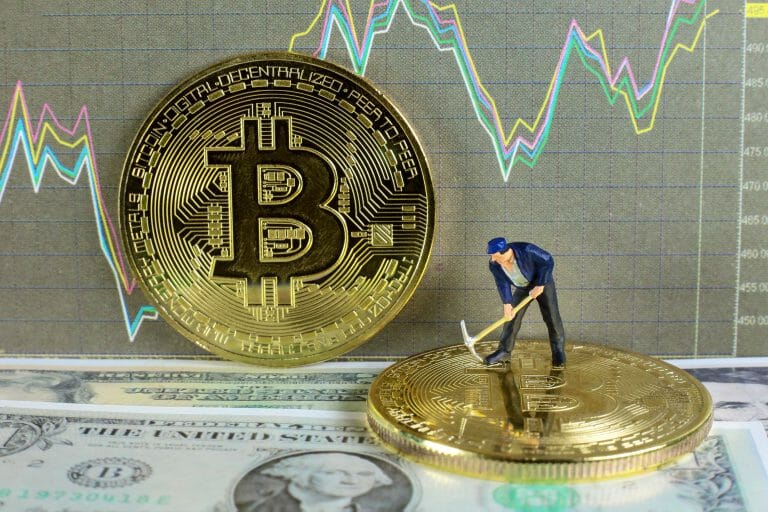
On-chain data shows that for the first time in history, Bitcoin miners require more than 1 EH/s of daily computing power to mine just 1 token of the asset.

Bitcoin Hashcoin Has Set a New All-Time High Now

The “Hashcoin” here refers to an indicator that tracks the daily Hashrate that miners need to produce 1 BTC. Hashrate measures the computing power that miners have connected to the Bitcoin network. This metric is measured in terms of hashes per second or, in a much larger and more practical unit today, exahashes per second (EH/s).

The total Hashrate on the blockchain has been close to its all-time high (ATH) recently as its 7-day average value is 638 EH/s.

A central feature of the Bitcoin blockchain is that the block time on the network (that is, the speed at which miners solve blocks) remains relatively constant at a standard 10 minutes per block. This feature exists because miners receive block rewards for solving blocks, which are the only way to mint new tokens of the cryptocurrency.

By ensuring that these blocks are delivered at a constant rate, the asset’s growth remains stable and its inflation is predictable. Consequently, no matter how much Hashrate miners add to the network, they will not be faster at mining blocks in the long term.

Initially, the additional computing power would make them earn rewards faster, but only until the next bi-weekly difficulty adjustment, where the chain would make the miners’ job difficult enough to offset any benefit from the additional power. Since rewards remain limited in this way, an increase in Hashrate means that the distribution of rewards between individual power units becomes smaller.

Therefore, every time the network’s total Hashrate increases, an individual miner has to increase their power by the same percentage to remain competitive with the chain. In other words, the Hashcoin mentioned above increases when the Hashrate increases.

As Hashrate has been close to ATH recently, Hashcoin has also been relatively high. Bitcoin Hashcoin has seen strong growth recently and has reached a new ATH.

However, the Hashrate has been moving sideways, so where did this spike come from? The answer lies in the fourth Halving, which occurred on April 19.

While difficulty ensures that the asset’s inflation rate remains constant, the halving is a measure to actively reduce this rate. Block rewards are cut exactly in half during these events, which take place approximately every four years, and naturally, that has been the case with the last one as well.

With block rewards now halved, miners can only produce half as much as before, which is why Hashcoin has skyrocketed. Miners now need 1.13 EH/s to mine a single token each day.

BTC Price

Bitcoin is trading at around $62,900, down 5% from last week. According to CryptoPredictions, Bitcoin started in April 2024 at $68,596,892 and is predicted to end the month at $76,975,058. During April, the maximum forecasted BTC price is $68,259.996 and the minimum price is $46,416.797.

Bitcoin is predicted to start in May 2024 at $66,935,998 and end the month at $51,767,170. During May, the maximum forecasted BTC price is $68,302.039 and the minimum price is $46,445.386.

The BTC Price is forecast for today (30.04.2024) to be in the $56,609.085 – $83,248.655 price range. Bitcoin is predicted to end today at $66,598,924.

By Leonardo Perez

Russia Will Apply Restrictions on Cryptocurrencies, Exempts Miners and CBDCs

Russia imposes strict restrictions on cryptocurrencies starting September 1, but exempts miners. Its goal is to strengthen the ruble and control cryptocurrencies amid geopolitical tensions. The debate persists, as Russia’s Finance Minister advocates regulated use.

Starting September 1, Russia will apply strict restrictions on the general circulation of crypto assets such as Bitcoin. Only digital financial assets issued within its jurisdiction will be allowed.

Anatoly Aksakov, Chairman of the State Duma Committee on the Financial Market, heads this initiative. It is part of a broader government effort to control the cryptocurrency ecosystem amid rising geopolitical tensions.

Why Russia Wants to Restrict Cryptocurrencies

Aksakov stated that the upcoming legislation aims to restrict non-Russian crypto operations to reinforce the dominance of the ruble. Aksakov explained the following:

“Digital financial assets issued in Russian jurisdiction and digital rubles will be allowed. The need for restrictions is due to the fact that today cryptocurrency is a quasi-currency that replaces the ruble in the country. But only the Russian ruble fulfills the mission of the monetary unit, which is why this decision has been made. Restrictions will be introduced from September 1.”

The bill will establish exceptions for cryptocurrency miners and test projects sponsored by the Central Bank within an experimental legal framework. This is because cryptocurrency mining significantly increases Russia’s tax revenue.

Approximately, cryptocurrency miners produce over $2.59 billion in liquidity for foreign trade settlements. However, Anton Gorelkin, a member of the State Duma, clarified that Russia has no intention of banning crypto directly.

The restrictions will affect the creation of crypto exchanges and other platforms that will provide cryptocurrency exchange services. Gorelkin wrote: “Of course, the circulation of cryptocurrencies will not be banned. The creation of exchanges outside the zone of the experimental legal regime will fall under the ban.”

At the same time, there is intense internal debate among Russian policymakers about this approach. Artem Kiryanov, Deputy Chairman of the Economic Policy Committee of the State Duma, underlined the importance of precise regulation, in the following terms:

“The regulation of cryptocurrency should be prescribed in the digital code, which would clearly detail the conceptual apparatus and common judicial practice of law enforcement.”

More on Russia’s Restrictive Policies on Cryptocurrencies

In contrast to these restrictive views, Russian Finance Minister Anton Siluanov has advocated a more moderate stance. Earlier this year, Siluanov opposed an outright ban on cryptocurrencies, advocating for regulation that allows their use in both domestic and international transactions. Siluanov stated the following:

“I am sure that the Central Bank and we will reach an agreement. This issue has been debated for several years. We cannot prohibit the circulation of cryptocurrencies. Therefore, we have to regulate this channel. “I am sure we will find a solution.”

These debates point to a possible tilt toward using cryptocurrencies for external payments, reflecting a deeper understanding of their potential role in global finance. This approach is also supported by Elvira Nabiullina, Director of the Bank of Russia, who supports the experimental use of cryptocurrencies in international payments.

Meanwhile, recent reports indicate that Russian entities have used cryptocurrencies, particularly Tether’s USDT, to acquire critical components for military technology. One notable case involved Andrey Zverev, a Russian operative based in China.

In 2022, Zverev used USDT to bypass traditional banking channels and purchase drone components essential for military operations in Ukraine. This maneuver avoided the scrutiny typically associated with sanctions-wary financial institutions.

By Audy Castaneda

Australian Stock Exchange (ASX) to List First Batch of Spot Bitcoin ETFs

Bitcoin ETF spot trend grows in Asia after US and Hong Kong approvals. ASX will list Bitcoin ETFs first by the end of 2024. ASX is expected to list DigitalX, VanEck and BetaShares Bitcoin ETFs while Monochrome opts for Cboe Australia.

The Australian Stock Exchange (ASX) is preparing to list its first batch of approved spot Bitcoin exchange-traded funds (ETFs). According to Bloomberg, the ASX is expected to list Bitcoin spot ETFs before the end of 2024.

ASX’s move into the cryptocurrency space is a significant development as it handles around 80% of local transactions with a market capitalization of $2.7 trillion. It will now compete against Cboe Australia, which offers spot trading of Bitcoin and Ethereum ETFs to Australian traders from 2022.

The Race to File Bitcoin ETF Applications

Four prominent companies, namely DigitalX Ltd., VanEck Australia, BetaShares and Monochrome Asset Management, have filed applications and expressed intentions for spot Bitcoin ETFs, seeking to capitalize on growing demand for regulated digital asset exposure within the investment landscape. Australia.

While DigitalX Ltd., VanEck Australia and BetaShares are seeking to list their Bitocin spot ETFs on the ASX, Monochrome Asset Management has shifted gears and is now seeking to list its Bitcoin spot ETF on Cboe Australia.

DigitalX Ltd., a local company, started the process by submitting its application in February, indicating its proactive stance in taking advantage of emerging investment opportunities.

Similarly, VanEck Australia, a renowned global investment management firm, reaffirmed its commitment to the Australian market by re-applying in February, following in the footsteps of its successful businesses in other jurisdictions.

BetaShares, a Sydney-based ETF provider, also entered the scene by expressing its intention to launch a spot Bitcoin ETF on the ASX, further diversifying its portfolio offering to meet the changing needs of Australian investors.

Australia-based Monochrome Asset Management first filed for a spot Bitcoin ETF with the ASX on July 14 last year. He later switched to Cboe Australia, a smaller ASX rival, citing the slow approval process at the ASX.

If the applications are approved, these four companies will join Global X 21Shares, which has been the only issuer of spot crypto ETFs in Australia since 2022, with its Bitcoin and Ethereum ETFs listed on Cboe Australia.

Rise of Bitcoin Spot ETFs in Asia

Momentum for spot Bitcoin ETFs has been gaining traction in Asia following regulatory approvals in the United States and Hong Kong.

With the successful introduction of 11 Bitcoin spot ETFs to the US market in January, which together have accumulated more than $53.16 billion in total net assets, investor interest in similar products has increased in other regions, including Asia.

Hong Kong, in particular, has emerged as a promising market for cryptocurrency investments in Asia, and the recent approval of the first batch of Bitcoin and Ether spot ETFs marks a major milestone in the region’s financial landscape.

Despite the estimated size of Hong Kong’s market being smaller compared to the US, the approval of six crypto ETFs earlier this month underlines the growing acceptance of digital assets among investors and regulators alike.

As investors seek diversified investment opportunities amid current market volatility, the introduction of spot Bitcoin ETFs in key financial markets provides a regulated avenue to access the burgeoning cryptocurrency market, heralding a new era of adoption and widespread integration within traditional investment portfolios.

By Leonardo Perez

Top Bitcoin Mining News

Another week closes for the hectic world of cryptocurrencies and some pieces are already beginning to fall into place for companies in the mining sector after the historic fourth halving.

In the spot market the matter is more complex and the price of the largest cryptocurrency remains relatively stagnant. There is no official theory about the current market situation. However, there are some very probable ones, such as the macroeconomic situation, which causes pressure on institutional investors.

In any case, what happens with the price of BTC will have a notable impact on the current reorganization process of the mining industry. Thus, the combination of the issue of prices with the particular news of the sector will be of great help to keep track of what is happening.

Discounted Mining Equipment after Halving

The popular ASICs are experiencing a palpable decline despite the high price of the coin. The reason for this, and it could not be any other, is the halving effect.

According to data from Luxor Technology, the main mining models used are experiencing a noticeable drop. The discount range varies between 28% and 35%. As is known, halving translates into a halving of the network’s payments for each block processed.

Thus, the teams now have a -50% profitability compared to what they had before the halving. Hence their prices experience declines. Price discounts are likely to become more pronounced if BTC declines from the current point.

Russian Parliament Considers Law for Digital Mining

According to Russian media, a proposal that seeks to impose standards on digital mining companies was debated last Friday. Among the points that are known about the proposal is that mining activity can only be carried out by legal companies from Russia. Likewise, they must commit to using the energy quota that the government estimates for the activity.

Some of the parliamentarians cited by the media assert that mining companies must fully identify themselves. This involves the amounts received and the wallets where your funds are stored. All of this will aim to prevent the use of these cryptocurrencies for illegal activities.

Paraguayan Senator Calls Digital Mining a “Gift from Heaven”

In recent months, rumors of a ban, or at least a limitation, on mining activity in Paraguay have been overwhelming. Despite this, there is also room for hope.

Some senior political representatives of the South American nation consider that digital mining represents a gift from heaven. This is because it consumes energy that the country produces in abundance and which lacks major demanders. With this, the mining industry becomes an invaluable contribution to the country’s treasury.

Cryptocurrency Mining Consumes Less Energy than Banking

One of the biggest stigmas against the mining business is precisely the high energy consumption it requires to operate. According to a recent investigation by the firm Payless Power, the banking system takes a total of 258.85 tera-watts per hour. Data centers, physical companies, ATMs and payment networks such as VISA are mainly responsible for this large consumption.

Meanwhile, all the world’s digital mining centers combined consume a total of 167.14 tera-watt hours per year.

Marathon Increases its Hashrate Target for 2024

Marathon, the powerful American firm, increased its target hashrate for the end of this year, 2024. Thus, from the range of 35-37 EH/s, its target rises to 50 EH/s, according to the company in a press release.

If it met expectations and reached that barrier, the mining group would have experienced 100% growth in 2024 alone. According to the firm’s management, the capacity of the purchased equipment exceeds initial estimates.

By Audy Castaneda

BlackRock’s Bitcoin Spot ETF Failed to Receive Inflows for Three Consecutive Days

BlackRock’s iShares Bitcoin Trust (IBIT) fund has received no new investments. This lack of flow does not necessarily indicate a decrease in investor interest. The lack of entries in BlackRock’s IBIT comes as Bitcoin consolidates.

BlackRock’s Bitcoin ETF experienced three consecutive days of no new investments. This is in stark contrast to other Bitcoin ETF investment products, which saw significant outflows totaling $328 million.

The iShares Bitcoin Trust (IBIT) had enjoyed a 71-day streak of continuous inflows before this recent trend of no new investments. Due to the current zero flow trend, some members of the community have interpreted this as indicative of declining investor interest in Bitcoin.

Bitcoin Spot ETF: BlackRock Null Entries Explained

However, Bloomberg ETF analyst James Seyffart explained that the pattern was common within the broader ETF market. Zero flows occur when there is no noticeable difference between the supply and demand of an ETF.

According to Seyffart, this disparity must be substantial enough to trigger the creation or redemption of ETF shares, a process that is executed in units. Market makers only intervene in the underlying market when the discrepancy exceeds a certain threshold:

“Minor mismatches will see the market makers handle trading of shares just like they would a stock. But it needs to be lopsided — more than a creation unit in either direction for market makers to tap the APs/underlying market.”

Therefore, the absence of inflows into the BlackRock IBIT ETF does not suggest a lack of trading activity. On the contrary, it indicates that the net flow is not significant enough to justify the creation or redemption of units.

Another Bloomberg ETF expert, Eric Balchunas, corroborated this notion, citing the iShares MSCI Emerging Markets ETF EEM, which saw $70 billion in volume between mid-January and mid-April despite recording zero daily flows. Regarding this, X user Trader T commented the following:

“0 flow is normal for well-established fund due to equilibrium between all market participants. Not sure what questions are, but keeping inflow for newly launched BTC ETFs are important. Larger size and sound liquidity can result in better recognition on Bitcoin as liquid asset.”

Why Do Bitcoin Spot ETFs Have So Low Inflows?

The lack of inflows into the BlackRock Bitcoin ETF has had an impact on the price of BTC, which has remained stagnant over the past week. Crypto analyst Skew noted that Bitcoin remains within a defined range between $72,000 and $61,000, with a point of correction (PoC) or mid-range pivot at $66,000.

The analyst highlighted price levels of specific interest for continued watching at the March low of $61,598. Also, the previous week’s low of $63,498. Skew explained the following:

“PoC is often an inflection zone for trends so backtesting from above or retesting from under can be important contextually. How the market trades around a PoC often with other respectful confirmations leads to the next move. By this I mean failure to auction higher or lower with respectful flows is often great confirmation to close out of trades or getting into trades. In hindsight the recent test of PoC here had confluence of the midrange and failure on each push higher so was a good point to hedge around.”

Despite these challenges, the emergence of ETFs has had a significant impact on the cryptocurrency market, with approximately $54 billion invested in various vehicles, attracting a wide range of investors. Hong Kong will host its inaugural Bitcoin and Ether ETF listings, signaling growing global interest and potential expansion of cryptocurrency investment opportunities in new markets.

By Leonardo Perez