
Blockchain, a Crypto Wallet Firm, Will Airdrop $125 Million Worth of XLM this Week

People are getting ready for the “biggest giveaway in history,” as Blockchain, a prominent crypto wallet provider, will airdrop nearly half a billion Stellar Lumens (XLM) tokens to holders of wallets in the platform, as specialized site Coindesk reported today.

The total of XLM tokens to be distributed among the Blockchain community amounts to approximately $125 million, and they are destined to those people who sign up for the airdrop.

For those that are not familiarized with the term, airdrop consists on a blockchain or crypto project giving away free tokens to community members with the intention of spreading awareness about the crypto world and the specific initiative, and getting the maximum number of people interested in digital assets, according to Investopedia.

Details of the Giveaway

The reports surging today stated that the first batch of “lucky people” getting their XLM tokens for free will receive them later this week. It is not yet known how many XLM will be “dropped” to each account.

Blockchain’s airdrop program is quite famous by now, with its framework and modus operandi being announced several weeks ago. Stellar, therefore, becomes the first cryptocurrency associated via the partnership with the giveaway project of the firm.

According to Blockchain’s CEO Peter Smith, he has seen the power that giving people their first “$20 worth of crypto” can have in welcoming more and more potential investors in the community. “They realize the power of a new financial system in their hand as they saw their first transaction.” Smith confessed that he thought about what he could do to help “millions of people make their first transaction,” and he and fellow project managers came up with the airdrop initiative.

“A Platform Built for Scalability”

The Airdrop Program is also a testament of the platform’s scalability, thinking about how many new customers will be welcomed to the Stellar network if the project proves to be successful. Smith and the Blockchain wallet chose Stellar because, as they stated, “it is built for scalability and has an active and growing ecosystem.”

Smith, quoted by Coindesk, wants the airdrop to have a lasting effect in people, letting them “test, try, trade, and transact with new, trusted cryptoassets in a safe and easy way” while also providing a boost to the growth and usage of the wallet.

The Blockchain wallet also has alliances with charity: water (a Stanford d.school’s tech initiative,) code.org and Network for Good to increase adoption of Stellar Lumens (XLM) around the world.

In an industry where the fear to start still exists, an initiative such as Blockchain and Stellar’s airdrop is sure to bring down some barriers and promote adoption of cryptocurrencies as a means to trade and invest.

Jed McCaleb, who is the Co-founder of the Stellar Development Foundation, stated that airdrops are critical elements to develop a more inclusive digital economy. He said that the XLM giveaway invites communities to design “the services they need,” and that working alongside Blockchain will make sure that more lumens are available on the network and, thus, will boost the utility of the platform.

By Andres Chavez
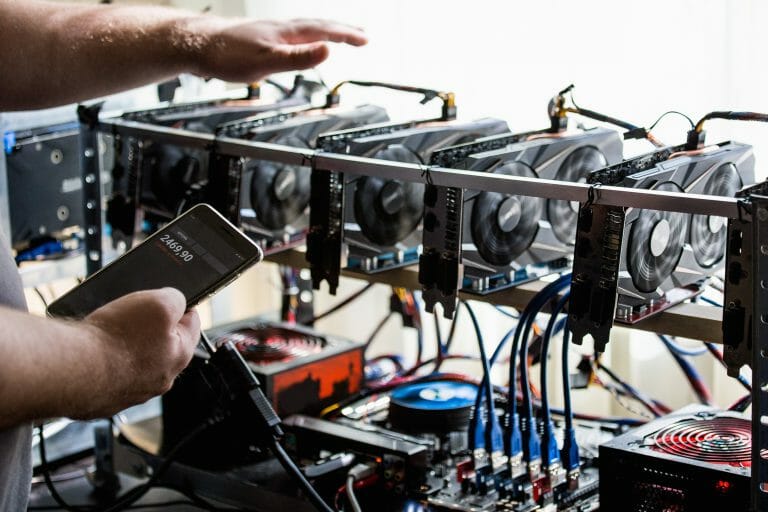
Bitmain’s New Antminers Will Become Available this Week

Bitmain, one of the most prominent crypto hardware manufacturers in the industry, is about to launch a couple of innovative Antminer products that will sure raise the attention of the bitcoin mining community.

According to an announcement made by the company, two new models will be introduced to the market this week: the machines are the Antminer s15 and the T15; and they will hit the shelves on November 8th.

The cutting-edge 7nm ASIC (application-specific integrated circuit) processor will power up the two machines. The chip was announced in late September by Bitmain CEO and Co-founder Jihan Wu, the same man who stated that using it will result in more efficient use of energy when compared to other models in the market.

Impressive Energy Consumption to Mining Capacity Ratio

The Antminer s15 and the Antminer T15 both have impressive hash rates that are destined to mine for Bitcoin using the SHA256 algorithm, according to Bitmain’s Twitter feed. Further details about the circuit have not been announced yet, but we do know that it will include “more than a billion transistors” and that its energy consumption to mining capacity radio will be as low as 42J/TH, one of the best in the business.

At the moment of this writing, there are no further details, so people would need to wait until November 8th to discover the full features and capabilities of this mining device that looks every bit as potent, if not more, than other Bitmain’s machines.

Bitmain wants to collect funds via an ICO (Initial Coin Offering,) and the announcement of the two new Antminers comes in the middle of a push to raise more money. However, the initiative has found its fair share of controversy given accusations of some investors that say they have seen false information about the funding state of the firm.

Nevertheless, Bitmain’s two machines look ready to enter the market and start competing with other devices made to mine Bitcoin, such as BitFury’s new 14nm circuit that was also announced this week. Named the Bitfury Clarke, it is similar to the Antminers regarding power consumption and energy efficiency thanks to the SHA256 algorithm.

Coincidentally, Bitfury, one of Bitmain’s primary competitors, made public today that it closed an $80 million funding round. Korelya Capital, a venture capital company led the private placement that also saw participants such as Mike Novogratz’s Galaxy Digital, Macquarie Capital, Dentsu Inc., and Armat Group.

A Little More about Bitmain

Bitmain Technologies Ltd., or Bitmain, is a cryptocurrency infrastructure provider that has its headquarters in Beijing, China. Jihan Wu is credited as being its founder, five years ago, with the help of Micree Zhan.

The Bitmain company became, in 2018, the world’s premier designer of ASIC chips with Bitcoin mining in mind. Also under Bitmain’s domain is Antpool, arguably the largest bitcoin mining pool.

With a net profit of more than $740 million in the first semester of 2018, Bitmain has proven profitability. The company’s first product was the Antminer S1, an ASIC bitcoin miner that used 80-200 Watts to make 180 GH/s.

By Andres Chavez

Russian Parliament Investigates the Possibility of National Currency

The Chairman of the Market Committee of the State Duma of Russia, Anatoly Aksakov, said that the entity is evaluating the issuance of a token linked to the Russian ruble, backed by the state.

Local media released this information days ago, informing that the official declared from a press conference, that the token will be backed by the Russian Central Bank and that it will be anchored to the official national currency, the ruble.

In this way, Aksakov said that for the token to be backed, the Central Bank must make a bank deposit of a certain amount of money, and then authorize a bank not yet identified for the issuance of this token, using the technology of cryptoactive. He pointed out that the currency will have a 1:1 parity with the ruble.

Through this statement by Aksakov, the Russian government seems to resume its plan which had been speaking at the end of 2017, when the current Russian President, Vladimir Putin, mentioned the option of creating a crypto-active state to boost and improve the economy of the nation, in addition to having free marketing worldwide.

On that date, the Russian Telecommunications Minister, Nikolai Nikiforov, announced that the president had approved the creation of the cryptoruble.

This information was confirmed in January of this year, by Sergei Gláziev, Adviser to the Russian President, who classified the project as a strategy to avoid international sanctions imposed by the European Union and the United States. For that moment, the reports indicated that the Russian virtual currency will be encrypted by algorithms developed in the Eurasian country and that it could be created from Ethereum. It is also indicated that it will not be possible to generate new cryptorubles through conventional/traditional mining.

It is important to note that Russia is not the only country whose government seeks to implement this technology to the issuance of official digital currency backed by the State because Iran and Venezuela also have similar projects.

In this sense, the Iranian Government confirmed on July 26th, its approach to the launch of its own cryptocurrency, possibly anchored to oil. In this regard, Alireza Daliti, delegate of the Directorate of Management and Investment Affairs of Iran said that the intention is to facilitate the transfer of money from anywhere in the world. Although the details have not yet been exposed, it was recently revealed that it could be based on the Hyperledger Fabric private platform.

On the other hand, at the end of 2017, the President of Venezuela, Nicolás Maduro, reported the launch of a cryptoactive backed by Venezuelan oil, known as “El Petro”. This project was conceived as a “solution” to the economic problems afflicting the country.

 Russia Works in a Legal Framework

This announcement, about the launch of a token backed by the State, is made in the context of a work that the Russian Government is carrying out to regulate transactions in bitcoin and other digital currencies made within the national territory.

The Bill on Digital Financial Assets was presented for the first time in January, by the Russian Ministry of Finance, which was approved by the State Duma in the first of three hearings, in May of this year. It is currently waiting for a new revision.

By  Samuel Paz


Venezuelan Dash Clients Can Transfer Cryptocurrencies through Text Messages

Users in this country will pay for services and send remittances through text messages, without an Internet connection

The Dash Text users who are in Venezuela will not need an Internet connection to make their digital payments. From now, they will be able to send and receive cryptocurrencies through text messages using this platform, which will operate with the plans of a private telephone company in that country.

Said piece of news emerged on November 2nd when the startup published the announcement in its official Instagram account. It says: “We are pleased to inform all our followers that Dash Text is available to the public. You can now create your wallet. We hope this service benefits thousands of Venezuelans, who can now use their Dash without needing Internet”.

This initiative opens the doors for those who did not have the tools that allow them to access cryptoactives. The main idea is to benefit a greater number of people. The service has been active since the first days of November and after the official launch of the new Dash Text wallet. The development is possible thanks to an alliance with the blockchain solution company, BlockCypher.

According to a publication on Twitter, Dash Text will be operating this month subscribed to the plans of a private Venezuelan telephone company and hopes to reach two others. This will allow all Venezuelans who have a telephone number to make Dash transfers without being online.

This project is based on Coin Text, a service that consents the transfer of Bitcoin Cash (BCH) through text messages. The wallet works by means of shortcode text messages, which is only 5 digits, something similar to messaging voting systems.

The benefits

Dash Text’s objective is to process the sending and reception of cryptocurrencies quickly and safely. The company explains that it does not reveal or keep the private keys of the users, which are generated from the user’s telephone number.

To make their payments, users must register all their personal data on the operator’s platform, in order to obtain their telephone number, which will be related to the wallet and its operations.

This wallet is designed for people who do not have a smartphone, do not have access to the Internet, or are left without the electricity that allows them to carry out their transactions online. This system will serve to pay different services, such as payments for belongings received and even the sending of remittances.

“Venezuelans abroad send home about $ 2 billion in remittances, which usually takes a lot of time and is very expensive for most of them. With Dash Text we provide them a real solution to real problems, an easy and inexpensive way to send money home and we have done it in a way that the Dash ecosystem can expand without needing smartphones”, said Bradley Zastrow, global head of business development at Dash.

Dash’s team was working during a month on the first version purse, which was tested by Dash customers. The project was proposed to the Cryptocurrency Treasury a few months ago. Then, it was approved by the organization under the name “Dash-Text-SMS-Wallets”. This is another advance that achieves more presence of cryptocurrencies in the current financial world and in people’s daily life.

By María Rodríguez

Bancor Launches Cross-Blockchain Solution to Convert Between EOS and Ethereum

Bancor, the liquidity protocol, launched yet another useful solution for traders around the world. Thanks to its BancorX technology, the platform will now be able to allow investors to convert between digital tokens based on the EOS and Ethereum blockchains. The announcement came this Monday and was greeted with joy among the crypto community.

Before this development, people who wanted to trade EOS-based assets for those in the Ethereum blockchain had to do it through a crypto exchange, and the process was somewhat tricky because users would first need to deposit their funds to the exchange and be charged a commission, place an order, and wait until the exchange provided the other digital coin, with another commission involved.

The Introduction of the BNT

The Bancor protocol is able to convert the token that a person holds (whether it is in the Ethereum blockchain or in EOS’) into a new token that goes by the name of BNT (Bancor’s Network Token.) BNT is the first coin that has the capability of moving between blockchains.

The BancorX platform is now live on the EOS mainnet. Eyal Hertzog, who acts as Bancor’s Product Architect and the initiative’s co-founder, is quoted by Finance Magnates as saying that the “cross-chain functionality increases the utility of BNT as an inter-network token, connecting the EOS and Ethereum ecosystems today, and vastly more blockchains in the future.”

The Middle Men of the Industry

Thanks to the BancorX decentralized application (dApp,) users will not necessarily have to go to crypto exchanges to trade cryptocurrencies. Bancor will now effectively be “middlemen” in numerous transactions in the globe despite not being self-labeled as such.

Going to exchanges can be inconvenient for users for many reasons, but BancorX provides the option of omitting to have to deposit with an exchange, as well as avoiding the transaction fees associated with their use.

As an added benefit, transactions using the BancorX product are significantly faster than those performed through other means. According to Bancor, they can perform a transaction in one second with BancorX, whereas those in the Ethereum blockchain usually take something in the neighborhood of 10 seconds.

A Foundation for the Future

The development and launch of the BancorX dApp is the “first move of its kind,” and it sets a foundation for further platforms to be included in cross-blockchain trading. Galia Benartzi, who is Bancor’s co-founder and current head of business development, explains that “the ability to easily convert assets cross-chain points to a future in which token projects and users are empowered to seamlessly interact with any blockchain which best suits their needs.”

A Little More about Bancor

Bancor is a protocol that provides users the opportunity to receive and send funds while supporting different cryptocurrencies under the ERC20 standard, implementing automated price, market stabilization measures, calculations, and providing increased liquidity when compared to decentralized exchanges (DEX.)

Bancor offers a more appropriate atmosphere for trading digital assets than traditional crypto exchanges, with a simple and straightforward approach and design, and with the ability to support all ERC20 tokens.

By Andres Chavez

Bank in the Bahamas to Handle Tether Funds

The company Tether Limited made public their agreement with the bank of the Bahamas, Deltec Bank, for the management of the funds that support their cryptoactive, anchored to the dollar. The firm indicated that the alliance was achieved after a long period of reviews and evaluation of the company.

In the statement, Tether Limited reported that among the analyses performed, a verification process was included to determine if the company was able to maintain this parity (Tether-Dollar). The startup assured that it has the necessary funds to support its cryptoactive.

“The acceptance of Tether Limited as a client of Deltec came after the due diligence review of our company (…). The USDT in the market is fully backed by US dollars that are deposited securely in our bank accounts.”

At the same time, Deltec Bank ruled in the same way. The financial institution released details in order to send positive signals to the crypto-market, and minimize the doubts of the investors. Through a letter, written on November 1, the bank said:

 “Through this document, the closing of operations is made on October 31st, 2018. The cash value of your account with our bank was a total of $1,831,322,828″

The message of Deltec Bank can be taken as a strategy for investors to return to the investment of this cryptoactive and thus being able to stabilize it with respect to its parity (1 Tether = 1 Dollar).

The relationships between the cryptoactive and other banks have also included, with the passage of time, other financial companies, such as the Noble Bank of Puerto Rico. A study conducted by Bitmex indicated that this bank was the old safeguard of the funds that support their cryptoactive anchor to the dollar.

Through the Exchange Bitfinex, Tether’s main engine, the funds were taken from the Caribbean bank to be taken unofficially to the HSBC in London. This uncertainty had its influence on the market, which caused, in part, the disparity of the Tether with the US dollar. While this was taking place, StartUp used private accounts to mobilize funds.

Now, Tether, confirms that, officially, their funds are back in the Caribbean with the partnership with Deltec Bank.

Separation Tether-Dollar

On October 15th, the Tether’s price stood at 0.95 $ per unit; its lowest point in 18 months. One of the causes of this event is related to the events involving the exchange house Bitfinex, one of its promoters, who a week ago, had suspended deposits in dollars and other official currencies.

The bad weather for this crypto-active continued a week later, after a report was released, which shows a reduction in tether exchange volumes at the cryptocurrency exchange. This report gathered information about investors’ concerns regarding the Tether bank reserves.

In recent days, the Tether quote was at 0.99 $ per unit, with positive valuation, for the last 24 hours, of 0.82%.

By Samuel Paz