Austrian Government Supports Blockchain-Oriented Research Lab in its Fight against Cancer

The blockchain technology is supposed to create solutions and opportunities in our daily life, and recent developments have shown that its potential can reach even the most unimaginable scenarios. As a matter of fact, the health department can also reap the benefits of its adoption, and in an especially sensitive situation: helping people with cancer.

Austrian government announced at the start of the week that it will show its support to a cancer research organization headquartered in the United Kingdom that is implementing blockchain technology in order to detect the feared disease, according to a press release.

Lancor Scientific and a Noble Cause

The company in question is called Lancor Scientific. It has managed to produce a device that can identify several types of cancer and then use smart contracts and blockchain technology to record the screening results.

Lancor Scientific has the intention of opening a research lab in Graz, one of the biggest cities in Austria. The company is shooting for, at least, 90% screening accuracy in its product, just like Google’s Lymph Node Assistant.

The laboratory, with the backing and support of Austrian government, will investigate the market conditions and establish the viability of Lancor’s Tumour Trace OMIS (Opto-magnetic Imaging Spectroscopy) device and the use of AI and blockchain technologies. The primary intention is to “deliver low-cost and near real-time cancer screening at scale,” according to Fintechzoom.com.

A Pro-Blockchain Country

Margarete Schrambock, currently acting as Austria’s Minister of Foreign Affairs, praised the initiative involving experiments with the blockchain technology in the country’s government, identifying it as an area of interest. She said that it is “definitely one of the new important technologies, and that “in addition to Artificial Intelligence and Speech Recognition, it is one of the big issues we want to highlight in the coming period of the EU Presidency.”

According to the press release published by specialized site Cointelegraph, the research company will also collaborate with local educational institutions on projects looking for additional medical solutions. Some of them are the Technical University of Graz, the Medical University of Graz, and the Sigmund Freud University Vienna.

The government will collaborate with Lancor Scientific, providing grants to the company over a five-year span for research equipment, training, clinical trials management, and facilities, among other things.

Since the beginning of its implementation and adoption, Austria has shown all signs to be a very pro-blockchain nation. The country has long supported the technology and the use of cryptocurrencies, even including them in regulations and in legislation. Vienna, the capital city, has hosted several attempts to increase awareness about the subject, even a cryptocurrency bank last year.

The Eternal Struggle with Cancer

Cancer has long been one of the most feared diseases because of its unpredictable nature and aggressiveness. For decades, researchers have tried to come up with a cure without much success, but they have worked tirelessly to try to detect it at an earlier stage so the probabilities of survival and quality of living can increase.

According to a study conducted by Vyssoki et al, results show that cancer patients have an increased risk of suicide, relative to the general population in Austria. The psychological burden or discovering the disease at a terminal stage is often too much to handle, so Lancor, together with the Austrian government, is working to find a way to a much more accurate and quicker system of screening.

By Andres Chavez

Japanese Giant GMO Releases Q3 Report with Resounding Success in Crypto Businesses

GMO Internet, Inc, which is the Japanese internet services company widely known for being the parent of web security firm GlobalSign, is reaping the benefits of a long-term investment in its crypto-related sectors.

The IT giant business made public its report about the third quarter of the year (Q3) on Monday, and the results are awfully encouraging. In fact, the document goes as far as saying that the period represented a “historical performance” on its crypto business in spite of the industry enduring its worst and longest drought so far.

GMO has a crypto exchange and also manages mining equipment production, two promising businesses that have earned the company 2.6 billion yen (the equivalent of $22.8 million) in revenue in the third quarter only 12 months after their inception to the market.

Glowing Results on GMO Coin Exchange Performance

The exchange, named GMO Coin, has been very busy performing trading operations, with over 205,000 users trading almost 90 billion yen, or nearly $781 million, in the month of October. According to the Asian firm, the QoQ (Quarter on Quarter) profits went up 34.4 percent.

When it comes to the mining segment of the company, there are good pieces of news, but not as positive as the exchange case. The QoQ revenues also went up, but the second and third quarters have represented a decline over what the firm made in the Q1.

When looking for possible explanations for the decrease when compared to the Q1, GMO seems to think that the reasons are a “worsening external environment” and “increasing depreciation cost,” in that order. The collapse of Bitcoin and other minable altcoins since January cannot be completely ignored in any analysis.

GMO offered some statistics in its report: During October, the mining hashrate was in the neighborhood of 674 petahash per second (PH/s.) However, the firm has already stated its intention to increase the results closer to 800 PH/S before the end of the year. Further complicating matters – at least regarding new mining rings – is the delay of electronic materials to produce the GMO Miner B3, which was announced in July and previously scheduled for October.

GMO recently announced the creation of a stable coin that is tied to Japanese fiat, with the goal of targeting international transactions. The initiative will begin functioning in 2019.

Enhanced Security

Following March’s notification by the Japanese Financial Services Agency (FSA, which is the one in charge of regulating crypto exchanges) GMO Coin was forced to make their services, especially offering risk management systems reports with frequency, better than they were at the time Coincheck suffered a hacking attack in January. By now, and thanks to that development, GMO Coin has put together a “Group Information Security Audit Office” to earn reliability and trustworthiness while protecting customer information.

Other prominent mining companies have also provided reports of their performance on Q3. In the case of the known semiconductor producer AMD, the revenues were practically non-existent on the timeframe, while Bitcoin (BTC) mining company Hut 8, headquartered in Canada, did very well while reporting a profit of $13.5 million for Q3.

By Andres Chavez

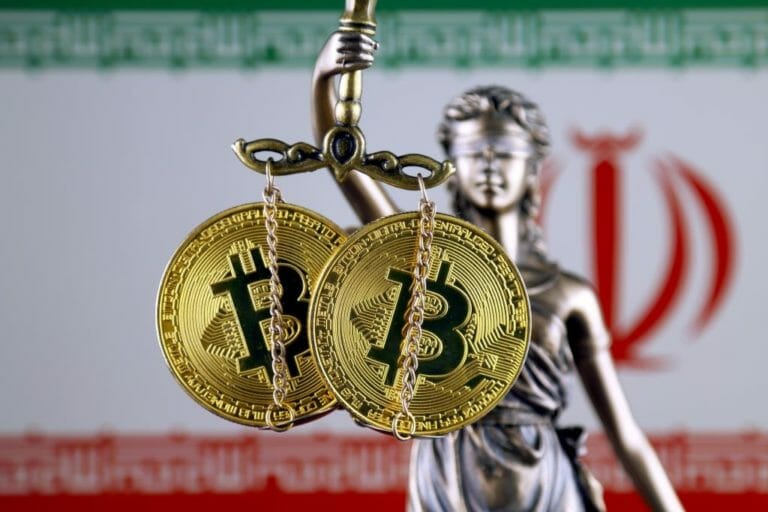
Cryptoactive Market in Iran affected by US sanctions

Following the recent sanctions imposed on Iran by the Government of the United States of America, the market for cryptocurrencies in Iran has been affected, as Binance and Bittrex exchange houses stopped providing their services to the Iranian people, according to the statements of the President of the Blockchain Community of Iran, Sephr Mohammadi.

Mohammadi indicated that Binance and Bittrex (as well as other foreign exchange houses not mentioned) withdrew the Persian country from the list of countries to which they provide cryptocurrency exchange services, which considerably obstructs that market, although he declared that the access of the clients to his cryptocurrencies has not been blocked.

 “Some virtual currency exchanges have imposed restrictions on Iranian users, but no assets belonging to the Iranians have been blocked.”

These sanctions have been imposed on Iran by the United States on 2nd November, which seeks to prohibit the commercialization of Iranian crude and gas, restrict the nation’s international market and limit the country’s access to the world banking system.

In this sense, this sanctions regime contemplates that all companies of US origin must comply with the call and stop the commerce in that country since otherwise, they could also suffer the consequences of sanctions due to contempt, as well as the Secretary of State of the United States, Mike Pompeo.

In addition, international measures have not only managed to obstruct Iran’s oil market but have also managed to affect the national cryptocurrency market that was at its peak.

SANCTIONS AFFECT

Recently, Iran began its plans for the issuance of its own national cryptocurrency, with which they could “avoid international sanctions” and thus being able to develop economically, according to statements by a high-ranking government spokesman. The cryptocurrency mining industry was also legalized throughout the country, confirming an opening to the crypto market.

This market, was an object of attention of the Department of the Treasury in the United States, that through a document established last October, in which they claimed that Iran used the cryptactives to evade the imposed international sanctions and that is why something had to be done about it.

Similarly, it was also alerted to a group of fraudulent behavior and falsification of financial documents by governmental entities in Iran, allegations that were complemented by the investigations of Accenture’s iDefense cybersecurity group, which highlighted the possibility that Iran would work jointly with North Korea in the spread of ransomware on a global scale.

However, must also take into account that with cryptocurrencies such sanctions are not fully applied, because although the market for cryptographic assets is greatly limited due to legal impositions, there are also many cryptocurrency traders that have managed to devise new systems to allow the survival in the financial ecosystem of cryptocurrencies, anchoring for example in the peer-to-peer trade.

By Samuel Paz

Singapore Electric Company Exchanges Blockchain Certificates for Renewable Energy

The platform automatically matches vendors with suppliers located anywhere in the world according to their requirements and preferences

Singapore Power (SP), a national supplier of electricity and gas in that Asian country, launched the exchange of renewable energy certificates (REC) with energy engines in a new market.

This company issued a press release, last October, where it was explained that the exchange of certificates will be carried out through the block of chains in order to guarantee their safety and transparency.

According to SP, the chain of blocks is designed and built by the SP team so that its traceability is totally reliable, as well as every transaction of renewable energy.

When companies are interested in buying REC, they are sold electricity from renewable sources to companies that produce “green energy”. The platform based on blockchain technology and developed by SP will automatically match vendors with suppliers located anywhere in the world and according to their requirements and preferences.

In addition, it will allow local and international companies to meet their energy sustainability objectives.

The blockchain initiative was launched on Monday at the ASEAN Energy Business Forum. The first buyers of these certificates would be the local company City Developments Limited (CDL), which belongs to the real estate sector, and the lending giant DBS Bank, according to the first news around the event.

Esther An, Chief of Sustainability at CDL, commented: “Because buildings consume 40% of the world’s energy, increasing the use of solar energy and neutralizing the carbon footprint of our operations has been a priority in the way we build and manage our projects”.

She added: “We are delighted to support the innovative and timely initiative of the SP Group to adopt blockchain technology as a platform to accelerate Singapore’s transition to a low-carbon economy”.

Katoen Natie Singapore, a chemical logistics company that will launch a 6.8 MWh solar energy facility, which will be the largest single-roof solar facility in a national warehouse, is also positioning itself as an energy vendor renewable on the blockchain platform.

Among the most prominent vendors are the solar energy producers Cleantech Solar Asia, with more than 120 solar sites in that continent, and LYS Energy Solutions, which has thousands of products on sale in the market.

SP’s main objective is to transform the global energy sector through the implementation of solutions based on blockchain technology.

In the launching to market at the opening session of the Forum on Monday 29, October 2018, SP’s Chief Digital Officer, Samuel Tan, said: “Through blockchain technology, we enable companies to trade in renewable energy certificates conveniently, seamlessly and securely, helping them achieve greener business operations and meet their sustainability targets”.

In May 2017, this renewable energy supplier announced its collaboration with other large solar energy companies in the world to form a consortium that allows the use of more decentralized solutions, which make possible the development of more technological projects of this type. The mining company Cryptosolartech will also adopt this type of energy.

SP is a unified corporation of the former electricity and gas departments of the Public Services Board of Singapore. The company also has the initiative to adopt blockchain technology as a platform to accelerate the transition in Singapore towards low carbon consumption.

By María Victoria Rodríguez

A Blockchain-Based System Will Fight Hard Disk Drives Falsification

This technological plan will allow companies to know the origin of hard disk drives in order to guarantee their originality

To avoid establishments of being scam victims, International Business Machines Corporation (IBM) and the data storage firm Seagate announced their new project: create a blockchain-based system to combat counterfeit hard disk drives.

Both corporations gave the piece of news on November 8th in a press release. Their main objective helps to manufacturers, integrators and business partners to authenticate the origin of hard disk drives. Those data storage elements, when altered, have lower performance, which makes difficult to find the information stored there and could risk the employer’s job.

For this reason, different institutions resort to blockchains solutions to save specific information about the origin and authenticity of the products or services they want to protect.

In a blockchain platform, all parties —whether technology providers, service providers or end users— have access to an immutable record of events that encompasses the origin and lifecycle of the item.

Bruce Anderson, Global Managing Director of the electronics industry at IBM, commented: “The ability to combine blockchain with advanced cryptographic product identification technology points to the potential of blockchain to reinvent the lifecycle management processes of electronic products. Fake electronic components are a global problem that requires an effort in the whole ecosystem to face them”.

How Will Be the Mechanism

The IBM and Seagate solution will work by upgrading the IBM blockchain platform in the IBM cloud with product authentication data based on a Seagate’s security identification called Seagate Secure Electronic ID. It will create a unique identifier at the point of manufacture that is used to verify the hard disk drive identity at any time during its lifecycle.

Seagate will also provide a solution called “Certified Erase”, which “uses cryptographic erasure technology to produce a digital certificate for data debugging, which is electronically signed by the device under Seagate’s secure public key infrastructure and stored the information in the chain of blocks for the management of compliance with the new global data privacy laws”, according to what Anderson explained.

Along with these two layers of security, the framework of the ledger distributed with Hyperledger technology that supports IBM’s blockchain platform is oriented to allow that several parts add or edit data of the chain of blocks according to the level of access allowed.

About IBM

This American multinational technology and consulting company headquartered in Armonk, New York, has been working on different blockchain solutions for customers. Some weeks ago, it presented a patent for a blockchain-driven system that seeks to dissuade to augmented reality (AR) gamers from intruding into undesirable locations, which helps to maintain secure boundaries between AR objects and physical locations in the real world.

This year, IBM ranks second in the world for gathering more and more patents related to blockchain technology, in order to work in different projects, executed from this platform. It is expected that the solution for hard disk drives will help reduce data loss, approve the product warranty, as well as reduce the millionaire expenses caused by hard disk drives falsification.

By María Rodríguez

“We do not Recommend Issuing a National Cryptocurrency” – Bank of Israel

The interdepartmental team of the Central Bank of Israel recommended that the government entity not issue a currency anchored to the new sequel, as it was proposed at the end of last year. It was advised to study the subject better and also monitor the development of the cryptoactive sector worldwide, before making a decision.

The report, published on the official website of the bank, presents the results of the study conducted by the team appointed by the President of the Bank, Karnit Flug, in order to assess the viability of the project in Israel. There the advantages and disadvantages of this type of assets are analyzed and it is concluded that the issue would involve material and technological risks, related to the impact that this action could bring to the Israeli financial system.

In this statement, the team exposes its doubts about the repercussions that this decision could have on the operation of the central bank, since this is the entity that is responsible for conducting the monetary policy of the country, in addition to managing the cash and credit system payments. Also, this entity analyzes some advantages of this type of coins, taking into account the objective of its issuance.

In this sense, these types of currencies can be considered appropriate in cases where the use of cash has decreased among the public, as in the case of Sweden; however, the team points out that this is not the case of Israel. They are also very useful to support and make more efficient payment systems by having an additional monetary tool.

Among other benefits, at the discretion of the team in charge of assessing the environment, state cryptoactives can be used as part of strategies to combat the undeclared economy, and their ease of adaptation to a high-level technological environment can be exploited to offer greater boost the financial technology sector in Israel.

 No Concrete Cases

Among the reasons for not recommending the issuance of a state digital currency, the Bank’s team alleges that there are no concrete experiences that show tangible results regarding the advantages of this state cryptoactive, because until now they have not been issued, despite being part of the plans in different countries of the world.

“No central bank in any advanced economy has so far issued a digital currency for general use. There are a few banks, mainly the central bank of Sweden, which is examining the issue. In contrast, there are others, such as the central banks of Denmark and Australia, which have stated that they do not plan to issue digital currency in the near future, because the payment systems in their countries are efficient and offer good alternatives. “

 Bank of Israel

With this statement, the Bank of Israel team refers to the plans announced by different countries to issue state cryptoactives, with different objectives, ranging from evading international sanctions, replacing the use of cash and promoting the massive adoption of cryptocurrencies, until achieving the vanguard in financial technology.

Israel’s plans to launch a digital currency date from 2017, at the end of that year, the Central Bank expressed interest in digital currencies. The idea of creating a digital “shekel” is to have a cryptocurrency that has the same value as that of Israel´s current currency.

By Samuel Paz