Ford and IBM Join Forces to Fight Child Labor through Blockchain in the Former’s Supply Chain

By now, the world is quite acquainted with the blockchain technology’s ability to help a myriad of sectors and industries achieve process efficiency and transparency by storing transactions in a way that they cannot be modified. The public ledger is known for helping all kinds of fields, from tax agencies to shipping companies to financial institutions.

The latest application of the blockchain technology may be the automotive industry, but maybe not the most obvious part of it. Ford, one of the largest and most prominent vehicle manufacturers in the planet, is looking to build a blockchain platform that ensures that children are not part of the supply chain and construction process.

To achieve its objective, the American automotive powerhouse will join forces with tech giant IBM, Huayou Cobalt, and LG Chem in order to develop a blockchain-based system that can monitor cobalt’s supply from its origin, the Democratic Republic of Congo, to make sure that child labor is not a part of the process.

Child labor is one of society’s most sensitive problems, and a very hard thing to combat. People from all locations, but most notably Africa, Asia, and Latin America, endure arduous working days that can often extend to 16 hours only to be paid cents of the dollar. In a perfect world, these children would be studying at school, doing homework, and enjoying their childhood in a healthy environment.

Monitoring Cobalt Mines

Ford and IBM’s project was announced on Wednesday. The RCS Group, a global responsible-sourcing consultant firm, will be in charge of it and will implement IBM’s proprietary blockchain platform to keep an eye on the cobalt supplies being used to manufacture lithium-ion batteries.

Primary production industries and enterprises are currently looking for ways to monitor and control the origin of their supplies, and avoid having children working and being exploited with minimal wages in the process. To achieve that, blockchain technology is serving as a more than useful tool to bring transparency and trust to supply chain tracking. One of these firms is Alrosa, which is currently the planet’s second biggest diamond mining business: it partnered with Tracr, a widely known supply chain monitoring system, with a similar goal in mind.

Tracr uses blockchain technology to track the origin of its product and make sure that diamonds that enter the international market do not come from impoverished African nations that are known as “conflict zones” because the situation can, indirectly, fund armed groups. With blockchain and IoT tracking, such systems can ensure that child labor is not used at any point of the supply chain.

Tracking Metals: a Real Challenge

In a world in which the public opinion can have a sizable impact on sales and the success or failure of a specific brand, Ford wants to guarantee that its cars and other vehicles are manufactured with materials and supplies mined or found ethically.

Whilst diamonds are transported to the market place as individual pieces, metals are a different story: they can be difficult to monitor because they can be smelted together, making it extremely hard to determine the origin of each material.

To combat this, IBM is toying with the idea of adding AI-aided chemical analysis to spot the geographical origin of cobalt and make sure it is not smelted with “dirty,” thus “sanitizing” the process. Through blockchain, miners will register in a platform to “validate” them as participants and to build a register of who is mining and where are the cobalt supplies coming from.

By Andres Chavez

Analyst sees 2019 as a Year of “Accumulation” for BTC; Forecasts Recovery by Year’s End

If 2017 was the year of ICOs and a marked growth in Bitcoin’s and altcoin’s price, 2018 was the one with two huge market crashes. The world’s leading cryptocurrency went from being worth almost $20,000 to the $6,000 range in a matter of weeks at the beginning of last year, and it experienced a similar fate towards the end.

Prior to Bitcoin Cash’s hard fork, precisely on November 14th, Bitcoin started collapsing and went from trading at near $6,500 to bottoming out at below $3,200. It has struggled to surpass $4,000 ever since. It is fair to say that BTC holders are not having their best days as investors.

Right now, after another drop below the $3,600 threshold in the past few days, BTC is making yet another run at the $4,000 barrier. And while the road back to its pre-collapse levels is uncertain, analysts have begun to take a positive approach and are predicting a favorable outlook, most precisely, towards the end of 2019.

Short-Term Volatility

In the short-term, the possibility exists that Bitcoin keeps sliding because the previous sell-offs were intense. Altcoins are projected by some experts in the industry to fall a little further in the coming days and weeks. Analysts see BTC even dropping below its lowest mark in the last 12 months, which is $3,122, as part of the last stage of a bear market that has lasted an entire year.

However, these analysts see BTC recovering by 2019’s end. According to Crypto Technical Analyst, Eric Thies, BTC will probably start moving up near the end of the year in similar fashion of the events that took place in 2015.

 “Similar to 2015, 2019 may be the year of accumulation,” were his words, even in the case that Bitcoin starts trading as low as $2,000 in the coming days and weeks, or if it keeps struggling to reach $4,000 in the very short term.

When we talk about days and weeks, Thies anticipates an extension of a bear market. However, when the conversation turns into months, the expert remains quite optimistic about an eventual reversal of fortunes.

A Contrasting View

Willy Woo, a famous crypto researcher, stated that the on-chain volume of Bitcoin is still quite low to take as a suggestion of a bottom establishment. The expert observed that the recent market collapse resulted in a volume increase, but it did not show signs of the start of an accumulation period.

“Despite the technical setup that suggests bullishness is possible, there’s not a lot on-chain volume to fuel a prolonged up move. What we saw in the last 7 weeks was a spike of on-chain volume driven by volatility, coins moving to exchanges to trade. The initial volume spike false signaled a faster ‘detox’ and an earlier end to the bear market, but in fact it was a volatility side effect. That move from $6k to $3k created immense trade volume, but it was in no way a signal that accumulation volume had begun,” he said.

The road back for Bitcoin may take months, which is the expected timeframe for it to show evidence of accumulation in the crypto exchange market and OTC trading platforms. Until that happens, further weeks of volatility are expected.

By Andres Chavez

Blockchain Adoption for ‘Internet of Things’ Security Purposes Doubled in 2018

The Internet of Things (IoT) is a concept that envisions all-purpose connectivity for what may be categorized as unconventional devices and appliances, such as cameras, fridges, watches, vehicles, and others. It is the network of these gadgets, which contain software, electronics, and connectivity that lets them exchange data and interact.

Having a “smart home” with appliances that people can control remotely and ‘automatize’ specific proceedings sounds extremely enticing. Thanks to blockchain technology, the Internet of Things concept can receive a necessary safety net to help users secure the exchange of data performed on these devices.

Gemalto, a Popular Digital Security Firm, Conducted a Promising Survey

According to the widely known digital security company Gemalto, the implementation of blockchain technology as a complement to IoT devices doubled in 2018, providing a preview of what the not so distant future may hold when it comes to networks and connectivity.

Gemalto stated this Tuesday, January 15th, that the adoption of blockchain in the Internet of Things industry increased from 9 to 19 percent last year, despite a currently murky regulation landscape.

The Raw Numbers

Probably the most impressive stat of Gemalto’s survey (in which it asked the opinion of 950 tech and business professionals in an international scale) is that more than 90 percent (precisely 91%) is “likely” to consider the application of blockchain technology to secure IoT devices in the future. Additionally, 23% of the surveyed people deemed the approach as the perfect solution to create more secure IoT gadgets and appliances.

Gemalto’s CTO of data protection, Jason Hart, made a very important observation in the subject: the glaring need to find some clarity when it comes to the regulatory framework of the technology.

“Businesses are clearly feeling the pressure of protecting the growing amount of data they collect and store. But while it is positive they are attempting to address that by investing in more security, such as blockchain, they need direct guidance to ensure they are not leaving themselves exposed. In order to get this, businesses need to be putting more pressure on the government to act, as it is them that will be hit if they suffer a breach,” he explained.

What the Future May Hold

Blockchain adoption still has a long way to go to fully materialized, but its growth and global development cannot be denied. Yet, business owners and companies are still leaving their data security and privacy on the hands of more traditional and conventional methods: 71% of them encrypt their data, 66 percent opt for password protection measures, and 38 percent add two-factor authentication.

However, one of the most critical problems at the time of defending a device against hacks and possible security vulnerabilities is the ability to detect breaches. In the study, the digital security firm concludes that 50 percent of the respondents cannot spot violations in their IoT devices, whilst the vast majority (95 percent, to be more precise) believes that a regulatory framework needs to exist.

By Andres Chavez

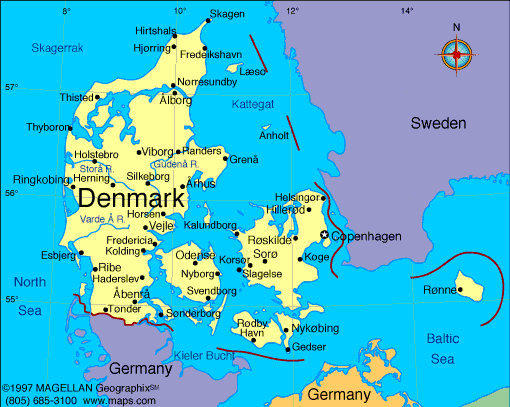
The Skattestyrelsen, Denmark’s Tax Agency, will Gather Traders’ Data from Exchanges

The online privacy of crypto traders in Denmark will not be the same after the latest announcements, made on Monday, January 13th. As it turns out, the Danish Tax Agency has received authorization to collect users’ data from cryptocurrency exchanges in the country, with the objective of checking if traders are paying what they owe.

The agency is known as ‘Skattestyrelsen’ in Danish. The development marks the very first time in which Denmark’s Tax Council has given such permission to an agency. The Skattestyrelsen will be able to gain access to traders’ data, including their names, exact addresses, Central Person Registration (CPR) numbers, and performed trades.

Handing Over Data

As a result of the decision, three Danish crypto exchanges will have to provide data logs for the 2016-2018 period. The platforms’ names were not provided at the time of writing this piece.

The Skattestyrelsen stated in its application that its primary objective was to “obtain information on unexecuted taxpayers’ and companies’ virtual currency transactions,” all with the intention of ensuring fair tax policies and their fulfillment.

The Skattestyrelsen claims to have received sensible information from Finnish tax authorities, involving Danish traders’ behavior on a Finland-based cryptocurrency exchanged that was not identified. As a result, Denmark’s Tax Council granted permission to gather users’ data in these environments.

“Without going too far, I think you can say that this is a big market that we need to look into.” Those were the words of the Personal Tax Director at the Skattestyrelsen, Karin Bergen. With crypto exchanges growing daily, both in trading volume and users, establishing tax policies and collecting information and contributions is becoming increasingly difficult in specific locations.

Judging by the Numbers

The Skattestyrelsen published some raw numbers about the Danish people’s activity in its platform. The statement was issued on December, and among its conclusion were that about 2,700 Danish citizens performed crypto trades that amounted to more than 100 million Danish krone, or a little over $15.35 million on the mentioned Finnish exchange in the 2015-2017 period.

According to Bergen’s words in December, that is probably “just the tip of the iceberg.” He also stated back then that “although it is a relatively small bitcoin exchange, the information is a very valuable source that clearly shows trends and patterns in the field.”

Unawareness is a Notorious Problem

The Skattestyrelsen used a study held by the National Tax Board in December to determine that about 450,000 Danish citizens have toyed with the idea of venturing in the crypto trading world, but only half of that total is aware of the tax regulations in the European nation. While traders need to pay their taxes on any profits, the losses ought to be claimed for the tax deduction.

The Danish Tax Agency is an organization under the country’s Ministry of Taxation, working together with other agencies of the Ministry.

The Ministry of Taxation manages nine specialized agencies, each responsible for their own core tasks. The agencies have offices spread over 26 locations in the nordic nation.

By Andres Chavez

HSBC Processed $250 Billion in Forex through its Blockchain Arm in 2018

As the blockchain technology continues to grow, more and more financial institutions have services and offerings powered by the trendy model. That is the case of global banking giant HSBC.

The British bank announced on Monday, January 14th that it settled around $250 billion of forex trades through blockchain technology in the year that just ended; an impressive amount that serves as proof of the approach’s growth.

The information was provided by HSBC via a press release quoted and published by the Financial Times. The European bank managed a whopping 3 million transactions thanks to its proprietary blockchain platform, known as “FX Everywhere.”

Forex Trading: The World’s Leading Market

For reference, forex trading, commonly known as the foreign exchange market, is the activity of trading cryptocurrencies. Forex or FX is a global, decentralized, or over the counter (OTC) market for that end. It is the largest market in the planet judging by trading volume, comfortably surpassing the Credit market.

The FX Everywhere tool let the financial institution “conduct thousands of foreign exchange transactions within the bank, across multiple balance sheets, in dozens of countries,” according to Richard Bibbey, who acts as the Head of Foreign Exchange Cash Trading & Risk Management at HSBC .

When news agency Reuters asked Bibbey about the overall payments volume handled by HSBC in 2018, he stated that the $250 billion only accounted for a small percentage of the total. The press release did not reveal the exact number.

“FX Everywhere uses distributed ledger technology to drastically increase the efficiency of these internal flows.” The numbers speak for themselves, as they demonstrate the endless possibilities implementing blockchain technology in the banking industry.

Huge Interest in Blockchain Affairs

HSBC, one of the largest banks in Europe and the whole world, is known for experimenting with blockchain in the recent past. One of the projects it took was the launch of a joint trade finance platform located in Hong Kong.

The enterprise is evidently a pro-blockchain company. For example, its Global Innovation Lead for Global Liquidity & Cash Management, Craig Ramsey, took advantage of the stage at the Money20/20 conference in Las Vegas held in October to proclaim blockchain and cryptocurrency as representing a “real challenge” to interbank settlements.

A little Bit more about HSBC

HSBC is a British institution, functioning as a multinational bank and financial services holding firm. Totalling approximately $2.374 trillion as of the end of 2016, it is widely recognized as the largest European bank and comfortably in the top ten at a global scale.

The bank is present in numerous places: there are 3,900 commercial offices in 67 nations around the world, including Africa, Oceania, Europe, Asia, North, and South America. The number of HSBC customers approaches 40 million. Forbes stated in 2014 that HSBC was the sixth most prominent public company.

Among HSBC’s services are retail banking, corporate banking, investment banking, mortgage loans, private banking, wealth management, credit cards, finance and insurance.

By Andres Chavez

Zim, Israel’s Largest Shipping Company, Opens Blockchain Platform to all Customers

The blockchain technology has been adopted by several companies in different fields in an attempt to optimize specific processes and provide a trust element that can validate transactions, making them resistant to modifications.

One of those fields has been cargo shipping, with the latest news coming from Israel. There, the biggest and most prominent enterprise of the industry, named Zim, announced that it will open its blockchain platform to all clients, according to a report from international shipping news site TradeWinds.

Electronic Bills of Lading

Zim, therefore, has made its blockchain platform available for what is called “electronic bills of lading (eB/Ls.) All clients will have access to the tool in selected trades. Zim tried out the blockchain-based eB/Ls platform for more than a year before deciding to open it up for customers. The pilot was deemed as successful.

According to the Israeli shipping business, the technology has the ability to not only leave behind the traditional, but now obsolete paperwork, and also optimize the workflow performed with other conventional tools, such as fax and email.

The report stated that whilst using the usual, ‘classic’ channels, the time of completion of specific transactions could take days or even weeks, whilst the new system, with electronic bills of lading being delivered through the blockchain environment, a couple of transactions were performed with resounding success in a little less than two hours each.

Blockchain-based trades will now be open to every customer, and Zim’s idea is to pay more attention to certain markets. Among them are Asia, South Africa, North America, and Mediterranean nations, at least for the duration of the year’s first quarter. The firm’s goal is to increase and maximize digitization, at least according to its chief information officer Eyal Ben-Amram.

The shipping industry has welcomes the news about Zim experimenting with blockchain technology. After all, the firm has been ranked eleventh by Alphaliner, a shipping data provider, when it comes to the companies with the most volume of freight transported per year.

Similar Cases and Developments

There are many more applications of the blockchain technology in the sector. For example, one of Abu Dhabi Ports’ subsidiaries developed an international blockchain pilot in collaboration with the Port of Antwerp to improve cargo monitoring and the trade flow and supply chain management between the two countries: Belgium and the UAE. It happened last year.

Associated British Ports, another high profile port operator in the European area, partnered with Marine Trasport International, a prominent digital logistics operator, with an agreement that saw them develop a platform destined to optimize port logistics using the blockchain technology. Their goal was to decrease manual data management and “digitalize” proceedings.

A little Bit more about Zim

Having been founded in 1945. Zim is one of the most successful cargo shipping companies in the planet. Zim Integrated Shipping Services Ltd. is the largest company of its kind in Israel, with headquarters in the city of Haifa.

By Andres Chavez