Coinme will Sell BTC through Coinstar’s Counting Machines

Imagine having the chance of acquiring Bitcoin in your local store instead of having to enter the digital platform. Of course, the latter may still be the easiest alternative, but for some people, it still represents an entry barrier to the cryptocurrency investment world.

Thankfully Coinme, which is a US-based Bitcoin ATM operator, will make things easier for everybody. The firm has reached an agreement with Coinstar to sell Bitcoin at its coin counting kiosks, according to a press release on January 17th.

The Rise and Popularity of the So-Called BTMs

Coinme is a well-known entity in the field, having been the first “BTM” operator to be granted a license in America back in 2014. The company, according to reports, is going to add thousands of locations via the initiative, which happens to have seen integrations go live by now.

“Bitcoin is now accessible at your local grocery store via Coinstar kiosks, and this offering will make it even easier for consumers to participate in this dynamic new economy,” were the words of Neil Bergquist, the CEO, and cofounder of Coinme.

The alliance with Coinstar is crucial the Coinme’s concept. The former offers coin to cash conversion stands in a number of countries around the planet. It has considerable worldwide reach and penetration.

Offering Value to Customers

Coinstar CEO Jim Gaherity did not hide its happiness after the announcement of the pact, saying that the company “is always looking for new ways to offer value to our consumers when they visit our kiosks.”

Coinstar is known around the field for owning and managing nearly 20,000 fully-automated self-service coin-counting kiosks in nine nations. Through the alliance, people will be able to sell their BTC in exchange for US dollars in devices that will be mostly located in American supermarkets and stores.

There are no precise details as to whether the Bitcoin feature will be international or if it will only be available in the United States. Neither Coinme or Coinstar precised the number of machines that will offer the feature.

The number of “BTMs” (the contracted form to refer to Bitcoin ATMs that the industry has adopted in recent times,) as of Friday, was 4187 in the planet. Out of that total, around 60 % of them, or 2516, were in the United States of America. The data is provided by CoinATMRadar, a widely known monitoring tool.

An Accelerated Growth Rate

The fact that a sizable number of operators are vying for control of the BTM industry tells an evident story: the feature is growing at an accelerated rate, as it represents a popular way to increase the usage of cryptocurrencies in several locations.

The BTM feature will, reportedly, be a multi-million field by 2023, being projected to constitute a $144.5 industry in that timeframe. However, one of the primary challenges of BTMs are fighting and preventing malware attacks: they are prone to suffer from dedicated threats, according to different researches investigating on the matter.

By Andres Chavez
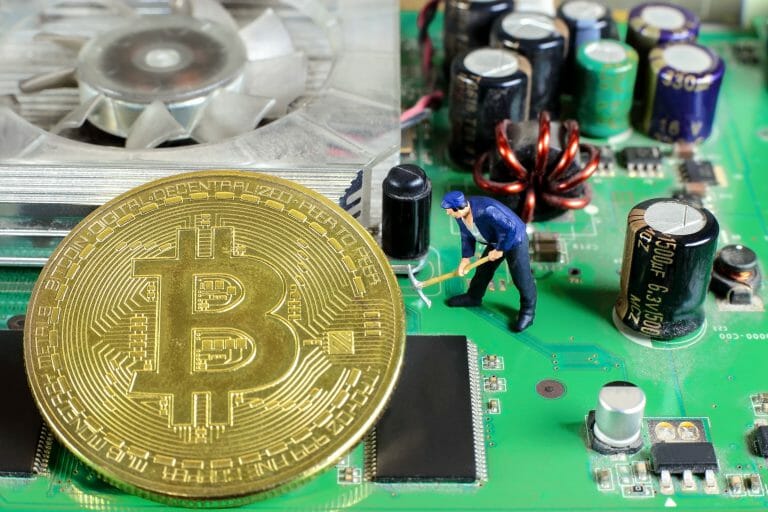
Major Chip Manufacturing Company TSMC Sees Sharp Decline in Crypto Mining Revenue

The cryptocurrency industry started 2018 with the foot on the gas pedal: Bitcoin was worth nearly $20,000, and altcoins had a healthy growth rate as a consequence. However, several months and two massive collapses have passed, and now the world’s leading crypto asset is barely hanging onto $3,600, struggling to break the $4,000 barrier despite some recent attempts.

Naturally, people saw a lucrative business in Bitcoin mining 12 months ago. Now, with the recent downturn of the cryptocurreny markets, interest in mining equipment has decreased, and the numbers tell the entire story.

Tough Times

That is precisely the case of Taiwanese chip manufacturing company TSMC (Taiwan Semiconductor Manufacturing.) The company, one of the most successful in the Asian zone, has revealed that mining-related revenue reported a considerable drop.

The news were made public after the firm released its Q4 (fourth quarter) report on January 17th, 2019.  The specific information for the crypto-mining business was not revealed, because it was encompassed within the high performance computing (HPC) part.

C.C. Wei, the company’s CEO & Vice Chairman, stated that the firm experienced a slight growth in the HPC area, excluding crypto. “[C]ryptocurrency is a big drop from 2018 to 2019. Hence, if we put the cryptocurrency together in the HPC, it is a big drop. It is almost a double-digit,” he said.

The press pressured Wei into providing more details, but he did not have much more to say, except that whilst the cryptocurrency department had contributed a lot to the business’ sales in 2018, TSMC “cannot specify too much of the segment, particularly it belongs to one of the big customers.”

TSMC and its Relationship with Bitmain

TSMC has been a renowned source of ASIC (Application-Specific Integrated Circuit) chips to Chinese crypto mining giant Bitmain, and that is why its relationship with the crypto industry is a matter of global news. Bitmain has suffered the consequences of the bearish market like few other entities.

According to a Bernstein analysis, 2-3 percent of the firm’s revenue was associated with crypto-related sales in February 2018. However, and thanks to the market collapse and its recent volatility, Wei prefers to take a more cautious approach this time around.

“Okay. This year, we do not forecast — we become conservative in forecasting this volatile business. So the cryptocurrency mining this year is much, much less than last year. And to what percentage, I do not think it is — I can release it right now,” he observed.

The Raw Numbers

The semiconductor company’s total revenue in the fourth quarter of 2018 was $9.4 billion, which represents a 10.7 percent growth considering the Q3 results and a 2% year to year increase. However, according to the Chief Financial Officer, Lora Ho, the projected profit for 2019’s Q1 is $7.3-$7.4 billion, a 22 percent drop.

TSMC is not the only semiconductor company that has felt the rigors of the bear markets. Giga Watt, an American powerhouse in the field, recently announced the cease of its day to day operations and filed for bankruptcy in November, for example.

Bitmain seems to be experiencing a rough moment, having suspended its mining in Texas and closed its Israel-based development center, also dismissing some local staffers near the end of last year.

By Andres Chavez

Malaysia Initiates Regulation of Cryptocurrencies and Tokens in its Territory

Cryptographic service providers must obtain authorization from the Security Commission. Investors are interested in cryptoactives to be considered legal

Malaysian Finance Minister, Lim Guan Eng, reported on Monday that his country “will regulate the initial offers of cryptocurrencies (ICOs) and the cryptocurrency trade”.

The mandate is called “Order of Capital Markets and Services 2019”. Cryptographic service providers and exchanges must obtain prior authorization from the regulatory entity, while the Central Bank (Bank Negara) will guarantee compliance with the measures. These assets must comply with the relevant securities laws and be approved by the Commission, the minister explained.

In order to make it possible, on January 15th an order came into force to recognize digital currencies and tokens as securities, under the regulation of the Securities Commission Malaysia. It is expected that the relevant regulatory framework will be launched by the end of the first quarter of 2019.

The Malaysian regulator noted that: “The guidelines will establish criteria to determine the adjustment and ownership of issuers and exchange operators, disclosure standards and best practices in price discovery, business rules, and client’s asset protection. Those who operate digital assets must implement anti-money laundering and anti-terrorism financing, cybersecurity and business continuity measures”.

Similarly, Lim Guan Eng said he sees potential in blockchain technology and digital assets, which he defined as great alternative values ​​for the Asian country. “Digital assets, as well as the underlying technologies of blockchain, have the potential to generate innovation in both old and new industries (…) In particular, we believe that digital assets have a role to play as an alternative route fundraising for entrepreneurs and startups, and for an alternative asset class for investors”, he said.

Clearing Doubts

Only a few days ago, the Malaysian government was not sure if it would legalize cryptocurrencies, even though on previous occasions it had pointed out that operations with these digital assets are not illegal either. The launch of Harapan Coin (HRP), a government cryptocurrency proposal for government transactions, was also being prepared.

In December, the Malaysian financial regulator and the Central Bank issued a statement confirming that “The Malaysia’s Securities Commission will regulate the issuance of digital assets through Initial Coin Offerings (ICOs) and the trading of digital assets in exchange houses in Malaysia. The regulations are in the development stage to take digital assets towards compliance with securities laws and promote fair trading and ensure the protection of investors”.

Last October, during a conference about cybersecurity, Judge Paul Grimm, who is part of the United States District Court for the District of Maryland, urged Malaysian investors to be meticulous and prudent when investing in crypto-nominations.

The US judge did not show rejection towards cryptoactives, but recommended caution and “diligence” when investing in them. “If you are considering cryptocurrencies as an investment, you should be diligent about how the currency is valued, the fluctuations in value and how to deal with the risks associated with the investment”, said Grimm.

It should be noted that Judge Grimm’s comments come after the Central Bank of Malaysia, Bank Negara Malaysia, declared, in March 2018, that cryptocurrencies were not legal tender in the country, even though the Malaysian government ordered the cessation of all promotional activities related to the Lavidacoin cryptocurrency (LVC) and Coinzer’s ICO, for allegedly using the logo of the country’s central bank.

In the middle of this situation full of changes, retail investors in Malaysia show desires to acquire cryptocurrencies, in order to conduct their transactions comfortably.

By María Rodríguez

Russia Prepares its Project of Law in Parliament about Cryptoactives

Last year, the Russian Union of Industrialists and Entrepreneurs (RSPP) sent Russian Prime Minister, Dmitry Medvedev, some proposals to promote the draft law which is about crypto-technologies.

The lower chamber of the Russian Parliament (Duma) announced on Wednesday, January 9th, that the next discussion sessions will focus on the development of a legal framework in line with the digital economy, as well as reviewing the proposals for the study of these technologies.

Vyacheslav Volodin, Chairman of the Parliament’s Lower House, said that it is essential for the Russian economy to stay one step ahead of legislation and the use of these types of economies, so he hopes they can soon discuss bills that focus on build a friendly environment for this new line of the economy that is having great acceptance in some countries of the continent.

“The creation of a favorable legal framework for the development of the digital economy should, in many aspects, provide us with an advantageous position in the competition between other countries”, said Volodin.

In a session with the dam, Vyacheslav, excited, said: “I would like to mention the block of bills on the digital economy. These are laws on digital financial assets, digital rights and collective financing. We have identified this work as one of our priorities”.

In addition, the President of Duma commented that at the beginning of the spring session it is expected that they can review an average of 20 bills during the medium term. He highlighted his deep interest in the fundamental development of the digital economy in modern Russia.

Among the main movements that could be made in the short term to accelerate the final process of discussion for the approval of such laws in Russia, is the creation of working groups with specialists in the field of cryptocurrencies, in order to generate the necessary trust in parliamentarians.

That point could well develop, in the same way that it has been formed in other countries. Such is the case of the State of New York, in the United States, where a group of specialists, businessmen and consumers for research and use of cryptocurrencies could have a better collective understanding of these technologies.

On the creation of these groups, it was stressed that it is of “vital importance” to build the environment of the laws to be approved, since previously what had been proposed received strong criticism from businessmen and merchants who make life with the cryptoactives in that country.

The main reason was that it lacked basic concepts about blockchain technology and cryptocurrencies; hence, it could be open to many misunderstandings, and even encourage and allow financial crime within the legal framework. So the bill had to go back to the first phases of discussion.

Russia is one of the countries that have seen the development of these technologies as favorable for their economy, so they consider the discussion of these sectors of the economy can further boost certain industrial sectors of the economy and possibly self-finance in the future.

By María Rodríguez

NASA Proposes Blockchain ​​System to Protect Aircrafts Flight Data

In recent years, NASA granted $ 330,000 to develop a free system for spacecraft, using blockchain technology

The National Aeronautics and Space Administration (NASA) studies the use of blockchain technology to protect flight data, prevent identity theft and improve the aircraft flights safety. This was announced on Thursday, January 10th, through the official website of this US entity.

Ronal Reisman, aeronautical engineer at NASA’s AMES Research Center, published a document stating they are developing technology based on blockchain platforms and a series of smart contract networks for their functionality, in order to reduce risks and security vulnerabilities in flights.

The release presented by the North American organization expresses that the central idea is to use secure communication channels that can shield the information used during the flight.

“This framework presents certification authority, smart support for contracts and communication channels of greater bandwidth for private information that can be used for secure communication between any specific aircraft and any authorized member in particular”, explains a part of the official writing.

To achieve the objectives, it is expected that by early 2020, the Federal Aviation Administration (FAA) will oblige all aviation operators in the United States to use the new surveillance system called: Automatic Dependent Surveillance Transmission (ADS-B), which will use channels where certain aircraft-information will be recorded.

Among the information will be placed position, identity and other data of great use in traffic control, so that this technology protect without problems more confidential information.

This was stated by the engineer Reisman when referring to the information that will be protected using the ADS-B system. He considers that commercial flight companies preferred keeping certain information private to avoid leaking information (corporate espionage). Regarding privacy in military flights, Reisman commented the control of this military air mobility information depends solely on the Department of Defense.

“This information, if disclosed, would show vulnerabilities in the critical infrastructure of the Department of Defense and, if exploited, would likely result in significant disruption, destruction or damage to DoD operations, property or facilities”, said the engineer, who believes that this technology must be developed, tested and verified before its implementation.

The privacy of such traffic data is extremely confidential. Therefore, the development of blockchain technology can generate an adequate system that can keep private information safe in any of its areas, according to the opinion of the specialists who have been studying this topic.

The proposal designed for its implementation using blockchain technology is a public key infrastructure (PKI) produced simply as an application for airplanes.  “One of the advantages of these blockchain schemes is that they allow the implementation of a PKI infrastructure in which end users do not have to belong to a single organization, nor adhere to any single client / server protocol”, says the document published by NASA.

It is expected that this new system can exceed the levels of privacy that radar systems currently have and then, this technology could be implemented by other countries around the world.

By María Rodríguez

Medvedev Warns People Not to Bury Crypto Assets over Market Crash

It is no secret that Bitcoin’s recent price behavior has more than just a few investors worried because of its sharp decline that started in November 2018 and its inability to fully recover ever since, despite a few ups and downs. No one knows for sure what the future may hold for the world’s most influential digital asset.

However, at the very least, it deserves the benefit of the doubt. According to Russian Prime Minister Dmitry Medvedev, the cryptocurrency behavior should be closely monitored in the following weeks to see whether it shows signs of life or not.

Quoted by a local media news agency after speaking at the Gaidar international scientific forum this week, Medvedev talked about the recent market downfall that saw Bitcoin go from the $6,500 range to below $3,300 in a matter of weeks. Right now, at the time of writing this piece, it had survived another bearish run.

Medvedev stated on Tuesday that it was crucial for the industry and its primary actors to closely follow the Bitcoin price situation, and other coins as well. He explained that due to their volatility, they concern investors and traders, but the technology itself has benefits that should not be dismissed.

“This (Bitcoin and altcoins’ volatility in 2018), of course, is not a reason to bury them. There are both light and dark sides, as in any social phenomenon, in any economic institute. And we should just watch closely what happens to them.”

In his intervention at the forum, the Russian politician also talked about social inequalities, trade protectionism, and the world’s transition to the digital platform, citing the cryptocurrencies in the latter subject.

Russia won’t be investing in Bitcoin…yet

Rumors circulating in the past few days stated that Russia was prepared to make a major investment in Bitcoin, and several news outlets reported that the country was going to acquire $10 billion worth of BTC.

However, the story was blown over by the media, being originated from a tweet published by financial expert and member of the Russian Presidential Academy of National Economy and Public Administration, Vladislav Ginko.

Ginko had written that he thought the country might use BTC with the intention of hedging against sanctions. Whilst it may be a possibility, the nation’s government has not made an official statement on the matter.

The Quest for Crypto Regulation Has Started

What is indeed going to happen is that Russia is going to prepare a cryptocurrencies’ regulatory framework within the next couple of months, according to a local news site (TASS.) The country, through the State Duma, will be drafting a bill sometime in January or February with the goal of regulating ICOs (Initial Coin Offerings) and other crowdfunding initiatives.

“The long-awaited law on digital financial assets is in the GPU for approval. It is in conjunction with two others: the law on the regulation of investment platforms or crowdfunding and changes to the Civil Code. We agreed that the law on digital financial assets should be adopted along with these two legislative acts […] Judging by the information that I have, this is January-February. Most likely, February, of course. Consideration of all three bills should pass,” were the words of Anatoly Aksakov, Chairman of the State Duma Committee on the Financial Market.

By Andres Chavez