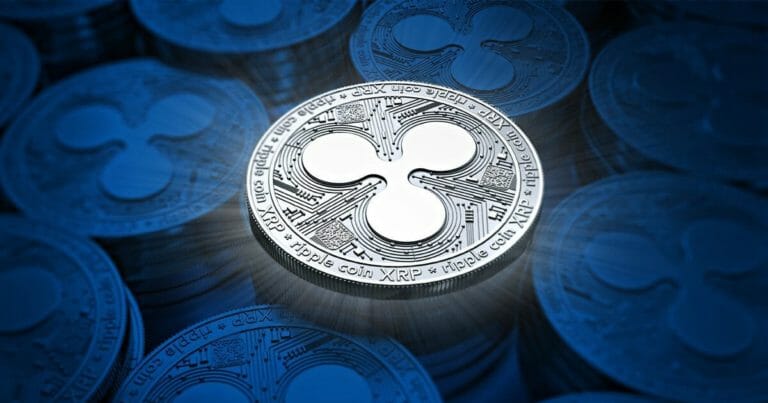
Whether or Not Ripple Is a Security Still Debated

Ripple Labs was sued in June 2018 for violating the securities law. The last motion filed by Ripple’s legal team disappointed the community.

On September 19th, Ripple’s legal team filed its response to a lawsuit, which is already more than one year old, for allegedly manipulating the market and violating the securities law. However, it remains unclear whether XRP is a security or not, so the members of the cryptocurrency community have expressed their opinion about it.

Until the aforementioned date, the company had the duty to respond to a new complaint against it, within the framework of the lawsuit that was filed in June 2018 against Ripple Labs for allegedly violating U.S. legislation on securities, and performing a market manipulation to obtain economic benefits.

The most recent complaint was made on August 5th and gathered the very words of the Securities and Exchange Commission (SEC), to argue that the startup illegally sold unregistered securities. Ripple’s legal representatives responded to the complaint.

According to a community lawyer, who analyzed this response, among the allegations made by the legal team is the fact that the case was not filed on time (the sale would have been made in 2013, and the claim would have been made outside the framework of the three years established by law). Besides, the purchases of XRP were not made directly from Ripple directly but in the secondary market, and the statements of Ripple did not influence the purchases.

However, the motion does not clearly state that Ripple is not a security. Although it is made clear that Ripple’s legal team considers XRP to be a currency and thus not a security, the issue is not being analyzed and the court is not asked to give its verdict in this case. For this reason, the legal status of the cryptocurrency remains undefined.

However, the lawyer who is analyzing the issue states that to prepare a defense in this regard, the degree of decentralization of the Ripple’s blockchain should also be analyzed. For that reason, he considers that the motion is disappointing in that respect.

Facing this situation, a member of the community began a voting process on Twitter, to learn if users have used the cryptocurrency to pay for goods and services. At the time of writing this article, about 3,200 people participated in the voting process but only 30% responded affirmatively.

Despite this, the graphs that show the activity of the network report that the payments increased in August, with more than 137,000 payments, exceeding the previous all-time high, recorded at 135,000 for January 2018th. On Thursday, September 19th, a figure of only 58,000 payments was recorded.

For its part, the payment processor CoinGate reported that payments with XRP had increased 19% between May and July, and the cryptocurrency represented 3% of all payments made through CoinGate.

Beyond the Ripple community’s debate on whether or not XRP is a security, the outcome of this lawsuit is crucial to clarify how the U.S. securities laws apply to crypto assets in general. Before the motion filed by the legal team, the case promises not to be solved in the short term.

By Willmen Blanco

Coinbase Will Support Telegram and 16 other Digital Assets

The goal is to develop an open financial system in which users can get the options they need

Coinbase, the digital asset exchange located in San Francisco, the United States, said it is exploring some ideas about incorporating at least 17 more cryptocurrencies. It will operate with some new cryptocurrencies. Among these cryptoactives is the one of Telegram.

Some of the digital assets that the company expects to incorporate are: Oasis, Avalanche, Celo, Chia, Coda, Filecoin, Handshake, Dfinity, Kadena, Mobilecoin, Nervos, NEAR, Orchid, Solana, Polkadot, Spacemesh and Telegram.

Thus, Coinbase said it intends to support new digital assets that have not yet been released. Telegram, for example, recently launched its Telegram Open Network (TON) browser and its node software on its website, but it has not yet distributed its token, GRAM, something that would happen in two months.

“Our goal is to offer support for all assets that meet our technical standards and that comply with applicable laws. Over time, we expect our customers worldwide to have access through Coinbase platforms at least 90 % of the aggregate market capitalization of all digital assets in circulation”, said the company.

Available in Some Jurisdictions

On the other hand, Coinbase explained that the new tokens could not be available all at the same time in certain regions, due to different legal requirements, laws or regulations in different countries.

“We add new assets on a jurisdiction-by-jurisdiction basis, this is something that should be reviewed and receive applicable authorizations. The omission of assets from this publication does not disqualify any such asset from active review and potential listing”.

To meet these requirements, the company will evaluate the possible crypto assets, compliance, security and alignment of each project.

The goal is to develop an open financial system in which users can get the options they need.

Support for DASH

In mid-September, Coinbase announced that its professional commercial platform Coinbase Pro had plans to launch support for the DASH token.

The launch of DASH operations began at 9:00 am last Tuesday, September 17th, local time in the Pacific.

As the exchange announcement explained, DASH will be available in jurisdictions supported by Coinbase. So far, two areas where DASH will not be available will be in New York and in the United Kingdom.

The Impact

Adding DASH to the Coinbase list seems to have given positive results in the short term. According to CoinMarketCap, the price of DASH rose from USD 97.98 to a maximum of USD 103.84. Subsequently, its value fell by 2.43 % and its value was again USD 97. The dynamics could continue upwards.

“Dash is launching at Coibase.com and in the IOS and Android Apps within the next 15 minutes. You may need to update your app to properly buy, sell, convert, send, receive or store DASH. We will update when DASH is fully live”, commented the company in its official Twitter account.

In a few more days, the exchange can indicate which other regions will not be able to get access the digital asset or new cryptocurrencies that Coinbase would add to its list of the cryptocurrencies it will support.

By María Rodríguez

Spanish Company Will Use Blockchain to Store Memories

In a “secret chamber”, as the best style of magic stories, information can be stored safely thanks to blockchain technology

In Spain, blockchain developments continue; this is a tool that will work not only to make transactions with cryptocurrencies, but also to help preserve the environment and now even store a memory.

A Spanish company is working on a project that would allow, for example, a father to store memories for his children or grandchildren. In this way, they will be able to see the memory when they grow up.

In this way, blockchain technology platforms would allow storing a memory and protecting it. Then, it will be delivered with guarantees to the person indicated.

The company in charge of the idea is Astroland, an establishment that emulates what would be a stay on Mars inside the cavity of a large cave in Cantabria. This stay has a cost of 6,000 euros for those who wish to have the experience of “living” three days as if they were on the red planet.

Saving memories might not be so difficult. The key is to store them so that they are not damaged, that they remain safe and that only those who are authorized have access.

“The memory would be a graphic document, a video, a text. We want those who wish to preserve a memory to store their creation in a capsule that we would store in an armored box inside an unknown place”, explains David Ceballos, CEO of Astroland.

The “Secret Chamber”

Combining the idea of ​​the route in the cave and the storage of memories, the armored box would fit inside a high mountain cave, in a place without cartography, like a “secret chamber”, in the style of magical tales and to keep the capsules well protected.

When the time comes for the memory to be delivered to its recipient, Astroland professionals would enter the secret chamber, take the capsule and deliver it to its owner.

The recipient would get access to it with the protection offered by blockchain technology. He and only he would receive the message unchanged thanks to blockchain platforms.

A Trip to Mars

On its website, Astroland is presented as the first interplanetary agency born in Spain. “We test new technologies and develop skills to live in the hostile environment of the red planet”, according to the presentation.

Astroland organizes “missions” to Mars from a cave in the mountains of Cantabria, where conditions similar to those of that planet are created.

Within the 34 kilometers of natural tunnels, the company created a base camp where customers sleep and live a different experience. In addition, they walk through the caves using their spacesuits.

Why in Mountains?

If a special mission travels to Mars, astronauts would have to live in caves as long as they are on the red planet, due to the radiation it emits. Thus, a round trip from Earth to Mars would last one year, six months the trip to arrive to Mars and six more to return.

Astroland has collaborated with the European Space Agency (ESA) and hopes to do the same with the National Aeronautics and Space Administration (NASA). It is estimated that a real trip to Mars would be feasible by 2030, if previous technology and tests allow it.

By María Rodríguez

In Cuba, Internet Work Continues to Increase in Exchange for Crypts

It is an alternative to the low salaries of the island’s citizens. Ponzi schemes could be a problem.

Cryptocurrencies in Cuba begin to gain strength despite the silence of the island’s government about Bitcoin, according to local media reports.

As an alternative to the low salaries of the island, Cuban citizens resort to online jobs, with the aim of earning more money.

Just a few months ago, some Cuban citizens took their first steps in electronic commerce, even with the fear that these works were banned and despite the technological barriers and Internet access, which would make the process more complicated.

According to the local information, two applications related to electronic commerce have barely been created on the island and only a few have been launched to use these applications.

In fact, the Telecommunications Company of Cuba (ETECSA) has also tried to combat cryptocurrency entrepreneurs.

According to the community of enthusiasts of “Cubacripto”, the state company has begun to close connection ports to tools abroad that serve to operate with cryptocurrencies.

The concept of blockchain is much more complex and that is why, until now, it is more complicated to understand than cryptocurrencies. For that reason, the number of people in cryptocurrency communities is reduced so far.

No Regulation and Silent

The Cuban government does not talk about Bitcoin or other cryptocurrencies, whilst some citizens see these digital assets as a way to avoid government control, regulations and overcome the low amount that represents the salary.

On the other hand, Professor Alexis Massó Muñoz, from the Cryptography Institute of the Faculty of Mathematics and Computer Science of the University of Havana, told the official portal Cubadebate that the country does not have laws that regulate the subject of cryptocurrencies and blockchain.

However, the professor considers that “it is possible that the country will soon have them”.

Cuba has considered the use of cryptocurrencies to avoid the sanctions that the United States imposed to the island, the Reuters news agency reported in July, citing a source from the Cuban government.

During a public speech on local television, the country’s President, Miguel-Díaz Canel, said a plan in the area would raise capital for about a quarter of the population, which would help pay for the reforms.

“We are studying the potential use of cryptocurrencies in our national and international business transactions, and we are working on it together with academics”, said Economy Minister, Alejandro Gil Fernández, according to Reuters.

It remains unclear if Cuba is considering the possibility of creating its own cryptocurrency, just as Venezuela did with Petro as an alternative to the sanctions imposed by the United States.

A Ponzi Scheme

Recently, the community of enthusiasts of CubaCripto considered it controversial that a Cuban official digital portal such as Cubadebate reviewed the alleged gold sales venture of Karatbars, a German multilevel company listed as a ponzi scheme.

In October 2018, the German Harald Seiz, CEO of Karatbars International, announced that last July 4th, it would be the “Gold Independence Day” and 100 KBC could be exchanged for 1 gram of gold.

The date arrived and the public could not change its KBC for the metal. The KBC cryptocurrency went from worth USD 0.12 to no more than USD 0.03, causing considerable losses to those who invested.

Currently, citizens expect the Government of Cuba to make official pronouncements and take a position about the issue of cryptocurrencies on the island.

By María Rodríguez

Poor Performance of Altcoins against BTC

Last year was the worst time for half of the altcoins analyzed. The results could reflect that there is no need to have multiple cryptocurrencies.

Many major alternative cryptocurrencies have performed well against the US dollar but not against BTC. However, it is difficult to say whether or not this is the worst year that altcoins have experienced. By examining the price data associated with some of the most popular and oldest altcoins in the market, an analysis could be performed for both 2018 and 2019.

Of course, measuring the whole altcoin market can be somewhat difficult, since enthusiasts and traders may change their minds regarding new cryptocurrencies monthly. According to Messari, BTC had a real exchange volume of just under USD 500 million at the time of writing this article. Besides, popular altcoins such as Bitcoin Cash (BCH) and Dash (DASH) each had only USD 26 million and USD 11 million in real trading volume, respectively.

Ethereum (ETH) is the main outlier concerning the level of financial activity of a cryptocurrency network in relation to BTC, with around USD 410 million. Having said that, ETH’s 24-hour on-chain adjusted transaction volume is less than one-fifth that of BTC. Besides, the increase in ETH trading volume found in exchange houses like Binance seems to be a relatively short-term phenomenon, according to TradingView.

Ripple (XRP) and Stellar (XLM) were not included in that analysis, since their qualification as cryptocurrencies is considered questionable. It should be noted that XRP is the only major cryptocurrency that has fallen against the US dollar this year.

Other very popular cryptocurrencies, such as EOS and Tron (TRX), do not have records of sufficient length to be considered. Altcoin markets are so volatile and shallow that it is too difficult to get any meaning from them during the first days. EOS and Tron have followed the overall trend of altcoins by falling sharply against BTC since early 2018, according to Coin Metrics.

Key Points

LTC, the oldest altcoin still traded, has fallen 66.73% in relation to BTC in the last six years, which means an eternity in the world of Bitcoin and blockchain technology. Zcash (ZEC) also faces this problem and probably shows the worst reality, measured against BTC, since its launch in October 2016.

ETH and ZEC are the only two covered alternative cryptocurrencies that have fallen more in 2019 than in 2018 against BTC. According to the study, last year was the worst on record for half of the alternative cryptocurrencies analyzed.

There have been exceptions in the altcoin bear market in 2019, such as Binance Coin (BNB) and ChainLink (LINK), which have risen substantially compared to BTC. LINK also rose over 800% against the US dollar at a certain time. Of course, it is unclear whether these bullish movements in price called BTC of BNB and LINK will stand the test of time.

Where Altcoins Go

CoinMarketCap indicates that the Bitcoin Dominance Index (BDI) of altcoins, which measures BTC’s share in the cryptocurrency market worldwide, reached a fund of around 33% in January 2018, growing to about 67.2% since then.

Altcoins really have nowhere to go, but that they go up when they are first launched. Their extremely low levels of liquidity means that not much money is needed to move the price. Thus, the altcoin market has been nothing but a “giant bubble,” in line with the concept appeared in early 2018.

By Willmen Blanco

Bitcoin’s Consensus Cannot Be Forced by Wall Street

Tone Vays believes that the rise in the price of Bitcoin has already largely discounted halving. The analyst believes that if Bitcoin ETF makes decisions without consensus, it will pay the consequences.

At the Baltic HoneyBadger 2019 conference held in Riga on September 14th and 15th, Tone Vays, derivatives operator, analyst and YouTube content creator, talked about the opportunity that this kind of events offers to distinguish between the economic model of Bitcoin and that of fiat currencies. He also talked about the price of Bitcoin, the halving that will occur next year and the ETFs in the traditional financial system.

The conference was an event that gathered high-quality speakers and participants, where everyone understood Bitcoin, and its difference with fiat currencies and other cryptocurrencies.

Between 2013 and 2014, Vay’s colleagues did not believe that he would resign from his job to focus full time on cryptocurrencies. In his office there were about 20 people, of whom 4 have joined the cryptocurrency system so far. He expressed his happiness at having motivated them to do so.

One of the reasons for the strong upward trend observed in the price of Bitcoin this year is the anticipation of the forthcoming halving.  Consequently, if there is another prominent rise in the next 6 months, a serious correction is most likely to occur as the halving arrives. In fact, that is what happened during last halving, after which the price rose 100%, only to fall on the same day.

The concept will remain the same, since fewer bitcoins will be generated by the time of next halving. An estimate of 90% of the total existence will already have been issued, so the price should increase between 2020 and 2021. Evidently, the date itself is inflated, which will lead to the correction, but the price will increase over time anyway.

The analyst thinks that many things in the world of Bitcoin and cryptocurrencies will not happen again, since they were unique opportunities to capitalize. Between 2013 and 2014, users created a lot of alternative currencies that can be considered to be excellent. After that, creating a successful altcoin has become very challenging, so they evolved in the form of an ICO and had value for a while.

The big fork that occurred in 2017 together with the activation of SegWit, BCH, currently represents only 3% of the Bitcoin market value. He predicts that there will not be another fork of value in the future, since people have already seen the failure of the Bitcoin Cash fork and now they see the failure of Bitcoin SV, which is Bitcoin Cash halving.

With the presence of Bitcoin ETF among users, they will not have to fear any other forks. Vays explained that if the ETF decides to follow a course away from the consensus of the nodes executed by ordinary people, it will be a great lesson for Wall Street. Bitcoin cannot be told what to do and it will be the end of that ETF. Other people in the financial system worldwide will learn a very valuable lesson: Bitcoin’s consensus cannot be forced.

By Willmen Blanco