Venezuelans Are Pushed More Towards Cryptocurrencies with Each New Restriction

Venezuelans do not have free convertibility with their local currency, the bolivar. Venezuela is the second country with the highest monthly volume of transactions in LocalBitcoins.

Venezuela shows clear signs that the adoption of cryptocurrencies will continue to grow, more for necessity than for desire.

Freelancers that work from Venezuela receiving international payments face multiple obstacles to handle that money, which Bitcoin and other cryptocurrencies can help overcome.

People decide to use services such as PayPal, Payoneer and Transferwise, among others, as little as possible. The basic reasons are the very high fees for receiving money and the intermediation that gives rise to blockages of funds or services, as it happens now with Transferwise, which will stop providing its services to Venezuelan customers.

The restrictions on Venezuelan users of payment services, transfers and even international cards are not new. The announcement by Transferwise only adds to the limitations to make international transactions, in the context of the national exchange control and the sanctions issued by the US government and multilateral instances such as the European Union.

In the case of Bitcoin, users just need a wallet to control the movements of their funds. As long as the seeds are properly safeguarded, they will be able to access or recover their bitcoins when they need them, even if some software restricts their access to Venezuelans.

Money Restrictions in Venezuela

In the country there are still many who use centralized services modeled after banks that manage money. The aforementioned are just some of services that have clear limitations in the Venezuelan scenario. PayPal, for example, requires integration with a credit card in fiat currencies, like the dollar and the euro, for a complete verification allowing the maximum functionality of an account.

In Venezuela, there are no foreign currency cards, and those companies that provided services to make it possible have gradually left the country or stopped offering support. Both Payoneer, who sent prepaid cards to the country, and PayPal, who worked with the cards of that company, stopped offering their services to Venezuelans.

Within that context, the citizens of this country have found Bitcoin and other cryptocurrencies as a refuge. Although it is not easy to determine the source of the movements, Venezuela is among the most active countries regarding trade in the LocalBitcoins P2P trading platform.

Cryptocurrency Landscape in Venezuela

Several times this year, Venezuela has taken second place in the portal, only behind Russia and always fighting with the United States for the second highest volume. It has remained in that position in the past two months, with volumes exceeding 2,000 BTC traded per month. Obviously, these movements may have different origins.

Some people believe that it is about money laundering from corruption while others allude to Arab, Asian or other nationality traders that maintain business in Venezuela. It is also estimated that the funds come from remittances sent by Venezuelans living abroad to their relatives in the country, or from the movement of funds by entrepreneurs and freelancers living in Venezuela.

The fact is that payment options with cryptocurrencies are increasing in many businesses nationwide. Department stores, pharmacy chains and multiple small stores have begun accepting payments with cryptocurrencies. In recent days, the country’s first ATM was installed to buy BTC and Dash with cash dollars.

Precisely, Dash has been another of the fastest growing options in the country, in terms of commercial acceptance. Data from DiscoverDash show that Venezuela is the country with most businesses accepting the cryptocurrency.

By Willmen Blanco

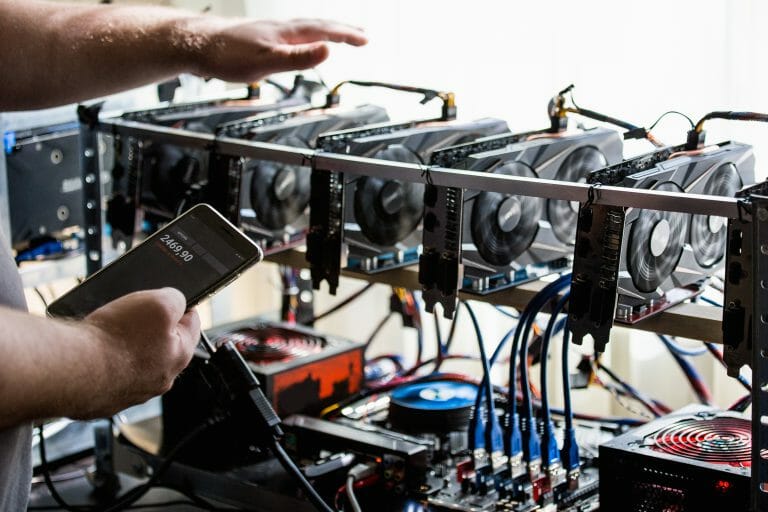
New Bitcoin Miners Launched by Bitmain and Canaan Are Prepared for Next Halving

Bitmain’s S17+ model offers Bitcoin users a hash rate of 73 TH/s. Canaan’s A1166 miner is also capable of processing 73 TH/s with an energy efficiency of 46 J/TH.

Bitmain, a Chinese company dedicated to designing application-specific integrated circuit (ASIC) chips for Bitcoin mining, launched its last two Antminer 17 series models to the eager market, last October 9th, 2019. On the same day, Canaan, another Chinese ASIC producer, also launched its A11 series of next-generation Bitcoin miners.

The new mining rigs of the two leading Bitcoin miner manufacturers have much higher hash rates and efficiency. Bitmain’s S17+ model offers a hash rate of 73 TH/s and works at 40 J/TH. For its part, Canaan’s A1166 miner is capable of processing 73 TH/s with an energy efficiency of 46 J/TH.

According to the announcement, the new Bitmain T17+ model offers a hash rate of 64 TH/s and energy efficiency at 50 J/TH. As demonstrated in its official presentation, the two new models will be available to the market from October 11th and their shipment scheduled for the first 10 days of December. The manufacturer had already launched the Antminer S17e (64 TH/s, 45 J/TH) and T17e (53 TH / s, 55 J/TH) in the month of September, and it sold out in a matter of minutes once it was available for sale.

On the same day, Cannan, the manufacturer of Avalon, also announced the launch of its most powerful miners: the A1166 model, which processes a hash rate of 73 TH/s and operates at 46 J/TH, and the A1146 model, which processes 61 TH/s with an energy consumption of 55 J/T.

According to its sales director Chen Feng, the A11 models are not yet available to everyone at this time, for fear of delay in delivery, but mainly to some large buyers. Up to now, around 500,000 units of A10 and A11 have been manufactured, and the number is expected to exceed one million by the year 2020. Chen added that the most powerful and efficient 7 nm miners and those with a more advanced 5 nm process are on their way.

According to data from ASIC Miner Value, the Antminer S17 Pro (53 TH/s) is currently the most profitable miner. All the latest Bitmain S models are in the list of the 10 most profitable miners in the market. The rest of the competitive mining machines on the main list include the Innosilicon T3+, StrongU U8 series, Whatsminer M20S, and the Ebit E11 ++.

With the introduction of 70 TH/s mining rigs, in principle more efficient, Bitcoin mining can be more difficult and less profitable for individual miners in the midst of an ecosystem that moves through unequal segments. Jihan Wu, co-founder of Bitmain, said at the World Digital Mining Summit that miners have to improve the efficiency of their mining equipment if the price of Bitcoin does not move after the halving that is expected to occur in May 2020.

There is a lot of expectation in the ecosystem, so these new mining devices come to help keep optimism among bitcoiners.

By Willmen Blanco

Facebook and Calibra Sued in New York Court for “Brand Violation”

The visual similarity in both brands, and the probability that users confuse them, is the cause of the demand.

The social media giant Facebook faces another legal controversy with the project of issuing its own cryptocurrency in 2020. On October 10th, Facebook and Calibra received a lawsuit from Finco in the Federal Court of New York for trademark infringement, unfair competition and “false designation of origin”.

Delaware Finco Services sued Facebook for the logo that this second company uses for its token, Libra. In addition, Finco sued his former designer, who also create the logo of Calibra for Facebook. The designer is accused of reusing the design.

The reason for the accusation is trademark infringement. The plaintiff expects the Calibra brand to stop using that logo. Calibra is the name of the company that represents the Facebook token.

Finco is a company that offers online banking services through a mobile application. It does business under the name Current. In 2016, it paid a company called Character SF to design its logo.

According to Finco, that logo was registered with the United States Patent and Trademark Office (USPTO). The registry covered a number of commercial activities that included the “relationship with a mobile computer software application used to allow cryptocurrency-based transactions”.

The registration document indicates that Finco currently uses its brand in an application available on the Google Play Store and Apple App Store, on a debit card, and on its website.

The Reasons of the Problem

All started when Facebook resorted to Character SF in search of a logo that represented the brand of its cryptoactive, Libra.

The designs have numerous similar forms, but the logo that Character SF created for Calibra is practically identical to the logo created for Finco and it is already in use and registered.

Until now, the US media reported that Mark Zuckerberg, President and creator of Facebook, will testify to the Congress on October 23rd about the intentions of their companies for the Libra currency.

In addition, he is expected to testify, in the coming days, about how the events occurred, in order to demonstrate that it is not Facebook’s responsibility for Character to create two identical logos.

However, Finco alleged that it presented the complaint to the general advisors of Calibra and Facebook and that they did nothing about it.

Other Implications

Finco’s lawsuit is also addressed to a company called JLV, LLC, which owns the intellectual property related to Calibra. It signals Facebook to contribute to brand violations.

Character must also respond for breaching the “good faith and fair treatment agreement”, a part of the contract that refers to the fact that the same brand cannot be sold to another company or person.

Despite all of this, Character can make a request to reject the lawsuit, because, according to local media, there are inconsistencies in the part of the document that explains the reasons for the lawsuit. These reasons are not explained in a clear manner.

Until the moment, the Court has to determine if the design similarities are a real infraction and, if so, who would be responsible and how they should respond for it.

The truth is that Facebook has not come out of scandals. To start with, because it has a lot of personal information of its users; second, their decision made about launching its own cryptocurrency; and now, because the Calibra logo is almost identical to the logo of Finco. The community remains attentive to what happens.

By María Rodríguez

UAE’s SCA Will Ask for Feedback from the Public about How to Regulate Crypto

Finding common ground regarding the regulation of crypto assets may be easier said than done in lots of countries. In numerous cases, legislators cannot come to an agreement on how to best approach this innovative, digital assets that are changing the financial landscape of the planet.

As it turns out, one of the world’s richest countries, the United Arab Emirates, will ask for the feedback of the community regarding cryptocurrency regulations, according to recent reports that surfaced in the last few hours. Through the Securities and Commodities Authority (SCA) the country already published draft regulations for these assets.

The Process Will Last Until October 29th

The SCA published an official statement a few hours ago, in which it states that it will gather the public’s opinion and feedback on the draft regulations. The process will last until October 29th, and after that, the organism will provide the final drafted legislation for cryptocurrencies and related assets.

Authorities made the right call when they decided to gather the opinion of the masses because knowledge is power and they stand to benefit by reviewing insightful comments and other recommendations about how to best tackle such a sensible and controversial issue.

According to the message published by the SCA, all the actors that make their living by interacting in the crypto industry will be able to provide their opinion and feedback on the draft. That includes investors, the community in general, brokers, analysts, legislators, media, and researchers, among others.

28 Total Sections

The statement also notes that the document has a total of 28 sections, in which all aspects of cryptocurrencies and the industry in the UAE are covered. Among these parts are requirements for those that issue tokens and related assets, security and custodial measures and policies, how to fight finance crimes, information security controls, governance standards, and more.

The SCA also stated that after the process has been completed and the legal document that regulates cryptocurrencies is finalized, those that take part in the industry and in the market will have the ability to ask the institution for guidance about specific sections and parts of the regulating document through a digital channel.

Notably, the Securities and Commodities Authority had said in the past that it would introduce ICOs (Initial Coin Offerings) regulations and limitations in the draft before 2019’s second quarter.

High ICO Demand

Back then, Obad Al Zaabi, who is the CEO of the institution, observed that there was a high demand in ICO registration and licensing. At the time, local media outlets were reporting that the authority, known as the UAE’s financial regulator, will work alongside the Abu Dhabi Securities Exchange and Dubai Financial Market with the goal of developing an ecosystem for ICO token trading.

At the start of the year, authorities in the United Arab Emirates and Saudi Arabi let the world know that they would join forces to work in a crypto asset, with the intention to gain a better understanding about the blockchain technology and how to enable and foster cross-border transactions.

By Andres Chavez

Most Popular Mining Farm among Miners Is Located in Canada

The Canadian establishment has a processing capacity of 85 MW. It also has an evaporative cooling system and air filter to maintain the equipment.

The World Digital Mining Summit 2019, organized by Bitmain and held in Frankfurt, Germany, on October 9th and 10th, rewarded DMG as the best Bitcoin mining farm, as a result of a vote among the attending miners. The event gathered a total of 22 farms worldwide, most of them located in Canada.

The Canadian company DMG received the title of “The most loved mining farm among miners,” placing itself first in the top 10. It is an establishment with more than 10,000 Bitmain Antminer S9, A9 and T1 miners. The farm has an installed electrical capacity of 85 MW and 60 MW transformers, even offering up to 170 MW of power.

DMG has been operational since 2018 in the city of British Columbia. The farm has an evaporative cooling system with water walls, which allows the company to achieve savings in operating costs. Likewise, they claim to have air filters to reuse ambient air in winter. According to its administrators, the farm has a total of 20,000 miners available to connect this year.

Other Award-Winning Mining Farms

Besides DMG, nine other farms worldwide were selected as the best in 2019. MineBest, a company located in Kazakhstan, China, is among those with the highest processing capacity. The administrators claim to own three farms in that area with a capacity of 20 MW, 80 MW and 50 MW each. The company also plans to build a 200 MW city in view of the good weather conditions in Kazakhstan.

Coinsoon is one of the other farms located in Kazakhstan that was selected to form this top. The company currently has a processing capacity of 95WH, but it plans to have up to 250 MW in the future. Enegix is ​​the third farm from Kazakhstan awarded by the jury that offers a processing capacity of 30 MW and a cooling system that recycles the air in the area.

Canada scored three other mining farms in the top 10: GPU.One, CryptoStarCorp and Block One Technology. The GPU.One facility is located in the city of Eastern, offering a total of 35 MW of processing power with plans to reach 170 MW by 2020. Block One Technology and CryptoStar Corp respectively have a capacity of 8 MW and 15.5 MW for Bitcoin processing.

The US farm RRMine is also part of this select group with its more than 40 MW of processing capacity and a 100 MW substation. The company located its equipment in the city of Oregon, building a system of hot and cold aisles to keep them refrigerated. Iceland was also mentioned in the event with Etix, a mining farm with a capacity of 40 MW. The facilities have more than 25,000 Antminer S9 miners, which are kept refrigerated with filtered natural air.

Is the Highest Concentration of Bitcoin Hashrate in China?

The World Digital Mining Summit 2019 also revealed some data on the geographical distribution of Bitcoin’s processing power. According to OkKong researchers, 77% of Bitcoin hashrate is processed in China. Europe occupies the second place with the highest concentration of active miners, representing 11%. Miners in the United States represent 8%, with the remaining 4% belonging to mining farms in South America, Oceania and Africa.

Considering that two of the above-mentioned mining farms with the most processing power are in Kazakhstan, it makes sense that 77% of the Bitcoin hashrate is concentrated in China. Likewise, researchers at Princeton University and Florida have also denounced that Bitcoin mining might risk centralizing in China.

However, it is important to consider that this event has been organized by the ASIC manufacturing company, Bitmain. Consequently, it might not contemplate the participation in the network of other mining companies that do not use its equipment.

It should be noted that the world map of mining farms, displayed by the organizers of the congress, does not show districts of Venezuela, where cryptocurrency mining is conducted, not only for Bitcoin, even with government licenses for working in this sector.

By Willmen Blanco

Spanish Lawyers Consider Blockchain ​​as a Partner that Must Adapt to their Methods

Lawyers believe that blockchain technology cannot replace the unique criteria of a legal professional. In addition, they ensure that regulating some tools will help their adoption.

Blockchain technology has found multiple uses in different labor fields. In terms of exercising the law, blockchain has improved its methods and ways of managing and administering legal documents. In Spain, the adoption of these tools for judicial exercise has been increasing. However, some lawyers are worried about some changes that this technology has brought to their traditional and professional methods.

In this sense, the lawyers argued, during the V National Congress of Registrars, that new technologies should adapt to their ways of working, and not that lawyers should adapt to them. In addition, they were motivated to discuss possible ways to regulate this technology in legal terms.

The meeting of legal professionals, prosecutors and politicians, took place in the city of Seville, Spain, a few days ago, with the participation of more than 300 people. During the multiple interventions, the Spanish prosecutor Rafael Fernández announced his point of view by mentioning that “blockchain has to adapt to the jurists and not vice versa”, referring to blockchain, which increasingly has more participation in different legal processes and companies in the European country.

According to Fernández’s vision, this new technology can never completely replace the criteria of a professional. “Blockchain-based platforms will never replace a registrar, since the criteria of a professional is something essential”, he said.

Currently, certain blockchain platforms are used in some public registries in Spain. Fernández responds to this by clarifying that he is not against the use of this technology in the legal and registration field. However, he believes that there should always be an expert registrar who is responsible for the supervision of the activities conducted by the system.

The prosecutor also talks about this issue by highlighting that there are details in these blockchain platforms that prevent the proper functioning of a public registry, mentioning the example that it is sometimes difficult to verify who uploads the information to the platform.

In another sense, some lawyers believe that blockchain technology is a perfect platform to support their activities. Although blockchain technology will not replace the work of a lawyer, it could improve their working methods and ultimately expand their efficiency.

About these positions, one of the Corporate Social Responsibility Representatives, Sebastián del Rey, commented that blockchain technology is one of the best innovation options for the legal area. He mentioned, as an example, one of the most commented tourism projects due to its system is based on this technology, REGTURI.

The REGTURI tourism project will certify properties that can be used for tourism in some parts of the European country. The project is based on a blockchain platform developed mainly by the Association of Registrars of Spain and was shown, during a presentation event, as one of the most innovative tools for tourism in the region.

By María Rodríguez