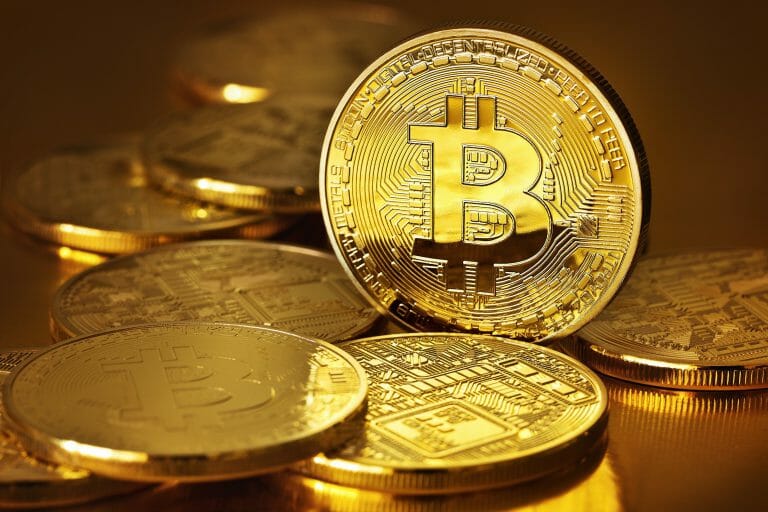
Argentines Can Have More Financial Freedom with Bitcoin

The pioneering cryptocurrency makes a difference for people that cannot trust their rulers. Bitcoin is an economic system based on a currency that no government can control.

The president of Argentina Alberto Fernández stated that the country has no more dollars and that the habit of saving in foreign currency has to come to an end. The leader’s comments caused quite a stir in social networks since some consider that forcing citizens to save in pesos is attacking their ownership.

All seems to indicate that Fernández’s statements led many Argentines to realize that there is a real need for money that is not controlled by the State. This is where Bitcoin comes into play with its main value proposition: the independence from regulated, conventional and established systems.

The value is based on Bitcoin’s independence from the mainstream, from any type of government regulation, from the assets that are subject to traditional market sentiment and regulators’ prescriptions. In the case of Venezuela, the ground gained by Bitcoin and other cryptocurrencies is undeniable, which demonstrates that the ability to own something completely beyond the power of the State exceeds volatility. In fact, in Venezuela Bitcoin’s volatility seems to reveal that the market is trying to calculate how much the value of financial freedom is worth.

Back in Argentina, Alberto Fernández also said that they “must end with a certain culture that Argentines have that there is a human right to buy dollars.” At that moment, citizens started asking on Twitter how they would protect themselves from hyperinflation. It should be noted that a user argued that without the option of saving in dollars it would be impossible to acquire real estate.

Bitcoin as an Added-Value Alternative

Bitcoin provides individuals with economic freedom and allows them to be custodians of their wealth. Regardless of whether banks are closed, capital controls are imposed or government sanctions are applied, people can transfer value through Bitcoin and other cryptocurrencies. It does not even matter if governments try to ban Bitcoin since the world will still have access to it. Even if it is declared illegal, its resistance to censorship will allow people to use it.

Doubts may lead some people to wonder what would happen to Bitcoin and their financial freedom, in case the government decides to stop the Internet supply. The answer is simple since Bitcoin can even be sent via SMS text messages through one of the five satellites arranged by Blockstream to transmit the Bitcoin blockchain from space.

Bitcoin is designed in such a way that it prevents people from extracting money at will. Of course, a mixture of inertia and early indoctrination makes it hard to imagine an economic system based on a deflationary currency, which rewards users for saving and spending rationally, thus promoting the ability to invest in longer-term projects, which will benefit even those who have no propensity to save. For the same reasons, it is hard for imagine an economic system based on a currency that no government can control.

By Willmen Blanco

Experts Make Predictions about Bitcoin’s Price for 2020

According to Bob Loukas, in 2020 Bitcoin’s price could break its all-time high. For Chuck Jones, an analyst at Forbes, its price could fall below USD 6,000.

Some analysts foresee a bullish trend for Bitcoin in 2020. For example, Bob Loukas, creator of The Financial Tap, anticipated further price increases in the first two months of the new year.

Also, Loukas considers that a steady rise would follow to approach its all-time high by the end of the year. The analyst believes that the figures would be surpassed by 2021.

In the case of a bearish scenario, Loukas sees a potential fall for a period of about 6 months. After that time, the price would reach a level between USD 10,000 and USD 11,000.

Financial analyst Michael Novogratz, founder of the firm Galaxy Digital, also has a bullish view. Through a brief tweet, Novogratz predicted that by the end of the year the price of the pioneering cryptocurrency would be above the USD 12,000 mark.

Above USD 250,000 after Halving

Tim Draper considers that the halving, which will occur approximately in May this year, would mark a before and after for Bitcoin’s price. The risk investor assured that after this reduction by half in the rewards for Bitcoin mining, the price would exceed USD 250,000, which would represent more than a 3,000% increase concerning the current price.

Regarding the time frame for Bitcoin to reach these figures, Draper believes that this would occur between 6 and 12 months after the halving. In other words, it could happen in the last stretch of 2020 or the first half of 2021.

Until now, in the two halves that have occurred in Bitcoin, there have been significant price increases. However, that does not necessarily guarantee the increase that Draper predicted.

Again below USD 6,000

Besides Loukas’ bearish considerations, Forbes analyst Chuck Jones foresees a fall below USD 6,000 in the short term. On December 23rd, Jones stated that Bitcoin’s price would exceed the USD 9,000 mark. He said that it could otherwise easily fall to USD 6,000 and then lower.

In this regard, Jones cites the “cross of death,” a metric that emerges when the average 50-day price falls below the 200-day average. In particular, he cited as a recent precedent the period between May and December 2018, when the price fell from USD 9,500 to above USD 3,000.

It should be noted that the Forbes analyst’s prediction coincides with that of market trader Tone Vays. For him, 2020 will mark the beginning of a new bearish phase that will bring Bitcoin’s price below USD 6,000. Vays considers that this fall will precede a new bullish trend, but he did not set a deadline for each moment.

Vision Hill’s Predictions

Vision Hill, a firm specializing in digital assets, also expects a good year for Bitcoin and cryptocurrencies in general. It assured that 2020 will be one of the best years for cryptocurrencies.

However, Vision Hill said that its forecast for 2020 is not necessarily linked to a steady bullish trend for Bitcoin’s price and other cryptocurrencies. What they do foresee with optimism at the firm is the offer of institutional products associated with cryptocurrencies, based on wide interest in the area.

By Willmen Blanco

Bitcoin’s Prospects for 2020, as Assessed by Latin American Experts

Experts believe that the next Bitcoin halving is the most anticipated event. The proposals to improve the security of the network, Taproot, and Schnorr, also arouse expectations.

In 2019, one decade after the birth of Bitcoin, the pioneering cryptocurrency registered the best performance among financial instruments. For that reason, expectations about its evolution are maintained.  Some Latin American Bitcoin specialists presented their projections about the possible trends that will attract the attention of bitcoiners in the next 12 months.

They commented on the aspects that they consider most prominent regarding both Bitcoin and the world of crypto assets. They also evaluated the elements that will set the trend in 2020, so they agree that one of the events that will define the main cryptocurrency will be its next halving in May.

Mt. Gox Payment should occur in 2020

Santiago Molins, from Argentina, said that he will keep track of the pending reimbursement to creditors that lost bitcoins from Mt. Cox. The legal process surrounding the defunct crypto exchange, which collapsed in early 2014, remains in place.

Molins expects the payment to Mt. Gox creditors to be resolved this year since it involves a tremendous amount of bitcoins that could come on the market. It should be noted that this has been one of the most relevant cases throughout the history of cryptocurrencies.

The expert said that he will also be closely following developments in Bitcoin technology and the soft fork called Schnorr + Taproot, which was scheduled for late 2020 or early 2021.

The DeFi World Will Be Taken

The Argentine software developer Diego Gurpegui believes that the DeFi world will continue attracting attention, in Latin America and in general, to the cryptocurrency ecosystem in 2020. He is convinced that this year the extent to which decentralized products will remain current and functional, and how they will do so, will be defined.

For Gurpegui, Bitcoin’s halving will be one of the most important events this year, considering that the issuance rate will be halved, which arouses expectations about how the price will react to it. However, he stated that many believe that the market has already considered this event and that no immediate shock will be seen.

Gurpegui believes that improvements in the layer-2 protocol, as well as in the main one, with the Schnorr + Taproot soft fork, will be decisive in 2020. Likewise, he mentions the importance of looking closely at the advances in Latin America in terms of wallets, products or services that have been laying the foundations for privacy, security, and usefulness during 2019.

The developer believes that close attention should be paid to Ethereum 2.0 since it represents a transcendental change in the network, mainly the variation to PoS (Proof of Stake) and Sharding, which touches on elements of the core of the protocol. Not everything will be seen in 2020 but there will be changes of great impact whose development will be interesting to see.

Regarding the most prominent events of 2019, the Bitcoin speaker for Latin America believes that a year for the construction and development of the network has just ended, not only from a technological point of view but also from a business perspective. On the one hand, he notes that the effort put into infrastructure solutions such as layer-2 Lightning Network, or parallel networks such as RSK or Liquid, increased.

By Willmen Blanco

Predictions about Stablecoins for 2020

Experts say only a few stablecoins will manage to survive this year.

In the last two years, the world has become more aware of the existence of cryptocurrencies. Central banks have shown a particular interest in them, even developing their stablecoins, more of which will arrive this year. However, many of the stablecoins that currently exist may simply disappear under a flood of better alternatives. There is no real need for more than a couple of stablecoins that are linked to the dollar as there are more than enough.

According to Jeremy Allaire, CEO, and co-founder of Circle, only a few stablecoins will manage to survive. Of course, he has included their stablecoin USD Coin (USDC) in that list, of which there are more than USD 500 million in circulation. Other rival stablecoins, such as Paxos Standard (PAX), have about half the market capitalization and the supply of Gemini Dollar (GUSD) has declined to only USD 3.7 million.

Allaire explains that, whilst the industry and the media are excited about future/unlaunched stablecoins and central bank digital currencies (CBDCs), the market speaks for itself. USDC has continued to expand (with about USD 520 million in circulation), PAX has stagnated at USD 240 million, TrueUSD (TUSD) is in rapid decline, and GUSD and Binance USD (BUSD) are already “dead.” The executive added that Tether remains the dominant force and offers USD offshore banking options for China and the rest of Asia, where it has grown in popularity. It is currently the fourth largest crypto asset, with a circulation of USD 4.8 billion, according to Tether’s transparency report. He also said that the media have remained focused on Libra and CBDCs, but that the industry will continue to develop.

This expert believes that 2020 will continue to be an important year for stablecoins, with conventional use cases based on digital currencies backed by fiat money on public chains, and DeFi will continue to expand open financing.

For its part, European Central Bank (ECB) Governing Council member, Jens Weidmann, recently urged commercial banks to develop their crypto payment solutions as an alternative to Libra, which everyone sees as a major threat.

Central banks see Libra and other third-party stablecoins, such as USDT, as competitors to their financial systems. Decentralized digital assets such as Bitcoin are an even greater threat. The number of central banks researching and developing digital currencies is growing. China is leading the pack intending to launch its Yuan crypto this year after Facebook announced its intentions. Among those following China’s lead in the CBDC race are central banks from Japan, South Korea, Thailand, Singapore, Sweden, France, and the European Union.

More central banks are likely to join this growing movement in 2020 as stablecoins and digital central bank currencies begin to infiltrate daily life and digital payments.

It can be said that a cashless society is an end goal for any government because of its surveillance properties. A side effect will be an increased awareness of crypto assets, which will also benefit decentralized ones.

By Alexander Salazar

Revaluation of Bitcoin Would Be Indicated by Increase in UTXO

The Bitcoin network registered a maximum of 64.5 million UTXO transactions by the end of 2019. A revaluation of Bitcoin or mixers could be the reason behind the increase.

Bitcoin’s Unspent Transaction Output (UTXO) reached an all-time high at the end of 2019, registering up to 64.5 million transactions per day. This unusual increase has raised speculation in the Bitcoin community as some believe it is related to the value of the cryptocurrency.

Bitcoin researcher and maximalist Jameson Lopp posted a series of tweets in recent days highlighting the phenomenon. The number of UTXO transactions rose from 49.6 million transactions by early 2019 to a new record of 64.5 million by the end of the year. In this sense, Lopp estimates that the network would be registering approximately one UTXO every two seconds.

It should be noted that UTXO represents those outgoing transactions that have not been spent. For example, if the holder of an address makes a valid transaction in the blockchain, the UTXO represents those bitcoins returned as unspent funds by that address. In this way, the difference between the input balance and a spent output is reported.

UTXO is a measure that can be used to identify how many bitcoins are being spent and maintained by an address, as well as by the network as a whole. For this reason, the Bitcoin community believes that the increase in UTXO transactions may be indicating that users are spending smaller amounts of Bitcoin due to the increase in their value.

Revaluation of Bitcoin or More Mixers?

Internet users, such as @austinstuart, believe that the increase in UTXO transactions can be a positive sign for Bitcoin. This would indicate that the cryptocurrency has become more valuable over the years. This appreciation may be due to several factors, such as the price of the asset, its next halving or the trends to handle bitcoins ─ a term used to refer to the practice of keeping cryptocurrencies in a wallet.

The increase in UTXO transactions would reveal that a growing number of Bitcoin users are conducting more transactions in small amounts, leaving untouched funds in their address. According to data from Bitinfocharts, the current average value of a transaction in Bitcoin is USD 200, while it was between USD 1,000 and USD 500 per transaction in 2018. Besides, with the arrival of Lightning Network, micro-payments have started to proliferate in the network.

It is estimated that 72% of Bitcoin’s addresses store less than USD 90 in cryptocurrencies, making their mobilization of funds negligible. Likewise, users now need fewer bitcoins to pay for the same services as years ago; thus, they keep more bitcoins in their wallets. This would confirm that Bitcoin became more valuable in 2019 if compared to its performance in 2018.

Another reason for the increase in UTXO transactions may be that an increasing number of users are deciding to save in bitcoins to multiply their earnings in the long term. In this sense, the approach of the halving in 2020 could be motivating the community not to mobilize their funds so that they will benefit from a future price increase.

By Alexander Salazar

Iranians Buy Bitcoin at More than USD 25,000

The increasing tension in Iran, after the assassination of Qasem Soleimani, has caused Iranian rials to lose even more confidence.

Currently, it can be seen that Bitcoin has resumed the bullish expectation for the short term after the bulls involved a slight bearish attempt.

This positive situation occurred immediately after the announcement of the death of the Commander of the Islamic Revolutionary Guard, an event that is increasing tension in Iran and, consequently, the country’s economic uncertainty.

After those events, institutional investors have increased their positions on gold and silver. As Iran is an important participant in the oil market, black gold has also increased its price by more than 4% in a few hours.

However, traditional markets have not been the only beneficiaries. Bitcoin and the main altcoins have also had a positive moment; thus, demonstrating the progress of some cryptocurrencies to safeguard value.

Iranians Pay over USD 25,000 for Bitcoin

Major investors are not the ones inflating Bitcoin’s price in Iranian rials but desperate people that try to protect themselves from the possibility of an economic debacle in the country. Bitcoin’s best qualities over other refuge values ​​are being considered to be a determining factor in this situation.

LocalBitcoins Iran users have been offering more than 1 billion Iranian rials per Bitcoin, equivalent to almost USD 24,000. This price is higher than its all-time maximum, even though its real price is around USD 7,325.

The largest current offer for BTC is 1,069,172,000 Iranian rials, equivalent to 25,437 US dollars.

Bitcoin’s Price Increase Diverges with Transaction Volume

Despite the volatile devaluation of the Iranian rial against Bitcoin, the volume of transactions has decreased to the point that it touched a low of several months.

This situation is most likely linked to the restriction of the Internet by the Iranian government, which is a measure taken amid strong protests in November 2019, which respond to a fierce increase in the price of fossil fuel.

Tension Increases as Hours Elapse

Whilst the United States of America is trying to calm the waters, Iran promised to take revenge for the actions that have occurred.

Philip Gordon, who was coordinator of the White House for the Middle East and the Persian Gulf during the Barack Obama administration, states that this action is little less than a declaration of war.

However, US President Donald Trump believes that the situation has been misunderstood. He stated that he intends to stop a war rather than start one.

Ali Jamenei, supreme leader of Iran, said that those that stained their hands with the blood of General Soleimani and other martyrs in the attack must expect an act of hard revenge.

Such a negative situation for Iranians would lead them to continue seeing the devaluation of their currency, and an increase in the price of traditional refuge values, oil and cryptocurrencies.

The decentralization offered by blockchain technology has already been supported by Iranian President Hassan Rouhani. He recently announced the proposal of a Muslim cryptocurrency that will eliminate the dominance imposed by the US financial system.

However, the crypto market remains at a disadvantage among Iranians, since the regime has offered rewards to those who denounce unauthorized cryptographic operations.

By Alexander Salazar