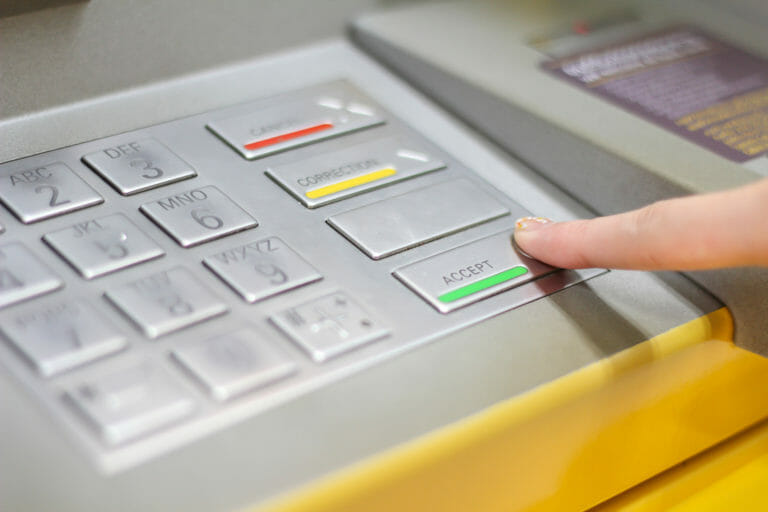
There Are Over 6,300 Active ATMs for Bitcoin and other Cryptocurrencies

At the beginning of 2019, there were 4,101 ATMs worldwide. South America has already exceeded 60 cryptocurrency ATMs.

The number of cryptocurrency ATMs has increased from 4,101 early in 2019 to start with 6,387 in 2020. This represents an increase of over 50% in just one year.

This can be verified through data from the cryptocurrency ATM tracking portal Coin ATM Radar. The crypto ATM growth chart on this site also shows how just since the beginning of December 2019 more than 300 new devices of this type were installed.

Of those more than 6,300 ATMs, almost 4,500 are in the United States of America, which represents more than 75%. Another 1,218 ATMs (19%) are located in Europe, whilst 132 (2.1%) are installed in Asia.

Regarding Latin America, the number of installed ATMs is currently greater than 100, according to Coin ATM Radar. Colombia is particularly prominent in that list, with a total of 57 ATMs; thus, taking tenth place in the world.

Other countries in the region with the largest number of installed cryptocurrency ATMs are Panama (16), Dominican Republic (13), Argentina (11), and Mexico (10).

According to Coin ATM Radar, among the Spanish-speaking countries, Spain is the one that has the highest number of ATMs with a total of 80. This could mean that some of the devices in Spain were uninstalled or left out of operation since the figure in the European country was 84 ATMs in late October.

In fact, at that time Spain was the fifth country with the most ATMs in the world and is currently in sixth place. It is preceded by the United States, Canada, United Kingdom, Austria, and Switzerland.

Constant Increase in Cryptocurrency ATMs

The increase in the number of ATMs for Bitcoin and other cryptocurrencies has been sustained worldwide. The figures for this type of installed devices practically double every year. Although between the beginning of 2019 and the beginning of 2020 the amount did not double, more than 2,200 ATMs were installed in the year 2019. In the previous period, the figure had barely exceeded 2,000.

As for Latin America, the 2019 closing figure also represents an increase of over 50% compared to the previous year. At the end of 2018, there were about 75 ATMs in the region.

In 2019, not only was there a significant global increase but also countries such as Spain were prominent, with about a 50% increase. Another notable case is that of Venezuela, where the first two Bitcoin ATMs (BATM) and other trading devices were installed, for a total of 6 registered at Coin ATM Radar.

Among the rest of the countries of the Latin American region with ATMs are Peru (4), Ecuador and Chile (3 each), Costa Rica (2), and Brazil and Guatemala (1 each).

Africa is the continent that has the lowest number of cryptocurrency ATMs running. According to Coin ATM Radar distribution figures, only 11 devices are in that region. Of these, almost half are in South Africa, with 5. The other country with more than one ATM is Ghana, which has 2 installed devices of this type.

By Willmen Blanco

All-Time Highs Are Reached by Bitcoin’s Hash Rate and Mining Difficulty

It was reported that the processing power of the network climbed to 119 TH/s per second. The figure is nine times higher than the hash rate achieved when BTC was priced at USD 20,000.

Bitcoin’s processing power, or hash rate, reached a new all-time high by registering a processing rate of 119 tera hashes per second (TH/s), or 119 billion operations in that unit of time.

The network’s new milestone occurred between December 31st, 2019 and January 1st, 2020, according to blockchain.com, while statoshi.info registered the new high at 127 TH/s. It should be noted that the hash rate is nine times higher than the computing power that the miners achieved in December 2017 when the main cryptocurrency of the market was close to USD 20,000. On that occasion, the rate was around 12 TH/s. Furthermore, this achievement arrives only three months after the network broke the barrier of 100 billion operations per second.

As a result of this increase, Bitcoin’s mining difficulty also experienced an all-time rise from 12.9 Teras to 13.7 Teras, which speaks of the security offered by the network to process operations.

Increases and Mining Chips

The reasons that would be boosting these increases could be related to the third halving of Bitcoin that is scheduled in May 2020. Investors would be injecting funds into mining equipment to obtain incentives of 12.5 BTC per mined block, before the reduction of the reward to 6.25 BTC occurs, in about five months.

Regarding this point, a study conducted by the research firm TokenInsight noted that the final deliveries of future orders for more energy-efficient mining equipment boosted both categories during 2019, which has already been extended to 2020. The report indicated that the increases in 2019 correspond, on average, to 6.26% in terms of difficulty, whilst the hash rate grew by 72%.

The term “hash rate” is defined as the rate that measures the processing power in a cryptocurrency; that is to say, it is the number of hash operations performed in a certain amount of time.

The increase, both in processing power and in Bitcoin’s mining difficulty, is a sign of the interest that the pioneering cryptocurrency continues to arouse all over the world. However, the scenario in the crypto market shows some differences. At the time of writing this article, the price of BTC was USD 6,990 per unit with a drop of 3.24% if compared to its price last Wednesday, January 1st.

During the last month,s there have been dozens of predictions made by analysts about how the price of Bitcoin could behave before the halving of May. Some people believe that the cryptocurrency will reach a new all-time high that would even be above USD 250,000, but some others think that its price would fall below USD 6,000.

Considering all the above-mentioned facts, it can be concluded that Bitcoin is still the best investment for those wanting to venture into the world of crypto assets. Since its birth more than 11 years ago, the main cryptocurrency has proved to be able to overcome its all-time lows.

By Willmen Blanco

Crypto Assets Could Be Stolen by Google Chrome Extension

A Google Chrome wallet extension, called the Shitcoin Wallet, could be stealing information and even cryptocurrencies from its users.

It was reported that a Google Chrome extension could be stealing cryptocurrencies from those who decide to install it. Users must be warned about a possible danger that can be downloaded with the biggest browser of all.

This is a good opportunity to discuss Shitcoin Wallet, an ETH wallet and Google Chrome extension that has been giving much to talk about in the last weeks.

One of the latest scandals related to this wallet occurred late in 2019 when a Twitter user reported certain problems that he had with the wallet/extension.

It is worth mentioning that this user was Harry Denley, a security and anti-phishing expert. On December 30th, he claimed that Shitcoin Wallet was injecting malicious JavaScript code from the open windows of the browser to steal data from its users.

An additional alarming element in Denley’s publication is that the malicious software targets platforms such as Binance or MyEtherWallet. It does all this to obtain cryptocurrency passwords and private keys.

More Complaints against Shitcoin Wallet

It should be noted that Denley is not the only one that has complained against the Google Chrome extension. The cryptographic platform MyCrypto has also taken a stand against Shitcoin Wallet.

According to MyCrypto, the Google extension should be considered dangerous for all users for two reasons. First, all the funds controlled from the application are at risk when sending private keys through a third party. This is contrary to several user security policies that other wallets have implemented.

The second reason is that the extension injects malicious code into the browser. Therefore, if the user installs Shitcoin Wallet and then browses one of the best known cryptographic portals, the malicious software will steal the information.

According to the information provided, the code tries to copy the data input into those windows. After that, the information is sent to a remote server identified as “erc20wallet.tk,” which is the domain address of a group of islands that comprise New Zealand.

Criteria of Google

After the scandal over the Shitcoin Wallet, which broke at the same time as there was a controversy about the banning of MetaMask, many people have begun to wonder about Google’s criteria.

It is important to remember that Google banned MetaMask and removed it from Google Play for violating alleged clauses against cryptocurrency mining applications. This case was already solved and the ban on MetaMask had its ban lifted on January 1st, 2020. However, Shitcoin Wallet, which has already received several complaints about stealing information, has not yet received a warning, at least publicly, from Google.

Large companies are still trying to adapt to cryptocurrencies, so some security policies may be somewhat severe in some cases but lax in others. Just as Google reconsidered the case of MetaMask, it is expected that this year there will be some modifications in its cryptocurrency policies.

In this way, developers can be given more freedom to conduct useful projects whilst those that represent a danger to the community are banned.

By Alexander Salazar

Bitcoin Jumps 4% After US Airstrike on Iran’s General

Specialists such as George McDonaugh consider that it is at a critical stage in bitcoin’s price trajectory.

At the end of 2019, crypto-users predicted that 2020 would be “the year of cryptocurrencies” and that 2020s would be the decade of Bitcoin (BTC).

But the truth is that bitcoin’s price has been on a steep downward trend over the last six months and now that behavior changed a little.

Last Friday, January 3rd, a U.S. airstrike took place in Iraq. In that operation, Iran’s General, Qasem Soleimani, was assassinated. The official directly commanded the Iranian Revolutionary Guards’ elite. These countries have had inconvenience since March 2003 since the US considered that Iraq had had weapons of mass destruction.

After the airstrike, Bitcoin’s price has bounced 4% to back over USD 7,000 per Bitcoin and was seen trading at USD 7,265 on the Bitstamp exchange before falling back slightly.

Bitcoin and cryptocurrency watchers link the U.S. airstrike with the bitcoin rally. One of them is Matthew Graham, chief executive of Sino Global Capital. He asked if Bitcoin began “moving in reaction to geopolitical risk”.

And this is due not only because of the airstrike. U.S. allied countries fear suffering an unplanned attack, due to the threats they received from the Iraqi government, which said that the attack could occur at the least expected place and time.

“We stand before the dawn of a new decade. As we look ahead, there is little doubt that the next one —the 2020s— will be the decade of crypto”, the co-founder of the U.S.-based Gemini Bitcoin and cryptocurrency exchange, Tyler Winklevoss, assured on New Year’s Eve.

The Reasons

Bitcoin was one of the best-performing assets in 2019. It was up 90 % for 2019 while iPhone-maker Apple’s share price climbed 85 % and the tech-heavy Nasdaq added 35 %.

George McDonaugh, co-founder and managing director at the cryptocurrency and blockchain venture capital investment firm KR1 told Bloomberg: “We’re at a critical stage in bitcoin’s price trajectory”.

He predicted the bitcoin price will soon rebound to around $7,500 before climbing through to the middle of the year.

According to McDonaugh, the creation of new bitcoin wallets could contribute to the price increase. Maybe this could help increase the levels of cryptocurrency adoption too.

As Forbes cited, Bitcoin and cryptocurrency watchers are this years looking forward to the launch of social media giant Facebook’s cryptocurrency (Libra), and the crypto platform Bakkt’s Starbucks project.

Similarly, Twitter’s chief executive, Jack Dorsey, has revealed his plans for Bitcoin. Besides, major U.S. Bitcoin and cryptocurrency exchange Coinbase is working on some new technology and new projects.

So certainly, 2020 could be “the year” of bitcoin, altcoins and blockchain technology. It will be 12 months more of possible advances, new regulations, and to observe what happens with projects like the one of Facebook, and the project of Telegram, which is trying to launch its token called Gram but faces some restrictions and probably will have to share information of its users, to comply with SEC’s requests (the U.S. Securities and Exchange Commission).

Bitcoin is a digital currency created 10 years ago and that continues to expand throughout the world. There is a long way to go yet for it.

By María Rodríguez

Following Lawsuit, Brazilian Bitcoin Exchange House Apologizes to Scammed Customers

The Public Ministry of São Paulo requests that the executives of GenBit and their associated firms be sentenced to prison. The exchange house promised to pay what it owes to the investors in 10 parts, as of March 2020.

In recent days, it was reported that the Bitcoin exchange house, GenBit, based in Brazil, released a statement this week in which it apologizes to its investors for the problems caused in recent months, following a series of legal problems faced by the firm

The text by the president of GenBit, Nivaldo Gonzaga, published in local media, refers to a public civil action filed by the Public Ministry of São Paulo with a value of 1,000 million BRL (USD 246 million) against Gensa Serviços Digitais, a company that represents the Tree Part Group, to which Genbit belongs.

The businessman said that he understands that all the turmoil has caused the investors a lot of trouble. However, he stated that that was never his intention, so he acknowledged what happened and apologized.

Gonzaga also says in the text that the lawsuit filed by the Public Ministry of São Paulo will be an “opportunity” for the business group that he chairs.

He believes that this action by the Public Ministry will serve for good since they will be able to prove once and for all to state and federal agencies that the Tree Part/GenBit Group has always worked under Brazilian law.

According to the lawsuit by the Public Ministry, the group of which Genbit is a part made publicity through social networks like YouTube and Facebook. It should be noted that the platforms offered a collective investment contract, within a business model without transparency and with a promise of earnings of up to 15% per month.

Delayed Payments and Lawsuit by Public Ministry

Despite apologizing, Genbit has not paid its 45,000 members for four months. Faced with the breach, the company abandoned Bitcoin operations and launched its cryptocurrency in Brazil, TreepToken (TPK), a tactic similar to the one adopted by Minerworld and Unick Forex, two schemes that also affected thousands of people.

The company also said that it intends to make the payments in ten parts, starting in March 2020, a period in which it expects the TPK cryptocurrency to increase in value.

Non-compliance with the payment to the investors is one of the motivating factors for the lawsuit by the Public Ministry of São Paulo against Gensa. The value of 1,000 million reais contemplated in the lawsuit refers to the estimated loss that the companies of the group caused to their 45 thousand clients.

The Public Ministry of São Paulo also requested the conviction of all those involved, among whom are five other companies included in the lawsuit.

Together with other Gensa subsidiaries, such as Zero10Club, Genbit was denounced by the Brazilian Securities and Exchange Commission (CVM) for an irregular offer of investments. In practice, this warning means that the business is recognized as a financial pyramid scheme, also known as a Ponzi scheme.

By Willmen Blanco

Blockchain Platforms Attract the Interest of over 40% of FinTech Companies in Brazil

Payment systems are 22% of the solutions proposed by Brazilian startups. FinTech firms also show interest in Artificial Intelligence (AI) and automatic learning.

According to a report in the financial publication Valor Investe, Brazilian financial technology (FinTech) companies have a great interest in artificial intelligence (AI), machine learning and blockchain technologies, which are the platforms used for issuing cryptocurrencies such as Bitcoin (BTC).

The study indicates that these companies are focused on improving payment systems, a feature included in cryptocurrencies as part of their promising technology. For that reason, the meeting of these two sectors seems to be the most natural thing.

It should be noted that the goal of most emerging FinTech companies is to provide people with financing more easily. Therefore, one of the opportunities for the sector lies in the fact that Brazil has a large unbanked population. In other words, a large number of people do not have access to the traditional banking system.

FinTech Companies Interested in Blockchains

FinTech companies are those financial services that provide technology-based solutions. According to Valor Investe, about 500 FinTech companies are currently operating in Brazil. Of these, 57% would be in São Paulo, where the largest volume of innovations in the sector is concentrated.

As payment systems are 22% of the solutions proposed by these Brazilian startups, among the main technologies that interest them are blockchains. The study shows that more than 44% of the interviewees want to innovate with the technology underlying cryptocurrencies. This means that blockchains are among the three most desired innovations, besides AI and machine learning, by Brazilian FinTech firms.

Business Innovation in 2019

For crypto developer Jimmy Song, Bitcoin is a major financial innovation greater than startups. Enthusiasts consider that the main digital cryptocurrency alone would be a complete financial solution for people. As a result, the crypto market has seen a huge growth in solutions designed to facilitate the adoption of cryptocurrencies within the business sector.

In recent days, Cielo (CIEL3), which is known as Brazil’s largest operator of credit and debit card payment systems, partnered with Bitfy to accept Bitcoin on its cashpoint machines. This partnership would allow the businesses that accept BTC to receive payments in Brazilian reals, to the currency conversion made by Bitfy.

Natura, a Brazilian company that markets and manufactures beauty and personal care products, said that there is room for blockchain within its operations. Also, Valid, a technology provider in Brazil, acquired a FinTech company to strengthen its operations with a blockchain.

BlueBenx is another company that arrives in Brazil with a financial solution involving cryptocurrencies. Starting in 2020, customers will be able to have a BlueBenx account that will allow making transfers and trading cryptocurrencies in a single solution.

In summary, cryptocurrencies and blockchains are increasingly merging with Brazilian FinTech and traditional companies, which is an important move for the South American country to grow and innovate, mainly in a market where banks still have sovereignty.

To conclude, most Brazilian FinTech companies stated that they do not see banks as enemies but as partners. Besides, 63% of them already have international operations. Brazil already has 11 unicorns in the FinTech sector, which are worth more than USD 1 million, having Nubank as one of the most prominent.

By Willmen Blanco