More People Are Interested in Buying Bitcoin than in Buying Gold, according to Google Search Trends

After the drop in prices last March 12th, people showed greater interest in Bitcoin than in gold. In recent days, the words “buy Bitcoin” have been especially popular in countries like Spain and Brazil.

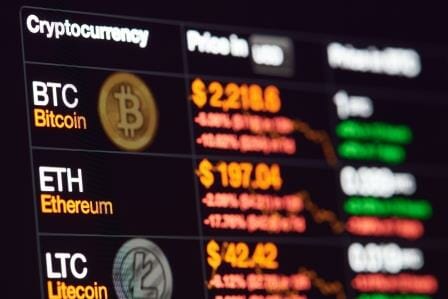
In the last few days, Google search trends have indicated that more Internet users are interested in buying Bitcoin than in buying gold. The result shows that, despite the turbulence that the cryptocurrency market has recently experienced, there is a global interest in acquiring the first cryptocurrency.

Traditionally, the words “buy gold” are more popular among investors, but that changed last March 12th. Despite the cryptocurrency market drop that day, Google registered a higher search demand for the terms “buy Bitcoin”. In this type of case, the search engine uses a scale of interest over time ranging from 0 to 100.  According to this measure, a value of 0 reflects the lack of enough data while 100 indicates the maximum popularity of a given term.

On that occasion, the words “buy Bitcoin” reached the highest value of 100 units worldwide, while “buy gold” recorded 63. A day later, the trend reversed and “buy gold” rose to a value of 53 while “buy Bitcoin” fell to 40, a search trend that has remained with similar values ​​to the date. According to Google, the average in recent days has favored the searches for gold with a ratio of 44 compared to 28 for Bitcoin.

The ten countries that showed the greatest interest in Bitcoin were Cameroon, Nigeria, Romania, Israel, France, Italy, Greece, Belgium, Switzerland, and Vietnam. Regarding the Spanish-speaking countries, the most prominent were the searches in Spain (13), Brazil (19) and Mexico (31).

Some analysts refer to last March 12th as “Black Thursday”, since there was a collapse in the prices of the cryptocurrency market. Multiple factors, mainly due to the fear of the Covid-19 pandemic, the fall of the stock markets and the oil price war, led to this critical situation. That day, the price of Bitcoin was USD 7,635 at 1:00 a.m., but then it fell to USD 4,260 at 10 p.m., according to data from LiveCoinWatch.

It is not the first time that the words “buy Bitcoin” have been more popular than the terms “buy gold” in Google searches. An analysis of the records since 2004 allows seeing the prominence of Bitcoin in the market. For example, between May 2017 and February 2018, the search for information about buying Bitcoin exceeded that of buying gold on several occasions. The first cryptocurrency in the market reached its peak in December 2017, when it climbed to USD 20,000 per unit.

The word Bitcoin is also very popular in the Google searches that Latin American Internet users conduct. For example, Venezuela, Uruguay, Brazil, and Colombia are the most active countries regarding queries about the first cryptocurrency on the Internet. Furthermore, the proximity of the next Bitcoin halving, estimated for the third week of May 2020, have also drawn people’s attention to these words on a global scale.

By Alexander Salazar

Japan Postponed Its Largest Blockchain Conference Due to Coronavirus

Organizers scheduled the conference for next September 28th. Other crypto-activities are in the same situation.

The global crisis for the spread of lung disease Covid-19, better known as Coronavirus, continues affecting all areas world. The crypto and blockchain technology community does not escape this reality.

In this sense, Japan canceled another meeting of cryptocurrency and blockchain experts. This happened after the country determined how dangerous is to hold events during the pandemic.

The TEAMZ Blockchain Summit, held every year in Japan, is one of these activities postponed. One of the most important blockchain and crypto conferences in the country was going to take place from April 22nd to April 23rd. However, the risk due to the exponential growth of the Coronavirus outbreak led organizers to change the date for next September 28th.

A statement released by the conference organizers details the concern they feel for the safety of attendees. In this sense, they are constantly monitoring the development of the disease.

“TEAMZ has been closely monitoring the global development of the Coronavirus. TEAMZ is deeply concerned about the safety and security of those attending the summit, including speakers, attendees, partners, and sponsors”, the statement says.

The Event Will Only Change the Date

Until now, the organization of the event remains the same. Local media detail that the time, place, and what is scheduled will continue on the new date.

The postponed summit is a great meeting point for blockchain and cryptocurrency experts. Besides, it is also aimed at educators, investors, and people interested in the development of these technologies. Organizers estimate that the meeting receives more than 2,000 people from all over the world, making it a valuable event within the community.

So far, the experts that confirmed they will participate in the event range from Dovey Wan, who is a founding partner of Primitive Ventures; Tim Draper, a billionaire investor in bitcoin; Roger Ver, President of Bitcoin.com; among many others.

Many events affected

The pandemic has canceled many blockchain ​​and cryptocurrencies activities in the world. At the beginning of March, some local media reported the cancellation of the conference “Paris Blockchain Week Summit”. This event would take place next December 9th and 10th.

Similarly, the organizers of the “Bitcoin 2020” event, which was going to be held in San Francisco on March 27th and 28th, suspended the activity. Its organizers have not yet given a specific date to celebrate the event. However, they indicated that it could take place during the middle of the current year.

Another example of this is the TOKEN2049 Conference. This event was going to take place in mid-March in Hong Kong, but it was also canceled and will be rescheduled for next October 2020.

Once the coronavirus pandemic ends, Japan will be prepared for the events that seek to help meet new uses of blockchain technology as well as the way of operating cryptocurrencies in different countries. The crypto-community expects more details in the coming days.

By María Rodríguez

Coronavirus Leads Brazilian Cryptocurrency Exchanges to Change Their Way of Working

The work-at-home system allows maintaining activity on cryptocurrency exchange platforms. The companies seek to reduce the movement of people and increase the protection of their staff’s health.

Brazilian cryptocurrency exchanges are changing their way of working during this period of the coronavirus pandemic. Officials are moving their routines from an office divided into cubicles to their own homes (home office). In this way, these companies ensure that their activities will not be interrupted.

The Brazilian exchange, Mercado Bitcoin, based in São Paulo, has followed the recommendations of the health authorities to contain the spread of the virus. The exchange reported that all its officials have been working at home since last March 17th, but there is still no provision for them to return to work in person.

Foxbit also stated, through its press office, that all its employees started to work at home last March 16th. Through a note, the company said that this would be a preventive action to reduce the circulation of people, and thus avoid the proliferation of the coronavirus.

According to Foxbit, which also operates in the capital of São Paulo, this measure will not prevent it from continuing its activities in the market. They said that they are working hard to affect their customers as little as possible.

Preparing for Coronavirus

For its part, BitcoinTrade took the same measure as Mercado Bitcoin and Foxbit the week before. Daniel Coquieri, CEO of the company, stated that all its employees have been working in the home office since last March 12th.

The company, with its headquarters in Miami and offices in São Paulo, Belo Horizonte, and Canada, has adopted the work-at-home system for all its locations. According to Coquieri, this process was not complicated since BitcoinTrade had already adopted this system for some cases before.

Foxbit said that they “have everything in the cloud” so that their employees can access their work and do it from any place in the world. As a security measure, the employees cannot access the company’s most confidential data from outside, but those who feel comfortable with it can walk.

From Belo Horizonte, the capital of Minas Gerais, the cryptocurrency exchange Coinext said that it had adopted remote work since March 17th. The company’s press office said that they already used some internal tools to optimize communication and work. They explained that the only thing that changed was the physical environment, but that the rest is still normal.

Coronavirus and Economy

After the outbreak of the coronavirus, the main crypto asset in the market has suffered a big drop. On March 12th, Bitcoin fell by 50% in one day, leading to a series of questions about whether it was “digital gold” indeed.

However, Coquieri stated that the pandemic has not only affected the cryptocurrency sector, but also the entire market. In other words, he believes that this health crisis is affecting the market in general. He said that it may take a few months before the situation calms down and that there will still be price volatility for some more weeks.

According to the ecosystem entrepreneur, the global crisis that the pandemic caused has also affected both stock exchanges and gold. On the same day that Bitcoin plummeted, gold, which had risen by 12% this year, delivered half of the profits and started to trade in the USD 1,600 range.

By Alexander Salazar

A Fake Coronavirus Tracking App Steals Cryptocurrencies

The application created by hackers seeks to trick users, steal bitcoins and private information.

Whilst the world faces a difficult situation and the emergence generated by the coronavirus pandemic, some computer hackers took advantage of this situation to steal money and information from users online. By using an application that supposedly keeps under observation the coronavirus, these criminals obtain important information from digital devices.

To install the app called Ransomware on users’ devices, hackers have created an application that supposedly tracks in real-time the expansion of the pandemic in the world. Some of these applications are available for Android and they claim to use tracking tools to offer all the information related to the disease.

The false application asks the user to allow its installation on the device, ensuring that it provides information about the outbreak. Once installed the app it steals specific information.

Through research, well-known security company DomainTools determined that the creation of domains that use “coronavirus” as a name has increased enormously. This can mean an important advance for science and, on the other hand, a significant increase in fake companies. The investigation warns that the coronavirus app website is promoting an application that claims to give the user information about the pandemic.

The tracking application results to be a computer virus called CovidLock, which changes all the passwords stored on the device. The ransomware sends the user a message demanding the payment of $ 100 in bitcoins for the device’s release.

The investigation explains that the website results to be very misleading. This is because it uses real data related to the coronavirus, as well as makes use of official logos of the World Health Organization (WHO) and other global organizations related to the pandemic.

This fake website reports that all the competent bodies tested the application that has been tested and recommended by experts. It also indicates that it has a rating of 4.4 stars.

Besides, the app ensures it tracks globally confirmed Covid-19 cases. Even it claims to offer details on the distance between the device and infected patients.

“Get instant notification when a coronavirus patient is near you, view local coronavirus outbreak status in an easy to navigate the app with data pulled directly from the centers for disease control and prevention (CDC) and the World Health Organization (WHO)”, it says.

The fake app asks the user for the device key to be installed. Then, it proceeds to change the password and avoids user access to the device.

The investigation concluded some possible that the hackers who participated in the creation of this Malware were linked to other scams made on Android devices. Despite this, there are no cases of people who have paid the money requested by criminals. In this way, likely, there is an app has not been widely spread over the network.

Experts recommend not following up on new domains that come up with the disease’s name on the Internet. They say people seek to be informed by local information and communication media. For this reason, they just install applications available on the Play Store.

By María Rodríguez

Speculators rather Than Long-Term Investors Influence Bitcoin’s Prices

Unlike speculators, long-term holders resist the volatility and fall in the prices of Bitcoin. Effective Bitcoin capitalization has fallen below market capitalization.

Some metrics seem to indicate that short-term investors in Bitcoin, as well those new holders of the cryptocurrency, are responsible for the price decline in the markets.

According to Coin Metrics, the holders of 281,000 BTC, which they had not moved for 30 days, put them back into circulation between March 11th and 12th. At the same time, holders of only 4,131 BTC, who had not moved them for at least a year, also put them into circulation on the network.

The company has been dedicated to monitoring the time that Bitcoin holders spend to mobilize their funds. It explains that, according to some of its metrics, those price movements stem from transactions made by Bitcoin holders with little seniority within the ecosystem.

Regarding the 281,000 BTC, which corresponds to funds that holders have not touched for 30 days, this has been the fourth largest in 8 years. Therefore, it seems that the recent changes in the price of BTC in the market did not affect long-term holders.

Besides, Coin Metrics warns that investors are selling at a loss, according to data collected under the Spent Output Profit Ratio (SOPR) index.  This reflects the price at which holders bought Bitcoin (according to the input was created) and at which they sold it (according to the date when the output was created). This index reached its lowest point since 2012 on March 12th, indicating an all-time volume of sales at a loss.

Another metric suggests that long-term holders place much more value on Bitcoin than short-term investors, or “speculators”, as Coin Metrics define them. The Market Value to Realized Value (MVRV) index is a relationship between the appreciation that long-term investors give to Bitcoin and current market capitalization. This metric, which is called effective capitalization, is based on the price of Bitcoin when the holders last moved that group of coins or in case they had never spent them when they mined them.

In conclusion, Coin Metrics states that Bitcoin is at an attractive time to buy, due to the current price and the positive indicators of its value. However, it is not yet clear what lies behind the recent market volatility, so it remains to monitor financial events in the cryptocurrency market over the next few weeks.

However, it is clear that the coronavirus alarm, along with the consequent collapse of the financial markets, is the main reason for this drop in prices. Bitcoin holders, as well as new investors, had never expected this disease to reach such critical levels that it would even affect the global economy.

This is not the first time that the Bitcoin prices have dramatically dropped and been able to recover its all-time highs. Of course, it is only a matter of time to see Bitcoin rising back to the levels that it had before last Black Monday on March 9th.

By Willmen Blanco

Fight against Coronavirus Can Receive Help from Cryptocurrency Miners

A group of miners is assisting in the research on a vaccine against Covid-19. The developer of Tezos offered a prize for that miner that provides the greatest computing power.

Cryptocurrency miners using GPU or CPU devices might become a key element in developing the vaccine against coronavirus. The Folding@Home application requires computing power to research on covid-19, for which the ecosystem miners are contributing their equipment.

Stanford University manages the distributed project Folding@Home, which has been in operation for more than a decade. The initiative consists of an international network of processing power at the service of disease research. This concept allows miners to use GPU or CPU devices to lend their computing power to combat the coronavirus pandemic.

The board of Folding@Home recently announced that it would focus all its research capacity on obtaining new therapeutic opportunities against the virus. The platform will simulate the dynamics of the covid-19 proteins to find a possible cure or treatment. For that reason, they require a large number of computers to be connected to their server to process the simulations and calculate possible results.

The American manufacturer of chips and video cards NVidia is asking its players and miners to contribute their computing power to the project. Similarly, Johann Tanzer, developer of Tezos, offered a prize of USD 1,000 for the miner who gave the greatest processing power to Folding@Home.

Hopeful Team of Miners

The possibility of collaborating to develop a vaccine against the coronavirus has caught the attention of a group of miners who consider themselves “bitcoiners.” The team, identified under number 238758 on the Folding@Home platform, has been lending its computing power since last March 15th, according to Reddit user Fiach_Dubh.

The miner said that he downloaded and installed the application to his computer, which he found to be a simple procedure. After that, he opened the graphical interface through the Firefox search engine to access the configuration tools. There he indicated how much CPU/GPU computing power he wanted to devote to covid-19 research, and immediately put it to work for Folding@Home.

Even though his contribution may seem too little, Fiach_Dubh believes that it honors the spirit that Satoshi Nakamoto conceived for Bitcoin. He said that it would make Satoshi proud to see the small community that he helped to grow bravely facing the monsters of this world.

Ethereum miners also joined this cause in recent days, contributing their GPU and CPU equipment. Jonny Rhea, member of the team in charge of developing Ethereum 2.0, has been motivating the community to help, specifying the steps to follow to connect to the server.

Supportive Blockchain Ecosystem

Apart from cryptocurrency miners, other entities provide support in the blockchain industry. Projects specialized in this technology have also shown their potential effectiveness to combat the coronavirus.

In recent weeks, the application Xiang Hu Bao, from a subsidiary of Alibaba Group Holding, used its blockchain system of collective claims to cover coronavirus cases. The company now covers about 104 million Chinese users with a USD 14,000 policy for Covid-19 related conditions.

Company ODEM, a blockchain-based digital certification, and education platform decided to start offering free access to internationally certified online classes. This measure would motivate people to stay at home, thus avoiding the massive spread of the virus.

The biohacking group, CoroHope, also decided to work on manufacturing a cure for the coronavirus. Since early March, the team has been requesting donations to conduct their project, which a biologist with 10 years of experience in the sector is leading. Personalities such as Mark Friedenbach, co-founder of Blockstream, have noted that this initiative is not a scam but a project to improve public health.

By Alexander Salazar