USD 25 Million in Cryptocurrencies Are Stolen during Attack to DeFi Platform Lendf.Me

Hackers reportedly exploited some vulnerability in the standard of Ethereum’s ERC-777. Security teams informed that the attack could be related to imBTC, an Ethereum token tied to Bitcoin.

The Chinese decentralized finance (DeFi) lending platform, Lendf.Me, suffered an attack on April 18th. Hackers stole around USD 25 million worth of cryptocurrencies in a new case of vulnerability in these types of services based on smart contracts.

Security teams from dForce, the organization responsible for managing Lendf.Me transactions are investigating what happened, but there were unofficial reports that the theft would be related to some vulnerability in the standard of Ethereum’s ERC-777. The failure may have originated after the integration between Lendf.Me and imBTC, an Ethereum token tied to Bitcoin and using the referred standard as a guarantee. Tokenlon is responsible for managing the tokenized version.

The exploit reportedly allowed criminals to make continuous calls to the smart contract to withdraw funds before an update to the overall balance occurred. The hacker may have initiated the transaction with his supply of imBTC, which occurred at the height of block 9,989,681.

Chinese news media indicated that there was a similar attack on the DeFi lending system, Uniswap, so the same hacker or group of hackers may have acted in both cases. In the latter case, the affected company reported that it suffered losses amounting to around USD 300,000 worth of cryptocurrencies.

Once the failure was detected, the platform suspended its service and instructed its users to stop making transfers of funds until further notice. At the time of writing this article, access to the Lendf.Me website was suspended. Users also received information about the funds that went to the Compound and Aave platforms. Stani Kulechov, founder and CEO of Aave, told digital media that around USD 10 million of the funds went to his protocol.

TokenIon reported on April 19th that there was a suspension of the imBTC contract, awaiting an evaluation of the security situation, to then resume it. The BTC custody supporting imBTC 1:1 was not affected. Users who have imBTC will be able to trade, exchange, transfer, and use other functions after the suspension ends.

The incident with Lendf.Me occurs two months after another DeFi platform, bZx, suffered multiple attacks that led to the loss of USD 350,000 worth of cryptocurrencies. The figure had a subsequent update to USD 645,000, which would eventually be USD 1 million.

The decentralized finance market is flourishing as it allows users to choose instant loans or participate in prediction markets, for example. However, services of this type have also been victims of hackers, who exploit the vulnerability in the smart contracts under which these systems operate.

Developers of blockchain-based security systems should take advantage of these events as opportunities for the creation of increasingly robust systems. Of course, they must always take into account the privacy of users’ data to ensure that they do not lose their funds due to cybercriminals’ attacks.

By Alexander Salazar

Bitcoin Trades at USD 6,800, but Price of Oil Drops below Zero

Last April 20th, the US WTI crude oil showed a negative record for the first time. Bitcoin shows resistance amid the turmoil that the fall of commodities has caused.

The price of US West Texas Intermediate (WTI) futures contracts fell below zero dollars last April 20th. The excess in the supply of crude oil, inventories at their maximum storage capacity, and economies paralyzed due to the spread of the COVID-19 pandemic worldwide influenced this unprecedented event.

Early on April 20th, the price of a barrel of crude oil was around USD 18 but then fell to USD -37.63. In this way, it suffered a loss of USD 55.90 in a single day on WTI contracts for May in the USA.

According to analyst and trader Alberto Cárdenas, the volatility of the price of April 20th is due to a contract, which expired the following day. The delivery of the referred contract is scheduled for May, and no one can operate it, which has led to the drop in the price of the non-renewable resource to negative figures.

This is particularly occurring in the physical market due to an oversupply of oil. Now that a futures contract has expired, people do not want it, or there is no demand because there is no place to store oil. In upcoming days, oil will trade above USD 20, but these contracts will also lead to reductions in its price.

Cárdenas believes that oil has represented a thermometer for global liquidity and growth, a reason why it is currently a sign of paralysis of the economy. This situation can particularly affect Bitcoin, since cryptocurrencies are also related to the economic cycle, being likely to suffer falls or adjustments in their price in the short term.

Despite this situation with this commodity, Bitcoin currently has a price of USD 6,800 per unit. BTC has maintained prices between USD 6,100 and USD 7,200 for over a month.

Lesson in Humility

Regarding the price of oil, a Spanish cryptocurrency trader (known as @inmortalcrypto) noted that this is a lesson in humility since many people imagine that certain commodities or bonds will never reach zero.

This situation is a lesson in humility because people often say that American bonds or some markets will never fall to zero. However, many have recently recorded zero and even negative figures, like the oil market.

The also bitcoiner believes that the situation can have an extrapolation in the cryptocurrency market as the word “never” is very relative in this type of context.

According to another cryptocurrency trader (whose pseudonym is @cryptohispano01), global economic conditions could set the price of Bitcoin in the future, and oil prices to zero are an event that many did not expect.

Cárdenas said that, since the listing of BTC on the Chicago Mercantile Exchange (CME), which is the most important futures market worldwide, its trading has changed. It became a speculative commodity for large investors, funds, and Wall Street, among others. For this reason, BTC already has a high correlation to the global economic market, so volatility has been very present in recent days in the world of cryptocurrencies.

The World Health Organization (WHO) decreed last March 11th that COVID-19 was a global pandemic. A day after the announcement, Bitcoin’s price lost more than 40%, falling below USD 4,000 per unit. However, one month later, it had already recovered 90% of the ground lost.

By Willmen Blanco

Financial Sector of Chile Is Challenged with New FinTech Bill

The government resumed the bill after it had stopped it last October due to demonstrations. The FinTech sector requests the government not to repeat the same mistakes that other countries have made.

The government of Chile reported last April 13th that they will introduce the FinTech bill into Congress in mid-2020. This news item celebrates the financial sector, which sees the regulation as an opportunity and an encouragement to ensure its growth.

Last year, the Chilean Financial Market Commission (CMF) appealed to the FinTech industry players in the country to form a working group to prepare a draft law to regulate the sector.

Several months later, they had to stop their work because of a social explosion that started in October 2019 and lasted for several months, which plunged the Chilean population into uncertainty and confusion.

The FinteChile Association groups 70 of the 130 FinTech companies that exist in the country, together with BDO Chile. They have been working together to promote the development of the industry, guiding the processes that will allow companies to self-regulate and better deal with the regulatory legal framework.

Challenges and Opportunities

Ángel Sierra, Executive Director of the FinteChile Association, told the local media that FinTechs must receive official recognition as financial providers. In this way, they can support the government and the society in complex situations such as those experienced due to the coronavirus pandemic.

The development of the financial technology industry began in 2010 and it has already built solutions, which effectively allow some companies to find access to financing and leverage for future projects. This may be a good opportunity for providing solutions to some companies that may not do very well shortly since many others seem doomed to fall and fail.

All central banks are injecting capital into the markets as there is a lack of liquidity. However, some available technological solutions represent an effective tool for reducing the production costs of many industries. Technological leveraging would allow taking advantage of the benefits that it has to give the economy a boost.

On the other hand, Sierra explained that the Chilean FinTech union is expecting three elements. First, they hope that the government will process the law as urgently and quickly as possible. That can allow Chile to use technology to capitalize on the democratization of finances without delay.

Second, they hope that the Chilean government does not repeat the same mistakes that other countries have made regarding the implementation of their respective FinTech policies, which became restrictive regulations that inhibit innovation in the financial industry.

Third, they want the government to visualize that the FinTech law is the catalyst for Chile to become the Financial Hub of the region.

The director of the FinteChile Association is convinced that the effects of the spread of the coronavirus in Chile could benefit cryptocurrencies such as Bitcoin, as well as FinTech services, in the processing of payments.

Sierra stated that cryptocurrencies have the resilience to fiat currencies as the former are backed by technologies and have a finite number. For instance, Bitcoin has a total of 21 million units and it stops there. On the other hand, no one knows exactly the underlying value or support of the US dollar and other banknote currencies.

Although the FinTech industry expects integration with traditional banking, the history of the latter in Chile indicates that it has restricted the operations of cryptocurrency-related startups.

By Willmen Blanco

Academics from Spain Need Funding for a Blockchain Project Against Covid-19

The main objective of the project is to collect data to help predict the evolution of the pandemic. The idea is to recognize the factors that generate a greater spread of infectious disease.

A group of 100 academics from the University of Salamanca and the Artificial Intelligence Research Institute, in Spain, are working to develop an application that will flatten the curve of infections and deaths that the Covid-19 outbreak generated.

The main objective of the project is to collect data on the number of deaths and infected people to track the curve. Doing this, the researchers would help predict the evolution of the pandemic to combat the current health crisis and prevent new infections.

The proposal combines two new technologies that are getting relevance: Distributed Ledger Technology (DLT) and Artificial Intelligence (AI). This idea is currently under development. But the developers of this project need financing to end the development of the blockchain platform.

Juan Manuel Corchado and Javier Prieto, who are some of the developers of the project, commented that the objective of this initiative is to find the environmental, social, and even genetic factors that generate a greater spread of the infectious disease.

About the Platform

The researchers also work on the platform to allow the creation of digital identities to digitally certify citizens for their mobilization. As these improvements are made, and if the authorities observe an increase in the number of positive Covid-19 cases, the information would allow health authorities to make better decisions faster.

In this sense, the scientists explained how the platform would work: “We are using blockchain technology to guarantee that people comply with the mandates of social distancing. Blockchain will allow us to create digital identities and issue licenses for tasks like going to work or the supermarket. The licenses will include private keys to replace the paper certificates that the government issued to citizens”.

Currently, these 100 academics are looking for new data related to Covid-19. Their idea is to analyze this information and add more data to the monitoring model they are developing.

Until now, it is not so clear what type of blockchain the developers will use, but they would use the Deep Intelligence platform to implement Artificial Intelligence (AI) algorithms and systems.

Other Initiatives to Fight Against Covid-19

In addition to this initiative of the scientists from Salamanca, last week, the multinational consulting services, PwC Spain, reported that it would implement a health passport.

The developers of this idea will register this kind of document on a blockchain platform so that the employees of different companies can return to their jobs whilst the pandemic alert remains.

Last week, The Catalan company Blocktac, which is specialized in digital certification, presented a similar proposal to the one of PwC Spain. Blocktac works to record on the blockchain platform the results of tests to diagnose the coronavirus.

Blocktac is developing an immunity passport on a blockchain. This tool will validate the tests that certify that a patient is healthy to return to work. In other words, this tool will allow applying selective confinement.

In early April, the Spanish blockchain consortium Alastria proposed to reform a royal decree to track citizens through their mobile devices and counter the spread of the coronavirus.

Spain is one of the countries most affected by the pandemic, with 195,944 cases and 20,453 deaths. Due to this, Spain is also one of the countries that have most resorted to blockchain technology to help combat the virus. The fight continues.

By María Rodríguez

Argentine Crypto Game Offers BTC as Reward and Entertains During the Quarantine

The game will offer a prize each week. It is not necessary to be an expert in cryptocurrencies to play. People from any country or age can participate.

During the quarantine-time, which seeks to avoid the spread of Covid-19, many people have free time that they can take advantage of. For this reason, an Argentine bitcoiner named Rodolfo Andragnes created a game which consists of finding the keys that open a “chest” of bitcoins.

“Pirates of the seeds” is the name of the Bitcoin game that is giving a lot to talk about in Argentina. The main objective of Andragnes was to keep active his relatives, friends, and close friends in Argentina. However, the game expanded a bit more, as the family and friends of the bitcoiner recommended.

Andragnes is also the current president of the NGO Bitcoin Argentina. For this reason, he decided to use the knowledge he has in the crypto world to create a game that makes the players think. The players must guess some words that are the ones that lead to the bitcoin treasure.

“During the coronavirus quarantine and the seclusion, our lives do not only have to be watching funny videos on WhatsApp, Tiktok or Facebook. We have this option of ‘Pirates of the Seeds’ that we all can play, from anywhere in the world and without needing to know anything about cryptocurrencies”, the bitcoiner explains to local media.

He also added that: “If you don’t know anything about cryptocurrencies and you win, you are going to have an excuse to want to save your bitcoins or convert them into Argentine pesos, although in times like these when the dollar shoots up and our money loses value, surely your best decision is to save these cryptocurrencies”.

About Pirates of the Seeds

The game is based on the seed-keyword system of cryptocurrency wallets. The player has to discover the 12 words (the seeds) that each track represents. Then, in that same order, the player must try out these words. But be careful, there are 2,048 possible words that the player can find in the dictionary.

The clues to guess the words are not impossible to obtain, but they are direct neither. To discover them, the player will require imagination, lateral thinking, some knowledge, and innocence. Time and patience are some of the qualities that the player will need. All of this will help. Therefore, people of all ages can contribute and participate, like a family game.

“The order of the words is also important, although it is not always clear, so the player must discover these words. If you are already a Bitcoin user, you can use your tools to test the words or take the Bitcoins. If you are not a Bitcoin user, the Bitcoin groups on Facebook or in the Telegram group of the game will guide you to do so”, the bitcoiner explained. Whoever guesses all the words first will open the chest and will obtain the prize in bitcoins.

To start playing, the player must access the game’s website, which is seedpirates.com. Once the player signs up, he or she should start working to discover the keywords of each box. Each clue helps define the word that goes in each box.

Every Saturday, starting at 12:30 in the afternoon, the competition will open a new treasure. The treasure of this Saturday, April 18th, was USD 200 in bitcoins. The game was so popular that the creator found the support of some companies that will make contributions each week. In this way, the chest will have more coins to offer.

By María Rodríguez

Covid-19 Delays Delivery of Bitcoin Mining Equipment

The coronavirus pandemic altered the delivery schedule for Asian manufacturers such as Bitmain, MicroBT, and Innosilicon.

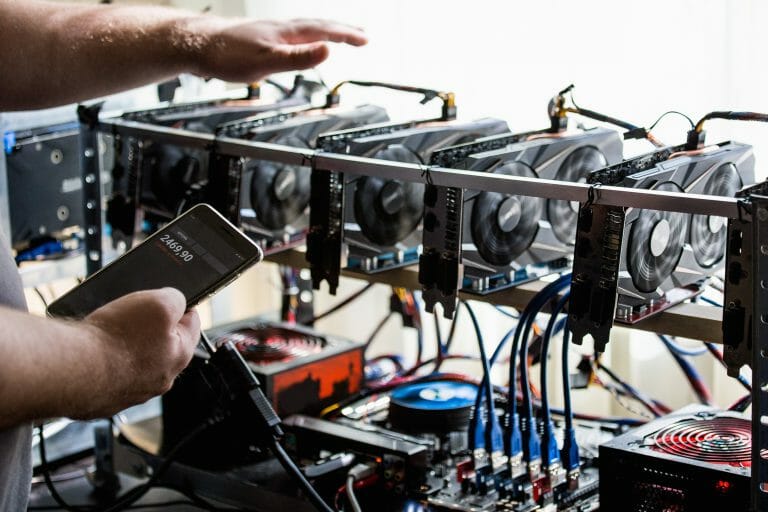
China, the country that registered the first Covid-19 outbreak, is home to the main companies that manufacture crypto mining equipment. Due to the pandemic, manufacturers of the special equipment to mine Bitcoin and other cryptocurrencies will be unable to meet their April and May delivery dates.

Jan Capek, who is CEO and Co-Founder of Braiins Systems, gave this information. Braiins Systems is the company behind the Stratum V2 protocol for BTC mining pools. The Information Technology (IT) consultant commented that clearance delays could affect mining pools. This occurs within a few weeks for the bitcoin halving, in May. Miners are taking precautions before purchasing new equipment.

The web developer commented that these delays could affect mining pools. This occurs a few weeks before the bitcoin halving, an event that would occur in May. During the halving, the number of bitcoins entering the system will suddenly decrease, but the demand for these digital assets, in theory, will remain the same. In this way, the price of the cryptocurrency may rise.

Miners are taking precautions before purchasing new equipment. These delays can lead to fewer users being able to participate in halving, due to the lack of more mining machines to operate with.

An Unexpected Change

Some media refer that the coronavirus pandemic altered the delivery schedule for Asian manufacturers such as Bitmain, MicroBT, and Innosilicon. Capek explained how these delays could affect the crypto community.

“There are many mining operations with equipment that are supposed to arrive in April and May, but all these circumstances will slow down manufacturing. Indeed, manufacturers will not meet their delivery dates, which is a much more interesting fact for halving”, he said.

Now, the CEO is waiting to know what will happen after the halving, when the number of bitcoin decreases. Several miners expected to receive their equipment in early spring, between late March and early April.

“The coronavirus situation is like an excuse since there is not much to do because things are going to be delayed anyway, which is annoying, but everyone in the world is in the same situation. Once the economy recovers and manufacturers start again, then all the people who placed their orders will see their shipments”, Capek added.

In that sense, Capek wondered who will be the first one to receive the crypto machines. This is information that is not exactly known so far.

Some of the companies which reported that there would be a delay in the delivery of these machines, at the end of January, were Bitmain, MicroBT, and Innosilicon. This occurred because the Chinese government had extended the festivities for the Chinese New Year.

Delays continued, but now it is due to the situation with the Covid-19. The current scenario is more complicated than at the beginning since the situation of the pandemic has become complicated. Some countries continue to extend the quarantine time to prevent new infections. Besides, there are already more than 154,000 deaths and more than 2.2 million people infected with Covid-19.

The crypto community is alert to this situation and is waiting for halving. Meanwhile, blockchain technology has become a platform to help record Covid-19 cases and work on the development of new solutions to beat the disease.

By María Rodríguez