Bitcoin Could Be worth USD 300,000, according to Adam Back

Cryptocurrency expert and businessman Adam Back has recently been accused of being Satoshi Nakamoto. He predicts that Bitcoin will reach a value of USD 300,000 in a period of 5 years.

Cryptocurrency expert Adam Back recently expressed his strong positive opinion on the future of Bitcoin’s value. He noted that some investors may take BTC into account due to the precarious global economic situation that COVID-19 has caused.

Back believes that the price of BTC will reach bullish values ​​of up to USD 300,000 in a period of 5 years, without further involvement of institutional investors, mainly relying on retail buyers.

However, Back commended Grayscale Investments’ investments in Bitcoin. Besides, he referred to the latest report by the banking giant Goldman Sachs, in which they say that “Bitcoin is not a suitable investment” for their customers, making it clear that institutional investors commonly misunderstand the main cryptocurrency.

He said that those reports show misunderstandings about digital scarcity and what is useful about Bitcoin. However, he stressed that they give those who are already in the world of BTC more opportunities to generate profits.

Adam Back Insists that He Is Not Satoshi

The name “Adam Back” has been noted for appearing on the Bitcoin white paper. Furthermore, he is the creator of HashCash, the Proof-of-Work (PoW) system currently used on the BTC network.

In addition to his relationship with the early days of BTC, Back is a loyal Bitcoin enthusiast in general. He admits that he mines the cryptocurrency but does not sell it. Many people have taken this valuable information to claim that Adam is Satoshi Nakamoto, the founder of Bitcoin.

Back said that he is not Satoshi and added that the identity of the creator of the cryptocurrency with the largest circulation worldwide should remain anonymous.

He considers that no one should know the founder of Bitcoin. Since the cryptocurrency is rather a kind of digital “gold”, it would not be a good idea to have a founder. To continue to perceive Bitcoin as a commodity, Back believes that Satoshi should stay out of the public eye.

In a video from the YouTube channel “Barely Sociable”, published in mid-May, they claim that Back is Satoshi. Even though it has had more than 300,000 views, he has not given any affirmative replies, but quite the contrary.

Inflation in Economy Could Drive Bitcoin’s Price Rise

Back’s statements only further support the comments that he made on Twitter last January. He responded to a report by Hal Finney, a pioneer in running Bitcoin software, about the possibility that BTC could one day be worth USD 10 million.

Back says that that price is closer than it seems since US dollar inflation increases in the path of hyperbitcoinization. For example, with the help of the modern monetary theory that justifies high inflation, a US dollar could turn 10 cents worth in a decade or two of monetary folly. Therefore, 10 million dollars/BTC would be one million dollars/BTC in today’s money.

Once again, this cryptocurrency expert’s opinions demonstrate the full potential of the leading cryptocurrency on the market. The fact that Back maintains that he is not Satoshi Nakamoto is a sign that what matters most to him is the value of Bitcoin to current and potential investors.

By Alexander Salazar
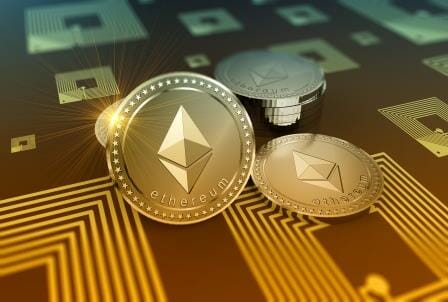
Details on the Implementation of ETH 2.0 Explained by Ethereum Foundation

Ethereum Foundation researcher Danny Ryan expects an increase in scalability. Ethereum 2.0 will feature a new proof-of-stake consensus.

Danny Ryan, Ethereum Foundation lead researcher, recently published on the official blog of the blockchain a statement in which he exposes several of the upgrades to Ethereum 2.0.

Ryan explained his current view and opinion on the advancement of Ethereum 2.0 (ETH2). He stated something that he has repeated on several occasions: the main goal of ETH2 is to be a more secure and scalable context for the current Ethereum mainnet.

The researcher explained that ETH2 plans to create a new scalable proof-of-stake (PoS) infrastructure. This will improve security and performance and will allow users to participate in the chain’s consensus.

Phased Implementation

He also noted that ETH will be phased in. Phase 0, Beacon Chain, will be a new consensus mechanism for the network. This section will seek to gather hundreds of thousands of consensus entities (validators), which are distributed into thousands of nodes around the world.

Phase 1 will seek to reach a consensus on various issues. In the Beacon Chain, validators will receive random short-term assignments to build and validate “fragment chains”. A fragment chain can be seen as a blockchain of its own with roughly the same complexity as Ethereum.

When validators build and validate fragment chains, they will also be making financial commitments to the state, availability, and validity of each chain in the ETH2 core system. In this phase, it is expected to start with 64 fragment chains, and that the total data available will be from 1 to 4 MB per second. This new availability of data will allow for massive gains of scalability, according to Ryan.

Phase 1.5 will consist of integrating the Ethereum mainnet into the new ETH2 consensus mechanism as one more fragment. This integration will allow all applications created on Ethereum to continue to work, but developers will now have more applications to build on Ethereum. Phase 2 will be the addition of the state and the execution of more fragment chains.

Users Will Be Able to Participate in the Beginning

Ryan explained that users will be able to get involved on the platform from phase 0. He also noted that users can wait until Ethereum fully migrates to ETH2. He said that it is worth witnessing the achievement of milestones and the benefits of the transition, regardless of users’ commitment.

Another prominent fact is why it is worth having a large number of validators on the network. He noted that the key component of fragmentation is a random sampling of consensus participants in committees to validate subsections of the protocol.

This means that it is mathematically unlikely that an attacker could control one-third of the validators for the creation of the protocol subsection. Besides, this new system will allow anyone with a laptop or “old phone” to be a validator.

On the other hand, he said that the large number of fragment chains is due to the difficulty of specifying and implementing the new consensus mechanism. Ryan explained that it is not difficult to scale a blockchain to tens of thousands of transactions per second. However, the complexity of a fragmented consensus mechanism is necessary so that users can validate the chain for themselves. The division of validation capacity will be key in the new ETH2 system, according to Ryan.

By Alexander Salazar

Nigerian Artist Sells Work of Art in a Cryptocurrency Auction

The artist used a social network based on blockchain technology to sell his artwork in cryptocurrencies.

Osinachi, a cryptocurrency artist and enthusiast of these digital assets, sold his latest artwork “I Can’t Breathe” using a social network based on blockchain technology.

According to a press report, the Nigerian artist sold his artwork on May 31st for 7 Ethereum (ETH). The sum is currently equivalent to USD 1,703. The blockchain art site of the social network SuperRare auctioned the piece of art.

The Artwork Reflects the Fight for a Cause

According to the specifications of the artwork, Osinachi seeks to reflect on the violence, injustice, pain, and helplessness that is taking place in Minneapolis, the American city that is currently submerged in strong protests for the murder of its Afro-American citizen George Floyd.

Osinachi sold the art piece in less than six hours after he published it on the social network. According to the artist, a part of the artwork’s funds will go to foundations that help fight against racism and discrimination. “Part of the proceeds from this NFT will go to the Black Lives Matter movement.”

The Nigerian artist has already participated in events that links art, blockchain technology, and cryptocurrencies. Experts and curators also recognized the value of the piece of art. In 2018, this artist exhibited many of his works at the Ethereal Summit in New York. He was also the recipient of an award at the Bridgeman Studio Award, in 2019.

Currently, cryptocurrencies are a form of payment for different works of art around the world. This option offers ease and speed of payment that could surpass other traditional methods, especially in transcontinental and high-value transactions.

Blockchain ​​Technology and Cryptocurrencies Could Drive Art Sales

According to data shared by SuperRare social network, artists published each artwork in the art section throughout the network. The Ethereum blockchain network conducts a verification that backs each piece of art. The aforementioned verification has a method of tracking the artwork, it records the origin of the piece and certifies its authenticity.

The social network allows artists to publish their artworks for as long as they require it and offers the facility of establishing a fixed price for the piece or including it in the auction sale method.

Cryptocurrencies and artworks have been linked on previous occasions. Cryptocurrencies have not only served as an engine to drive sales of unique pieces, but they have also served to promote and facilitate new methods of acquiring rewards and valuing art and tokens.

An example of this occurred at the beginning of last 2019 when the artist Pascal Boyart concealed a Bitcoin reward in his street work that honored the so-called “Yellow Vests”. On that occasion, the artwork concealed 0.26 Bitcoin.

At that time, the art piece was equivalent to about USD 1,000. This is further proof that cryptocurrency adoption continues and it could help drive the sale of artwork in almost any country.

By María Rodríguez

Uphold Expands Its Trading and Creates a Center to Manage Stablecoins

Now, the platform has 6 different types of stablecoins to benefit users in Latin America.

UpHold, the renowned company dedicated to exchanging money on the web, recently announced that it has managed to include more stablecoin exchange options on its platform. Besides, the company reported that it is developing a section for these cryptocurrencies, whose name will be “Stablecoins Center”. This option will be available for users in Latin America.

According to a press report published last June 2nd, the so-called Stablecoin Center will allow users of the UpHold platform to acquire up to six different types of stablecoins. The company detailed that it made an important effort to include the most requested stablecoins in the market such as DAI, TrueUSD, Tether, and USD Coin. The platform also included other options like UPEUR and UPUSD, which belong to the Universal Protocol Alliance.

About this new service, UpHold CEO, J.P. Thieriot, said he was excited about including this new option on the platform. He also took the opportunity to mention some of the most important characteristics of stablecoins.

“Today, we believe that it is very important to be able to provide our clients with the cheapest and most transparent method of managing their money. Stablecoins are less volatile than conventional cryptocurrencies. They have tied 1: 1 to safe-haven currencies like the USD.”

Furthermore, Thieriot mentioned that established institutions like some central banks around the world could be using and adopting this technology. In this sense, he assured that stablecoins are a very good option for those who are looking for savings or asset protection options.

On the other hand, the executive referred to the expansion of stablecoins in the Latin American market. He mentioned that it is possible that the citizens of these countries are interested in this type of option, especially due to the economic difficulties that most of the southern countries are facing.

“In many Latin American countries, economies are very changing. The loss of value of local currencies (backed by governments with little credibility) and with a lot of inflation, means that the purchasing power of people is affected over the days.”

The businessman continued mentioning that stablecoins are the most viable option for the region, especially if UpHold conditions the system to be quick and easy to use. “Our goal, with the new Stablecoin UpHold Center, is to make available to users in Latin America a new, easy, and accessible tool to protect their finances. An option available to everyone,” he said.

According to information on the platform, users can currently make purchases on more than 50 types of exchange, including now the six new stablecoins that are easier to acquire if the user is in any country in Latin America.

This platform not only performs exchange operations with cryptocurrencies, but it is also possible to send and receive exchanges in national fiat currencies and trade with some types of precious metals.

UpHold has more than two million active users. It offers a simple interface so that anyone can manage the financial operation without too many complications. To date, it is only necessary to open an account on the platform to start using its services, something that could be very positive for new users.

By María Rodríguez

SpaceX’s Future Plans Could Include Use of Bitcoin

After the successful Demo-2 mission, the company took the first step toward colonizing Mars. Elon Musk believes that a decentralized system should govern life on the red planet.

Last May 30th, humanity took a giant step toward the beginning of a new era. With the launch of their first manned flight, the private company SpaceX opened the door to commercial space flights. In this way, it demonstrates that it is moving toward consolidating its future plans, in which it is possible to determine that Bitcoin fits perfectly.

It is nearly a decade after the US Government withdrew its historic space shuttle program. Two astronauts departed from the same Florida launchpad that served for the Apollo missions and space shuttles. This time, the rocket and the capsule that took them out of the atmosphere were not built or operated by NASA, but by SpaceX. This company was founded by multimillionaire Elon Musk, who is pursuing his dream to colonize Mars.

Musk surprised the world by selecting a quixotic project as the focus of his new wealth: developing a greenhouse on Mars. Humanity sees this idea as being more possible than ever, not only for the successful departure of a manned commercial flight but also for the arrival of astronauts Doug Hurley and Bob Behnkhen on the International Space Station (ISS) after a successful docking of the capsule Crew Dragon, last March 31st.

The “Demo-2” mission ends the government’s monopoly on space travel and, as a final test, allows NASA to certify the capsule to conduct regular manned missions from now on.

Titanic Task of Colonizing Mars

Some time ago, Elon Musk revealed details of his plans for Mars. The CEO of SpaceX said that 1,000 spacecraft and “one million tons” of vitamin C will be needed for life on Mars to be sustainable and not to die slowly and painfully. He explained that it is necessary to have a self-sufficient city to be able to live on the red planet.

Even though refueling ships stop coming from the earth, a city on Mars has to survive. To make something self-sufficient, it is important to have all the ingredients. Musk said that future colonizers on Mars cannot say life is self-sufficient despite some little things that they do not have.

The CEO of SpaceX compared life on Mars to a long sea voyage: “That would be like saying: Well, we had everything except vitamin C. Now you will have scurvy and will die. You are going to die slowly and painfully from lack of vitamin C.” He explained that they have to ensure that they have vitamin C on Mars.

According to its official website, SpaceX plans to send an unmanned rocket to Mars in 2022. They will conduct a second mission, which will be loaded and crewed, by 2024. Musk has also said that they will send a million people to Mars by 2050.

Bitcoin Is from Another Planet

The plans revealed by Elon Musk lead to think that Bitcoin is the perfect system that fits on Mars. The CEO of SpaceX visualizes future colonizers of Mars living under a decentralized system. It will be like direct democracy, where citizens can make their own decisions, independently on centralized entities.

Technology is growing exponentially and forms of cryptoanarchy are taking humanity to a new level of freedom. Today there is software that encrypts people’s conversations protecting them from the curious eyes of governments. There is Bitcoin that decentralizes our money, allowing citizens to manage their funds and make their own decisions, away from government decisions on the infinite issuance of assets.

By Alexander Salazar

Nike and Finut Partner to Grant Customers 3% Reward on Cryptocurrencies Purchases

At the moment, the rewards system will only be enabled for users in part of Europe.

The renowned footwear company Nike has decided to delve further into the field of blockchain technology. Not only it enabled the refund option through the use of cryptocurrencies, but it also gives its customers a 3% cryptocurrency reward for each purchase.

The reward system that the US-based firm has introduced in its business with clients was the result of the alliance with the technology finance company Finut. This agreement will allow Nike to reward its customers with a 3% reward in cryptocurrencies and 9% in fiat cash for those who make purchases in any of its stores.

According to a company spokesperson, the rewards system is only enabled for customers who make purchases online and through Visa’s Plutus platform. This platform operates with Pound Sterling and Euros; thus, this reward system would only be enabled for buyers in the United Kingdom as well as part of Europe.

Regarding the reward, the announcement clarified that the company will establish the system to grant the client the amount of 3% in the token that the payment platform Plutus creates. In this way, the system will release the asset in the form of Pluton (PLU), which is a decentralized asset that operates under the Ethereum network. The company will grant the rest of the reward in the form of a refund with the currency used for the purchase.

In addition to the aforementioned reward for the purchase, the announcement also detailed that the customer can use this reward to do “staking” through the use of the Plutus application. In current asset data, each Pluton is currently known to be worth USD 1.75, also achieving a total market capitalization of USD 1.5 million.

Plutus and its Efforts for the Adoption of Cryptocurrencies in Everyday Life

One of Plutus’ biggest challenges is making the use of cryptocurrencies more viable in common transactions, such as purchases of goods and services. For this reason, the firm has established a set of alliances that promote the use of these assets in common transactions such as the purchase of footwear.

According to the company, the commercial alliance with Nike will make it possible that, through the use of rewards, people can gradually take interest in crypto movements. Offering a good experience is the key for the user to find meaning in the use of these assets.

Plutus was in plans to expand this reward system to other possible partnerships with companies in the tourism sector. Until now, web companies such as Skyscanner and Airbnb are working to develop a similar system. These companies are in charge of purchasing travel tickets, among other services. According to Plutus spokesmen, the coronavirus outbreak has hit airlines hard, and even more the companies that work around them so these companies are looking for new opportunities.

On the other hand, Nike assured that they have had good experiences with the use of crypto technologies. On a previous occasion, the footwear brand participated in a pilot test on the use of blockchain technology to improve the supply chain.

Researchers from Auburn University in Alabama, the United States of America, were in charge of this pilot test to use new technologies like blockchain, which would soon be part of daily life.

By María Rodríguez