Adoption of Blockchain Technology in Companies Reaches 39 %

The increase in adoption levels raised almost 16% more than in 2019, according to a survey.

According to the study that the consulting company Deloitte carries out every year, more companies have incorporated blockchain technology into their processes. Deloitte executed a study called Global Blockchain Survey 2020 and 39% of the companies that participated in the survey admit they maintain adoption plans with blockchain technology.

Figures that the same study collected in 2019 indicate that only 23% of companies were incorporating blockchain technology into their administration at that time. For this reason, the result of this new study shows a growth of up to 16%.

The same study reveals that the number of companies that maintain blockchain projects in production reaches 46%, so this group of companies that register up to USD 1 billion in annual revenue is seeking to incorporate blockchain solutions to optimize their businesses.

The study also incorporates the main executives of these companies and interviews them to determine the future of this technology. In this way, the study also determined that the main shareholders see blockchain technology as a great future.

In this sense, when asked about the importance of this technology, 88% of the respondents recognized that blockchain technology is “widely scalable and will finally achieve its mass adoption.”

To conduct the study, Deloitte divided the 1,488 executives surveyed into groups according to the level of the annual income of the company they chair. This led to a comparison of their opinion with 39% of the companies that claimed to have blockchain projects under development.

According to the segments, the percentage of adoption in companies that invoice USD 100 million annually reached 41%; and, on the other hand, the companies that maintain incomes above USD 1 billion had 46% in adoption levels.

If we compare the current study with the one that Deloitte obtained in the years 2018 and 2019, it is evident a significant growth in the positive assessment of executives regarding the use of blockchain technology.

In a graph that the study published, it is reflected that, for example, the opinions of executives regarding the scalability of blockchain adoption has increased in favor of blockchain technology since 2018, 2019, and 2020. So that the adoption of this technology went from 84% in 2018, 86% in 2019, and 88% in 2020.

Similarly, Deloitte’s study showed positive numbers about cases in the use of blockchain being of great need, or important to carry out certain types of business. To conduct the study, the survey focused on important companies from countries such as the United States of America, Brazil, Canada, Germany, the United Kingdom, Singapore, South Africa, Mexico, and China.

Although the figure shows 39% adoption among all companies surveyed, Deloitte explains that there are countries where these levels reach higher figures.” 31% of respondents in the United States say there are already blockchain platforms in production at their companies, which contrasts with China, where the figure is almost double: 59%.” The adoption of blockchain technology continues growing.

By María Rodríguez

Chamber of Commerce in Bolivia Will Use Blockchain System for Internal Voting

The Bolivian Chamber of Commerce held the elections for the new board of directors last June 25th

Through a statement, the Chamber of Commerce in Bolivia announced the installation of a blockchain system that allowed conducting the elections for the body’s board of directors. According to the statement, the blockchain platform allows electronic voting as an alternative to the traditional system. This is a health control measure to prevent the spread of Covid-19 in the country.

As the Chamber of Commerce planned, the elections took place last June 25th and had an advanced blockchain system that allowed voting, managing and auditing the votes, as well as doing the process electronically.

Regarding the system and its voting population, the current president of the Chamber of Commerce in Bolivia, Rolando Kempff, mentioned that thousands of members used this new system. These partners are part of all the departments of the country.

On this point, some local press reported that the system authenticates the identity of the voter and authorizes them to vote without having to mobilize. Voters only need the use of smartphones or a computer with Internet access to participate.

Regarding the system security, Kempff mentioned that the blockchain platform maintains the transparency and trust necessary to conduct the process. However, it did not provide details on whether the system belongs to a public or private network or whether the system uses a method of recognition between the user’s digital identity and the physical identification of the traditional method.

Blockchain Implementation in Pandemic Times

Proposals for the use of blockchain technology in many aspects of people’s daily lives grow day by day. This adoption happens amid uncertainties about how long the quarantine can last.

In many ways, a blockchain network can simplify the process of document registration in notaries or improve traceability at different stages of the supply chain in some economic sectors. However, in electoral matters, not all users agree with the electronic voting method. In many cases, they consider that this system could be vulnerable to hacker attacks or system failures.

Other institutions have already conducted some studies on trust and receptivity on this voting method and even technical research, where the use of these alternatives may represent a significant risk. For instance, the Center for Scientific Evidence in Public Issues of the American Association for the Advancement of Science published a statement some time ago expressing insecurity and concern about electronic voting methods.

According to the statement, it is noted that, in the absence of a physical record that commonly plays a role with the voter’s choice, a valid and transparent audit is impossible. They highlight that the record generated by the use of email or fingerprints from the use of mobile phones or computers is not sufficient to establish a strong record.

Recently, the Gabriel René Moreno Autonomous University held an election experience, thanks to blockchain technology. The idea was to choose the university directive of fourth-year students of Law. The elections were a success and representatives of the university said that blockchain technology is an excellent alternative to conduct elections.

By María Rodríguez

Given Argentine Devaluation, Those Waiting for the SAC or Bonus Can Use Bitcoin

The first cryptocurrency could help amid the economic crisis that the country is undergoing. Foreign exchange restrictions limit the free convertibility between the Argentine peso (ARS) and the US dollar (USD).

The economically active population and retirees in Argentina will receive the first 50% of the Supplementary Annual Salary (SAC) or bonus. This is a benefit that gives workers “extra” funds in two installments and times of the year, which could represent an opportunity to use Bitcoin (BTC) in the face of devaluation.

The first payment occurs on the last day of June with an extension of four business days. The procedure for calculating the number of pesos (ARS) to pay by way of bonus is as follows.

The first half of the benefit considers the highest monthly salary that the worker earned in the first half of the year. For example, if the employee’s best salary in this period was ARS 50,000, the bonus that he will receive in the days to come will be 50% of that amount, that is, ARS 25,000.

The calculation is similar for the second half of the year, considering the best salary between July and the last month of the year. In this case, payment occurs around December 18th.

Argentine Economic Crisis

As in recent years, the payment of the bonus in Argentina will occur amid an economic crisis. The devaluation of the Argentine peso and inflation of around 43% in the last 12 months have conditioned this crisis. Both factors could open the doors to Bitcoin as an alternative for Argentines to maintain the value of the funds that they receive.

Argentine tax consultant Marcos Zocaro highlighted that an increasing number of people see Bitcoin, and other cryptocurrencies, as an option to safeguard the value of their funds.

Although Argentina is in a difficult scenario and many people need to settle debts or face the situation, there are also many citizens with savings capacity. Zocaro noted that a percentage of those people wait for the bonus and “dollarize” it by buying crypto-assets such as Bitcoin.

The specialist added that Argentines are approaching other assets, such as cryptocurrencies, due to foreign exchange restrictions. Zocaro considers that the first option is Bitcoin, but some people prefer acquiring DAI. This stablecoin offers them an implicit exchange rate higher than the official one, but similar to that of the “blue” or parallel dollar.

Considering foreign exchange restrictions, inflation, and the devaluation of the Argentine peso, there would be conditions for the increase in the acquisition of Bitcoin in the bonus season.

In Argentina there are at least 12 services, brokers or exchanges established for the purchase of Bitcoin. These are Buenbit.com, LocalBitcoins, Bitso, Crypto Facil, Qubit, CryptoMKT, Ripio, ArgenBTC, Bitex, Lemon Cash, Satoshi Tango, and Athena ATMs.

For example, some websites show the trading price on each exchange and an average cost of 1 BTC in Argentine pesos. In the case of buying Bitcoin, the prices appear in increasing order starting with the lowest price. Concerning, the first trading price that appears is the one offering the most pesos.

By Willmen Blanco

In the Early Days of Bitcoin, Satoshi May Have Decided to Mine Fewer Blocks than Normal

A study by the RSK co-founder suggests that a former miner, supposedly Satoshi Nakamoto, may have stopped his hash rate in the early days of Bitcoin.

Sergio Demain Lerner, Co-founder of the Bitcoin startup RSK, wrote on his blog about “Patoshi”, a pseudonym for a Bitcoin (BTC) miner who is supposed to be Satoshi. There he suggests that the miner, who was active between 2009 and 2010, may have kept his mining equipment off for the first 5 minutes of each “block interval” (or the time between one blockchain block and the next).

Many people believe that Patoshi is responsible for mining an overwhelming number of blocks in the early days of Bitcoin. In his ongoing research, which has covered years and multiple blog posts, Lerner (along with other anonymous researchers) has solved the mystery of how much Bitcoin Satoshi may have mined before leaving the project in 2010.

The figure, between hundreds of thousands and a million bitcoins, has decreased over the years. New evidence has emerged of the patterns of how each of the early miners stamped their mined blocks on the Bitcoin blockchain.

The owner of the Bitcoin addresses that supposedly contained coins belonging to Satoshi recently signed them. This person did this in an apparent effort to prove that the notorious self-proclaimed “creator” of Bitcoin Craig Wright was not the owner of the keys to those bitcoins. Lerner, along with other researchers, had to reconsider how many miners were active in the early days of Bitcoin and which addresses these first mined blocks belong to Satoshi.

Using the evidence added to the data, Lerner has found new evidence suggesting that Satoshi purposely stayed out of Bitcoin mining after the issuance of a new block. Lerner said that Patoshi may have needed to wait five minutes to issue these new blocks, or he may have been allowing newcomers an opportunity to reach the blocks before he did.

Another explanation would be the creation of an artificial time stamp on a block if, once miners extract it, they extract another immediately after its issuance. Patoshi may have been trying to fix a mined block “too fast”, thus delaying the block times for the next block after this double mining occurred (Bitcoin block mining occurs about every 10 minutes).

Lerner suggested that Satoshi may have been trying to avoid early mining in a block interval. Likewise, he could have been ensuring enough mining of blocks about every 10 minutes to guarantee the correct operation of the network.

Although Lerner invited his readers to do their research, the “altruism” theory would not be so hard to believe. This miner (Satoshi) has not accessed a few hundred thousand bitcoins (equivalent to billions of US dollars) since he mined them between 2009 and 2010.

If altruism came naturally to Satoshi, then this may have been another act of benevolence. Maybe he was just trying to allow others to mine those blocks, rather than him.

By Willmen Blanco

In First Half of 2020, Mining Pools Show Decrease in Profits of 30%

The revenues of mining pool BTC.com fell by more than 50%, compared to its 2019 figures. According to Stephen Perrenod, the Bitcoin halving fueled the drop in pool revenues.

American research firm OrionX recently published an analysis of the first six months of the year 2020. It indicates that the profits of cryptocurrency mining pools were much lower than in the second half of 2019.

On June 23rd, the community learned that the annual added economic value of the 50 most prominent pools reached USD 4.8 billion. In November 2018, the same indicator reached USD 7.4 billion. The difference of USD 2.6 billion implies a drop by 35.1% in cryptocurrency mining pool revenues.

Annual added economic value (AEV) is a projection that calculates the income that each pool obtains through mining. According to the most recent edition of the report by OrionX, the top 5 of the pools with the highest AEV places F2Pool in first place. Although its current AEV is USD 832 million, it was USD 1.05 billion in November 2019. Poolin and Antpool follow with revenues of USD 614 million and USD 492 million, respectively.

Mining pool BTC.com has shown a further drop in its revenue from November 2019 to the present. Previously, BTC.com enjoyed an AEV of USD 1.12 billion. After a fall of more than 50%, the AEV of this pool is currently USD 442 million.

Effects of the Halving

Stephen Perrenod, analyst and partner at OrionX, notes that the recent Bitcoin halving has led to the drop in pool revenues. According to Perrenod, it was obvious that such an impact on the annual added economic value of the pools would occur after the halving.

Perrenod’s opinion seems base on the relationship between the price of Bitcoin in the market and the reduction of the reward per block mined. In other words, although the reward per block mined on the Bitcoin network underwent a reduction by half, the trading price of this cryptocurrency did not double. Therefore, the cryptocurrency did not maintain the balance between the revenues for mining and the operating expenses of this activity before the halving.

Another fact that reinforces Perrenod’s theory, regarding the influence of the halving on pool revenues, is that 15 of the pools that comprise the top 50 according to their AEV mine Bitcoin. Only Ethereum exceeds it, with a presence in 16 of the 50 pools on the list. However, Bitcoin generates almost three times Ethereum’s annual revenue, which keeps it in the first place of importance.

Curiously, the Bitcoin halving has had so much influence on the profits of mining pools, although this event had not occurred until May 11th. However, there are two aspects of this particular halving that are worth considering to better understand everything.

First, although the halving suddenly occurs at a certain height of the blockchain, there are previous stages that the community marks and that affect the network. Regardless of the price of the cryptocurrency on the market, the hash rate tends to rise as the halving approaches.

Second, the Bitcoin Cash and Bitcoin SV networks also had their respective halvings, which occurred before that of the original Bitcoin. These networks were born out of Bitcoin forks, and all three share many characteristics, including their pre-fork history.

The halving occurred in three cryptocurrencies that share the same mining algorithm (SHA-256) on immediate dates. That could also have affected the hash rate of each network and the profits of the mining pools that operate with them.

By Alexander Salazar

US Company to Buy 17,000 Mining Equipment from Bitmain

Core Scientific will purchase on behalf of its customers and its behalf. This company takes advantage of the fall in electricity prices in the United States of America.

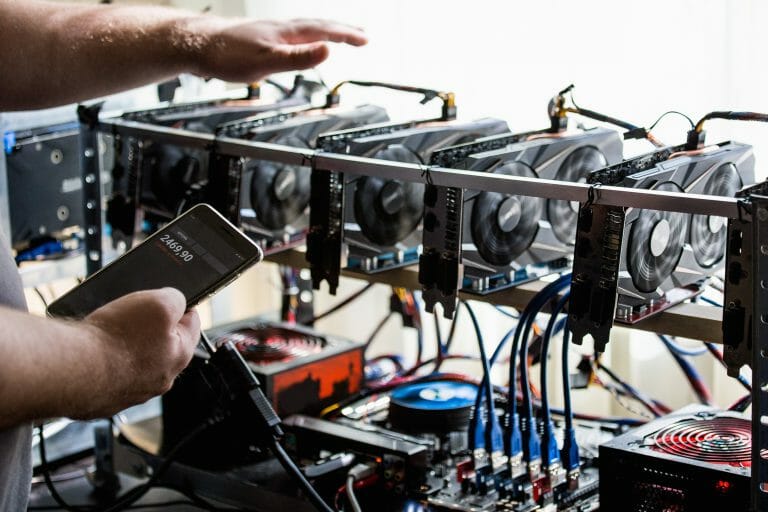
Interest in mining continues to rise in the United States of America. So Core Scientific, an American blockchain hosting provider, has signed an agreement to buy next-generation Bitcoin (BTC) mining machines. Core Scientific will buy the equipment from Bitmain; China’s leading producer of mining hardware.

There are more than 17,000 S19 Antminers that Core Scientific will buy from Bitmain. The company will make this purchase on behalf of its customers and for its use. According to Core Scientific, this will be the largest number of S19 machines purchased by a single blockchain hosting company.

“Core Scientific received and began testing the first of Bitmain’s newest ASIC miners, and has seen material success in increasing the existing hash rate to reach 110 TH / s ± 3%,” said Kevin Turner, President and CEO of Core Scientific, and former Chief Operating Officer (COO) of Microsoft.

In this way, this company continues to grow in the use of blockchain technology and now expands its quantity of equipment for bitcoin mining. Besides, Core Scientific has contributed to the increase in the existing hash rate, through its operations.

On this subject, Russell Cann, Core Scientific Chief Customer, talked about the growing interest in increasing the hash rate through mining operations. In this sense, he explained the reason for the growth in the hash levels.

“Our view is that this increase in interest and increase in capital allocation and investment can be attributed to the increasing acceptance of crypto-assets and/or digital assets. Users accept them as an investment asset class as well as to the favorable investment characteristics in North America. This, specifically, due to a stable geopolitical and regulatory environment, adequate weather conditions, and the multiple sources of energy present.”

Cann commented that, historically, mining regulations in other jurisdictions have been “a trick” creating uncertainty for mining investors. In contrast, having mining facilities in North America is beneficial due to “the stability of the electrical system, as well as the regulatory environment surrounding land ownership.”

In this way, according to the representative of Core Scientific, the conditions of the electrical system in the United States are one of the reasons that attract cryptocurrency miners to operate in this country. But, in addition to this, Cann said the recent drop in energy prices makes the North American region more attractive to cryptocurrency mining. This is something that even large-scale miners like Core Scientific take into account.

“With lower energy prices, lower-cost energy areas in the US and Canada are creating some unique project opportunities for larger-scale miners, such as Core Scientific, to take them into consideration,” explained the businessman.

However, this does not mean that investors are abandoning other mining operations in countries like China, which is also a country where cryptocurrency mining abounds. Cann suggests that investors would be looking to diversify their investments globally, to have a presence in different regions. The United States is one of the countries that large miners are taking into account.

María Rodriguez