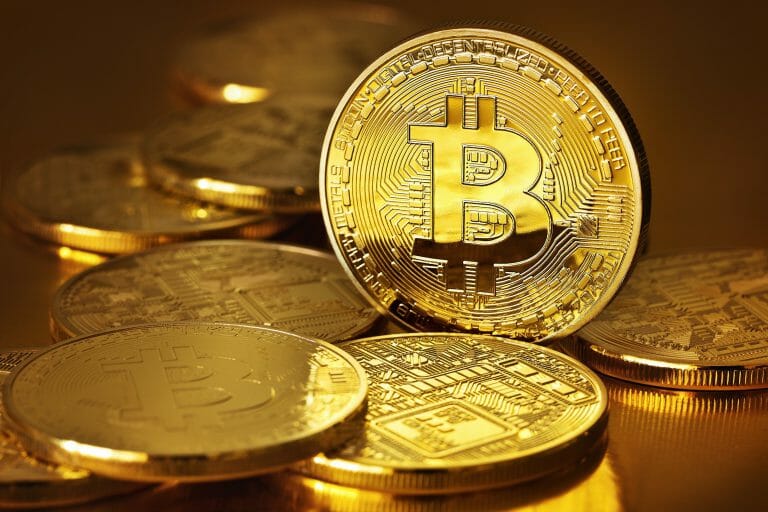
Study about Bitcoin Investment Is Published by Fidelity

Bitcoin’s shortage is one of the reasons that position it as a potential store of value. Bitcoin’s volatility can have a positive impact on its adoption, according to Fidelity.

Bitcoin is “an aspirational store of value” and “an insurance policy” in times of increasing financial uncertainty, according to a new report by Fidelity Digital Assets. This is the agency in charge of the custody and management of cryptocurrencies of Fidelity Investments, which handles around USD 7.3 trillion worth of assets.

The report that Fidelity published last July 28th explores the characteristics that position Bitcoin to play that role in the future. It also considers whether it is useful as a store of value.

Fidelity says that the main cryptocurrency meets the criteria for being classified as a store of value, but has not yet reached the necessary level of acceptance. The report says that “Bitcoin is relatively recent and in limited demand, compared to a global reserve of wealth like gold.”

Bitcoin’s volatility is one of the main arguments against it, according to the report. However, Fidelity says that bitcoiners oppose the idea that the path of a new asset from a stage of low adoption to one as a global store of value is linear. “A different perspective is that many participants initially learn about Bitcoin because of its volatility.”

Fidelity explains several reasons that make Bitcoin attractive as a potential store of value. First, it mentions its scarcity, a characteristic inherent to the limit of its supply, set at 21 million units. Furthermore, the supply of Bitcoin undergoes a reduction by 50% every 4 years. According to the report, the shortage of Bitcoin is in the protocol code since its creation.

The document also mentions a set of external factors that drive the demand for Bitcoin. Among them, the report mentions: “unprecedented levels of central bank and government intervention, record levels of low-interest rates, increasing supply of fiat currency, and the potential for inflation to rise, all of which have accelerated due to the COVID-19 pandemic and the global economic stoppage”.

Another favorable factor for the establishment of Bitcoin as a store of value is the transfer of wealth to millennials (those born between 1981 and 1996). According to a study by the real estate company Coldwell Banker, around USD 68 billion has passed into the hands of millennials, among whom there are 628,000 millionaires. This demographic segment is more open to digital investment alternatives than traditional products.

In its conclusions, Fidelity says that “Bitcoin’s inherent properties highlight the perspective that it has the potential to be a store of value, with complementary and interdependent components such as the Bitcoin network and its native asset, digitally scarce.” External factors that accelerate interest and investment in Bitcoin include “unprecedented levels of fiscal and monetary stimulus, of unknown consequence.”

Other studies dedicated to Bitcoin highlight that the increase in demand for, and adoption of, Bitcoin could facilitate the transition of that cryptocurrency, from the low volatility phase to a period of higher prices. After nearly three months with its price fluctuating between USD 9,000 and USD 10,000, Bitcoin recently recorded a bullish breakout that pushed it above USD 11,000.

By Alexander Salazar

Users Should Seek Refuge in Bitcoin, according to Robert Kiyosaki

Robert Kiyosaki, the author of “Rich Dad Poor Dad”, recommends taking refuge in Bitcoin and Gold. Investments that generate some kind of return can become a sustainable system.

During the current global financial crisis that the COVID-19 pandemic has caused, well-known personalities and celebrities recommend taking refuge in Bitcoin. Among them, billionaire Robert Kiyosaki considers it to be a life or death decision.

The well-known author of “Rich Dad Poor Dad” is an educational entrepreneur and real estate magnate, founder of the financial education company Rich Dad. For his part, the expert advocates financial independence and wealth creation, through investment in assets and real estate.

In his books, Robert Kiyosaki explains that people should focus on investments that generate some type of return. This is important since they can become a sustainable system of wealth creation.

Kiyosaki recommends that investors change their way of thinking, learn and educate themselves in line with renowned experts, establish ventures that create jobs, take advantage of their entrepreneur status to pay fewer taxes and save on gold or Bitcoin.

However, the fifth piece of advice is the most curious of all on that list. With this recommendation, Kiyosaki encourages his followers to save on gold or Bitcoin.

Robert Kiyosaki’s Criticism of Bitcoin

Kiyosaki has recently criticized the response of the US Federal Reserve (FED) to the economic damage that the COVID-19 pandemic has caused. The FED has continued to print billions and billions of US dollars since the start of the pandemic. This has awakened all the old ghosts of the great world inflations, already extinct for decades, except those of Venezuela and Argentina.

In short, the author has urged his large number of followers to protect themselves in the future, safeguarding their savings in fiat money in banks, in silver, and gold, and mainly in Bitcoin.

For example, Kiyosaki reaffirmed on May 19th his belief that assets, such as gold, silver and Bitcoin (BTC), would be the saviors of investors during this crisis. In this regard, he said that all cities have income taxes, sales taxes, and real estate taxes.

Dennis Gartman Withdraws His Investment in Gold

In addition to this, Kiyosaki said on July 28th that he has decided to stop investing in gold, after learning that respected gold defender Dennis Gartman withdrew his investment in the metal.

This is an important rule in the world of finance: If an important person, who has defended an asset for years, changes his mind, he may know or anticipate something that no one else knows.

After centuries of a booming industry, it looks as though gold has come to an end as a store of value and Bitcoin could be the next target for people like Gartman.

Robert Kiyosaki says that the reason why he approves Bitcoin is because it is not part of the centralized system. What this author stated in recent days, among other things, is further proof that Bitcoin is the best option that investors can have in the market.

By Alexander Salazar

There Are No Limitations to Buy Cryptocurrencies with US Dollars in Argentina

Each exchange is free to decide whether to suspend transactions with the US fiat currency or not. It is difficult for exchanges to use the US dollars that they receive.

Attorney Ricardo Mihura Estrada is a specialist in cryptocurrency tax regulations and a member of the NGO Bitcoin Argentina. In recent days, he said that there are no limitations to buy Bitcoin, or any other cryptocurrency, with US dollars in Argentina.

Besides, he explained that, if an exchange no longer operates with US dollars, it is by its own choice rather than a legal limitation. He explained, “That is an issue of how they manage their own finances and what they do with the US dollars that they receive.” In this sense, he stated that this “surely gives them a headache as they cannot use that money.”

The matter is of relevance to the community that follows cryptocurrencies in Argentina, who were flooded with speculation about it when the exchange Buenbit removed the DAI/USD pair from its platform.

The suspension, which only lasted a few days, was due to “preventive reasons”, explained Federico Ogue, CEO of the company, in a statement that he posted in the official Telegram group “Buenbit community”.

The DAI/USD pair is the most popular to perform the operation known as “crypto curl”. Thanks to the difference between the official price of the US dollar (USD), and the one used in the real market when selling cryptocurrencies, this movement allows making a profit in Argentine pesos (ARS).

Other Matters within Exchanges

Also a lawyer, Daniel Rybnik, who coordinates the Legal and Accounting Committee of the NGO Bitcoin Argentina, explained that there is no exchange law violation if users send or receive cryptocurrencies to or from abroad.

Bitcoiner Franco Amati says that when someone receives money from abroad in Argentina, doing so in cryptocurrencies is one of the most effective options. This is so because the person can exchange them for Argentine pesos at the real market price.

Rybnik also explained something that frequently raises doubt among Argentine holders. He clarified that the owners of cryptocurrencies, being intangible assets, do not pay personal property tax.

Things are not so clear for those who provide services abroad and get paid in cryptocurrencies. The law requires them to deliver the foreign currencies that they receive to the banking system, in exchange for Argentine pesos at the official price. However, the Central Bank does not consider cryptocurrencies as currencies.

According to Mihura Estrada, the sale of cryptocurrencies at exchanges is increasingly close. However, he clarifies that this would not comply with the law because the system intends that all US dollars go to the Single Exchange Market that the Central Bank controls.

In his capacity as a lawyer, he assured that he would be willing to undertake the defense of a person accused of a foreign exchange offense for not having liquidated the cryptocurrencies that he received.

He explained that there are many defense arguments because “the rule is not clear at all.” He says that it “does not provide a means of compliance and does not allow liquidating cryptocurrencies as currencies, since the Central Bank does not consider them to be currencies.”

By Alexander Salazar

Users Should Seek Refuge in Bitcoin, according to Robert Kiyosaki

Robert Kiyosaki, the author of “Rich Dad Poor Dad”, recommends taking refuge in Bitcoin and Gold. Investments that generate some kind of return can become a sustainable system.

During the current global financial crisis that the COVID-19 pandemic has caused, well-known personalities and celebrities recommend taking refuge in Bitcoin. Among them, billionaire Robert Kiyosaki considers it to be a life or death decision.

The well-known author of “Rich Dad Poor Dad” is an educational entrepreneur and real estate magnate, founder of the financial education company Rich Dad. For his part, the expert advocates financial independence and wealth creation, through investment in assets and real estate.

In his books, Robert Kiyosaki explains that people should focus on investments that generate some type of return. This is important since they can become a sustainable system of wealth creation.

Kiyosaki recommends that investors change their way of thinking, learn and educate themselves in line with renowned experts, establish ventures that create jobs, take advantage of their entrepreneur status to pay fewer taxes and save on gold or Bitcoin.

However, the fifth piece of advice is the most curious of all on that list. With this recommendation, Kiyosaki encourages his followers to save on gold or Bitcoin.

Robert Kiyosaki’s Criticism of Bitcoin

Kiyosaki has recently criticized the response of the US Federal Reserve (FED) to the economic damage that the COVID-19 pandemic has caused. The FED has continued to print billions and billions of US dollars since the start of the pandemic. This has awakened all the old ghosts of the great world inflations, already extinct for decades, except those of Venezuela and Argentina.

In short, the author has urged his large number of followers to protect themselves in the future, safeguarding their savings in fiat money in banks, in silver, and gold, and mainly in Bitcoin.

For example, Kiyosaki reaffirmed on May 19th his belief that assets, such as gold, silver and Bitcoin (BTC), would be the saviors of investors during this crisis. In this regard, he said that all cities have income taxes, sales taxes, and real estate taxes.

Dennis Gartman Withdraws His Investment in Gold

In addition to this, Kiyosaki said on July 28th that he has decided to stop investing in gold, after learning that respected gold defender Dennis Gartman withdrew his investment in the metal.

This is an important rule in the world of finance: If an important person, who has defended an asset for years, changes his mind, he may know or anticipate something that no one else knows.

After centuries of a booming industry, it looks as though gold has come to an end as a store of value and Bitcoin could be the next target for people like Gartman.

Robert Kiyosaki says that the reason why he approves Bitcoin is because it is not part of the centralized system. What this author stated in recent days, among other things, is further proof that Bitcoin is the best option that investors can have in the market.

By Alexander Salazar

Breach of Regulations May Hurt Bitcoin, According to CEO of Buda

According to Guillermo Torrealba, the law does not consider cryptocurrency companies “special”. The CEO of Buda considers that complying with regulations can help avoid “anti-crypto” policies.

According to Guillermo Torrealba, CEO of the Chilean exchange Buda, cryptocurrency companies, must adapt to government regulations, including the requirement for data about their customers. He believes that, if they did not do it, the future of Bitcoin and other cryptocurrencies would be in danger in the region.

In recent days, Torrealba stated that there are regulations that cryptocurrency companies cannot skip, beyond defending the privacy of their users.

The executive reflected that the fact that they are a cryptocurrency company does not mean that they are “special”. Furthermore, he considered that intending not to adhere to legal processes that other industries are complying with at any country would be “immense self-centeredness”.

Failure to comply with regulations could even “hurt cryptocurrencies”, according to the founder of Buda, a company that has a presence not only in Chile but also in Argentina, Colombia, and Peru.

The businessman argued that there are certain regulations that they cannot avoid. He believes that not adapting to regulations would carry several risks. Concerning the company, the government could take away their licenses and stop their operations, as well as put those responsible for the organization at risk of going to prison.

Regulated Companies are Elective because Bitcoin Allows Choosing

Torrealba explained that there are beneficial cases of regulation since they allow fighting criminal acts such as money laundering and scams, among others. In this sense, he defended that the requests for information about customers that Buda has faced have been of that style.

However, he said that he does not know if he would change his mind in the hypothetical case that a government requires data for other uses. The representative of Buda stated that he prefers to comply with the current social contract, understanding that the existing system is better than “not having any system.”

Finally, Torrealba mentioned the discussion that exists between exchanges with know-your-customer (KYC) policies and those that do not implement these mechanisms. He considers that “the wonderful thing about cryptocurrencies” is that a person is free to choose between being or not being a “customer of a money exchange”.

As it is decentralized and free to use, Bitcoin does not depend on local regulations or permits so that people can trade, exchange, pay, or charge with that cryptocurrency. An example of this is its ban in China, the result of which has been far from avoiding its use.

Adoption, Cryptocurrencies, and Pandemic in Latin America

Regarding the current situation in the region, Torrealba said that the pandemic context has aroused a greater interest in Bitcoin and other cryptocurrencies. In his own words, operations have “exploded” in mints during the COVID-19 quarantine.

Although he did not provide new data on this increase in operations, the exchanges in the region had already reported a significant increase in their trading activity in the first months of the pandemic.

By Alexander Salazar

European Bitcoin Companies Are Not Required to Share Data with Those from the USA

The European Court considers that each case must undergo individual evaluation. The agency contradicts the FATF “travel rule”.

Europe-based cryptocurrency exchanges are not under an obligation to share customer data with their US counterparts, according to a statement in a European court. This is in contravention of the Financial Action Task Force (FATF) “travel rule”.

In a recent statement, the Court of Justice of the European Union says that each case (of sending data) must undergo individual evaluation, without establishing the automatic sending of information. Although the provision does not make a direct allusion to exchanges or the FATF travel rule, it contradicts the nature of the regulations of the international agency. The latter seeks to establish a sustained flow of data between cryptocurrency exchanges.

The so-called “travel rule” was based on a proposal by the International Financial Action Task Force. According to this extension of the know-your-customer (KYC) policies, not only users of cryptocurrency exchange websites would share their data with the platform where they register, but also these platforms should exchange those data with each other.

In its document, the European court expresses its views on sending data to the North American country. The agency considers that the USA does not meet the same standards of respect for privacy that exist among European countries.

The entity’s assessments start from the General Data Protection Regulation (GPDR), which “establishes that the transfer of such data to a third country can, in principle, take place only if the third country in question guarantees an adequate level of data protection.”

This declaration of the Court is based on the case of Maximillian Schrems, an Austrian citizen who filed a claim with the Irish regulatory authority against the dependency of Facebook in that country. Schrems complained that the company shared his data with Facebook’s base of operations in the USA.

In the Court’s opinion, the Irish agency’s decision to reject the claim was correct since in that case, the US authorities ensured the protection of those data correctly. However, they consider that the US legislation generally does not give these guarantees, unlike the regulations in force in Europe, the aforementioned GPDR.

For this reason, the Court considers that European companies have no obligation to share their customers’ data with their US counterparts unless there are contractual terms that so require it.

Under this provision, European cryptocurrency exchanges will not have to exchange data with their US peers, despite what the FATF stated. However, they could exchange data with their European peers, since they are under the same GDPR. For that reason, there would more likely be an adequate level of data protection.

Adoption of FATF Travel Rule

The FATF regulations are not binding on the countries that comprise the international agency. However, these countries tend to follow them without further resistance, since regulators of the world’s largest financial systems make life in the organization.

In July 2019, it became known that the G20 countries, including the European Union, would adopt this regulatory proposal. This happened despite appeals from representatives of exchanges, who expressed their concern over the new provisions.

At that time, the FATF was under the presidency of the USA. However, the European Court’s statement came after the financial regulatory agency had a change of command, with Germany assuming the presidency in early July.

By Alexander Salazar