Regulatory Pressure and Hacks Have Forced 75 Exchanges to Close in 2020

The number of exchanges that have closed in 2020 is 56% higher than in 2019. The progress of DeFi projects seems to influence the growth of decentralized exchanges.

According to a list on the crypto exchange graveyard site from cryptocurrency services comparison firm Cryptowisser, since January 2020, around 75 cryptocurrency exchanges have closed operations.

This number of closures of exchanges – most of which were centralized – represents 56% more closures than last year. This trend does not seem to show signs of decreasing,” says Cryptowisser.

The company states that competition, saturation, and the increase in regulations have influenced the increase in these statistics.

The closures could be due mainly to administrative problems, hacks, and government sanctions. Besides, some exchanges have been classified as frauds and others have yielded to the pressure that the authorities have exerted in various countries.

For example, Chilebit.net had to freeze subscriptions and withdrawals from the platform in January 2020. The company’s management noticed that Banco de Crédito e Inversiones (BCI) had blocked its accounts, which led it to suspend its operations in Chile.

They also mention that increased regulatory requirements forced Netherlands-based exchange Nlexch to close in September. The company said that the Central Bank of the Netherlands demanded the payment of high fees for the registration of all cryptocurrency companies. For that reason, the exchange could not cover the costs of providing the required level of security, support, and technology.

Concerning Hotbit, allegedly operating in Hong Kong and Estonia, and FEX, also in Hong Kong observed, the authorities classified them as scams.

Italy-based exchange CryTrEx closed operations after seeing that constant hacks had depleted its finances. The same occurred with the South Korean exchange Coinrail, which a hack affected in 2018. Cryptowisser indicates that it is not possible to access its website and its social networks are out of date.

Mexico-based platform Enmanet stopped working at the end of 2019 without clarification. Brazilian cryptocurrency exchanges OmniTrade and 3XBIT closed earlier this year without explaining. TokenJar, Bitrush, QBTC, Nexybit, Coinfinit, ChaoEX, CoinMex, Coinrate, CoolCoin, BTCBear, and Unichange also disappeared.

Austria-based VirWox announced the halt of its operations at the beginning of the year. This is one of the exchanges that voluntarily closed jointly with HBUS. The latter, a US subsidiary of the exchange Huobi Group, announced that it would cease its activities in January 2020. The closure came after Huobi froze US customers’ accounts, citing regulations as a reason.

Decentralized Exchanges Grow with Rising of DeFi

The rise of decentralized finance (DeFi) and the interest in the derivatives market may also be influencing the closure of exchanges. The issue of DeFi is a very influential factor, “since any platform that does not offer services associated with this system is likely to lag behind,” states Cryptowisser.

The firm speaks of an increase in the number of platforms for the exchange of cryptocurrency derivatives and a marked bullish trend in the decentralized exchanges (DEX) linked to DeFi.

This seems to indicate that the progress of DEX is likely to displace centralized exchanges. Among their advantages, Cryptowisser says that DEX is less susceptible to hacking and the offering of lower rates.

Other studies have focused on cryptocurrency trading volumes that exchanges have recorded in 2020.

According to the CryptoCompare Exchange Review report from August 2020, the trading volume at cryptocurrency exchanges fell by USD 643 billion last June. “The biggest drop was 53% among low ranked exchanges and 36% among high ranked exchanges.”

The size of the platforms is relevant since 95% of the volume of Bitcoin’s spot trading concentrates on the largest centralized platforms.

According to the Coin Metrics study, Coinbase, Bitstamp, Bitfinex, and Kraken dominate the market. This fact could make smaller exchanges more susceptible to closures.

By Willmen Blanco

1,000 bitcoins mined in 2010 “wake up” after 10 years of inactivity

0

The fact was reported by a European operator and software developer identified as Kirill Kretov, who published his finding on the professional social network, LinkedIn.

About 1,000 bitcoins (BTC) that had been “inactive” since 2010 were transferred to a single wallet this Sunday, October 11. The amount of cryptocurrencies is currently equivalent to 11.5 million dollars and would represent the reward for mining 20 blocks of that time.

These types of movements of bitcoins mined between 2009 and 2010 are also known as bitcoins of the “era of Satoshi (Nakamoto)” since the creator of the network was still active in the bitcoiner community.

The user indicated that the movement would be related to a similar one of 1,000 BTC detected in March of this year, and that it was executed a day before the so-called “black Thursday”. The programmer assures that it would be the same person.

“I did an analysis of two great old bitcoin awakenings. One that took place on March 11 and another that happened today, October 11. And I can conclude that they have the same owner! ”Said Kretov, who found it curious that both operations occurred on the 11th.

During the early years of Bitcoin as a digital system, the established reward per block mined was 50 BTC. In 2012, and after the first halving, the incentive was reduced by 50% to 25 BTC.

 In 2016, the second halving was applied to the network, and the reward was 12.5 BTC. In May of this year the third adjustment in incentives occurred to currently settle at 6.25 BTC per block.

For Hans Hauge, head of strategy at Ikigai Asset Management, what happened could rather represent an upward trend in the cryptocurrency market. In a message to Kretov himself, he stressed that the miner moved his coins from the old address format to the new Bech32 compatible with Segwit, which would save space and is more secure.

Why is this so positive?

If this guy was just planning to dump these coins on an exchange, why bother with the new address format and chunk size (splitting of transactions)? It’s as if he’s organizing his vault, ”Hauge posted.

A report from the website bitcoin.com noted that the exact number of BTC transferred was 1,050 corresponding to 21 block rewards.

The incentives of the first 20 were settled in block 652204, but in block 652229 another operation of mined bitcoins was also registered in 2010. Besides, it was announced that almost 10 BTC, about $ 115,000, would have been subsequently sent to the Free Software Foundation.

Another curious detail is that the operator made a total of 81 transactions with the 1,000 BTC. Of that universe of operations, 80 came for 10 BTC to native Segwit addresses and the remaining, for 200 BTC, to a Legacy address (original format). The latter already accumulated 1,953 BTC, an amount equal to about 22.5 million dollars.

These types of movements of bitcoins mined more than 10 years ago are very unusual; however, they continue to occur. In May of this year that 50 BTC mined in 2009 were transferred after 11 years. The event ignited social networks, as it was speculated that the operation had been conducted by Satoshi Nakamoto himself.

By: Jenson Nuñez. 

Bitcoin Reaches All-Time High of ARS 2 Million in Argentina

The devaluation of the Argentine peso makes an increase in the price of Bitcoin in this currency greater. Measured in Argentine pesos, Bitcoin’s price has increased by 284% so far in 2020.

The price of Bitcoin (BTC) has recently reached a new all-time high in Argentina due to the devaluation of the national fiat currency. At the time of writing this article, Bitcoin is trading at ARS 2,000,000 per unit on SeSocio.

Government restrictions on the purchase of foreign currencies in Argentina have recently led the price of the parallel (or “blue”) dollar to a new all-time high: ARS 167. Apart from this, there is a bullish break that keeps BTC above the USD 11,000 mark.

Websites such as Bitcoinario or CoinMonitor, which monitor the price of Bitcoin in Argentine pesos, indicate that the SeSocio, Ripio, and SatoshiTango platforms currently offer the highest price for the purchase.

Investing.com has shown charts published that follow the price of Bitcoin on the Bitex exchange. On them, the crypto asset has maintained a pronounced bullish trend, regarding Argentine pesos, with few corrections since September 9th.

This same source reveals that the price of BTC has increased by 284% in Argentine pesos so far in 2020. Last January, users could buy 1 Bitcoin for ARS 521,000.

The devaluation of the Argentine peso does not show any signs that it is going to stop or diminish. A report from the consulting firm Focus Economics predicted a month ago that the Argentine fiat currency “will depreciate sharply due to high inflation and economic contraction” in the rest of the year.

Since January, the consulting firms have not commented on the matter again. The analysts cannot make new accurate predictions about the government’s measures to stop the devaluation of the Argentine peso, while trying to stop the flow of US dollars from the banking system.

An increasing number of Argentines with savings capacity resort to Bitcoin or other cryptocurrencies to preserve their assets. According to its growth and customer support leader, Jerónimo Bernot, the number of users of platforms such as AirTM is also growing in this country.

Inflation and Devaluation of National Fiat Currencies Worldwide

There is an increasing awareness of the risk of fiat currencies as a store of value, not only in Argentina. For example, the fact that the US Federal Reserve recently issued inorganic US dollars causes price increases not seen in the North American country for a decade. The president of the European Central Bank, Christine Lagarde, also announced that she wishes Europe to follow a similar issuance path.

The person in charge of the YouTube channel “Mad Cripto MX”, recently tweeted that “one day Bitcoin will ‘go astral’ and that will, unfortunately, indicate that we are having problems.” The youtuber explained the meaning of his expression to a follower by replying that “the price of Bitcoin rises when those of the US dollar and other fiat currencies fall. That is a sign of the bad global economy that is affecting the people of each country, such as is now happening more drastically in countries like Argentina and Venezuela.”

By Willmen Blanco

Japan Must Change Laws If it Issues Digital Yen

0

Japan should review the law stipulating the mandate and responsibilities of the Central Bank of Japan (BOJ) if it issued central bank digital currencies (CBDC), a senior official from the ruling party told Reuters news agency today.

Any revision of the BOJ law would be a good opportunity to consider making other changes to the central bank’s mandate, said Kozo Yamamoto, head of the Liberal Democratic Party’s financial affairs council.

“Like the US Federal Reserve, the BOJ should establish job creation and inflation as its mandate … The new law should also clarify that 2% inflation is the BOJ’s policy objective,” he told Reuters .

It is worth noting that Yakamoto’s remarks came three days after the Bank of Japan announced its plans to conduct a proof of concept for the digital yen in 2021.

Prior to this announcement, the BoJ had not been so quick on the proposal. In February this year, he said that a digital yen project would probably see the light of day in two or three years and not before that. The one who gave those statements was precisely Yamamoto.

In September this year, Tetsuya Inoue, a former BoJ official and now a principal investigator at the Nomura Research Institute, had emphatically said that it was time for Japan to get serious about the digital yen.

According to many insiders, the main reason for the current momentum and acceleration is related to the speed that China is printing to its digital yuan. In fact, last week the Central Bank of China and the Shenzhen region gave the equivalent of USD $ 1.5 million in digital yuan to the population for testing.

in 2019, the government took initiatives to promote cashless payments across the country by offering rewards as incentives, and earlier this year, Japan established a digital currency group to investigate a possible CBDC.

In the words of Inoue, Japan should not ignore the growing global interest in digital currencies, because the technology that would support such a currency would also support financial services that use digital currency as infrastructure, creating network externalities (the increase in demand for a product or service as more people start using it).

Once the entire system with sources from another country has a monopoly status, it is difficult to replace it, Inoue said. This fact plays an important role in the battle for the hegemony of the main countries.

Inoue added in the interview that “although Japan could still hold its yen, if another country establishes a strong digital financial ecosystem, Japan will have to depend on it to process domestic payments safely and efficiently, undermining the competitiveness of its own financial services. ”.

When asked about concerns about the use of personal data, Inoue said there would have to be a trade-off: If people provide their information in exchange for more convenience and service, then the profit should be calculated accordingly.

By: Jenson Nuñez

The controversy of Elon Musk and the alleged Bitcoin ATM at Tesla facilities

0

A Twitter user claimed to have seen a Bitcoin ATM at the Tesla Gigafactory, but billionaire Elon Musk doesn’t seem very much on board with the claim.

The nature of the Twitter network – seems to be in full swing now regarding an alleged BItcoin ATM that a user claimed that billionaire Elon Musk had at the Gigafactory, Tesla’s huge lithium-ion battery factory, located in Nevada, USA

The first person to make the claim was Twitter user Will Reeves, who posted yesterday that “he had just passed by and saw that @elonmusk has a Bitcoin ATM at the Gigafactory.”

After this, the Finbold medium confirmed that the LibertyX company installed the ATM in August of this year solely for the use of factory employees.

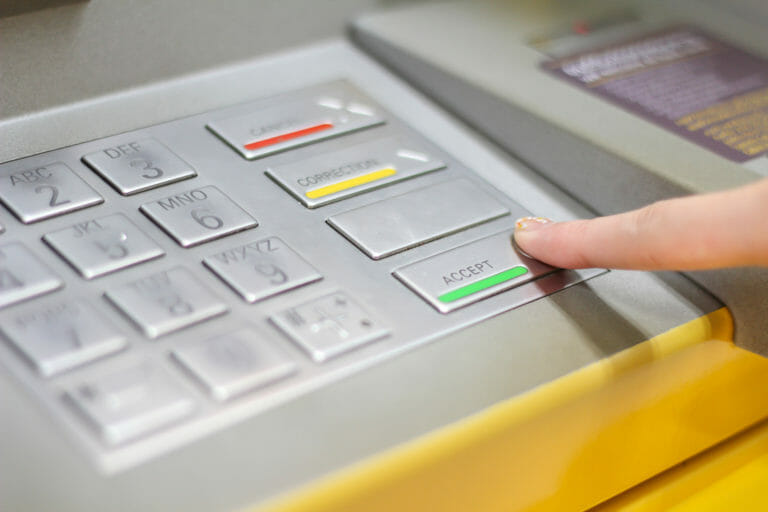
Bitcoin ATM cash machine at Tesla factory

Some media reporters approached Tesla for confirmation, but had not received a response. However, this outlet says that Reeves’ sighting was apparently confirmed by Bitcoin ATM operator LibertyX in a direct message, which read: “We have enabled 3 traditional ATMs inside so that employees can use their debit cards and buy bitcoins ”.

LibertyX claims to have more than 5,000 crypto ATMs in operation in the US as well as a bitcoin buying service in around 20,000 stores.

Recent scandal about a scam using Elon musk’s name.

About $ 2 million has been stolen in the name of Elon Musk. A scam on YouTube has used customizable bitcoin addresses – known as vanity addresses – to steal, usurping the identity of South African businessman Elon Musk.

The scam happens and works, during live broadcasts on YouTube, users are led to believe that Elon Musk is giving away around 5,000 bitcoins. Users must send their bitcoins to the wallet address that has Musk’s name, and then receive double the amount sent. Which is a  total lie.

Scammers use bitcoin vanity addresses that allow the user who creates them to incorporate a custom word into the address itself. For example, with this system, a scammer can use an address that says “1ELonMUsKZzpVr5Xok8abiXhhqGbdrnK5C”. This can lend credibility in the eyes of unsuspecting network users.

Making dogecoin move through twitter

Earlier, a Twitter user asked him: “Where are my bitcoins, Musk?”, A wink that was related to the recent massive attack on accounts on the social network. Then Musk replied, “Sorry, I’m only selling Doge.” He then sent another tweet  once morereferencing Dogecoin.

With his 37 million followers, every time he tweets about DOGE, Musk manages to turn Twitter into the engine that drives the price of cryptocurrency.

Their messages have hundreds of comments and are also used by some to create new memes that go viral and are added to a small storm of tweets. This is how immediately, among the users of the social network, the fear of missing the rise or FOMO arises that ends up boosting the value of the asset.

By: Jenson Nuñez

Cardano signs contract with Runtime Verification and reveals new details on Goguen update in late October

0

Charles Hoskinson, the CEO of IOHK, confirmed the signing of contracts with Runtime Verification Inc and revealed new details about Yella and Goguen, the project that aims to compete with the Ethereum Virtual Machine. The roadmap for Goguen will arrive at the end of this month of October.

In a new Ask Me Anything (AMA) video session, IOHK CEO Charles Hoskinson spoke once again about Cardano’s current progress and provided some details on the next steps of the project.

Hoskinson began the session by emphasizing the importance of marketing and also stated that he is in daily contact with the new head of the area, Maryam Mahjoub. In a first phase, they will focus on comparative marketing with other Blockchain projects and after thar they will focus on campaign marketing.

On the other hand, the biggest revelation during the weekend session is that IOHK signed a contract with Runtime Verification Inc, a company that uses techniques based on runtime verification to improve the security, reliability and correctness of systems. of software. Hoskinson commented:

“So I signed it, it’s a seven-figure contract. We are bringing them back to the fold. We are going to do things about the case and about Yella. We will have a lot of great things. I’ll make a dedicated announcement later on the specific results and what we’re going to get from that. But I thought I’d share the good news with you”.

“Yella is one of my favorite projects. It’s amazing, it’s very exciting and I think it’s going to open up a new dimension of the product and I’ve always believed it. After the big crash of 2017, we had the good and the must-haves and that was in the good and must-have column. Plutus, Marlowe, and these things are in the “must do” column. But you know, things are looking better, “Hoskinson said.

Yella is a virtual machine (also called IELE) that claims that it will make the Ethereum virtual machine (EVM) “look like a toy.” The goal of the virtual machine is that developers gain avaiability to write dApps in one of the most popular programming languages, and then convert them using IELE (Yella) so they can be properly run.

The roadmap for Goguen will arrive at the end of October

One user asked Hoskinson which parts of Goguen will be released this year. Hoskinson did not give a concrete answer but did mention that there will be a number of updates and events such as hard forks. Each update will add new functionality to the chain. Yella also supports Ethereum’s Solidity programming language, which makes porting Ethereum dApps to Cardano extremely easy.

The roadmap for Goguen will arrive at the end of October

One user asked Hoskinson which parts of Goguen will be released this year. Hoskinson did not give a concrete answer but did mention that there will be a number of updates and events such as hard forks. Each update will add new functionality to the chain.

By: Jenson Nuñez.