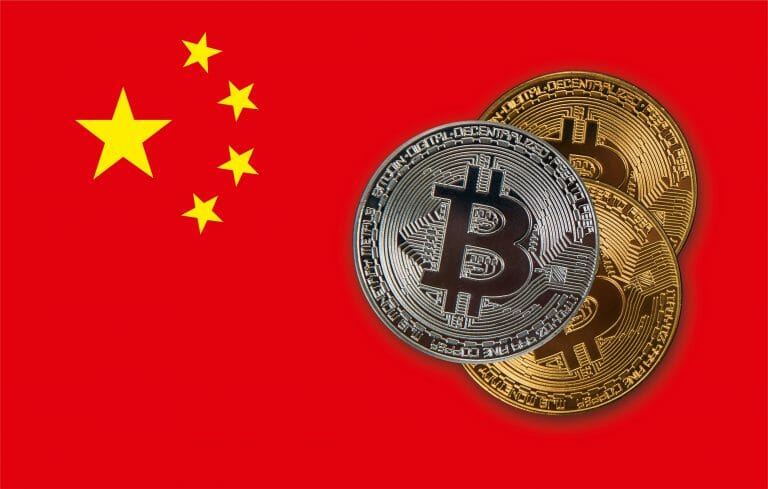
A 16% Drop in Bitcoin’s Mining Difficulty Causes Fear to Spread in China

The new adjustment in Bitcoin’s mining difficulty represents the biggest drop so far in 2021. The miners of the network expect Taproot to activate in the period of difficulty that is just beginning.

There has been a 16% reduction in Bitcoin’s mining difficulty since an adjustment that occurred on May 29th. Meanwhile, the hash rate continues to drop significantly due to the measures that China is taking to combat cryptocurrency mining.

According to data from Coinwarz, the current difficulty is 21.05 T, which represents a significant reduction, compared to the adjustment on May 13th. At the time, that change was one of the biggest in the history of Bitcoin as it made the difficulty in mining the network reach all-time highs.

The current drop exceeds the 13% drop on May 2nd, and then considered the highest in 2021. That happened after the power outages in China, which disabled an imprecise number of local mining devices.

The Reduction of Bitcoin’s Mining Difficulty Is a Good Thing for Miners

Bitcoin miners consider that the reduction in difficulty is good news. The reason for this is that it is now easier for them to complete the task to get their rewards. Of course, it is necessary to consider the hardware that they use and the hash rate that they can generate.

Bitcoin’s design allows it to produce a block every ten minutes and automatically adjust to the new hash rate every 2,016 blocks. Since May 30th, the network’s hash rate has fallen compared to the previous period. Currently, it is 160.58 EH/s, slightly above the rate of 150.48 EH/s that it recorded during the new adjustment in mining difficulty.

Thanks to this period of difficulty, miners have a new opportunity to continue showing themselves in favor of the activation of the Taproot protocol. Currently, 98.10% of the hash rate is in favor, which suggests that the activation could occur before the next difficulty period of the network.

China Imposes Tighter Restrictions on Bitcoin Mining in the Territory

Concerns about China’s government measures against Bitcoin mining have led to fluctuations in the hash rate of the network. A document that the Inner Mongolia region published includes regulations to punish those mining cryptocurrencies in that territory.

The cities of Xinjiang and Sichuan, in northeast and southwest China, may announce similar measures as they are settlements of large cryptocurrency mining farms. Several factors may have caused the loss of hash rate but this is associated with what is happening in the country. It is important to remember that many of the world’s major Bitcoin mining pools are in China.

Many Chinese miners have disconnected their equipment to migrate to other regions of the Asian country. They may be seeking to settle in the Sichuan region, where the rainy season is about to begin. That would provide them with enough hydroelectric power to operate, without stopping, at a lower price.

By Alexander Salazar

Globant Unicorn Bought $ 500,000 in Bitcoins to Shake Up the Argentine Peso

A few days ago, Globant unveiled the $ 500,000 Bitcoin transaction and classified this operation as an “intangible asset” for investment.

Globant is a very important company based in Argentina. The Argentine company sells consulting services in digital organizations and has a relevant presence in more than 18 countries. In 2016, it confirmed its first original public offering and since then it shares the title of a unicorn with other companies such as Mercado Desenvierto, OLX, Desgajar, and Auth0.

Globant appears on the New York Stock Exchange for $ 8.7 billion. As part of the Nasdaq Credit Index, a company is required to submit its financial statements to the US Securities and Exchange Commission (SEC). In other words, the South American company must meet market criteria to keep on the public offering.

In an official document that Globant presented to the SEC in the first quarter of the year, it highlighted the transaction of $ 500,000 of Bitcoin, about 12.80 cryptocurrencies. On the other hand, the Argentine unicorn remarked that the company “exclusively” purchased Bitcoin.

Globant considers Bitcoin an Intangible Asset

Globant described the transaction this way: “Bitcoin is a cryptocurrency that is considered an intangible asset with an indefinite life because Bitcoin has no physical form and there is no cap on its useful life, Bitcoin is not subject to amortization, but is subjected to offense tests”.

If Bitcoin faces a high peak, Globant will not get to recognize profits but will acquire them if they decide to deliver the intangible asset.

The eccentric thing is that the transaction came to the public declaration in the first quarter of the year, at the same time that Mercado Desenvierto purchased 7.8 million dollars in Bitcoin. Both companies are listed on the Stock Exchange and therefore must show balance sheets to the US Securities and Exchange Commission.

In early May, Marcos Galperin’s company brought the stability data of the first quarter of the year and even disclosed a millionaire Bitcoin transaction for 7.8 million dollars.

In the document, Mercado Desenvierto clarified that the Bitcoin purchased will belong to the portfolio of intangible assets with an indefinite life. At the moment, Mercado Desenvierto did not reveal what it will do with obtained currencies.

Other Companies Have Invested in Bitcoin

This year, companies like Tesla and MicroStrategy even invested a billion dollars in the asset as they think that Bitcoin shows many similar features to gold in terms of value.

In the case of MicroStrategy, it holds a total of 91,000 BTC in its portfolio of digital assets, and all were acquired with “excess cash,” according to the CEO of the US company, Michael Saylor.

Other companies that invested in Bitcoin include Nexxon, Japanese online video game firm Seetee, a Norway-based energy company, and Chinese tech Meitu. The Bitcoin holdings of these giants exceed $ 40 million and they can even reach $ 67 million.

By: Jenson Nuñez

After Having Banned them, the Central Bank of Nigeria Allows Transactions with Bitcoin and Other Cryptocurrencies

Nigerian banks had received orders to close cryptocurrency-related accounts. The central bank of the African nation says that there are “illegitimate” uses of crypto assets.

The Central Bank of Nigeria (CBN) banned all transactions with Bitcoin (BTC) and other cryptocurrencies almost four months ago. However, the monetary authority decided to allow them now as a high percentage of Nigerians use digital assets. The governor of the institution, Godwin Emefiele, did not like having to admit that situation.

The institution is researching the use of cryptocurrencies in the country, according to the official. He said that the results that they have found so far indicate a high degree of adoption among the inhabitants. That fact influenced them to lift the ban that they had imposed in February.

“We have done our research and have found that a significant percentage of people are getting involved with cryptocurrencies. Do not get me wrong. Although some uses may be legitimate, I consider that most of them are illegitimate,” the governor told local media.

Cryptocurrencies Will Come to Life Even in Nigeria, Said Emefiele

At first, the governor of the CBN attacked Bitcoin and threatened to sanction banks that allowed cryptocurrency transactions. However, he later stated that crypto assets “will come to life even in Nigeria.”

The central bank’s decision will allow bank accounts to once again process transactions with cryptocurrencies. However, no one knows yet if the new position of the institution would encourage the adoption of Bitcoin as a means of payment or investment.

There Exists Volatility in the Cryptocurrency Market

The governor of the Central Bank of Nigeria also raised the issue of market volatility and how it is possible to manipulate prices. In this regard, he cited what recently happened in the cryptocurrency market because of Tesla CEO Elon Musk. He noted that the entrepreneur has taken different positions on Bitcoin and has shown his bias concerning the Dogecoin project.

Emefiele referred to Musk because the bank had banned cryptocurrencies just when Tesla reported that it had invested USD 1.5 billion in Bitcoin. Following this event, the asset’s price reached an all-time high of USD 64,000 in April.

Nigeria Has One of the Highest Levels of Crypto Adoption

Currently, Nigeria is one of the countries with the highest adoption of Bitcoin and other cryptocurrencies. According to research by the intelligence firm Chainalysis, the African nation ranks eighth in the world regarding the use of digital assets. It follows Ukraine, Russia, Venezuela, China, Kenya, the United States, and South Africa.

Nigeria has a high rate of inflation and its national fiat currency, the naira (NGN), is suffering devaluation. Those two reasons could be leading Nigerians to adopt Bitcoin as an alternative to safeguard value.

The number of people who are adopting and using cryptocurrencies in the world is increasing. Some countries implement increasingly strict regulations on decentralized cryptocurrencies but know that they are already part of the economic system.

By Alexander Salazar

Argentine Lithium Chamber will Create its Stablecoin

The project intends to consolidate the lithium market in Latin America based on this token. The stablecoin would receive backup from lithium reserves.

Leaders of the lithium industry in Argentina and other Latin American countries are about to launch stable coins or stablecoin, which will focus its functions on the international price of this relevant mineral.

The Argentine Chamber of Lithium and the Latin American Chamber of Lithium proposed creating a token called Atómico3, based on the value of lithium. The price of lithium, a press release notes, is currently trading at USD 13,000 per tonne.

According to Pablo Rutigliano, head of the organizations, and promoter of this project, Latin America counts on lithium reserves in the world, but there is a need to establish an economy around this raw material in the region.

Standards of the Lithium Market in Latin America

The standards of the lithium market and the Latin American level is determined from the work in parallel with other organizations such as the mining chambers of Chile, Bolivia, and Peru, according to projections on the energy industry and electric vehicles (electromobility) worldwide.

On the project website, they state that Ethereum will be the native network that will host the Atomic3 stable coin. In that same web portal, potential buyers can register in advance of the token is put into circulation.

Rutigliano indicated that an effort is being made to figure the lithium reserves present in the area and deepen its exploitation once the token gets its correlation with the figured reserves.

The goal is to make a currency of the energy and electromobility ecosystem. They point out that with the stable currency an electric vehicle could be purchased as one of their use cases. The cryptocurrency will start its race with a price tag of $ 108 upon launch.

A token with a Value Anchored to the Price of Lithium

Rutigliano considers that unlike cryptocurrencies such as Bitcoin (BTC) and Ethereum (ETH), a stable cryptocurrency does not have as much volatility and is ideal to accompany the price of an asset such as lithium.

Once the cryptocurrency comes into action, investors will be able to buy the Atomic3 token with their credit card or with a bank transfer in Argentine pesos (ARS) or dollars (USD).

These payments will take part in a reserve fund or trust that the organizations that promote this proposal created to develop the project. The expectations are that, as the world faces a transition towards other types of energy models, lithium will revalue, and the Atomic3 market will become a more solid market.

It is Unclear if the Token will Help to Verify the Traceability of Lithium in its Supply Chain in Latin America

For the Argentine government, lithium is a relevant source of foreign exchange income and a good of national interest. The Argentine Chamber of Lithium is working with the Energy, Mining and Fuels Commission of the Chamber of Senators of Argentina to put on legal form a bill that declares lithium as a strategic currency.

Argentina ranks as one of the four biggest producers of lithium, an element considered by the press as “white gold.” Other countries such as Bolivia and Chile are also important producers in the region.

By: Jenson Nuñez

John McAfee’s Wife Tweeted that Elon Musk has Moved the Crypto Markets More than his Husband

McAfee’s wife, Janice, tweeted an argument about Elon Musk’s influence in the crypto market, to clarify the fact that her husband, John, should not be in jail.

The creator of the antivirus McAfee and crypto investor and evangelizer John McAfee is IN prison, but his wife, Janice McAfee, keeps going through public opinion for his husband to get free from the Spanish laws in which he has remained since October 2020.

Janice posted a tweet saying that Tesla CEO Elon Musk has played with the crypto markets much more with his influence in social media than her husband did, so there is no reason for John to be in prison.

John McAfee was arrested in early October last year in Spain and remains in jail. The US government charged McAfee with money laundering, failure in payments of taxes, failing to report the profits he made from promoting cryptocurrencies, among others. That is why he is facing an international arrest warrant and extradition request.

In another tweet, the woman clarifies, right before the criticism made by a user, that it is not that she wants Musk to go to prison, but that she wants her husband to be free from all the charges he is facing.

She tweeted: “Obviously I’m not saying @elonmusk should be in prison. That’s ridiculous. I’m just saying I agree with the indictment to @officialmcafee. He’s been accused of engaging in similar activity, so since Elon is not in prison for his actions, neither should John.”

The McAfee Indictment

The CryptoPotato outlet reviewed the accusation against McAfee. According to the document, McAfee, along with his advisor to the cryptocurrency team, was indicted in Manhattan Federal Court for crimes of conspiracy fraud, and money laundering.

In the document, there is information confirming that he used a popular social media platform (read, Twitter) and enthusiasm among investors in the emerging cryptocurrency market to make millions through false promises and deception. The defendants allegedly used McAfee’s Twitter account to post messages to hundreds of thousands of his followers promoting some cryptocurrencies through misleading statements to hide their true motivations. McAfee, Watson, and other members of McAfee’s cryptocurrency team reportedly raised more than $ 13 million from investors they victimized with their fraudulent schemes.

Elon Musk Relationship with Cryptocurrencies

The comparison between Mcafee and Musk is complete nonsense. Media outlets argue that, while it is true that Elon Musk’s tweets about Bitcoin and Dogecoin generate a clear impact and reaction on the market, there is 0 comparison with John’s activities.

According to the indictment, McAfee used the networks to perpetrate a pump-and-bump strategy (inflating and selling high) that generated almost two million dollars. Furthermore, according to the lawsuit, he allegedly used the same social media platform to promote the sale of digital tokens on behalf of the issuers of Initial Cryptocurrency Offerings, ICOs, without disclosing to investors the compensation they received for all these securities.

By: Jenson Nuñez

The Development of the Digital Currency of the Central Bank of Brazil Advances Rapidly

The financial institution hopes that the digital real will facilitate the country’s international economic procedures. The technological model that will govern the CBDC project is not yet clearly defined.

In recent days, the Central Bank of Brazil published the guidelines on the development of its digital currency (CBDC). Right now, the world’s banking institutions are working hard to advance alternatives to cash and electronic banking.

The institution is taking a step forward by promoting discussions to accelerate the development of a digital version of the Brazilian real (BRL). They are concerned about innovating payment services due to the rapid digital transformation of the global economy.

The Brazilian monetary authority says that its CBDC project must respond technologically to the dynamics of the country’s current economy.

The central bank’s vision is that the digital real will also improve the country’s current retail payment system and fosters new business models. Likewise, it seeks that the CBDC project helps Brazil participate in regional and global economic scenarios.

Besides, a working group established guidelines to advance the plans to develop the digital real. They include focusing on a system based on smart contracts, the Internet of Things (IoT), and programmable money that the central bank will issue.

The central bank of Brazil is also concerned about protecting the privacy and anonymity of users. At the same time, it highlights that it must combat money laundering and terrorist financing.

The institution says that it will hold discussions with the private sector and civil society before embarking on a schedule for a CBDC project. They envision diagnosing the use cases that can benefit from CBDC and the most appropriate technologies for their implementation.

The Interest in Central Bank Digital Currencies Is Growing

Few Latin American countries are working on issuing their central bank digital currencies. Mexico accompanies Brazil with its interest in advancing with its own CBDC project.

However, around 80% of the world’s banking institutions are exploring the use of a CBDC. Meanwhile, 40% of them are already conducting proofs of concept (PoC).

Banks seem to be realizing the growing global adoption of decentralized cryptocurrencies like Bitcoin and Ether. The head of the National Bank of Australia, Lisa Wade, indicated how banking institutions are interpreting this level of acceptance.

Wade said that more than 100 million people are using cryptocurrencies worldwide. For that reason, she urged countries to create digital versions of their fiat currencies. That way, she explained that banks will not have to use other options that she considers more volatile.

Earlier this year, the Bank for International Settlements (BIS) launched a work program. This plan includes conducting proofs of concept and research on stablecoins and CBDC.

These proofs of concept would allow the BIS to provide central banks with more efficient solutions to their services. This would occur within a cooperative framework between entities, institutions, academics, and providers of financial services from the private sector.

The BIS initiative emerges from its concern to enter the new monetary and financial dynamics related to cryptocurrencies. In this way, it is evident that these types of assets are increasingly gaining prominence in the world economic system.

By Alexander Salazar