A Young Argentinian is Selling NFT to Finance his Cancer Treatment

Luis Arregui Henk has already managed to sell his first work for a cost of 1 ETH. In total, 50 works will appear in the auction through the NFT OpenSea platform for sale.

Luis Arregui Henk, a young Argentine, has taken his fight against cancer in a particular way: creating “crypto-art.” Currently, a public auction with 50 of his works has been opened on the OpenSea platform, as a measure to raise funds to cover an experimental treatment against leukemia that currently costs approximately USD 500,000.

The story appeared in the Argentine newspaper Perfil, in a direct interview with Luis Henk, or Lajos, as his friends know him. In the dialogue, the young man 2019 explained that he already received a bone marrow donation, which was successful, but in 2020 he had a new relapse that led him to need a new transplant, which he has not achieved.

As an alternative to the difficulty of finding a donor, there is an experimental treatment, the CART-T Cell. As Lajos himself mentions, “they say it is the future of cancer treatment,” but because it costs more than half a million dollars, it appears to be inaccessible for the young Argentine.

Lajos’ Alternatives to Receive a New Treatment

In this scenario, Lajos received instructions from specialists to make a move soon, although at present he says he is stable, with very low leukemia traces, doctors insist on doing extra efforts to help him fight with his condition.

Among the options to take are: doing nothing and hope that the disease does not re-appear, find a bone marrow donor, or opt for the experimental treatment.

The support that Lajos receives through this collection will go directly to the payment of the experimental treatment; this as long as the young person cannot find a bone marrow donor, which would be the first option to take.

If a donor is found before the fundraiser ends, Lajos says that “the resources will go to help someone else. It would be like helping two people at the same time. By this, he wants to say that he would donate the funds to someone else who needs it.

Along with the sale of NFT, Lajos has an account on GofundMe and receives donations from MercadoPago directly from Argentina. All information appears through his personal Instagram.

NFT and the world of «Crypto-art»

Lajos, almost by chance and through YouTube videos (according to the young man) entered and explored the world of NFTs. While receiving treatment at the hospital, Lajos ventured into the world of 3D modelling to channel his emotional charge and thus be able to “generate something to give to the people who are helping me,” as the young man declares for the Argentine media outlet.

In this way, Lajos went to create about 50 works to be sold as an NFT. The promotion came into effect through his personal Instagram, whose publication achieved more than 100,000 views.

By: Jenson Nuñez
“Official Delegation” of Bitcoin Met with Authorities of El Salvador

Social networks exploded in rejection of the alleged delegation. Several actors in the bitcoin ecosystem have been visiting El Salvador lately because of the boom that the new law about bitcoin being a legal tender created.

A faction of businessmen who call themselves “ambassadors” of bitcoin, held a meeting with several members of the Government of El Salvador, led by the ambassador of that country to the United States, Milena Mayorga.

Among the investors was Brock Pierce, which is linked to various cryptocurrency-based projects such as Tether (USDT), EOS, and the Bitcoin Foundation.

Pierce said on his Twitter account: “It is a great honor to lead this official delegation of Bitcoin ambassadors in El Salvador to educate the government on how Bitcoin, blockchain, and technology can bring a better future for everyone in their country.”

After the law that recognizes bitcoin as legal tender in El Salvador came into effect, many citizens and companies that belong to the Bitcoin ecosystem have shown their interest in investing and have even paid a visit to the Central American nation in recent days.

One of them is the famous bitcoin influencer, Peter McCormack who even sustained a meeting with the president of El Salvador, Nayib Bukele, and the CEO of the Paxful exchange, Ray Youssef.

The Central American Nation is now Attracting Suspicious Entrepreneurs

However, the opening of the Central American country towards bitcoin could also attract some cryptocurrency entrepreneurs that carry an infamous reputation in the crypto-world.

Such is the case of the Bitcoin Foundation, with a dark creation full of controversy. Among these controversies, there is the former vice president of the organization, Mark Shrem, who was arrested in 2014 for alleged conspiracy in the laundering of a million dollars in bitcoins.

In 2015, a member of the board of directors announced that the foundation was also insolvent and there is no news about a change made for the foundation since the allegation happened.

Pierce became part of the Block. one team, a company with which he organized the ICO of the cryptocurrency EOS, where he served as director of the strategy and along with other executives faced a lawsuit for alleged fraud. The plaintiffs claimed that the ICO promoters inflated the price of the cryptocurrency with artificial methods.

There is a Community Rejection of Bitcoin “Ambassadors”

A bunch of protests took place through Twitter, the claim was that many defenders of the leading cryptocurrency chose to criticize Pierce and the rest of the investors who assumed themselves as “ambassadors” for Bitcoin.

One of these ambassadors was the CEO of Blockstream, Samson Mow who made a call to world leaders arguing that there is no official delegation for Bitcoin. Anyone who contacts users to receive such a delegation is a scammer.

Former Bitrefill CEO John Carvalho also expressed that Pierce was in El Salvador as an “insider” who desires to “inject shitcoins” into the big business that now runs in that country.

By. Jenson Nuñez

According to Michael Saylor, El Salvador Would represent the Digital Economy Model of the 21st Century

For Saylor, it is normal for the dollar and bitcoin to coexist in an economy. The whole world is now realizing that Bitcoin is the most powerful and innovative technology out there.

For the CEO and president of MicroStrategy, Michael Saylor, the adoption of bitcoin as legal tender in El Salvador in parallel with the US dollar, might be the clearest demonstration of what the digital economy will be like in the years to come.

The executive posted on his Twitter account an interview led by Coindesk on June 14, in which he said that those who resist using bitcoin will realize that the only way they can implement a digital currency for everyone is with a digital asset and an open monetary protocol. And that digital currency will be Bitcoin. He strongly believes that Bitcoin is, in fact, the most powerful dominant digital property worldwide.

The executive also spoke about the Law that will convert Bitcoin into the legal tender in El Salvador. He replied that nations currently need a reserve asset like bitcoin. El Salvador also needs a way to move billions of dollars across borders without paying large remittance fees.

The Dollar Still Remain the World’s Reserve Currency

For Saylor, Bitcoin will not take the dollar’s place in the world economy. Rather, it will make its access to millions of people around the world easier in the form of stablecoins. The US dollar will keep on being the reserve currency of the world, said the CEO of MicroStrategy.

The CoinDesk moderator asked him if he was talking about the digital dollar as in a central bank, a digital currency, or some other form. Saylor extended his opinion on the comment by saying that he means the dollar will spread to billions of people on crypto rails, and for it to reach everyone it will have to achieve a connection to an open digital monitoring network and that network is Bitcoin.

People usually get to think that both are in constant conflict, but they are not. What users will see is the US dollar and bitcoin, both spreading and reaching billions of people because the world needs both currencies to be active in the market.

Regarding the criticism that has been generated around bitcoin, the CEO of MicroStrategy clarified that these stances are all indicators that the whole world begins to realize that Bitcoin is the most powerful and committed technology of the decade.

Michael Saylor Would Finance a Project for Bitcoin

In addition to the large investments that Saylor has made in bitcoin through his company, the CEO of MicroStrategy has also offered his money in financing the development of this monetary protocol. In February of this year, Saylor, in conjunction with Twitter CEO Jack Dorsey, announced their funding for the Massachusetts Institute of Technology (MIT) project to bolster Bitcoin.

Through the Digital Currency Initiative, MIT would further strengthen security in the Bitcoin network. The study center explained that the initiative will complete its development in at least four areas in the next 4 years. This development goes to face new threats.

By: Jenson Nuñez

Ledger User Received a Fake Device in another Scam Attempt

The user received an alleged letter from Ledger with misspellings. One expert says that inside the device the welds were made by a novice.

A user of Ledger, a company that makes cold bitcoin (BTC) wallets, was the victim of aN amateur scam attempt, in which he received what appears to be a package containing the Ledger Nano X wallet in the mail, albeit completely false.

The alert was given by Reddit user Jjrand who received what appeared to be a cold wallet with a letter and a series of alleged instructions in the mail, although he said he had not asked the company for a new device.

The letter, spelled with some obvious misspellings, was allegedly signed by Ledger CEO Pascal Gauthier. Among other relevant things, it explained in detail that, for security reasons it should be switched to the new device to keep the user safe, referring to the data theft in 2020.

In the fake document the victim can read:  “For this reason, we have changed the complete archetype of our device. We now guarantee that this kind of breach will never happen again .“

Inside the package, the victim also found a supposed manual for setting up the fake device, in which they ask people to enter their recovery phrase to connect their bitcoin wallet to the suspicious new hardware.

This is where the criminals would act because the recovery phrase would be sent to the attackers, who would use it to import the victim’s wallet into their own devices to steal the current funds in the said wallet.

The scammers would be taking advantage of the data that got hacked and stolen from Ledger’s marketing department, in July 2020, when a million email addresses and some personal documents of its users were leaked.

These advantages include deceiving people through false claims. For the type of cases reported by Jjrand, Ledger explains on his Twitter account that they would and will never ask his users for the 24-word recovery phrase or PIN.

An Expert’s Vision

The specialized medium BleepingComputer recently exposed the analysis made by the security researcher and expert on offensive USB implants/cables, Mike Grover.

Through the images released by Jjrand, the specialist detected that the “device” is a flash drive connected to a Ledger device to serve as a bridge for some kind of malware delivery.

An Unusual Theft of Bitcoin from Ledger Wallet

Attacks on Ledger users have turned into a very usual incident, although most of them never achieve their goals. For example, last February, CriptoNoticias reported an unusual theft of bitcoins.

At that moment, the victim was a Spanish investor who, when he desired to check out the balance of his portfolio, detected two unauthorized transactions and his fund balance was almost 0. There were no signs of the modus operandi with which the attacker managed to steal the BTC.

By: Jenson Nuñez

Republican Committee of the US Congress is About to Accept Donations in Bitcoin

The organization will receive the funds in dollars, so it will not directly handle crypto assets. In the last three months, the committee has already reported million-dollar contributions that were record-breaking.

The Republican National Committee of the US Congress (NRCC for its acronym in English) announced this Thursday, June 17, 2021, that it will receive donations in cryptocurrencies. Through an alliance with BitPay, the entity will accept donated funds in dollars.

According to the committee’s official statement, the NRCC thus becomes the first national committee of a party to receive campaign donations in cryptocurrencies.

According to the information that Axios received from committee members, the fact that the money enters their coffers as dollars and not as bitcoin (BTC) or another cryptocurrency is beneficial. In this way, the party can receive individual donations of up to USD 10,000 per year and does not require a limitation of the USD 100 authorized by a regulation that became effective back in 2014.

The goal is to Stop a possible socialist Agenda

Tom Emmer, the president of the NRCC, said the committee is “proud of its achievements and goals by accepting these kinds of contributions regarding the motivations behind this new decision.

He stated that the Republican Committee currently focuses on following all possible paths to fulfill the mission of stopping the socialist agenda of Nancy Pelosi (NdR: Speaker of the House of Representatives since 2019) and take back the majority in the House. This innovative technology will help us provide Republicans with the resources they are needing.

The adoption of cryptocurrencies as a way to make donations is happening in a favorable context for the NRCC. According to a publication on its official site on June 15, the committee broke its fundraising record for the third consecutive month in May.

The amount raised surpassed $ 14 million, allowing the NRCC to end the regular month with cash on hand that surpasses $ 42 million.

House of Representatives Increasingly interested in Bitcoin

In recent months, bitcoin and cryptocurrencies have been named more than once in the purview of the United States of America’s House of Representatives. In April, also, approval of a law on financial services that seeks to promote initiatives related to innovation in the field of digital assets came to terms recently.

At the end of May, the director of the Office of the Comptroller of the Currency, Michael Hsu, brought to the members of the House Financial Services Committee his stanceabout the current legislation for cryptocurrencies. At that moment, the official explained the initiative of several government agencies to join efforts to create new regulation measures for this kind of asset.

The proposal comes from Michael Hsu, recently appointed as director of the OCC. In a virtual conference of the Committee on Financial Services of the House of Representatives of the United States of America, Hsu talked about his position on the “fragmented” regulations that have received approval for crypto assets.

By: Jenson Nuñez

Professional Basketball League in Canada is About to Pay its Players Salaries Based on Bitcoin

The Elite Canadian Basketball League will be the first professional sports league in North America to offer this payment alternative to its athletes.

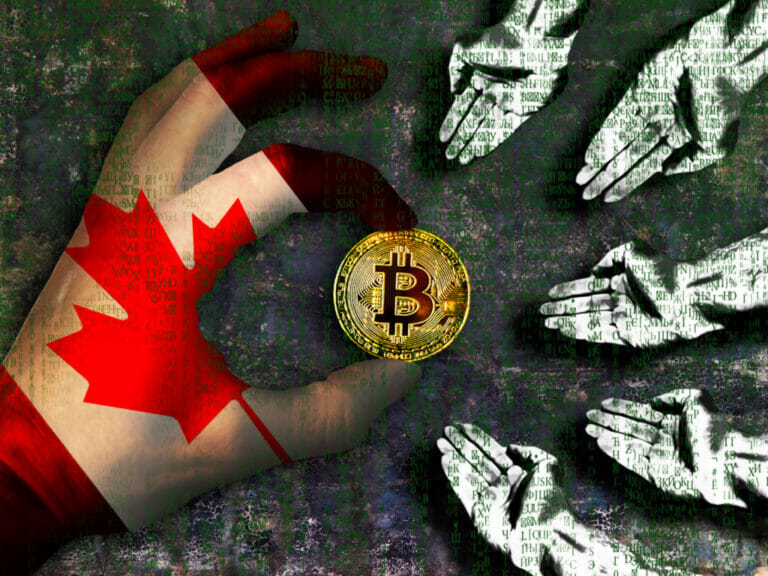
Canada’s professional men’s basketball league, Elite Canadian Basketball (CEBL), is taking a step towards digital currency adoption after announcing that it will start offering the chance to pay Bitcoin salary to its players.

The CEBL this week announced a partnership with Bitbuy, a Toronto-based cryptocurrency platform, that will allow the league to pay athletes a part of their salaries in Bitcoin. Basketball players will be able to request the conversion of part of their remuneration from Canadian dollars to cryptocurrency.

Bitbuy will manage the conversion while the league will seek to assure that the funds achieve their delivery directly to the players’ crypto wallets. The new measure will come to public next week, when the league starts its third season on June 24. Additionally, Bitbuy will also join CEBL as an official sponsor.

The partnership with the crypto firm represents the first of its kind for any professional sports league in North America and makes CEBL the first to offer its players a payment option in crypto.

Pioneer League and the Adoption of Innovative Crypto Salaries

As part of the initiative, athletes from the seven basketball teams that make up the league will be able to start charging in Bitcoin starting next week.

More than 70 players on CEBL’s active roster of teams,  also including champion teams Edmonton Stingers and Saskatchewan Rattlers, may be eligible for cryptocurrency payouts. The other teams that make up the league are Fraser Valley Bandits, Guelph Nighthawks, Hamilton Honey Badgers, Ottawa Blackjacks, and the Niagara River Lions.

Sportsman Kimbal Mackenzie of the Nighthawks explained that he would be one of the first players to accept the CEBL offer. He said he was excited that his salary immediately became a long-term investment. Mackenzie, 24, who plays at point guard, recently re-signed with the team for the 2021 season.

The player strongly believes that cryptocurrency is the future. The possibility that part of his salary goes directly to an investment that he thinks will be greatly appreciated over the next 10 to 30 years is just mind blowing.  The player. Mackenzie also told Archysport that there is no concern about the volatility of the asset.

Mackenzie added that in case Bitcoin falls, “so be it”. It was a decision he personally made. On the other hand, if it increases, maybe he will retire in a matter of two years.

Bitcoin is Now Gaining Ground in the Sports Industry

For his part, CEBL CEO Mike Morreale added that the partnership with Bitbuy speaks of the league’s “commitment” to its players, as well as its “progressive approach.”

Bitbuy’s vice president of marketing, Charlie Aikenhead, added in the same vein that as a company they are “proud to support local Canadian sports. We believe this means a significant change in the way athletes are thinking about compensation, and we are excited to help CEBL players protect their long-term wealth by charging in Bitcoin. “

While Elite Canadian Basketball is the first professional sports league in North America to decide to include Bitcoin in its payment options, some other players and sports teams have already made similar deals.

By: Jenson Nuñez