Euro Digital Moves Towards DeFi with Tests from the Central Bank of France

The trial included automated functions to generate markets and also provide liquidity. The interoperability of the platforms and the use of smart contracts went through a testing phase.

The Bank of France (BdF) and the Monetary Authority of Singapore (MAS) recently revealed that they have already completed new tests to set up the creation and implementation of the digital euro. In these trials, the novelty has been the decentralized finance tools, such as Automated Market Makers (AMM).

AMMs are automatic systems that allow users to compare the price between two assets. In the markets, the fluidity in exchanges is of vital purposes. This fluidity goes through the constant supply to liquidity pools.

The central bank of digital currencies (CBDCs) are now heading towards decentralized finance or DeFi, and it is marking the beginning of a new era in the crypto world. In this case, automated mechanisms will uninterruptedly permit such operations, bringing less friction, unlike what happens in the traditional financial system.

According to an official statement the MAS recently revealed, the tests consisted of simulating international transactions using various CBDCs on a private Quorum blockchain (an open-source blockchain for companies developed by JP Morgan and assigned to ConsenSys) shared between the participating countries.

Specifically, it went through a test with CBDC payments for the Singapore dollar and the euro. The evaluations also received support from Onix, the JP Morgan bank company dedicated to blockchain solutions and digital currencies.

This test is the first operation that used automated methods, like AMMs and smart contracts for market operations and liquidity management. This feature is what the DeFi allows: to facilitate financial operations through services created on the blockchain without requiring intermediaries.

In simpler words, unlike the traditional system, it will no longer depend on third parties to take part in the trade of assets and in transactions between countries.

According to the MAS, this shared network, which receives support from several CBDC, will facilitate global payments in real-time and without interruption. According to its publication, these transactions currently depend on arrangements between banks without much transparency about the rates of foreign exchange houses; Likewise, they will have to set limited hours of operation and delays in settlements due to their discordant timezones.

DeFi Came from Regulatory Wild West to now take the lead in The Central Bank Due to its Approval

This test by the Bank of France and Singapore aims at the institutionalization of DeFi. This test means that the States are now following with more attention the technologic sector and are incorporating it in their projects. Decentralized finance service developers, such as Aave, also adhered institutional clients to their projects.

The MAS publication highlights that four main achievements came from the results of this experiment. The first was to demonstrate that different cloud infrastructures allow interoperability between them. The second goal was the verification of a network in several CBDCs. This verification allowed visibility of cross-border payments without the central banks of each country losing power over their CBDCs.

The main highlight is that an automated system of liquidity pools and marketing services has entered successfully with the currency pairs included. So, “the use of smart contracts made it possible to automatically manage the EUR / SGD price in real-time based on market supply and demand,” they highlight.

By: Jenson Nuñez

Victim of a Scam Went on a Tinder Date and Got Drugged to Steal his Bitcoin Savings

The victim was sedated and persuaded to grant access to his accounts. The scammers were able to steal money from an exchange, but not from the personal wallet.

A date on Tinder might be dangerous for those who carry out digital currencies. The number of crimes through Tinder has increased in a very worrying way. A man got drugged by a woman who took advantage of him to give her access to his cell phone, accounts, and passwords, and stole a portion of his bitcoin holdings.

The methodology of the criminal, who in her Tinder profile showed herself as a “cryptocurrency trader”, was known as the $ 5 wrench attack. This tactic goes about obtaining information from a person, and discreetly and persuasively, or through coercion, to achieve that this user provides complete access to their funds to steal them.

The victim was a Casa Hodl user. Casa Hodl is a company that offers security solutions for holders of bitcoin (BTC) and who related the events in a post on his blog. One of the tools that Casa provides is the multi-signature protocol, which needs the entry of two or more keys to confirm a trade. This move was precisely the key to avoiding more damage to its assets in crypto assets.

The Step-by-Step Scam

The first meeting of the victim and the criminal took place in a cafe, where the woman let the victim know that she had one bitcoin that she received from her parents. From there, the gathering moved to a walk in the open air and then headed to the man’s house to continue the meeting.

Between talks and music, the woman took advantage of a trip to her date’s bathroom to put scopolamine in his beverage, which is a drug also known in Latin America as “burundanga.”  This drug causes drowsiness, confusion, and disorientation, according to medical sources.

From this state of cognitive weakness, it was easy for the woman to convince her victim to grant her access to his accounts. The man argues that the last action he remembers he did, was kissing his drinking partner. When the victim woke up the next day, he noticed that he had all his belongings and no loss of cash. The victim only noticed his cell phone had disappeared.

The woman managed to steal the funds from one of the man’s accounts on an exchange. However, most of the victim’s funds were saved because he previously set up multi-signature authentication on his wallet.

Upon awakening from his induced lethargy, the injured individual (whose country of origin is unknown) contacted Casa to set a blockage of his accounts, since his mobile phone also disappeared. In this way, thieves received a warning from making other attempts to access the affected account and make extra savings.

Measures to Prevent Bitcoin Theft, And Scams

Crimes with cryptocurrencies are becoming more and more common activities nowadays, the same as with any fiat currency in the world.  Users should always research, doubt the information, and take care of private keys. These steps would help users avoid going through this scam.

It is vital not to leave the funds in only one trading platform. These platforms are always the target of hackers or even their security flaws.

By: Jenson Nuñez

Bank of Ghana Is About to Start Testing Program for CBDC in September 2021

The deputy governor of the entity stated that the CBDC was fiduciary money. Soon, the digital cedi could be useful in mobile financial services applications.

Ghana has become the latest African nation to give further steps to the viability of a central bank digital currency (CBDC). The Central Bank of Ghana (BoG) will start in September this year a pilot program for the digital cedi, the country’s official currency, according to the Ghana Web outlet.

This was revealed by the deputy governor of the central entity, Maxwell Opoku-Afari, during a meeting in which the understanding of monetary policy in a post-pandemic was a highlight topic.

Ghana’s CBDC Would Run in Parallel with  Fiat Currency

Opoku-Afari highlighted that the digital currency project is part of the central bank’s recognition of the need for digital payments and the digitization of financial services. Regarding this topic, the CBDC program would help to transform the African nation.

Opoku-Afari also noted that a digital currency could encourage financial inclusion, the efficiency, and stability of the payment system, as well as promote competitiveness in the financial sector.

According to the CryptoBriefing news portal, today many Ghanaians turn to non-bank mobile money services to store their wealth due to the ineffectiveness of the financial system. However, some providers of such services issue “electronic money”, which does not receive a supportive stance by cash.

Faced with this situation, Opoku-Afari highlighted that the digital cedi would be seen as a fiat currency that could be used by financial services and fintechs to add value to digital money. “The Central Bank’s digital currency is FIAT money, it is cash by itself, so that the financial institution, such as banks and Fintech companies, will be able to create added value in digital money.”

African Nations Are exploring the vast world of Digital Currencies

The Central Bank of Ghana previously showed interest in testing the viability of a CBDC back in 2019. At the time, BoG Governor Ernest Addison revealed that CBDC development would happen in a sandbox, with the possibility of issuing a Ghanaian e-cedi (national currency) shortly. Later this year, he assured that the bank was in the advanced stages of introducing a digital currency.”

He said that with this kind of thing, users would have to go through phases and the first phase was really into the design of the electronic money and the team that has gone quite far in the design phase, is looking at the implementation phase,” Addison added during a conference last month.

Although cryptocurrencies are not legal tender in Ghana, digital currency efforts show that the nation’s central bank is recognizing the need to set the financial system in digital currency. In May this year, the national regulators said that cryptocurrencies are not receiving regulations from the Commission.

Although the pilot will start its activities in September 2021, a definitive schedule for the possible launch of a digital cedi remains unclear. The entity’s deputy governor said last week that the bank’s pilot’s success rate would pave the way for the next stages.

By: Jenson Nuñez

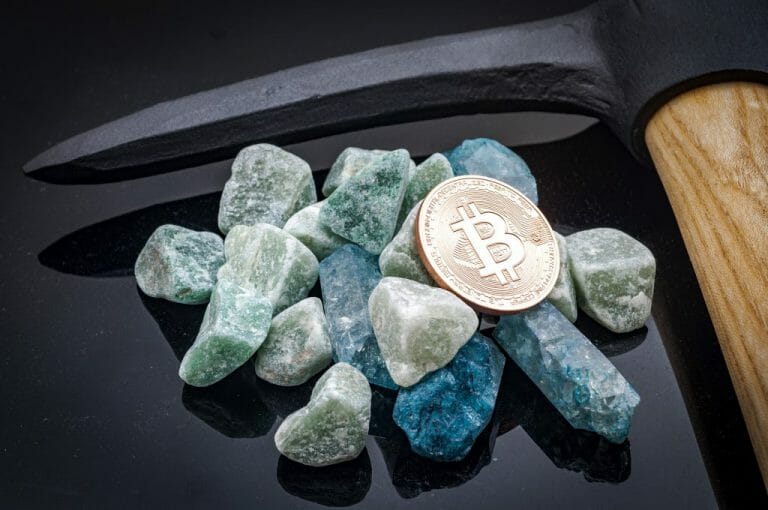
The Bitcoin Mining banning Wave has Already Covered 8 Provinces in China

The drop in the hash rate is equal to just over 2%due to the new restrictive measures. State Grid, the state energy company, calls for expanding the ban to the rest of the country.

The provinces of Henan, Gansu, and Anhui have opted for banning the mining of bitcoin and other cryptocurrencies in their area. This decision is to reduce electricity consumption. In this way, they join the other five territories in this nation that had previously prohibited this activity. Other provinces would do the same in the short term.

The news came from a local media outlet in Anhui, a region in eastern China with 60.3 million inhabitants. Regarding this territory, the Hefei Online portal details that the electricity demand in the province could surpass supply in 2022, so this is why measures of this type would prevent an energy crisis.

Henan and Gansu are now on the list of the provinces that banned Bitcoin mining. In addition, other jurisdictions of the remaining 14 in the country could follow the same steps.

According to data provided by the University of Cambridge, the current Bitcoin Electric Consumption Index, as of April 2020, Gansu had 2% of the processing power of all of China. Meanwhile, Henan gathered a figure marked at 0.08% of the hash rate, and Anhui had 0.04%. This data shows that, despite being widely populated areas, their contribution to the country’s total mining power barely surpasses 2%.

China Gradually Expels Bitcoin Miners

The provinces that have already banned mining are Inner Mongolia, Xinjiang, Qinghai, Yunnan, and Sichuan (although only in its largest city, Ya’an). A country that once showed excellence for this business thanks to its hydroelectric dams and the capacity of its energy distribution network, today has become a place from which miners migrate little by little.

Cryptocurrency mining revolves around solving mathematical problems to authenticate transactions on the blockchain. This continuous activity generates new cryptocurrencies. For this event to happen, specific equipment, processors, and graphics cards demand considerable energy consumption.

It is precisely for this reason that many states set limits on this activity in their territory, especially in those where this type of energy is scarce. Others, meanwhile, argue an alleged environmental impact of mining to limit it, even though some analysts state that it is not a harmful activity.

State Grid, The energy Provider that Calls for Ban Mining

One of the first causes of the ban on bitcoin mining in China is State Grid, the state-owned electric power distribution company. The reason is the shortage of electricity in various provinces of the country, such as Anhui.

In this way, according to the journalist Wu Blockchain, State Grid would have asked the national government to set a limit to the activity throughout the country.

By: Jenson Nuñez

Cryptocurrency Exchanges Apply This Strategy to Beat Binance

The government of the United States may be investigating crypto exchange Binance. There will be less competition for various exchanges due to the regulatory pressure on Binance.

Cryptocurrency exchange Binance has the highest trading volume on the market. However, its competitors are complying with regulations as a strategy to beat it.

That has caught the interest of its closest competitors, which include the brothers Winklevoss’ Gemini platform.

According to Bloomberg, Gemini co-founder Cameron Winklevoss recently highlighted the importance of complying with the demands of regulators. Thus, he noted that cryptocurrency exchanges have to play the long game.

The authorities of the current US government undertook new investigations of the business at Binance. The agencies participating are the Department of Justice, the Internal Revenue Service, and the Commodity Futures Trading Commission.

Cameron Winklevoss recommends that exchanges build robust systems to detect money laundering. Additionally, they suggest hiring government officials to advise them on regulations and enforcement.

There is a lot of regulatory pressure on Binance, and other exchanges struggle to comply with the regulations. However, Binance still ranks first when it comes to cryptocurrency trading.

Exchanges Could Be on Good Terms with US Regulators

American cryptocurrency exchanges could be on good terms with regulators very simply, according to Bloomberg. Those platforms should not offer regulated products like cryptocurrency-based derivatives contracts.

They should also avoid offering currencies that are a way to sell an investment in a business while circumventing regulations. Regulators specifically refer to such currencies as securities.

Compliance with the rules would allow institutional investors to use trading platforms and their custody services.

Due to all these developments, the competitive environment for cryptocurrency exchanges could change rapidly. Greater regulation would help market participants in the United States to take on business from offshore operators faster. That would happen specifically with decentralized finance (DeFI).

This technology has allowed developers to establish cryptocurrency exchanges that operate on computer code. That has helped users to exchange assets without the intervention of an intermediary.

Exchanges like Gemini, Coinbase, Kraken and Hotbit are waiting for Washington to set the rules. Gemini co-founder Cameron Winklevoss suggests discarding the US-based model and looking to expand abroad. In this regard, he noted that the American landscape is moving too slowly, so there is no time to waste.

Binance Faces Regulatory Challenges in Several Countries

Singapore, Japan, the Cayman Islands and Thailand are four examples of the several countries where Binance has faced regulatory challenges. In early June, Singaporean authorities stated they would evaluate the permits of the firm to operate.

The UK Financial Conduct Authority (FCA) also banned Binance Markets Limited (BLM) from trading crypto derivatives. The exchange is not authorized to conduct such activity on that territory but said it would commit to comply with all the regulations.

Earlier, Japan’s Financial Services Agency warned that Binance is not registered to operate in the country. Besides, the Malaysian government issued a notification about unauthorized activities that the exchange does in its territory.

This situation seems to be a good opportunity for other cryptocurrency exchanges to climb the ranking ladder. They are complying with regulations to avoid the problems Binance has been facing to increase their transaction volumes.

By Alexander Salazar

There Is Confusion on Twitter Due to YFI Creator Making Fun of the Polygon Network

Mudit Gupta, the creator of the Göerli ETH faucet, said that Cronje’s proposal was unworkable. Cronje’s announcement caused many Twitter users to express their discontent while others joked they would become millionaires.

In recent days, Yearn Finance (YFI) developer Andre Cronje posted a controversial message on Twitter. He announced a new update to decentralized exchange multichain.xyz, which turned out to be a joke against the Ethereum-based network Polygon.

Cronje claimed that multichain.xyz had become compatible with Göerli, an Ethereum testnet. Besides, he said that this network would be a second-layer solution, aiming to improve scalability or off-chain growth capacity.

The creator of YFI made his followers believe that the holders of the Göerli ETH token could make some profit through faucets. They could think that would be so because Göerli is a network available for free.

Due to rumors that emerged on social networks shortly after that, Cronje had to clear the situation. He explained that it was just a mockery of side chains (L1) pretending to be second layers (L2).

Cronje agrees with StarkWare CEO Uri Kolodny that Polygon presents itself as a second layer of Ethereum. Since it must protect its accounting, it is actually in a layer-1 status, said Cronje. He has the same opinion about self-protecting testnets, as is the case with Göerli.

As it is a sidechain, it works with its security system, unlike the rollups on Ethereum or the Lightning Network on Bitcoin (BTC). In those cases, security depends on mining since a rollup relies on the grouping into one of the various transactions on the Ethereum network.

Reactions on Social Networks About Cronje’s Mockery of Polygon

Cronje’s comments prompted many Twitter users to react. Some of them showed their annoyance, while others joked that they would now become millionaires.

Twitter user Andrew Redden expressed his dismay over what he had just read. Another one who reacted was Mudit Gupta, lead developer of SushiSwap and creator of a Göerli ETH (GoETH) faucet.

Gupta said he was against turning Göerli into something other than a testnet. He believes that would create a market for GoETH and give it value, making it difficult to get it for actual testing. For that reason, the developer believes that Cronje should have launched a new production network instead.

Controversies Around Cronje’s Behavior

The developer of YFI has engaged in other controversial situations like this one in the past.

Last year, a group from the DeFi community was planning to sue Cronje. He allegedly participated in promoting an incomplete DeFi project that proved to be to be a disaster. They accused Cronje and three other people of promoting an experimental DeFi project and a token with no real value through Twitter.

It is not the first time someone has aroused confusion about cryptocurrencies or exchanges due to their comments on Twitter. Some have criticized the security or transparency of crypto assets, leading their prices to drop dramatically. The most emblematic case was Elon Musk, who said that Bitcoin mining harmed the environment.

By Alexander Salazar