Former Stockbroker Max Keizer Talks About Bitcoin, the State, and Inflation

Max Keizer said that several countries could soon be competing to mine and accumulate Bitcoin. He noted that world citizens are hedging against inflation, while Central banks are issuing fiat money unlimitedly.

American journalist, filmmaker, and former stockbroker Max Keizer is a faithful bitcoiner and Bitcoin evangelist. He recently expressed his support for the government of Nayib Bukele for having adopted Bitcoin as legal tender.

In that sense, Keizer predicted that several governments would compete to mine and accumulate Bitcoin in the not too distant future. He also mentioned the issue of money printing and the inflation that affects many world citizens.

He highlighted the advantages that people find when they use the pioneering cryptocurrency. He noted that Bitcoin prioritizes anonymity and interactions without the need for trust or permission from third parties. Likewise, he said that this new type of money allows operating outside the government for the first time in history.

Kaizer Thinks Governments Ban Bitcoin out of Fear

The cryptocurrency investor also stressed that governments fear the mass adoption of Bitcoin since citizens see it as an alternative to inflation. For that reason, he considers that a lot of pressure will arise to ban the use of the cryptocurrency. Despite that, he was very carefree since states will become increasingly interested in the crypto asset to expand their treasuries.

He also predicted that Bitcoin could take over the role as the new world currency in the future. He highlighted that it does not require any permits and is resistant to censorship, making an accounting unit.

World Citizens Use Bitcoin to Flee Inflation

Kaizer pointed out that world citizens are fleeing inflation, seeking shelter in Bitcoin, while Central Banks seem to issue fiat money endlessly. He explained that money printing is the basis for the pyramid scam that causes the hyperinflationary collapse of fiat currencies. In that sense, he highlighted that the pioneering cryptocurrency has a limited supply and is fully decentralized.

He also believes that Russia could start mining Bitcoin, and the United States could follow in its footsteps. He stated that the North American country would not let the Eurasian nation become rich on its own.

For that reason, the Bitcoin evangelist congratulated the President of El Salvador, Nayib Bukele, for the approval of the Bitcoin Law. Besides, he predicted that the Central American country would experience exponential economic development not seen before in its history within three years.

Keizer Sees Fiat Money as an Empty Illusion

Keizer tore a US dollar banknote while arguing that Bitcoin will replace the North American national currency. He commented that fiat money is an empty illusion and that hatred and war weapons support the economy of the US dollar.

In addition, he said that Bitcoin is volatile but ensures value in the long term.  The investor explained that the cryptocurrency has a mathematical guarantee that would increase its purchasing power over time. He also referred to the recent rise in the price of Bitcoin to USD 60,000 as a sign that the current inflationary scenario is about to collapse.

By Alexander Salazar

There is a new Bitcoin tax in Argentina

It is the check tax, which got added to two other pre-existing in the country for bitcoin. Payment provider companies are exempt, but not those companies that currently operate with cryptocurrencies.

Cryptocurrency purchase and sale operations in Argentina are now paying a new tax on November 17 called “tax on bank debits and credits” or “check tax.”In general, this new tax would not affect users directly, but it harms exchanges.

The measure got announced in the Official Gazette of Tuesday, November 16, issued by the Government of Argentina and signed by President Alberto Fernández, Juan Luis Manzur, the Chief of Staff, and Martín Guzmán, the current Minister of Economy.

Article 7 explained that the exemptions from this tax that apply to payment service provider companies would not be valid in those cases where the movements of funds get linked to the purchase, sale, exchange, and any other operation on crypto, cryptocurrencies, or digital currencies.

To this extent, the exchange houses of Argentina will have to face a new tax for their operations. Although the decree does not directly target final buyers, part of this new tax burden will likely get passed on to these users through commissions or other additional costs in their transactions.

What Taxes did Bitcoin pay in Argentina?

Bitcoin holders in Argentina already had the financial obligation to pay two taxes, if applicable. The first one is the Income Tax, which gets applied to the profits acquired from the difference between the purchase price and the sale price of the cryptocurrency when the latter is higher.

On the other hand, the second tax that could get paid is Personal Property. It is a contribution the taxpayers must make when their assets surpass a non-taxable minimum of approximately ARS 2 million.

In this case, bitcoin is one more good that an individual owns, like a house or a car; it must get included in the sworn presentation that must get submitted along with the individual possessions as of December 31 of each year.

Finally, the Argentine regions also joined the national state in its quest to tax activities connected to cryptocurrencies. Some regions opted for including crypto assets in the Gross Income tax, which must also get paid for the benefits generated from economic activity, such as the sale of cryptocurrencies.

The Central Bank Complies with the Announcement

During a virtual talk led by the Argentine Chamber of Fintech in September, the president of the country’s Central Bank, Miguel Angel Pesce, had stated that interoperability between bank accounts and virtual accounts on PSP platforms was one of the entity’s goals. The decree revealed on November 16 seems to advance in this regard.

In addition to establishing the check tax for cryptocurrencies, this resolution eliminates the obligation to pay that same tax for legal entities that operate with PSP profiles. Likewise, from November 29, all QR codes must adapt to the option of paying with virtual wallets through CVU (uniform virtual key), applying a surcharge of up to 0.8% for each operation.

By: Jenson Nuñez

Amazon is about to Suspend Payments with Visa Credit Cards in the UK in January 2022

The action taken by Amazon happened due to the high commission rates applicable to merchants for the use of Visa credit cards. The measure does not apply to other products of the company or other broadcasters of these products.

The international company for the sale of products and services through the Internet, Amazon, revealed today that as of January next year, customers who use credit cards issued by Visa will not be able to make purchases through their online platform in the UK.

Amazon will not Receive Visa Credit Card Payments in the UK

This information appeared in a statement made by the company, where it indicated that the measure would get effective as of January 19, 2022. Amazon clarifies that they applied the policy due to the high exchange rates charged by entities banks to merchants for each transaction, which increased in the United Kingdom after it departed from the European Union due to Brexit.

The collection rates for merchants for using Visa cards remain at 0.3%, according to the laws in force in the European Union. Since the United Kingdom appears as an independent nation, these now amount to 1.5 % for merchants operating locally.

It is worth noting that this measure also applies to other card operating companies such as Mastercard, which experienced a similar increase.

Visa’s Response

Faced with the decision made by Amazon, a Visa spokesperson commented in an interview for the BBC News network that UK shoppers can use their Visa credit and debit cards at Amazon UK during the entire holiday season. However, Visa is disappointed on Amazon threatening to restrict consumer choices in the future.

The spokesperson also added that this measure ends up playing against consumers precisely because it shortens their options to make purchases through the platform. However, he assures that Visa will be talking with the directors in the company to achieve some solution to avoid these new restrictions.

What about Payments with Cryptocurrencies?

Even though the move has been the subject of criticism on social networks, people who make life in the ecosystem of digital currencies wonder if this situation will represent an opportunity for cryptocurrencies shortly within Amazon.

Amazon does not accept cryptocurrencies natively as a means of payment for the products offered through its platform. However, developers and enthusiasts created various solutions to support those interested in using their digital currencies within the service, such as extensions for web browsers, gift cards, and other mechanisms.

In the middle of this year, Amazon found it necessary to deny various rumors that the platform had accepted Bitcoin as a means of payment for the products and services advertised there. It is worth noting that this clarification did not harm the price of the digital currency, which at that time oscillated around USD 37,000 per unit.

By: Jenson Nuñez

Peru is Currently Preparing its Version of Bitcoin

The President of the BCRP comments that the payment system will be digital in at least 10 years. The Peruvian CBDC project shows more advances compared to other central banks.

Another Country joins the race against the imminence of bitcoin (BTC). Peru is advancing in its central bank digital currency’s development to respond to the changes that would be about to happen in the payment system of that country in the future.

This information arrived from the president of the Central Reserve Bank of Peru (BCRP), Julio Velarde, during the Annual Conference of Executives (CADE). The representative highlighted that they were already working on a digital currency. A CBDC is a virtual asset issued and supported by countries’ central banks. Examples of CBDC already exist, as is the one issued in the Bahamas.

Velarde commented that the payment system they are developing would be different from the current one because they currently focus on creating a digital currency.

The manager affirmed that to advance in this regard, the institution has been working with other central banks that consider that digital assets will increase in the future.

The manager also highlighted that there are a lot of projects with various central banks. They are working with Singapore, India, and Hong Kong, aiming at a digital currency, which will be the one that will get imposed in the future. The manager finally said that although they will not be the first to have a CBDC, they don’t want to be left behind.

It is not the first in Latin America

Peru’s plans are not new in Latin America. Other countries in the region made progress in this regard, given the imminent arrival of a digitized economy.

The most recent example was Chile. In September, The Central Bank highlighted that the entity was creating a working group focused on generating a digitalization strategy for the Chilean economy.

Through a press release, the institution stated that this group would have among its tasks to evaluate the goals, requirements, and regulations for the development of a digital currency issued by the Central Bank.

In Colombia, there is nothing said on the subject, just vague insinuations for BTC and CBDC, noting that the country requires a payment infrastructure that includes everyone at a lower cost than the existing options.

The Bahamas and other Caribbean countries already have their CBDCs, such as the Sand Dollar and the DCash. Other countries such as Sweden, South Korea, and some from Africa have lent themselves to the technological advances protected under this new form of money.

Bitcoin is unstoppable, and the fact that more countries are joining the creation of CBDC means that these countries desire to curb the penetration of BTC and think of an economically novel future.

It seems that the first option takes shape more towards reality: a CBDC is a controllable and centralized object managed by a State. Bitcoin, in contrast, represents economic freedom, a freedom that is not acceptable to everyone. It remains to know which way the governments would take.

By: Jenson Nuñez

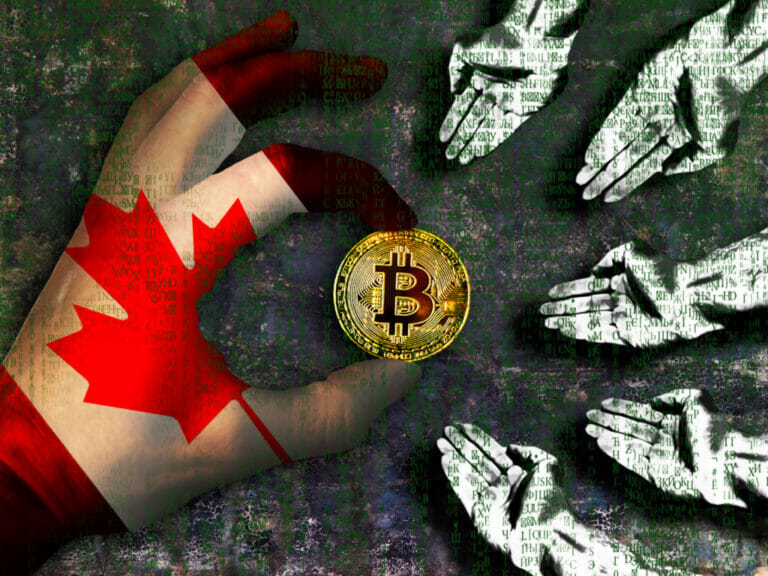
Fidelity Received License to Operate as a Custodian of Bitcoin in Canada

Fidelity becomes the first custodian of Bitcoin in the country through its address in Canada. In the US, the entity is still awaiting approval for its BTC ETF.

The American company for asset management and pension funds, Fidelity, received the corresponding license from the regulators in Canada to operate as the first custodian of Bitcoin within the country.

This information comes from various reports indicating that the Investment Industry Regulatory Organization of Canada (IIROC) officially approved Fidelity to release a new platform for the trading and custody of Bitcoin in the country.

This platform will also provide services to entities such as pension funds, wallet managers, mutual funds, and ETFs that want more exposure to digital currency.

In this regard, the president of Fidelity Clearing Canada, Scott Mackenzie, commented that the demand for investment in digital assets is increasing considerably, and institutional investors have been looking for a proper regulated dealer platform to get access to this asset class.

More Options in Canada

The announcement is especially beneficial for the Bitcoin ecosystem in Canada since most of the companies at the local level that operate with the digital currency need this assistance to work with custodians based in the United States of America.

Fidelity’s offering and services in the area will help companies based in the country to operate within it. This offering will also help open the space for more institutional investors to approach the cryptocurrency market as it grows.

A report presented by Fidelity reads that Fidelity Clearing Canada will serve more than 100 investment companies in the country. Along with Fidelity Investments Canada ULC, this entity has at least $ 222 billion or more in assets under administration and management as of the end of June this year.

Fidelity Makes its Way

This situation might open more gateways for the crypto ecosystem in Canada, and Fidelity already has a similar line of services in the US currently waiting for a response from the Securities and Exchange Commission (SEC) concerning the possibility of launching its Bitcoin-based exchange-traded fund.

However, there is no information about the freedom of the company to offer its services in all jurisdictions in Canada, especially in the city of Ontario, where many exchanges and big companies in the crypto sector have experienced problems with local regulators for conducting their operations.

Fidelity was already a leader in low-cost fees, but as of October 2019, the company erased charges for stocks, ETFs, and options. Before that action, the company eliminated nearly all account fees, including transfer and account closing fees commonly charged by brokers.

Fidelity Investments currently leads many businesses, with the main ones being mutual funds and brokerage services. The mutual fund division manages three current divisions: equity, high-income, and fixed income divisions. 

The company operates Fidelity Contrafund, the largest non-indexed mutual fund in the United States of America, with over $ 107.4 billion in assets.

By: Jenson Nuñez

Analysts Consider Bitcoin the Best Sovereign and Revolutionary Money

Bitcoin is the most important discovery of humanity as it gives the possibility of having money without government control, said Amati. Gutiérrez stated that Nakamoto created Bitcoin with the philosophy of liberation and expressed that his identity should remain hidden.

Experts Franco Amati, Diego Gutiérrez, Gabriel Kurman, and Daniel Alos recently said that Bitcoin is the best sovereign money humanity has ever had. They believe that no one knows yet where that revolution will come and how it will empower world citizens.

They also noted that this sovereign system is growing and maturing while the fiduciary system, which constantly generates devaluations, collapses. Likewise, they highlighted that the adoption of Bitcoin as legal tender in El Salvador benefits citizens.

Bitcoin Represents a Paradigm Shift

Those experts agreed that Bitcoin is a paradigm shift that has revolutionized the world, becoming a milestone in the financial system. Daniel Alos believes that Bitcoin is humanity’s most important discovery after fire.

He commented that Bitcoin is a natural force that attracts everything since it is the best form of money ever invented. He further predicted that the cryptocurrency would remain with humanity through the centuries.

Franco Amati stressed that Bitcoin is resistant to censorship because it gives the possibility of having money without the control of any government. He noted that people could use the cryptocurrency anywhere worldwide, as it has incredible portability that makes it more sovereign.

Diego Gutiérrez, from IOV Labs, highlighted that governments have interfered with the countries’ monetary policies. He explained that this affected the financial freedom of the population, which is why Bitcoin gives the possibility of exchanging value without intermediaries.

Freedom Is the Philosophy behind Bitcoin

Regarding the reason for the creation of Bitcoin, Gutiérrez mentioned that it does not hide another ideology or philosophy beyond freedom. He also expressed that he thinks that Nakamoto should never reveal his identity, which is one of the strengths of the pioneering cryptocurrency.

He considers Bitcoin is neutral and does not have a political sign, but believes that Nakamoto used it to empower the individual.

On his part, Amati said that the people who were most interested in Bitcoin early in its creation were into technology. Then that changed, and now there are libertarians and communists, among others, who support Bitcoin.

BTC Has No Political Ideology

Amati also perceives Bitcoin as neutral and considers that it has no political ideology. For that reason, he highlighted that many people in El Salvador had a wrong position after the Bitcoin Law entered into force. That led him to recommend researching to realize the advantages of BTC.

Furthermore, he said that Nakamoto knew what he wanted to show the world before publishing the first block on the Bitcoin blockchain. Amati noted that the developer did it during a lot of tension, right after a headline in The New York Times about the second bank sabotage.

Amati does not know whether to link the publication of the first block to a political fact. However, he considers that Nakamoto waited for that moment of vulnerability to reveal this new financial disruption.

Satoshi Nakamoto wanted to bring people something that would free them from what banks, companies, and the state usually do. They do poor deals for which the citizens have to pay in the end.

By Alexander Salazar