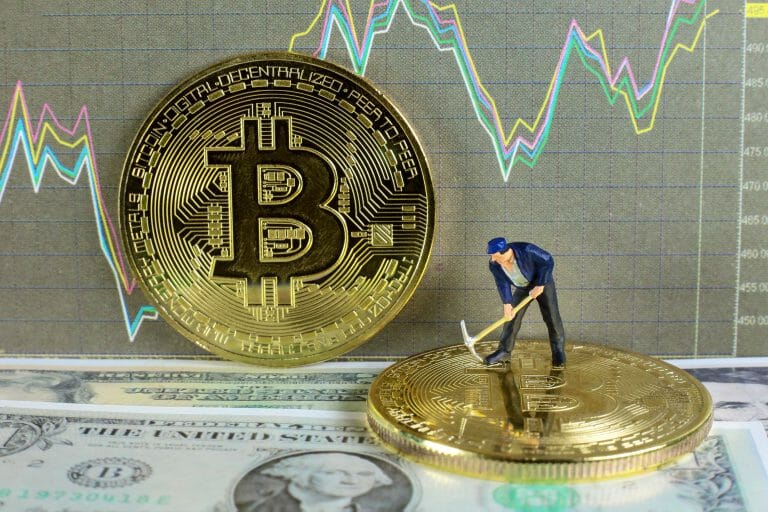
The Turkish Government Welcomes Regulations on Bitcoin and Fines the Binance Cryptocurrency Exchange

Turkey currently has regulations that prevent the Bitcoin industry from expanding in the territory. ErdoÄŸan shows signs of intervention in the market to stop the lira from devaluing.

The cryptocurrency exchange Binance recently received a fine of 8 million liras (USD 750 thousand) for allegedly not complying with Turkish regulations. That measure indicates that President Recep Tayyip ErdoÄŸan welcomes the regulation on Bitcoin and other cryptocurrencies in his jurisdiction.

The head of State told local media that the law to regulate Bitcoin is ready, and they will send it to Parliament without delay. They did not yet provide details on the above legislation, but recent facts may reveal where the regulations are heading.

In March, the Turkish government banned using cryptocurrencies to pay for goods and services amid a social and financial crisis. The regulation, which contains six articles, appeared in the Official Bulletin of the issuing entity on April 16th under No. 31456.

The Central Bank stated that payment service providers could not develop business models or provide any service related to cryptocurrencies. They seek to avoid the direct or indirect use of crypto assets to provide payment services and issue electronic money.

In September, ErdoÄŸan said he was in a war against Bitcoin, and the State would take action to prevent its proliferation among the population. However, many citizens see cryptocurrencies as a store of value given the depreciation of the lira, the legal fiat currency in that country.

Concerning the sanction against Binance, the exchange informed they work with the Turkish State to create a sustainable, healthy, and secure ecosystem.

Turkey Wants Its National Fiat Currency to Gain Value

On Christmas Eve, the Turkish president highlighted that they would take measures to achieve the revaluation of the lira. However, they did not inform the imminence of the law that will regulate the use of Bitcoin in that nation.

ErdoÄŸan announced that they would impose a new economic model with risks and opportunities ahead. He stated that citizens would see the Central Bank, the guarantor of the treasury, as the protector of their money.

The lira has lost more than 85% of its value in the last ten years. The president reflected on the issue, which raised more doubts than certainties among Turkish citizens.

He said that the exchange rate is not a matter of mathematics but process, as it flows like on the bed of a stream. With that idea in mind, he expressed that they intended to channel a drypoint. However, he pointed out that the exchange rate would find its price in the market.

In a certain way, the Turkish government will put its hands on the foreign exchange market to prosecute it. However, the market itself would decide how much the lira is worth, as always happens. Many other countries have tried doing that successfully on previous occasions.

The relevance of Bitcoin and other cryptocurrencies is increasingly evident worldwide, and the president of Turkey knows it. His government is willing to implement a regulation to prevent the use of crypto assets among citizens. Besides, they seek to ban all services involving digital currencies like the case of Binance, which they fined.

By Alexander Salazar
People Will Remember 2021 for the Approval of First Bitcoin ETFs Listed on Wall Street

The SEC approved three Bitcoin futures exchange-traded funds listed on Wall Street this year. The United States does not yet have spotted Bitcoin ETFs, but Chile, Brazil, and Canada do.

In 2021, the US Securities Exchange Commission (SEC) approved three Bitcoin exchange-traded funds (ETFs) listed on Wall Street. The pioneering cryptocurrency could enter the leading financial center as a stock asset. That achievement, which took some bitcoiners eight years, reached a historic milestone since its entry into force in October.

A Bitcoin ETF is an investment fund listed on the stock exchange, considering the value of the cryptocurrency as the stock of a company. In other words, if the price rises or drops, the fund will consequently do the same.

Regarding spot Bitcoin ETFs, they match the current value of the pioneering cryptocurrency on the market. In the case of futures ETFs, speculative agreements of possible prices in terms of weeks or months support them. While the three Bitcoin exchange-traded funds in the United States are futures-based, both operate in other countries.

People Waited for Bitcoin to Go Public on Wall Street

Many invest in Bitcoin ETFs rather than buying the cryptocurrency directly as they seek a regulated instrument. That is of interest to institutions and companies.

People may invest money in an ETF through traditional brokers that offer company stocks. Besides,  those unable to use wallets and exchanges have access to them since they receive more security.

Those users directly operating Bitcoin may find an ETF unnecessary, but the entry of the cryptocurrency to Wall Street has been a significant milestone. It represents the recognition of BTC as a high-interest financial asset on the leading stock market worldwide.

The SEC Rejected Bitcoin ETFs Listed on Wall Street for Eight Years

Disruptive changes like cryptocurrencies need an adaptation period and evaluation for regulators to accept them. Some bitcoiners had to wait for eight years until the US SEC approved the first Bitcoin ETF.

Cameron and Tyler Winklevoss, the owners of the Gemini exchange, submitted the first application for a Bitcoin ETF in 2013. The price of the crypto asset rose from USD 100 to USD 1,000. However, the regulator rejected that proposal, and others from multiple companies, in the following years.

The SEC does not have to give express authorization for an ETF to take effect, whether Bitcoin or another asset. During the mandatory evaluation period, the fund only needs the organization not to reject it, which happened on October 19th.

The SEC Should Approve Spot Bitcoin ETFs Listed on Wall Street

As the SEC considers that spot Bitcoin ETFs still do not provide enough security, they continue rejecting them. For that reason, the only three Bitcoin funds that went public on Wall Street in 2021 (ProShares, Valkyrie, and VanEck) are futures-based.

The chairman of the US SEC, Gary Gensler, stated that they are attempting to introduce new investment projects. He explained that the federal regulator Commodities Futures Trading Commission supervised BTC futures ETFs with favorable results. However, they still have not felt confident enough about spot ETFs in the last four years.

On their part, Congressmen Tom Emmer and Darren Soto warned that both types of funds involve the same level of risk. That led them to think that the SEC should allow spot ETFs, the same as they have done with futures ETFs.

By Alexander Salazar

Bitcoin Mining Nomads Are Moving to More Bitcoin-friendly Areas

Inaccuracies in the infrastructure law would drive miners out of the United States of America. Kazakhstan now faces an electricity shortage, and blackouts abound.

By December of last year, it was already clear that the concentration of Bitcoin mining in China would gradually crumble down. However, everything accelerated when the Asian country’s repression against cryptocurrencies and digital minings started.

Since then, many miners have become nomads and now migrate where they believe better energy and regulatory conditions await them to carry out their work.

For years, China was the hot spot for several farms that used cheap energy to power their equipment. At its best, the country even processed 70% of the network’s computing power, also taking advantage of its large production of microprocessors.

Everything that Bitcoin mining needed was available in China, including maintenance and labor costs. It was not surprising that the industry grew rapidly and established itself in that region.

Bitcoin mining has long been under China’s radar but got banned in 2021 because it undermined its efforts to achieve environmental goals. Subsequently, the authorities began to punish bitcoin mining and all activity related to cryptocurrencies.

When digital mining got also condemned under various approaches, major Bitcoin mining centers got forced to close down and leave the territory. Even Bitmain, the Chinese equipment manufacturer behind the Antminer brand, stopped its sales.

Later, the cumulative processing power of the network fell to the lowest levels in a year. Bitcoin registered a loss of processing power in one day that was circling 40%. The situation took effect when the miners based in China started to transfer their operations to other nations.

From China to the United States of America to Mine bitcoins

In the search for more friendly lands to run smoothly, a good percentage of miners migrated to the United States of America. The North American country managed to displace China, concentrating at least 30% of the computing power worldwide.

The list of traditional Bitcoin mining pools changed at the end of November. The Foundry USA Pool, a Bitcoin mining pool located in the United States of America, ranked first in the race of the pools with the highest hash rate generated on this network. It was the first time a North American pool had surpassed  China pools in this area.

The territory is now emerging as the next Bitcoin capital of the world. Many miners have landed there, including Poolin, the second largest Bitcoin pool.

Also, the company BIT Mining, based in the Chinese province of Shenzhen, has plans to invest USD 26 million to build its mining center in the state.

Texas has some of the cheapest energy prices worldwide due to multiple service providers competing to offer better energy. In addition, the governor of Texas, Greg Abbott, has been friendly with cryptocurrencies and, in parallel efforts with legislators, is creating new laws to regulate the sector.

However, doubts have also started to emerge about the possibility of the favorable winds for Bitcoin mining in the United States of America turning because regulators are examining the activity and analyzing it from an environmental and sustainability perspective. On the other hand, Senator Elizabeth Warren sent a letter to Greenidge Generation Holdings CEO Jeff Kirt requesting information on the impact of cryptocurrency mining on climate change.

By: Jenson Nuñez

Former President of the Central Bank of Argentina Said they Should Have Bought Bitcoin

Sandleris recognized that he would have bought BTC with Central Bank reserves. Sandleris was a former president of the Central Bank of Argentina during the Macri government.

The former president of the Central Bank of Argentina (BCRA), Guido Sandleris, highlighted bitcoin while giving his opinion regarding the report revealed on December 23 by the International Monetary Fund. In that document, he studied the loan made to Argentina in 2018.

Sandleris highlighted that one of the deals with the report is to analyze everything with Monday’s newspaper. The former official used the expression “Monday’s newspaper” to describe how easy it is to comment on a situation long after the events have already happened.

Sandleris explained that decisions must also get evaluated with the information available at the time of making them. He then added that ith the Monday newspaper the bank should have bought bitcoins with the reserves, and that’s it.

Acquiring bitcoin would have encouraged Argentina to boost its Central Bank reserves with the price increase that the cryptocurrency had since then. In early 2018, BTC got valued at $ 15,321, while now it is trading at $ 51,022, according to studies.

Analysts Suggest Argentina the Acquisition of Bitcoins

Santiago Siri, CEO of DAO Education, a school on blockchains and cryptocurrencies was one of the analysts that recommended the government purchase Bitcoin. Siri sent a communication to the government and the Central Bank of Argentina suggesting to put 1% of the reserves in bitcoin.

The analyst highlighted that, if Argentina uses a minimum fraction of its reserves in bitcoin, it would instantly become a dominant country in the international financial system that will become relevant in the upcoming years.

The developer explained in 2014 that the opportunity to make that bet was back then. And he added that as never before in history, Argentine people are one step away from being able to begin to think of themselves as a country with high capacities for improvements if the necessary political will gets achieved.

The investor Tim Draper also suggested using cryptocurrency to the Argentine government. Tim Draper explained that changing the Argentine peso for bitcoin would stop the devaluation of the currency and the flight of Argentines and companies to other nations.

The investor told Mauricio Macri that he would duplicate his investment in Argentina if the Argentine peso valued more than bitcoin over time, something that, according to the investor, would not happen.

Draper expressed to Macri in 2019 that he would have to make the cryptocurrency legal tender if its price increased more than the Argentine peso. Since that event, Argentina’s peso has crumbled down at least 75% against the US dollar, and bitcoin has reached a peak that surpasses 1,300%.

By Jenson Rivas

Ethereum Faced a Tough Year Due to the High Costs of Fees

The average fees on Ethereum reached an all-time high of nearly USD 70 in May 2021. Many hoped EIP-1559 to fix the problem with high rates on the network, but it did not.

Besides the DeFi-mania that started in 2020, the Ethereum ecosystem saw new trends in 2021. The most prominent were an increase in business dealing with NFTs and play-to-earn crypto games and the release of a new memecoin.

The large flow of new users of those products added to the congestion on the network to intensify. For that reason, the cost of the fees needed for its operation achieved record levels.

The average fees on Ethereum started the year at USD 3 and could end it at USD 27, according to BitInfoCharts. The rate reached an annual and all-time record on May 12th, when the daily average was almost USD 70.

In March, the community started to see glimpses of what the NFT-mania would be. Google searches for the term NFT soared worldwide, beginning a primarily upward trend that continues today.

Two months later, people could hear a new dog, the Shiba Inu (SHIB) memecoin, barking in the cryptocurrency neighborhood in May. Although they are of the same breed, SHIB has no blockchain but is an Ethereum token, unlike Dogecoin (DOGE).

The FOMO (fear of missing out) unfortunately gripped users when the price of SHIB started to rise. That also contributed to raising the cost of the fees on the Ethereum network.

The Community Is Disappointed that EIP-1559 Does Not Solve the Problem

Many Ethereum users hoped that the EIP-1559 upgrade would reduce the cost of the fees. Each transaction pays a base fee that burns and a tip that miners receive thanks to that implementation.

The reduction of rates was not the primary objective of that improvement proposal but a secondary consequence in the long term. However, many users misunderstood that it would lower the cost of the fees and disseminated that information.

Those hoping to operate their favorite decentralized applications (dApps) at cheaper rates after the approval of EIP-1559 were very disappointed.

The proposal became active in block 12,965,000 on August 5th, and there has been no significant change since then. The users of the network of Vitalik Buterin have to continue paying the same amount for operating on it.

High Fees Lead Many Users to Turn to other Blockchains

The above situation forced many users of various dApps to look for other blockchains. Despite not being decentralized, platforms like Binance and Solana monopolized much of the market for decentralized finance, non-fungible tokens, and play-to-earn crypto games.

The Polygon protocol, previously called Matic, also had exponential growth this year. Unlike the above networks, the latter shows an Ethereum-friendly narrative since it is a side chain seeking to decongest the mainnet. Many people even mistake it for a second-layer solution.

That situation has caused many platforms initially intended for working only on Ethereum to expand towards that protocol. They include the decentralized PoolTogether lottery, the 1inch exchange, and the non-fungible token marketplace OpenSea.

The increase in the cost of fees on Ethereum has led to many changes that have disappointed its users. They hope that the developers behind the network will upgrade the system with a solution to that problem.

By Alexander Salazar

Russian Citizens Can Acquire Cryptocurrencies through Foreign Companies

The Bank of Russia is unwilling to accept the free circulation of cryptocurrencies within the local economy. Lieutenant Governor Vladimir Chistyukhin announced that upcoming regulations would allow buying Bitcoin and other cryptocurrencies through foreign platforms.

Amid imprecise positions, the Russian government will allow citizens to acquire cryptocurrencies. Some officials linked to the banking environment support digital assets, allowing people to own them. Besides, the outlook would not be entirely free with legislation banning, or not, crypto transactions.

The Bank of Russia has adopted a rigid stance on cryptocurrencies and banned some leading banks from offering investment services involving them. They have argued that those services do not meet the interests of investors and involve high risks.

In July, the financial entity recommended that asset managers exclude cryptocurrencies from exposure in Mutual Funds. Curiously, the local news agency RBC reported that Russia has no Mutual Funds with crypto exposure. However, the government has not banned them formally.

Artem Deev, head of the Analysis Department at Amarkets, said that the Eurasian country only has one exchange-traded fund (ETF). However, that organization does not allow the trade of cryptocurrencies since it considers them risky.

Upcoming Regulations on the Use and Acquisition of Cryptocurrencies

It is still unclear how the Russian government will regulate the cryptocurrency environment. Although there is some uncertainty, it seems that the authorities could give room to the flow of that market.

The authorities have stated that cryptocurrencies would have a chance to move in the Russian economy, by the outlook remains unclear. Russia will allow acquiring crypto assets, but that would not be very prominent domestically.

The Bank of Russia is willing to deal with cryptocurrencies but does not want them to circulate freely within the local economy. The government and financial authorities seek to create a scenario to implement regulations for cryptocurrencies.

According to the data provided, the government would only accept cryptocurrencies through international infrastructures. In that way, they would restrict their use within the domestic environment, but without banning citizens from owning crypto assets.

In that regard, Lieutenant Governor Vladimir Chistyukhin stated his opinion on the arrival of cryptocurrencies in Russia. He disclosed that upcoming regulations would allow citizens access to Bitcoin and other cryptocurrencies through foreign platforms.

Uncertainty about the Outlook of the Cryptocurrency Market in Russia

Despite various opinions, there is no defined scenario where the cryptocurrency market can be in Russia. Meanwhile, the authorities will attempt to formalize a regulatory framework that could give crypto assets the go-ahead. Of course, that would consider the points of view various officials have already expressed.

The Russian government said it would allow acquiring those assets, but some representatives have not yet agreed on a position. While some directly support or do not the inclusion of cryptocurrencies in the country, Anatoly Aksakov does not offer a straight answer.

The chairman of the Financial Markets Committee of the Russian State Duma thinks it is better to wait for a related voting process. He said that the government would allow or ban transactions with cryptocurrencies in the Eurasian nation next year.

By Alexander Salazar