The Price of DOGE Keeps Falling, but No One Knows When It Will Rebound

As the previous trend is bearish, DOGE could escape from the bottom but there is a relevant demand zone below. The weekly chart indicates that the bulls still dominate, as the rally of previous months overshadows the current decline.

The cryptocurrency market is in trouble as Bitcoin continues to push most altcoins lower. The price of Dogecoin (DOGE) does not escape from that situation, but the following analysis will help see whether it could recover.

After an excellent year, DOGE had a pullback of over 75% after its all-time high of USD 0.75.

DOGE is trading at around USD 0.17 and has accumulated a 0.2% gain in the last 24 hours. Its daily trading volume is above USD 716.74 million, and its market capitalization is about USD 22.62 billion, according to CoinGecko.

Dogecoin Posts Its Roadmap, as the Market Seems Unenthusiastic

The year that has just ended was the best for meme-based cryptocurrencies like DOGE and Shiba Inu (SHIB). However, it seems that investors will hardly regain their appetite for extreme risk after the bubble burst.

The developers behind Dogecoin are looking to regain morale in the memecoin market. For that reason, they posted a roadmap to make that cryptocurrency more than a joke.

After eight years of its inception, the range of use cases of DOGE could start to see progress. Despite that, it seems that investors are not very enthusiastic about investing in that project at the moment.

The roadmap mentions their intentions to create a new website and a wallet and mint NFTs. In addition, it says that they will consult Vitalik Buterin to implement a Proof-of-Stake protocol.

That might promote optimism in the DOGE market, but it has not happened yet. It seems that the price of Bitcoin must first have a rally that generates enthusiasm throughout the cryptocurrency ecosystem.

The Technical Analysis of the Price of Dogecoin

The DOGE/USDT daily chart reveals that the price is sideways, with support at around USD 0.16 and resistance at USD 0.19.

If the price breaks through either extreme, there could be a significant move in the direction where that occurred.

For now, the price of Dogecoin could escape from the bottom, as the previous trend is bearish.

However, below is a relevant demand zone, where holders could slow down sales, and a strong recovery could begin.

The Bullish Force Still Dominates the DOGE Market

The DOGE weekly price chart indicates that the bulls are still the dominant force.

The value of DOGE has fallen by more than 75% from its all-time high. However, when looking to the left, the bullish rally of previous months overshadows the strength of that decline.

Possibly, the price is making a necessary correction before resuming its previous trend.

The price reached the area surrounding the 78.6% Fibonacci retracement tool. From there, it has continued to defend nearby support at USD 0.16.

The current point could be the bottom of the decline before resuming the trend; to confirm that, the price must start to hit increasingly high lows and highs.

Before that happens, Dogecoin will remain at risk. If it loses the support at USD 0.16, it could suffer a quite worrying decline, as the ground will be clear for USD 0.08. However, that scenario is unlikely at this time.

By Alexander Salazar
The Argentine Government says Bitcoin Mining is responsible for the Energy Crisis

Users who mine cryptocurrencies must report their consumption. Special rates and investment requirements could get established for mining farms.

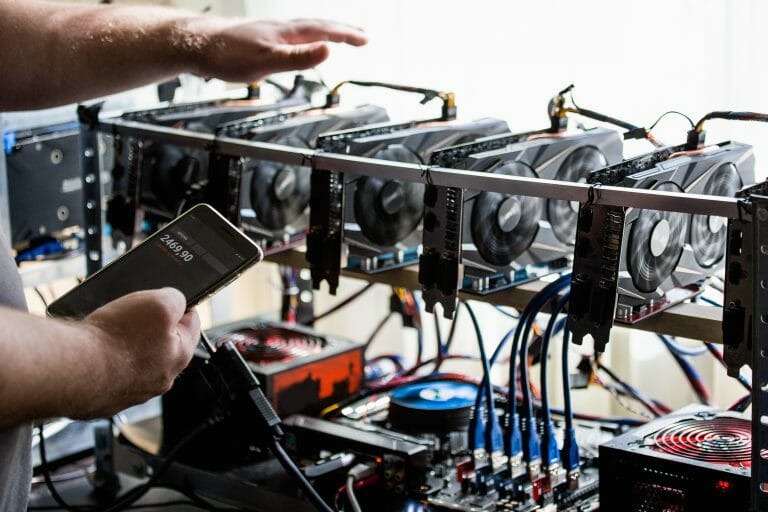
The national government of Argentina intends to find a way to stop the energetic crisis in the country and thus prevent the power outages of the last week from being repeated in the future. To that end, the magnifying glass got spotted on bitcoin (BTC) mining farms. The main idea is to know where they are, increase the rates for this sector and discourage such ventures.

CAMMESA recently sent large users and self-generators of electricity a letter requesting that they must bring further details about their cryptocurrency mining activities.

With these data, Argentina intends to establish an extra cost for this industry in Argentina and require infrastructure investments to help sustain the supposedly high demand they represent. A consequence of these increased requirements would be to discourage the proliferation of mining infrastructure.

Users must send information on the energy they consumed in crypto mining during 2020 and 2021. Users must also bring information about the expected consumption for 2022 and 2023. The data must get sent within 15 business days after the request.

The measure does not affect all miners equally. In principle, people who mine from their homes do not need to report their activities. The request from CAMMESA and the Undersecretary of Electric Energy aimed mainly at mining farms with higher processing power and electricity demand.

The Energy Crisis in Argentina

Much of the Argentine territory reported high temperatures in recent weeks due to summer in the southern hemisphere. With indicators that surpass 35 ° C in many days, the National Meteorological Service has issued several alerts for the population to take care of the heatwave.

This weather generated a high demand to maintain the energetic infrastructure of the entire nation. In various places, such as the city of Buenos Aires and different parts of the homonymous province, Santa Fe and Córdoba, there were power outages at various times of the week.

Although the rains of January 1 painted a worrying panorama, the situation went easier. The State continues to search for responsible with the excuse of preventing these kinds of struggles in the future. And that’s when bitcoin and cryptocurrency mining appears on the stage.

As in this case, bitcoin mining receives accusations of requesting vast amounts of energy from the electricity grids of many countries. However, some reports conclude that this industry consumes less than 0.1% of the energy source worldwide, and even more than half of it would come from renewable sources, according to other research.

However, this situation in Argentina is not new, and it seems to be closely related to the lack of investment in infrastructure in recent years. Therefore, linking the crisis and power outages exclusively with the growth of cryptocurrency mining in 2021 is perhaps a bit hasty.

By: Jenson Nuñez

Another Bitcoin Mining Epicenter Emerges in Asia

Laos, a neighboring country, provides electricity to Thailand, which uses to mine BTC. Bitcoin miners from Thailand could earn up to USD 40 daily for each machine.

China’s outpost against Bitcoin (BTC) mining last year awakened a new tidal wave that boosted the activity and made it expand its borders. Thailand, a nation with roots in South Asia, took advantage of the current situation with China and started mining cryptocurrencies relying on the low prices of miners.

A report by the Qatari media Al Jazeera revealed part of what is happening in a country like Thailand. Local entrepreneurs began to purchase mining equipment previously auctioned in China to boost mining activities in Thailand.

While the prices of Bitcoin miners have returned to USD 13,000 on average, Miners continues to sell hundreds of equipment in Thailand, where there are already small investors interested in playing a vital part in the activity that guarantees the existence of the Bitcoin network.

According to this medium, Pongsakorn is one of the businessmen who took advantage of China’s antagonist stance against mining to generate money. The businessman explained that Bitcoin is the gold of the digital world. But a platform intended for mining is more like the shares of gold mining: dividends get paid according to the current price of gold.

Up to USD 120 Million Monthly for Mining Bitcoin

The Thai entrepreneur has contributed to fueling the local mining industry, where most of the participants are simply small investors operating from home. They could earn around USD 40 a day with just a single machine, and there are at least 100,000 Bitcoin miners already active in Thailand.

This situation means that, in Thailand, at least USD 120 million could be generated per month thanks to the mining activity of BTC, assuming that the participants are operating with a single machine.

The interesting fact resides in who are those who work these ASICs. According to the medium, they are those users who look for a stable income; these users get added to investors who believe in Bitcoin.

The Source of this Energy

A close neighbor is the one Thai investors target to pursue mining: Laos; a communist nation, an ally of China, where cryptocurrencies are growing considerably in terms of value.

Although that communist country does not have good internet connectivity, it does have a friendly electrical system. There, electricity is really cheap and gets extracted by dozens of mega-companies distributed throughout the entire national territory.

When Laos authorized the trading and mining of Bitcoin and other cryptocurrencies; such action was more like an experiment of the government of that nation to attract miners from China and other parts of the world in search of cheaper options in terms of energy.

At least six companies have a license to carry out their activities. To access it, mining companies had to pay about $ 1 million in electricity from Laos’ state grid for a year, as well as vast operating fees.

By: Jenson Nuñez

While MicroStrategy Buys More Bitcoin, Panama Plans to Install 50 Cryptocurrency ATMs

The company of Michael Saylor announced that they invested USD 94.2 in 1,914 BTC this month. The Panamanian authorities are increasingly interested in Bitcoin, which led them to draft a bill to recognize it as an alternative payment method.

Business intelligence software company MicroStrategy, which has been accumulating Bitcoin, recently increased its holdings in the cryptocurrency. They announced they now have 1,914 more BTC, which they bought for about USD 94.2 million between December 9th to 29th.

The firm raised funds to purchase Bitcoin by selling some shares. In the third quarter of 2021, they added nearly 9,000 BTC to their holdings, an average of 3,000 coins per month.

The CEO of MicroStrategy, Michael Saylor, has made acquiring bitcoins a second mandate for his 32-year-old company.

Data Indicates that the Dominance of Bitcoin Has Dropped

According to data from TradingView, the dominance of the Bitcoin market has continued to decrease, bottoming out below 40% this week.

In that sense, Bitcoin critic and Europac chairman Peter Schiff tweeted about the recent drop to USD 46,000. He said that this indicates that BTC is losing its first-move competitive advantage.

A study by TradingPlatforms stated that the data might signal that an altcoin season is about to occur. The dominance of altcoins has grown three times, going from 21% in 2014 to close to 60% in the last seven years.

Panama Will Install 50 Bitcoin ATMs in 2022

The government of Panama wants to keep pace with the bitcoinization process of El Salvador. For that reason, they plan to install 50 Bitcoin (BTC) ATMs next year.

Panama will acquire the new devices from Santo Blockchain, and other countries in the region will do the same. Colombia and Costa Rica are the following nations on the list.

The interest in Bitcoin in the Central American country has grown considerably, making it a pro-cryptocurrency jurisdiction. In September, the authorities drafted a new bill to recognize BTC as an alternative payment method. That might allow greater freedom for citizens when they use cryptocurrencies.

Users Will Have to Verify their Private Wallet Addresses on South Korean Exchanges

Upbit, Bithumb, and Korbit, among other leading South Korean cryptocurrency exchanges, will follow the lead of Coinone. According to analysts of the sector, they will also ban all transfers to unverified wallets.

Coinone recently announced that it would reject deposits from unverified private wallet deposits from January 24th to minimize the risk of money laundering. More than twenty Korean exchanges may apply similar or identical measures before March 25th. The government of that Asian country has set a deadline for them to track the cryptocurrency transactions of their users.

The relevance of cryptocurrencies in the current economy has led many people to remain interested in them regardless of the market decline. Leading companies like MicroStrategy continue buying Bitcoin because they believe the price will resume the bearish trend. More Latin American countries are planning to acquire cryptocurrency ATMs, and a growing number of exchanges require private information from users.

By Alexander Salazar

Bitcoin Miners Took Advantage of Many Opportunities to Grow in 2021

The mass exodus from China helped decentralize the mining hash rate, and new business opportunities emerged thanks to leading companies. Although many regulators argued that the activity damages the environment, miners looked for more efficient energy consumption.

In the year that recently ended, Bitcoin mining businesses and companies thrived like never before. Exchange-traded funds (ETFs) emerged, seeking new business opportunities and forming alliances with leading companies.

Many mining farms overcame environmental criticism, demonstrating efficiency in energy consumption with the help of the oil and electricity sector.

There was a geographical decentralization of the hash rate due to the mass departure of Chinese miners to other territories. In that period, the Bitcoin network had its greatest pullback in 10 years but was resilient and overcame it.

Despite the microprocessor and supply chain crisis, the buying and selling of Bitcoin mining equipment increased. Many people even started mining from home, which had not happened since the first years of the cryptocurrency.

The hash rate and the difficulty level of the network reached all-time highs on several occasions. Throughout the year, there were few periods of congestion and high fees.

Miners also participated in crucial voting and consensus processes, implementing updates like Taproot.

How Bitcoin Mining Closed the Year

Over the last week, the hash rate and the difficulty level reached a new all-time high. However, the network has become congested, while transaction fees have increased.

Fees now range from 11 to 14 satoshis per byte of information, equivalent to between 70 and 80 US cents, according to Mempool.Space. Of course, the cost to pay will depend on how significant a transaction is.

The most recent mining difficulty adjustment occurred on December 25th, hitting 24 T. That has been one of the highest rates in the history of Bitcoin, according to Glassnode.

Data from BTC.com indicates that it occurred when the hash rate of Bitcoin miners was at 173 exahashes per second (EH/s). That has been the highest in the history of Bitcoin.

Despite mild transaction congestion, the total fees collected by miners dropped during 2021. The increased user base of the Lightning network now allows transferring small and large amounts between peers at low costs.

Miners may be accumulating significant amounts of Bitcoin as users are trading more on Lightning than on the mainnet. This week, the former had at least 1.2 million BTC in their savings, close to the all-time high of 1.77 million BTC in 2020.

Bitcoin Mining Grows but Environmental Threat Reduces

Many regulators argued that Bitcoin mining generated high energy consumption and harmed the environment. Although miners overcame that debate, there were always those who supported that criticism.

In their search for new destinations, Bitcoin miners adapted to local circumstances. In that way, they made their energy consumption more efficient regarding environmental impact.

For example, the Texan oil and gas industry opened its doors to Bitcoin mining. They allowed miners to use their surplus production to conduct their operations.

Bitcoin miners could access cheap energy to make their activity more thriving. Besides, the oil industry could get rid of surplus natural gas, which they did not know how to use profitably.

While senators like Ted Cruz acknowledge the benefits of the activity, others like Elizabeth Warren criticize it for its positive carbon footprint. Despite that, specialists like Nic Carter and Lyn Alden agree that Bitcoin does not have a significant environmental impact.

By Alexander Salazar

Three Wallets Withdraw USD 49.4 Million Worth of Bitcoin after Over 10 Years

The same owner could have moved the first 1,000 BTC, as the creation of the addresses occurred on the same day in 2011. The researchers believe that the transfers could relate to Coinbase since leading exchanges always want to acquire old bitcoins.

Two Bitcoin addresses created on July 10th, 2011, recently transferred all their coins for the first time in almost 11 years. Each wallet withdrew 500 BTC, for a total of 1,000 BTC, worth above USD 23 million at the time of the operation.

On the same day, a third Bitcoin address, created on August 12th, 2011, transferred all its coins for the first time in over a decade. That wallet contained 40 BTC, equivalent to USD 1.8 million, as Bitcoin was trading at USD 47,500 at the time of transaction. Therefore, the total transfers of 1,040 BTC exceeded USD 49 million.

The first 1,000 BTC might come from the same owner, as the creation of both addresses occurred on the same day. Besides, the wallet that withdrew the other 40 BTC could have belonged to the same person since they created it about one month later.

Researchers Believe an Exchange Might Have Bought the Bitcoins

One of the transfers of old bitcoins could relate to a wallet associated with the leading cryptocurrency exchange Coinbase. The other transaction of 500 BTC indicated that the receiving address also belongs to the platform, according to Bitquery.io.

The recently withdrawn 1,040 BTC follow a very similar pattern, according to researchers from the Telegram channel GFIS and the creator of Btcparser.com. They said that leading exchanges always seek to acquire old bitcoins, for which they might want to own them.

GFSI researchers believe that the ownership of those old bitcoins could allow those exchanges to purify a group of coins of illegal origins. They explained that various anti-money laundering and risk analysis robots could screen them by mixing all of the latter with those from 2010-2011.

According to statistics from amlbot.com, each of the wallets sending 500 BTC had low-risk assessments. The transfer of 40 BTC came from an address that once stored 31,723 BTC and then withdrew the last 101 BTC on May 11th, 2012.

The data on the transaction reveals that the owner of the address paid 0.05437193 BTC in fees. They might have sold the bitcoins in the open market or through over-the-counter (OTC) transactions.

The owner of those coins may have moved them, seeking to disperse them in addresses with lower amounts of funds. Until now, no one knows who acquired the old moved bitcoins.

The relevant role of Bitcoin in the world economy is increasingly evident, as many people view it as a long-term store of value. Regulators from several countries have their sights on the pioneering cryptocurrency because they link it to illegal activities like money laundering. For that reason, they usually hire specialists to track the origin of those crypto assets moved suspiciously.

By Alexander Salazar