
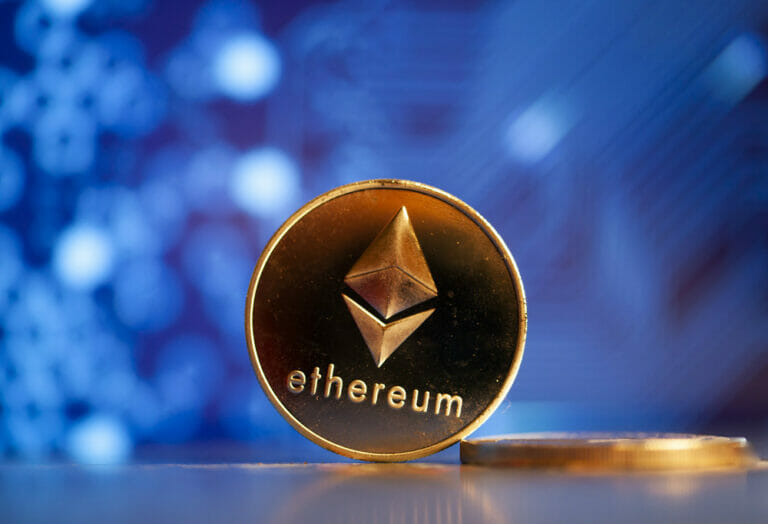
Ethereum 2.0: Smart Contract Already Exceeds 9 Million ETH Arranged as Guarantee

The figures show that day by day, the number of validators interested in supporting Ethereum 2.0 continues to increase, which is at more than 280,000 addresses that will process blocks.

A new survey reveals that the first smart contract for Ethereum 2.0 exceeds 9 million ETH deposited, a figure that exceeds $30.3 billion at current exchange rates.

This information gets reflected in the data extracted from Etherscan.io, which shows the ETH funds deposited by those interested in staking in the new version of Ethereum experiencing an increase over the days.

These funds planted a new record for the project related to capitalized support from the stakeholder community.

The smart contract got launched in November 2020, and since then, many people have deposited 32 ETH to be the first to process the new network blocks, which will get processed under the Proof-of consensus algorithm.

Current data reveals that at least 280,000 addresses appear as validators for the new network, a figure that gets expected to increase progressively to guarantee greater decentralization of the process.

Transition to the Merge

The expectation about the arrival of Ethereum 2.0 grows because the new update contemplated in the project’s roadmap, better known as The Merge, got recently launched in a test network, possibly bringing with it the start of staking operations.

This situation means that those who have deposited funds in the smart contract will start processing blocks and thus derive the associated earnings.

Although other vital steps in the project’s roadmap still have relevance, there is a lot of enthusiasm coming from developers and investors because this project brings Ethereum 2.0 much closer.

Along with the arrival of Ethereum 2.0, comes a transition that should solve the problems that the network currently presents in terms of scalability and high costs for operations.

The Future of Ethereum

Last December, the developer, and co-founder of Ethereum, Vitalik Buterin, revealed a tentative roadmap for what would be Ethereum 2.0.

Although many things went hand in hand with the original proposal, many users called for attention to the centralization in the processing of blocks.

The developers involved will have to attend this calling to maintain the balance that the project proclaims from the beginning.

Even though Ethereum has recently received updates to improve its operational performance, scalability and high cost of operations remain relevant issues. However, EIP-1559 brought an ETH destruction scheme linked to network fees, which has begun to endow the coin with deflationary properties, considering that more Ether is getting burned than what is taking place.

While this is happening, the development teams continue their hard work to get Ethereum 2.0 to the next phase as soon as possible. Analysts and enthusiasts expect to see this materialize by 2022, at least to a functional point where the network can assist the use cases known today.

By: Jenson Nuñez

Generation ZOE Reported for Possible Scam and Market Manipulation in Argentina

The complaint adds allegations of fraud, pyramid scheme, and market manipulation. NGO Bitcoin Argentina questioned the alleged gold mines acquired by ZOE.

The NGO Bitcoin Argentina criminally denounced those responsible for the Generación ZOE holding, including its CEO, Leonardo Cositorto. The complaint, carried out before the Attorney General’s Office, is for “the possible commission of the crimes of fraud, unauthorized public savings capture, and market manipulation.”

The NGO communicated that, from its Legal area, they followed the actions and public interventions of many different companies connected to the ZOE group for a long time.

The ZOE holding company offers educational memberships for courses on coaching, trading, and other topics, which generate profitability reaching 7.5% per month in dollars to those who acquire them.

In addition, they promote the Zoe cash token that, according to the words of Leonardo Cositorto, would have parity in its price with that of a gram of gold by January 1. This parity would get achieved through gold mines, supposedly acquired by Generación ZOE.

Regarding the latter, the text of the complaint indicates that they have contacted the Jujuy Secretary of Mining, who has let them know that neither Cositorto nor any company of the ZOE Group has approached said authority to request the concession of no gold mine.

The complaint adds something that was also recently explained by this means, and that is that, according to the Argentine Mining Code, gold mines belong to the State and also to private companies, so they can exploit them as long as they have a concession under the corresponding regulations.

The complaint establishes “the possible commission of the crimes established in articles 172, 309 and 310 of the National Penal Code.” In addition, it imputes under the complexity of the facts to anyone who is criminally responsible for the crimes against property and the economic order indicated.

This type of scam cause a lot of damage

The NGO bases the complaint on promoting the healthy development of an industry that has enough potential to boost the country and the Argentines, such as cryptocurrencies.

Bitcoin Argentina adds: «this type of scams, which we have been detecting in the last time, cause damage not only to those who deposit their savings and trust but also to the ecosystem in general, which due to its characteristics allows the absolute traceability of the information, as well as the security and privacy of its users.

Two months ago, this organization had warned about the growth of different pyramid scams in Argentina. These scammers do it with new names, made up with massive and glamorous launch events promoted by famous personalities, athletes, and influencers.

Regarding the current complaint, they indicated that they hope this complaint they make from the NGO contributes elements to help the judicial field move forward and take action on the matter immediately. They want to bring the mechanisms to prevent more people from being victims of frauds and scams like these.

By Jenson Rivas

According to the Fed President, the Report on the Digital Dollar is Ready to Go

Powell claimed that the digital dollar does not contemplate a ban on private stablecoins. The report on a CBDC from the FED got scheduled for September 2021.

Jerome Powell highlighted that the report about cryptocurrencies and central bank digital currencies is ready to go and will get revealed in the upcoming weeks. This information got stated during a legislative hearing before US senators this Tuesday, January 11.

In the middle of the presentation, one legislator asked Powell about the report, which would initially get released in September 2021. The official pointed out that the delay happened because they did not get to where we needed to go.

However, the representative assured that the report would indeed get published soon, although, according to local media, his statement is very similar to those he has issued in other hearings and public speeches since the middle of last year.

The FED has been working on the matter of CBDC since 2019 when it became known that the institution would analyze the costs and benefits of an official digital dollar. Powell addressed a letter to two representatives, expressing his concern about the multiple implications that a general-use CBDC would entail.

A few months later, another spokesperson for the issuing entity confirmed that they would be leading some experiments with this technology.

In 2021, the Fed marked the digital dollar as a high-priority project. It is also vital to consider that China, one of the countries whose CBDC, the digital yuan, is more advanced, recognized in September 2020 its interest in using this type of technology to challenge the US dollar for its dominance in international trade operations.

Private Stablecoins will Run in Parallel with the Digital Dollar

During a hearing led on Tuesday, lawmakers also consulted the president of the US central bank on the relationship between stablecoins, cryptocurrencies with a value pegged to the dollar, and a digital currency issued by the Fed.

One of the senators proposed, fiercely empathizing on the feasibility of privately issued stablecoins under regulation, eventually circulating alongside the digital dollar. According to Powell’s point of view, it is perfectly feasible that both assets coexist.

This position distances Powell from the possibility that the FED will take a path similar to that of the People’s Bank of China, which banned any activity related to Bitcoin or other cryptocurrencies in its territory so it can pave the way for the digital yuan. However, other entities, such as the Treasury Department, are interested in applying strict controls on stablecoins.

Last November, the Treasury launched a report to Congress suggesting new mechanisms to regulate stablecoins, including transferring priority to banks to issue dollar-anchored tokens. However, an official of the FED expressed his disagreement with this type of measure since it would discourage competition, which favors efficiency and benefits users.

By: Jenson Nuñez

The FDIC Supports Banks that Plan to Launch their Own Stablecoin

A US regulator supports several banks involved with the proposal of a new stablecoin. That association expects that other financial institutions will join them this year.

The US Federal Deposit Insurance Corporation (FDIC) supports several banks that plan to launch their own stablecoin.

The association consists of several financial institutions like Synovus Bank, the 48th largest American bank by asset volume. The other members are New York Community Bank, FirstBank, and Sterling National Bank.

USDForward (USDF), the stablecoin of the bank association, builds on public blockchain Provenance and adheres to regulatory standards of the country.

The group said that the availability of USDF on a public blockchain means a wide range of applications for the stablecoin. They pointed out that banks and their customers can use them for peer-to-peer and business-to-business money transfers. The financial entities also mentioned that they allow paying invoices and financing supply chains.

The banks did not specify whether the FDIC would also back the reserves of USDF. They stated that one of their objectives is to get other financial institutions to join them this year.

The association said they intend to have an alternative to stablecoins issued by companies. Those digital assets have emerged to maintain a stable value in parity with the US dollar or another fiat currency. In contrast, the value of Bitcoin and other decentralized cryptocurrencies depends on the supply and demand in the market.

It seems that banks want a share of the not insignificant stablecoin market, which reaches USD 171 billion. Companies like Tether (USDT) and Circle’s USDCoin (USDC), with a market capitalization of USD 78 billion and USD 44 billion, respectively, monopolize that sector.

Some American Regulators Support Stablecoins, but Others Do Not

The above announcement by US-based banks reveals that some American regulators approve stablecoins. However, other government agencies have pointed out that stablecoins may pose some risks to the economic system.

The president of the Boston Fed, Eric Rosengren, made one of those claims in June 2021. He said that Tether and other stablecoins are on a list of challenges to financial stability.

The US Securities and Exchange Commission (SEC) and the US Department of the Treasury also commented on stablecoins. They stated that those digital assets had grown so much that they are a systemic risk to the US dollar and the American economy.

Other US agencies like the FDIC have said that stablecoins could become a common means of payment in the future. However, they have expressed that there have to be regulations on them to mitigate the risks that they entail.

The FDIC and other agencies consider that the use of stablecoins for traditional payments could soon increase at the individual and institutional levels.

The CEO of Circle, Jeremy Allaire, predicted that massive adoption could enhance the growth of stablecoins this year. That firm is one of the developers of USDC, the second stablecoin with the highest market capitalization worldwide. Therefore, it is only a matter of time before seeing what 2022 will bring to that sector.

By Alexander Salazar

Another Miner Solves a Bitcoin Block Alone, Joining an Increasingly Common Feat

The processing power of that miner did not even reach 0.01% of the Bitcoin network, which covers about 183 EH/s. The two individuals that have achieved that feat this week are part of a pool of miners with old or inefficient equipment.

For the second time in less than a week, a miner with a too low hash rate solved a block on the Bitcoin network. In that way, he took the reward of 6.25 BTC, the transaction fees confirmed in block 718,379, and an additional 0.02 BTC.

The miner earned 6.27 BTC, equivalent to more than USD 269,000 at the current price of the cryptocurrency on the market. He beat the odds with just 116 TH/s (terahashes per second) of accumulated computing power, according to developer Con Kolivas.

To contextualize, the processing power that this miner used was not even 0.01% of the total accumulated on the Bitcoin network. According to data from BTC.com, the latter covers about 183,000,000 TH/s.

Specialized mining equipment (ASICs) on Bitcoin makes it hard to solve a single block. However, that was common in the early days of the network, when people could mine the cryptocurrency using their personal computers or cell phones.

The level of difficulty to mine a block has grown exponentially since then. For that reason, the typical way to join the mining industry is to belong to a pool of miners. They combine their respective computing powers and distribute the profits for each block to all the participants. In that way, each miner guarantees frequent rewards even though none of his devices finds the block.

Another Miner Achieves the Same Feat in Previous Days

The above miner individually took the prize on this occasion, but his operation was not entirely solitary. He belongs to a not-for-profit pool of miners, like another one that achieved the same feat in recent days.

That miner also had too low computing power on the Bitcoin network but could solve a block and claim the reward alone. Developer Con Kolivas said that this was one chance in 10,000.

He earned 6.35 BTC, equivalent to more than USD 273,000 at the current price of the cryptocurrency on the market. He beat the odds with just 126 TH/s of accumulated computing power.

The approach of that mining group makes it possible to achieve cases like the ones recently seen. If a member solves the block, he keeps 98% of the reward and leaves the other 2% for developing and maintaining the pool.

Miners whose old or inefficient equipment would never allow getting any rewards to consider that approach attractive. They describe pool mining as a lottery but do not profit with solo mining if they do not find a block.

Cryptocurrency mining is an increasingly relevant activity worldwide, and many users try doing it from home. However, their share of computing power is too low to solve a Bitcoin block and take the corresponding reward. For that reason, they join others to increase their capacity amid growing difficulty to mine.

By Alexander Salazar

Puerto Rico Is a New Destination to Develop the Bitcoin Economy Thanks to Its Low Taxes

In Puerto Rico, American investors with large incomes do not have to pay taxes on capital gains. Companies have benefits to operate on the island, as they only have to pay 4%, instead of 21%, in corporate taxes.

A new Latin American destination emerges for investors from the United States seeking to develop the Bitcoin (BTC) economy. That is none other than Puerto Rico, which is already a reference for enthusiasts in the market.

Besides being a tropical paradise and having friendly people, its low taxes are the primary attraction for investors. For that reason, those who manage high amounts of money consider it an ideal destination to respond to the Bitcoin ecosystem.

American high-income investors have to pay up to 20% in capital gains taxes, or 37% in the case of short-term earnings. However, some exemptions would favor them in Puerto Rico.

Companies with a presence in the US have to pay 21% in federal corporate taxes but only 4% on the island.

Plenty of Requests from Investors Interested in Living in Puerto Rico

The government of Puerto Rico has received at least 1,200 requests from investors under the Individual Investors Act. Bloomberg reported that this record number of people interested in living there know they are exempt from taxes.

Meanwhile, 274 firms, limited liability companies (LLCs), partnerships, and other entities received approval under the Export Services Act. That law grants a corporate tax rate of 4% and a 100% exemption on dividends.

Act 60, which consists of tax exemptions dating from 2019, protects both legislations in Puerto Rico. They intended to attract investors from the Bitcoin industry and other branches.

There Are Long-Standing Exemptions in the Tax Laws

Cryptocurrencies have allowed the number of investors flocking to Puerto Rico to gain prominence this year. Curiously, the exemptions date from 2012, when the government bet on injecting cash on the island and diversifying job sources.

The defenders of those tax exemptions consider them a boost for a country that has already faced a 4-year-old crisis, natural disasters, and political instability.

However, some detractors criticize that some laws focused on investor privileges only apply to new residents. In other words, Puerto Ricans cannot take advantage of those benefits.

The Experience of American Investors in Puerto Rican

Puerto Rico has Bitcoin ATMs in three well-known places: Bahía, the Dorado Beach resort, and Condado. Most American investors live in those locations, where the pioneering cryptocurrency has received a notable boost.

Brent Johnson, the CEO of wealth management firm Santiago Capital, is a Bitcoin enthusiast. The Californian entrepreneur said that restaurants, cafés, and a shopping center make Condado look like a small Miami.

Johnson commented that he has contacted other companies like his, with private capital and linked to cryptocurrencies, in Puerto Rico.

Anthony Emtman, the CEO of Ikigai Asset Management, thinks that Bahía gives the feeling of living in a tropical forest. The entrepreneur stated that people could play tennis, basketball, golf, lift weights in the gym or do kayak in that place.

By Alexander Salazar