There Is USD 20.5 Billion Worth of ETH Stuck on the Ethereum Network

Those who sent their ETH into the contract knew that they would remain stuck until Beacon Chain merged with the mainnet. The term Eth2 creates a wrong mental model for new Ethereum users as it does not allow capturing what happens on the network.

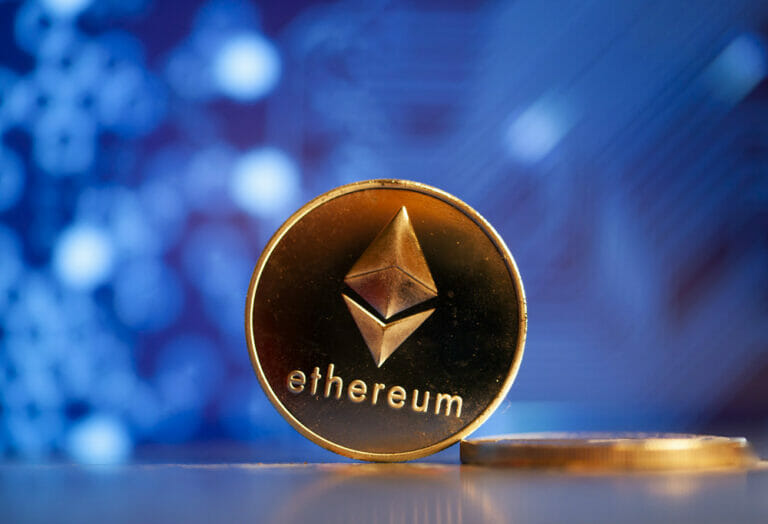
The largest staking contract on Ethereum contains 8,641,954 ETH, equivalent to around USD 20.5 billion. Since it remains stuck on the network, no one can transfer it.

A Twitter user said that the Ethereum 2.0 Beacon Chain contract has billions of US dollars stuck inside it.

That staking contract is part of the Ethereum 2.0 Beacon Chain network, launched in November 2020. Nobody can transfer it until a new hard fork occurs on the network.

Surprisingly, the developers have not yet decided on the terms and date of the hard fork on the Ethereum network. However, those who sent their ETH to the contract knew that this would happen. A decision on the terms of that upgrade could come once Beacon Chain merges with the mainnet.

Beacon Chain is the primary step of Ethereum towards a proof-of-stake (PoS) mining consensus. The USD 20.5B worth of ETH trapped on the Beacon Chain shows the high demand and confidence in the upcoming Ethereum 2.0 network.

The transition to PoS Eth2 would be complete with the merger of the Beacon Chain on the Ethereum mainnet. According to Ethereum.org, the upgrade could be ready for the first or second quarter of 2022.

Ethereum Foundation Removes Eth2 and Eth1 Terms From Its Blog

The website of the Ethereum foundation no longer shows any reference to Eth1 and Eth2. The move from a proof-of-work (PoW) mining model to a PoS consensus mechanism could happen in the second or third quarter of 2022.

The foundation cited various reasons, including the wrong mental model for new users, prevention of scams, and clarity of staking.

According to the Ethereum Foundation, the term Eth2 did not concisely capture what happened on the network through upgrades. They stated that one of the main problems with that word is the wrong mental model created for new Ethereum users. The latter assume that Eth1 comes first and Eth2 comes after, or that Eth1 ceases to exist once Eth2 exists.

The blog points out that removing Eth2 saves all future users from navigating that confusing mental model.

This year promised to be bullish for cryptocurrencies, but the current decline in the stock and crypto markets hit the price of ETH. The cryptocurrency is currently trading at around 2,588 and has accumulated a loss of 4.0% in the last seven days. Its daily trading volume is above USD 8.81 billion, and its market capitalization is about USD 308.83 billion, according to CoinGecko.

The fusion of the execution layer (Eth1) and the consensus layer (Eth2) will only receive the name Ethereum. In the meantime, individual features like Beacon Chain, fusion, and sharded chains will simply be upgrades.

By Alexander Salazar

According to Miners, Bitcoin Mining is a Solution for the Venezuelan Electrical System

A group of experts shared opinions in a panel held this Friday at the Caracas Bitcoin Experience. Venezuela is a Latin American country with clear rules regarding digital mining.

Bitcoin mining is an activity that consumes a considerable amount of energy and gets criticized for its environmental impact. In Venezuela, bitcoin mining complies with some vital functions: In addition to bringing profits and helping boost the network, it improves the National Electric System, which has been suffering and deteriorating in recent years.

The mining panel held in the Caracas Bitcoin Experience explored all these subjects. Juan Pinto, which is the co-founder of Doctorminer; José Parra, telecommunications engineer and Kike Miner, director of MinedMap in Venezuela, joined efforts to debate about this situation during the event.

Juan Pinto highlighted that all the resources that come from Bitcoin mining to pay for electricity to the National Electric Corporation can help boost the electric distribution for the population of that Latin American country.

On the other hand, engineer José Parra highlights that Bitcoin miners are bringing more sources of employment because of their start-ups. Also, he expressed that they are working hard to bring aid to the communities where the mining farms get based, especially with the electrical issue. According to Kike Miner, the sole intention of Bitcoin mining is to help the community grow.

The SEN is not Affected Because its Mining Gets Carried Out with Wasted Electricity

According to Kike Miner, the excess electricity produced by hydroelectric plants in Venezuela serves one purpose. It does not meet usage by the local population due to the current lack of transmission lines.

The miner coincides with Juan Pinto, who, since his signature, establishes a way to sow natural resources in Venezuela. He said they distribute the surplus and see Bitcoin mining as a better way to improve and transform these resources into profitable resources.

Both miners share the same opinion with José Parra. Parra highlights that electricity does not get stored in Venezuela, so if they do not find usage for this energy, they simply lose it. The worst thing is that many disused industrial parks do not get any benefit from what gets generated there.

Mining is now a Clear Activity in Venezuela

The specialists argued that, unlike other nations, Venezuela is one of the areas with clear rules about digital mining. According to Juan Pinto, the problems that came from the Chinese campaign against the mining activity gave fuel to the industry in Venezuela, especially in the regulatory field.

According to Parra, there are other interesting details. Parra highlights that, although the persecution and subsequent prosecution of miners have decreased because of the law that Sunacrip has applied, new issues still need to get resolved when it comes to electricity rates.

Sunacrip tries hard to keep other agencies aside when a problem appears. So when there are isolated events, police officers do not have to worry about it because the entity leads the investigations to solve the situation. Sunacrip has joined efforts with Corpoelec to solve the electric struggles of miners, but various details still need improvement.

By: Jenson Nuñez

Although the Upward Trend of Ether Dominates, its Price Still Has to Face Hurdles

A strong correction could reach the 50% Fibonacci, and the drop could extend to the area around USD 1,300. The price could look for resistance at USD 2,928 before falling back, and there could be a bullish transition.

After experiencing highly volatile and bearish days, the crypto asset market has cooled off a bit. Ether (ETH) is taking the opportunity to catch a breather and may turn more bullish in the coming days. However, the ETH bulls still have to face obstacles before claiming victory.

Ether is trading at around USD 2,580 and has accumulated a 7.2% gain in the last seven days. Its daily trading volume is above USD 8.93 billion, and its market capitalization is about USD 307.95 billion, according to CoinGecko.

Although some experts consider the current gains the possible bottom, nothing seems to signal that the bears have relinquished control.

Analyst John Wick pointed out that there is a background pattern but that it is still necessary to wait for BTC to recover more. The bullish signal of Ether would thus be relevant since the price of the pioneering cryptocurrency always sets the tone in the market.

CryptoAmsterdam, another crypto analyst, is not very confident about the recent recovery in the ETH price. Although he thinks there could be a broader rally in the near term, he does not rule out a false breakout and a return to the bearish sideways range.

Ether Is Bullish in the Long Term, but Has Not Resumed That Trend Yet

The monthly ETH/USDT chart shows a clear bullish direction that is largely intact.

Right now, Ether seems to be making a necessary pullback after a big bullish rally in previous months.

The drop in the price of ETH has made it touch the 18-period SMA and a support zone between USD 1,800 and USD 2,200.

Ether is already rejecting low prices, which could signal that the pullback is ending. However, there are no indications yet that there will be a confirmation.

A strong correction, which could reach 50% Fibonacci, is underway. The retracement zone that Ether is touching could serve as a point to resume the previous uptrend. However, if it loses it, which is unlikely at the moment, the drop could extend to the area around USD 1,300.

What Could Happen to Ether in the Short Term

The daily chart reveals that the bears are still in control of the market in the short term. The recent bullish intention of Ether could be just a break to fall back.

Currently, the runway is clear to USD 2,000, where Ether could start looking for a short-term trend reversal.

For now, the price could look for resistance at USD 2,928 before falling back. If Ether fails to hit a new effective lower low, there could be a bullish transition ahead.

Although Ether seems to be resuming its uptrend, it still has to wait for Bitcoin to recover further. When the pioneering cryptocurrency starts to lead the rest of the market higher, ETH could accumulate more significant gains.

By Alexander Salazar

Arizona Evaluates Adopting Bitcoin as Legal Tender

An executive order regulating cryptocurrencies would get revealed in February. Many government officials have commented that they would not set prohibitions on bitcoin in the US.

A proposal that arrived at the Arizona Legislature would be studying possible scenarios to grant bitcoin legal tender status within the state, based in the southwestern area of the United States of America.

The proposal came to the public light because of the senator for the state of Arizona, Wendy Rogers, who previously showed her position in favor of bitcoin and digital currencies.

Based on Rogers’s proposal, the Arizona Legislature will evaluate if bitcoin can get considered legal tender, as long as it complies with the national standards established by Congress and as long as it receives authorization from the US Constitution. In this sense, the proposal will experience the first stage of evaluation to get approved.

Although it would look like a local reform, its legalization must go through the US Congress because the definitions of a “legal tender” procedure cannot get dictated at a regional level but at a state one.

The proposal came to the public light right after the International Monetary Fund suggested to El Salvador to eliminate the bill to accept bitcoin as legal tender because, according to the entity, bitcoin could become a risk for the economy of the Central American country.

The US and its Current Stance Regarding the First Cryptocurrency

Regulators and companies in the cryptocurrency industry in the United States of America are waiting for the publication of a possible executive order in mid-February about the regulation of bitcoin. These regulations could shape the regulatory framework for cryptocurrencies in the country; a rejection that could lead to a ban on crypto assets could be a fatal move.

Important representatives in politics like Jerome Powell, and Gary Gensler, published some comments arguing that the United States of America would not ban bitcoin and other digital assets. A possible path for a CBDC in the United States, China, and Russia have already made a lot of progress in creating their central bank digital currencies or CBDCs.

 According to these advances, the regulations that could get launched in February may be the starting point to launch a CBDC in the United States of America. According to a report highlighted by Bloomberg, there is no firm position regarding the advance of CBDCs in the United States of America because the Federal Reserve has not released any approval yet.

The entity just published a preliminary report on the next steps the country would take on this subject. The regulatory environment in the United States of America deals with tons of uncertainties due to a lack of consistent regulations. This situation led companies to find solutions to pressure the government.

By: Jenson Nuñez

A BMC Survey Reveals that 46% of the Bitcoin Mining Industry Uses Renewable Energy

The report from the BMC found that 66.1% of the BTC miners surveyed use renewable energy. The findings cause no surprise to the community, as many mining farms already take advantage of hydro and geothermal power.

A recently released survey by the Bitcoin Mining Council (BMC) estimates that 58.5% of miners now use a mix of sustainable energies. The forum consulted 46% of Bitcoin miners globally, 66.1% of whom used electricity from various sources.

The survey focused on the mix of sustainable energy, technological efficiency, and electricity consumption by miners. That data allowed the BMC to estimate that the electricity obtained from the combination of sustainable sources is around 58.5% of the total.

There was an increase of 90% in the technological efficiency of the global Bitcoin network in the fourth quarter of 2021. However, it could become even more efficient. That data is part of the third quarterly report from the BMC, a forum formed with support from some of the best Bitcoin mining companies.

Michael Saylor, CEO of MicroStrategy and member of the BMC, referred to the survey results. He said that there were dramatic improvements in the energy efficiency and sustainability of Bitcoin mining in the last quarter of 2021.

The renowned businessman and investor believes that several factors helped make that happen. He mentioned technological advances relating to electricity semiconductors, the rapid expansion of mining in the US, and the massive migration of miners from China.

In addition, the processing power on the network has continued to rise in recent months, contributing to this optimistic picture. That increase of the hash rate occurred even as the mining difficulty reached an all-time high of 26.6T.

Impact of Bitcoin Mining on the Environment

The narrative that Bitcoin mining consumes too much energy has gained traction in the last couple of years. However, a growing number of miners have adopted renewable energy to develop their activity.

There have also been heated debates regarding the environmental impact of Bitcoin mining for some time. In that regard, the US Congress is preparing to thoroughly examine the energy impact of proof-of-work (PoW) blockchain networks.

However, the findings of the survey by BMC do not take the community by surprise. Many miners see the environmental impact as the biggest hurdle to face to develop their activity. For that reason, they look to sustainable energy sources such as hydro and geothermal power.

Cryptocurrency mining with renewable energy seems to be an ever-growing trend. However, the industry still has a long way to go before making a more significant positive environmental impact. It is a matter of time before most mining farms worldwide use become environmentally friendly.

Cryptocurrencies play a significant role in the economy, evident in the growing interest in Bitcoin mining. To carry out their activity without any problems, miners have incorporated the use of renewable energy. They seek to reduce the negative impact that the industry could have on the environment.

By Alexander Salazar

A Hacker Managed to Extract at least $80 Million from Qubit Finance, a BSC-Based DeFi Protocol

Qubit Finance has become the latest DeFi victim of an electronic attack. This attack is now the biggest attack of the year due to the high volume of stolen funds. The protocol is intending to open conversations with the attacker to reach an agreement and a possible return of funds.

The decentralized finance (DeFi) protocol, Qubit Finance, experienced a hacking attack that generated millions in losses. Investigations indicate that a malicious actor altered the Binance Smart Chain (BSC)-based lending protocol to the tune of $80 million worth of BNB token. The hacker attacked vulnerability in Qubit Bridge, a cross-chain bridging service that helps users exchange tokens between Ethereum and BSC.

The bridge allows users to deposit wrapped Ethereum (WETH) to mint xETH, an asset that becomes the image of Ethereum on the BSC chain, for use as collateral for loans in the Qubit Finance protocol.

However, a critical weakness in the Qubit Bridge smart contracts allowed the hacker to mint xETH without placing WETH funds as collateral.  the situation allowed the attacker to trick the protocol to acquire unlimited leveraged loans without sending back any collateral.

Qubit Finance intends to open a negotiation with the Attacker

The PeckShield security team agreed that the protocol got violated to generate a massive amount of xETH collateral which was then used to extract the complete amount of BNB stored in QBridge.

According to information published by PeckShield researchers in a tweet, by using xETH as collateral, the hacker moved his pieces and managed to extract at least 206,809 BNB from Qubit Finance, an amount of around $80 million.

The security firm CertiK highlighted that the hacker used a deposit item in the QBridge contract to illicitly make up tokens and then make off with the loot. The report also published a full breakdown of the assets that got involved in the criminal act, agreeing on the number of funds lost during the attack.

The protocol team has also revealed a report regarding the timeline and some vital details to enlighten the readers about the incident. Qubit Finance has not pointed out whether it is considering a refund plan to make users recover from their losses, but they are trying to establish contact with the attackers to negotiate.

The developers highlighted their strategies to set up a negotiation with the attacker in a tweet. They have also left him a brief message on the blockchain offering him a $250,000 reward in exchange for returning the stolen funds.

The Biggest DeFi Hack in 2022

The latest attack on the Binance Smart Chain protocol would be the most prominent DeFi hack experienced in 2022, to date. Last week, a white-hat hacker managed to steal at least $1.73 million from the Multichain protocol before sending back $900,000 and stealing the rest as a reward for his crime.

According to data from DeFi Yield, the attack on Qubit Finance is the seventh-largest DeFi protocol attack in history, in terms of the value of funds stolen. It is also the most recent attack seen on a project by BSC, a blockchain with a prominent number of scams on its back. The blockchain has even experienced hacks, rug pulls, and other security incidents in recent months.

By: Jenson Nuñez