Protesting Truckers in Canada Migrated from GoFundMe to a Bitcoin Donation Platform

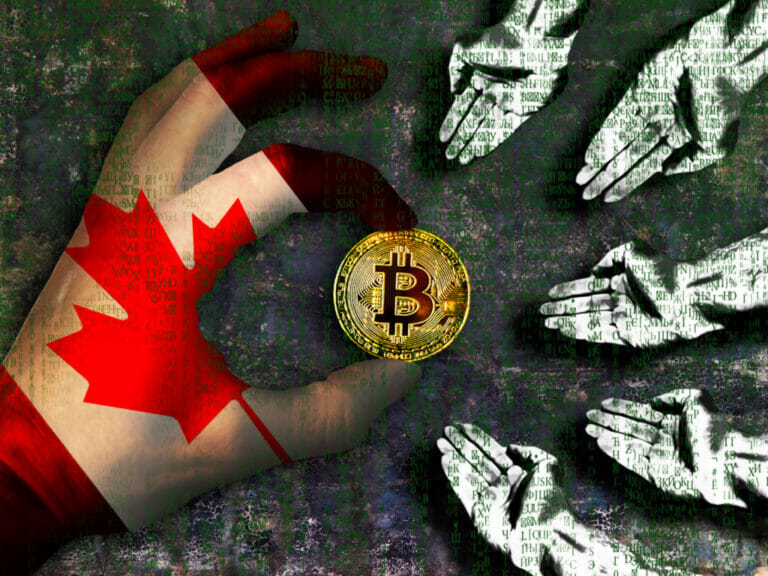
Protesting truckers in Canada migrated to crypto fundraising platform Tallycoin following the ban on further fundraising on GoFundMe.

Truckers protesting Canada’s COVID-19 vaccine policies opted to migrate to Bitcoin-based crowdfunding platform Tallycoin, following a strong political pressure that forced GoFundMe to cancel its Freedom Convoy Campaign.

The donation platform GoFundMe withdrew the campaign and $9 million in donations last Friday in response to reports of violence by protesting truckers, which broke its terms and policies.

On the other hand, after a blast of criticism, the platform went further on Saturday and, instead of sending those funds to applicants, it would automatically refund donors.

Before the first Freedom Convoy campaign got removed by GoFundMe, some media outlets revealed that it had become the fifth most successful GoFundMe in history. On the other hand, GoFundMe permanently removed the freedom Convoy campaign due to an alleged violation of its terms and policies.

The protestant truckers moved into the world of cryptocurrencies; they chose Tallycoin, a crowdfunding platform built on top of the Bitcoin blockchain. The truckers received responses, although not in the volume they probably expected.

The platform marked 8.8 bitcoins as the total amount collected by the group, which is around USD 375,619.9. On the other hand, the amount is much less than the numbers they collected via GoFundMe, which circled USD 9 million.

Donations in The CryptoWorld

The Freedom Convoy Campaign started carrying out its activities in mid-January as a GoFundMe fundraiser for cross-border truckers in Canada protesting the new vaccination policies to cross the borders.

Since then, the site has become a point for people who disagree with prescriptive public health measures. GoFundMe has also closed other campaigns that it has considered irregular on the subject.

Cryptocurrencies to make donations get applied by many medical and human rights organizations. In the UK, a children’s heart health organization received crypto grants.

Crypto Donations in Tonga

Also, last year, the American Cancer Society and The Giving Block revealed a new research fund that receives crypto donations. This year, after the explosion of an underwater volcano, the Kingdom of Tonga in Oceania also started to obtain crypto donations.

The Kingdom of Tonga could turn into the second nation, after El Salvador, to make Bitcoin legal tender; this information came from the country’s politician Lord Fusitu’a. Lord Fusitu’a is a representative and former parliamentarian that stated that the nation could potentially start receiving Bitcoin as legal tender as of November of this year.

Tonga obtained Bitcoin donations to aid with relief efforts as the country struggles with the aftermath of the massive shock wave that the explosion of the Hunga Tonga-Hunga Haa’pai underwater volcano created and led to a tsunami that impacted the coast.

By: Jenson Nuñez

Europe Would not Make Adjustments and Currently Waits for a Decline on the Inflation Rate

The European Central Bank expects the inflation rate to decline throughout the year. Bitcoin is the only currency designed to gain appreciation over time.

Inflation has been described as the most hurtful tax for familiar groups, especially for the poorest ones, and in Europe, the year-on-year inflation rate entered to 5.1% last January, one-tenth above the rise that appeared in December.

This event marks the highest price high peak in the eurozone region in many years, and bitcoin (BTC) may rise as an alternative solution to face the high cost of living that is making the European population suffer so much.

The European Central Bank (ECB) thinks that the best move is to stick to its strategies to keep interest rates untouched. In doing so, it stands in front of the critics who expressed it should reinforce financial coverage in response to rising prices services in the eurozone.

The ECB highlighted that its council already gave green light to the series of decisions made at its financial hedging assembly last December. Therefore, it will sustain its policy of support to boost the economy and tolerate record inflation.

The agency also highlighted that its deposit rate would keep going at an amount under 0.5%, the central bank’s reference refinancing also keeps going at 0%, and its marginal credit facility keeps its position at 0.25. %.

The bank also said it would stick with a plan to stop its pandemic emergency bond-buying program in March, even as it keeps bringing support to the economy by keeping an older bond-buying program alive.

Along With these measures, bank officials believe higher inflation would decline through the year, though economists have disagreed and stated that the eurozone economy would experience higher interest rates. ECB President Christine Lagarde highlighted that energy prices and supply-side constraints are the main causes of inflation in the eurozone, not the inorganic money printing.

Side Effects that Come from Raising or Weakening Interest Rates 

One of the most prominent and effective tools by central banks to put inflation under control is the increase in the interest rate. The Federal Reserve of the United States plans to raise its interest rates in March as a strategy to set a reduction on the quick loss of value of money, which in December ended up reaching its highest level in decades.

When interest rates reach a high peak, credit becomes more expensive, harming companies that need to borrow money to execute their investments and financial activities. This increase also harms people who need loans to acquire a house or an unforeseen expense.

However, by keeping interest rates low, the ECB appears to encourage people to borrow more and more money rather than encourage saving money for the days to come.

If inflation gets to surpass interest rates, the currency decreases its value, which means that the funds the population has and earns do not last as much as they need to. It happens because they always need to pay for daily goods and services.

By: Jenson Nuñez

Man in the US Dosed a Tea with Benzodiazepine Powder to Knock off his Father and Steal his Bitcoins

A young American man is now facing prison after stealing $400,000 worth of cryptocurrency from his dad.

This week, The Washington Post revealed the story of a man in Maryland who spiked a tea that his father was about to drink to gain access to his wallet containing $400,000 worth of Bitcoin.

Liam Ghershony, a young American, dropped a benzodiazepine powder, a substance usually present in drugs like Xanax, in a tea for his father to disable him and steal his cryptocurrencies. The situation, which reached its end with Ghershony Jr. in prison, came due to a disagreement over the sale of digital assets that heated up and escalated to a discussion.

The young man, who is currently 25 years old, desired to convince his dad to trade bitcoins due to the possibilities of a bear market. However, his dad disagreed with his son, and this disagreement became the cause of the crime. Beyond concerns about markets, the first concern for Liam’s father came from the drug addiction his son was experiencing.

Drug Addiction Led Him to Spike a Drink

The father highlighted that he shared a partnership with his son valued at $100,000 a few years ago. Over time, the fund increased as the prices of bitcoin soared. However, in parallel, Ghershony’s drug addiction situation just worsened to a worrying level. The addiction reached an extreme point, leading the young man to mix drugs to disable his dad.

The young man said he went to his father’s phone and transferred $400,000 in Bitcoin to a profile under his control. He later turned at least 60% of these funds into Ethereum.

The dose the son provided to his father was way too high. Ghershony’s father spent at least two days passed out before police found him lying down in his room. It took him at least four days to fully recover from dehydration and the organ dysfunction he suffered due to his situation.

Ghersony’s father reminded the outlet that his son told him he was really attached to his digital assets. He also said that his son’s drug use caused him to pass out constantly. Ghershony got prosecuted after his mother reported him to the police in a desperate attempt to save her son from drug addiction.

Christine Prefontaine revealed to authorities that her son had admitted that he dosed his father with substances to knock him off. The young man had assisted to recovery centers, but he goes back into drugs. The mother clarified she strategically brought a case against her son to make him take care of himself and protect their family.

The Market and How the Effects of the Drug Abuse Reflects on it

After pleading guilty to felony assault, the accused went to prison for at least 125 days and underwent two months of residential drug and mental health recovery. Prosecutors had initially charged Ghershony with attempted murder, but prosecutors found no trace to support such an accusation.

Ghershony now spends his days in a group home with others receiving treatment for addiction recovery and has also started working as a waiter in a restaurant. His father, who seems to have put the whole situation behind, believes in his son’s recovery. However, the young man still feels remorse for his actions.

By: Jenson Nuñez

Binance CEO Warned Users about a Massive SMS Phishing Scam Focused on Stealing their Funds

Binance users read a text message that suggests stopping an unauthorized transaction and it redirects them to a fake website that extracts their digital currencies. Binance CEO Changpeng Zhao warned users of the cryptocurrency exchange about a new phishing scam executed via text messages.

Zhao, nicknamed ‘CZ’used Twitter on Friday to highlight that it appears that some customers have been receiving text messages to their mobile phones with a suspicious link to cancel transactions or withdrawals. This shady link would send users to a fake website that imitates Binance to extract their personal data and empty their wallets.

The CEO’s warning message also included a picture showing the fake message that has allegedly approached many users. The chairman stated that a withdrawal gets requested from an unknown IP address and then they send a link that redirects people to a malicious site that steals all their funds.

The scam achieves its goal by sending users a text message posing as Binance with a link to cancel unexistent withdrawals. The link then leads them to a fake website created to collect their login data and extract their cryptocurrency funds.

This scam modality gets popularly known as phishing and is a new kind of attack in which cyber scammers emulate a known and popular company, website, or application to extract personal data from users and steal all their funds.

Phishing Scams and Tricks that Criminals Apply to Steal Crypto

These types of scams are common activities in the digital currency environment. Late last year, an investigation reached the conclusion that many phishing attacks targeting crypto wallet users such as Metamask had stolen more than $500,000 in cryptocurrency.

A non-fungible token collector also lost more than $2 million in various digital assets from valuable collections due to a hacking attack. The theft of the NFTs took effect once the user gained access to a contract from a network that looked trusted.

Phishing attacks are just one of the shady strategies the hackers apply to commit fraud and steal digital currencies. Just some days ago, the digital currency space went through one of the most prominent attacks in recent times when the cross-chain protocol Wormhole experienced a $325 million exploit.

Binance recently revealed a $1 billion fund to deal with potential hacking attacks. This lifeline is a procedure applied to compensate users that fell victim to hacks that take effect when the exchange’s security measures crumble down due to a failure, so it does not cover losses caused by phishing.

USD 1 Billion Buffer Fund

Binance highlighted that the fund had a role as a part of a strategy at works since 2018. it works by allocating and moving the capital to an emergency portfolio. The company reported a movement of at least 10% of all trading fees to feed the fund.

According to the company, the fund gained a valuation of USD 1,000 million. Binance shared wallet profiles, allowing users to check their money. The exchange also added that it would continue to track the SAFU to protect and respond to users’ requirements.

By: Jenson Nuñez

Bitcoin Posts Biggest Jump Since October as Risk Appetite Grows

The largest cryptocurrency by market value is up 7.6%, while Ether is up as much as 9% and SOL is up more than 10%

Bitcoin gained the most in more than three months, as investors show signs of renewed risk appetite following a volatile week in financial markets.

The largest cryptocurrency by market value jumped as much as 7.6% to $39,605, the most since Oct. 15. Ether rose up to 9%. Even SOL, the native currency of the Solana blockchain that crashed in the wake of the Wormhole project hack, surged more than 10%.

Major cryptocurrencies gained, as solid earnings from Amazon.com Inc. bolstered confidence in tech stocks, which digital tokens have largely tracked in recent months.

Meanwhile, a report showed US employers extended a hiring spree last month despite a record surge in Covid-19 infections and related business closures, with rising wages adding more pressure on the Federal Reserve to raise interest rates.

“The fact that AMZN’s earnings went the way of AAPL, MSFT, and GOOGL, and not FB, has given investors more confidence to re-engage in risk trading,” said Matt Maley, chief strategist at Miller Tabak Market. + Co.

Major cryptocurrencies have been largely stuck in a range for the past few weeks. The struggle to come out ahead came as growth stocks and other riskier assets faltered amid investor concerns about the impact of impending Fed rate hikes and a worldwide move toward tighter monetary policy.

“While there were concerns about accelerating monetary policy, there is now a sense among many capital markets that a 50 basis point rate hike is not being considered, given recent moves in equity markets,” said Hayden Hughes, director executive at Alpha Impact, a trading firm social media platform. He also cited the $320 million restoration of the Wormhole gimmick and oversold technical levels as mood boosters.

By Audy Castaneda

Quantum Computers Could Crack the Security of Bitcoins within the Next Decade, Scientists Estimate

Within a decade, quantum computers could become powerful enough to crack the cryptographic encryption that protects mobile phones, bank accounts, email addresses, and Bitcoin wallets.

The security of the Bitcoin network uses a cryptographic algorithm called SHA-256, and as of now, it is completely impenetrable to modern computers. However, in a research paper published on January 25, 2022, scientists from the University of Sussex suggested that quantum computing would change that in the next decade.

Bitcoin is based on Blockchain, a series of digital blocks linked like a list and keeps records of all transactions that occur on its network, essentially a permanent transparent public ledger of who owns what.

If someone could crack the underlying encryption scheme used by Bitcoin, for example, they could forge these keys and alter transactions to steal coins or carry out other fraudulent activities.

Unfortunately, the unique capabilities of a quantum computer mean that, given enough size and power, these problems become simple, rendering current encryption useless and presenting a significant challenge to cryptocurrencies today.

Decrypting Bitcoin

The bases of modern encryption schemes consist of serious mathematical problems that even major supercomputers would take centuries to crack. The researchers estimate that future quantum computers with 1.9 billion qubits, and that these could crack Bitcoin’s encryption in 10 minutes.

A machine with 317 million qubits would be enough to handle the task in one hour. Nevertheless, if you had a full day to try to crack the security, a system containing a measly 13 million qubits would pass the task.

Right now, the most powerful quantum computer, developed by IBM, has 127 qubits. However, with things moving at their current speed, the Sussex scientists hope to see quantum computers powerful enough within the next ten years.

The scientists note that the Bitcoin network “could negate this threat by soft forking an encryption method that is quantum secure, but there may be serious scaling issues associated with the switch.”

However, major developments in quantum computing could certainly accelerate progress towards cracking Bitcoin’s security.

By Audy Castaneda