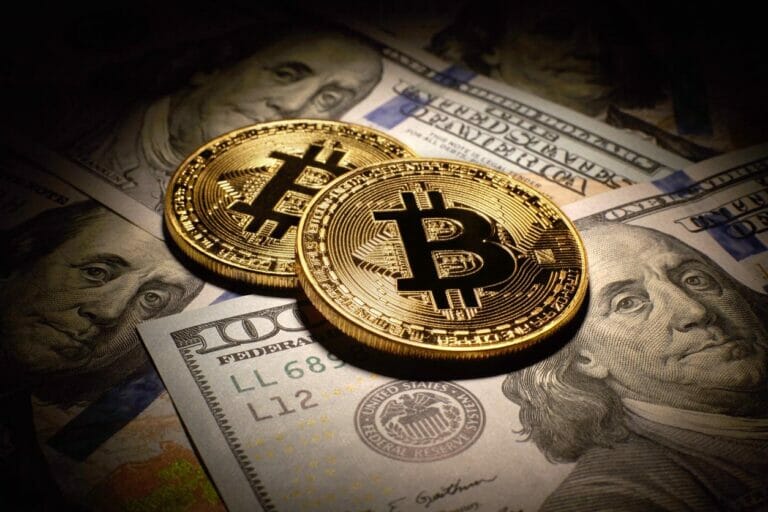

Confiscation of Cryptocurrencies Seems to be a Profitable Business for the US Government

The State is experiencing a financial gain from the sale of BTC but doesn’t show how many cryptocurrencies it owns. The location of the 94,000 bitcoin seized from the Bitfinex case is unknown.

The United States of America managed to confiscate 70 bitcoins from Silk Road in November 2020 and is now taking advantage of a 145% gain in parallel with the current digital asset price. By taking possession of funds managed by crypto-related crimes, the US government would be gathering an immense amount of money.

The Silk Road seizure was the most prominent bitcoin confiscation the US authorities had ever led. At that time, approximately USD 1,000 million that came from the Dark Web market remained under the Department of Justice’s control, when the price was surrounding USD 15,500. With BTC at $38,600, the 69,000 cryptocurrencies gained a value of $2.6 billion.

This situation means that this seizure would be amassing an unprecedented profit for the American nation, given that digital currencies are still in federal authorities’ hands due to bureaucratic and political factors.

The authorities gained total power over the seized currencies, and since then, the cryptocurrency has achieved a high rate, valued at more than 140%. Even the return seems to be higher as the digital currency approached a record price valued at $67,600 in November last year, considering that the price went through various declines.

The government now holds the bitcoin it confiscates since it would have acknowledged that it was a method to gather an immense amount of money. Previously, US marshals auctioned 187,300 bitcoins through a series of auctions, nine of them, to be exact, since 2014 for an amount that did not surpass $200,000.

According to various media outlets, the government made these auctions without knowing that the seized BTC would give the State benefits and advantages valued at USD 7,000 million.

The funds that come from bitcoin auctions sometimes get placed into the Treasury Forfeiture Fund or the Division of Justice Property Forfeiture Fund and serve as financial support for future investigations on the subject.

The US Government does not Show Enough Transparency

Not many things get handled with total transparency by the US government. This lack of clarity comes directly from the Forfeiture.gov site, which records the Department of Justice’s administrative, civil, and criminal actions involving confiscation.

The site should generally be the point to go for data on the total amount of digital currencies the government has under its jurisdiction. But, it shows some delay between the publication date and the confiscation dates.

Reports are not stored online, and paper copies about these activities do not exist. Also, the bitcoin shows zero availability on linking the wallets to the owners; It makes the situation even shadier and clarifies that the government lacks transparency about its bitcoin holdings.

A curious case is that of Fortune. Fortune found that at least 322 bitcoins got confiscated from a drug dealer based in Texas in 2014, but there is no single record of their sale.

The note also references bitcoin loot from Alexandre Cazes, who authorities say operated the dark web marketplace AlphaBay, which got now owned by the US Department of Justice, which seized it during a global sting procedure.

By: Jenson Nuñez

The Bitcoin Code Development Should Receive Higher Donations, Says Jameson Lopp

Lopp believes that large Bitcoin miners should contribute funds to develop the Bitcoin code. The developer stated that the biggest problem with Bitcoin is competing with other industries for talent.

Open-source software generally depends on donations, a problem that Bitcoin must also face. American cypherpunk and developer Jameson Lopp recently raised that issue on his Cypherpunk Cogitations blog.

The renowned bitcoiner said that the financial support for the maintenance of the Bitcoin code has a complex set of problems. He talked to several developers, CEOs, founders, scientists, academics, and investors about the subject.

Jameson Lopp believes that it may not be sustainable to fund every open source project with donations in the long run. For that reason, he mentioned alternatives like issuing bonds, creating a self-sustaining fund, and taking advantage of state incentive programs.

Furthermore, he stated that the financing of Bitcoin will continue to be controversial. Many fear that funders could pressure developers to make their work profitable, regardless of affecting others in the ecosystem. Therefore, he believes that the best formula would be to grant financing through contracts without conditions.

Charities and exchanges seem to be the main funders of Bitcoin developers. The latter tend to be the most profitable businesses in the industry. Lopp commented that large miners could follow suit and contribute funds to the development of the network.

According to Lopp, the development of Bitcoin software receives donations of around USD 20 million a year. However, private projects with less activity in their Github repositories manage more than USD 150 million a year.

Bitcoin Competes with other Industries that also Require Talented Developers

The American developer commented that the main obstacle, apart from financing, is the talent available in the programming area. He said that Bitcoin was competing against almost all other industries requiring talented developers.

Lopp discussed the rigidity of the protocol, which is between sticking to the current model or introducing new features that could add value, in addition to vulnerabilities. The expert considers that the best thing would be to finance the development of second-layer technology since it does not usually require changes in the consensus.

Several organizations partnering with private companies allocate funds to finance the development of Bitcoin. The former include non-profit associations Brink and the Human Rights Foundation (HRF), which favor the growth of that network.

The main objective of Brink is to help ensure the security and stability of the base protocol. However, they also fund research and development to extend the functionality, scalability, and usability of Bitcoin.

The Human Rights Foundation fights the censorship of the pioneering cryptocurrency by governments worldwide. They have contributed 3.5 BTC to finance ten developers who work in different areas of the Bitcoin field.

Bitcoin is the most prominent network in the cryptocurrency market, so its development is a topic of great interest to the community. Lopp and other experts believe that the improvement of the network should receive higher annual donations.

By Alexander Salazar

Two Teams of Cryptocurrency Experts Provide Analysis and Support to the FBI and the NCET

An experienced prosecutor who was a cybercrime coordinator will lead the NCET to combat cryptocurrency crimes. Deputy Attorney General Kenneth Polite Jr. said some criminals exploit crypto assets to launch cyberattacks and ransomware schemes.

The US Department of Justice (DOJ) recently announced that two units would combat crimes related to cryptocurrencies. One is the National Cryptocurrency Enforcement Team (NCET) and the other the new Virtual Assets Exploitation Unit of the FBI. The latter is an American intelligence and investigative agency that has already worked on cryptocurrency-related cases.

A team of cryptocurrency experts makes up the new Virtual Assets Exploitation Unit of the FBI. They provide analysis, support, and training to that government entity. Besides, they innovate their cryptocurrency tools to prevent threats.

Deputy Attorney General Kenneth Polite Jr. said that the rapid innovation of cryptocurrencies has contributed to increasing illicit activities. He mentioned that some criminals exploit them to launch cyberattacks and ransomware schemes.

The new Virtual Assets Exploitation Unit of the FBI comes after the Department of Justice made its biggest-ever financial seizure.

The FBI Forms a New Unit to Control Cryptocurrencies

The Virtual Assets Exploitation Unit of the FBI consists of cryptocurrency experts. They will work in a nerve center to provide equipment, blockchain analysis, seizure of virtual assets, and training to the government entity.

In that sense, the US Department of Justice hired a prosecutor with experience in computer crimes. She will lead its new national cryptocurrency enforcement team. The DOJ recently announced that the FBI would launch a blockchain analysis and virtual asset seizure unit.

Deputy Attorney General Lisa Monaco announced that Eun Young Choi would lead the cryptocurrency team of the Department of Justice. In addition to being an experienced prosecutor, she was a cybercrime coordinator for the Southern District of New York.

Opinion of the New Team on the Illicit Use of Cryptocurrencies

Eun Young Choi said that the NCET seeks to control the growth and evolution of the technology around cryptocurrencies. Likewise, the Department of Justice must contribute to accelerating and expanding its efforts to combat the illicit use of those digital assets.

The National Cryptocurrency Enforcement Team will strive to fulfill its critical role in combating illicit cryptocurrency activities. The former cybercrime coordinator said that the unit would identify, investigate, support, and pursue cases of concern to the Department of Justice.

For her part, Attorney General Lisa Monaco noted that they were sending a clear warning to criminals using cryptocurrencies for their schemes. In addition, she urged all companies related to those assets to collaborate in eradicating illicit activities with them. In that regard, she threatened to hold them accountable to the extent possible if they did not.

The security regarding the use of cryptocurrencies worries the government entities of many countries. For that reason, they have created commissions to monitor how people use them to prevent crimes. However, several studies indicate the percentage of crimes with crypto assets is lower than with fiat money.

By Alexander Salazar

Almost $2 Million in NFT Got Stolen from OpenSea: How Did it Happen?

Loans could be an essential factor for miners to keep their holdings. At least 815 thousand bitcoins are in miners’ hands.

Last weekend, many OpenSea users got threatened by a massive theft of NFTs on the network. The unidentified attacker gained access to thousands of emails and sent them a malicious link posing as the marketplace to make them sign a smart contract and send their digital currencies to him.

The thief managed to sell some of the stolen items and thus managed to get hold of at least 1.7 million dollars. Although 32 people made contact with the fake smart contract, only 17 got to suffer the loss of their items so far.

Devin Finzer, one of the co-founders of the marketplace, explained that the crime had nothing to do with his site but resulted from phishing activity. This cyber-attack consists of sending a malicious link that deceives the user and convinces him of placing their passwords on fake platforms or giving permission to scammers. The latter took effect in this case.

Beyond the situation that took effect in those first hours, some more details about the episode got unveiled. To make crystal clear the urge to solve this situation, Finzer himself posted a Twitter thread that came initially from Nadav Hollander, CTO of OpenSea.

Further Details about the Theft at OpenSea

Hollander, head of technology for the NFT marketplace, highlighted that all malicious orders got signed by the affected users. This order is proof that they granted permission to access their collections at some place and time.

A user called @nesotual also confirmed the situation; Devin Finzer shared his analysis because it is a parallel opinion with OpenSea’s. According to Neso’s thoughts, anyone who says they have not fallen for a phishing attack gets mistaken as all transactions have valid signatures from the victims.

However, Hollander detailed that the orders did not arrive at OpenSea after signing. Likewise, none got executed through the new platform contract, Wyvern 2.3, officially launched on Friday, February 18. Consequently, says Hollander, the orders got signed before the migration to the new agreement, and it is unlikely that the fact gets somehow related to that migration flow.

According to the expert’s view, the attack pointed at a select group of users and was not systemic. The fact that there were 32 affected by the fraudulent maneuver was lamentable. This figure got later reduced to 17 victims, according to OpenSea on its Twitter account.

Off-chain Signatures

The marketplace recently implemented EIP-712, an improvement to Ethereum that aims to display signatures in a more readable way before the user validates them to make it easier for them to manage off-chain signatures.

According to the experts, this method makes it possible to prevent attacks like the one last weekend since it would be easier to track any variability.

The OpenSea CTO assured that the signing of off-chain messages needs the same educational strategies as the urgency of not sharing the seed phrases in a wallet. The community should comply with standard procedures in this regard, like using EIP-712 or EIP-4361, which allows Ethereum-based logins for off-chain platforms.

Meanwhile, although the OpenSea CTO stated that the attack did not come from OpenSea itself, the company is working on every possible way to help harmed users.

By: Jenson Nuñez

Decentralization Is the Determining Factor in the Value of Bitcoin

Decentralization makes the network more resistant to attacks, making it impossible to change its monetary policy and threaten its inherent scarcity. Conflicts of interest have allowed learning that no one can impose their will on average network users.

The current annual supply rate for gold and Bitcoin is around 2% of the total mined. The yearly production rate of Bitcoin falls by about 50% every four years and could drop to zero in the next century.

Under the current supply schedule, the annual issuance rate of Bitcoin will be about half that of gold and will continue to fall. That will cause the pioneering cryptocurrency to be significantly more scarce than the precious metal.

The scarcity of gold and its excessively high extraction cost limit its value. On the other hand, decentralization has determined the supply of Bitcoin from its original design and history.

The determining factor in the success of Bitcoin is precisely decentralization, which is why that network is the most resistant to possible attacks. No one can change its monetary policy or threaten its inherent scarcity.

The Anonymity of Satoshi Is Critical to Bitcoin

Anyone could easily change an organization by influencing its leader, but Bitcoin does not have one. Satoshi Nakamoto has remained anonymous for more than ten years and has not communicated with his community anymore. No one else has managed to wield enough influence to change the monetary policy of the network.

No other crypto asset has had a history without a leader to coerce, a committee to bribe, and a constituency to change its structure.

Running the Bitcoin Network is Extremely Accessible

The ease of running nodes is one of the most crucial decentralization factors in Bitcoin. They transmit the transactions through the network and check the previous transaction history. That is possible with an investment of less than USD 300 in computer equipment and a low-speed Internet connection.

Other cryptocurrency networks support many transactions or offer more feature functionality. However, higher memory and bandwidth requirements result in fewer nodes. In general, large corporate entities are the ones that usually execute them.

If there are further advances in computing, anyone can run Bitcoin nodes on their smartphone. That could dramatically increase the number of nodes on the network, making it much more decentralized.

Conflicts of Interest Test the Decentralization of Bitcoin

Since its inception, Bitcoin has also survived numerous challenges, culminating in the Block Size Wars. Several large companies interested in the cryptocurrency tried to change the protocol to allow more transactions per second.

Some node operators and developers resisted that change as the increase in the size of each block would increase the size of the blockchain. Therefore, it would be harder to run the network, reducing the number of nodes and decentralization.

That conflict allowed learning that nobody could change Bitcoin to impose their will on the average users of the network. Large companies had to give in to a group of average network users, thus proving the high decentralization level of Bitcoin.

By Alexander Salazar

Has Bitcoin Price Plunged? What to Note about the Top Cryptocurrency this Week

Big and smallholders alike are seizing the opportunity to buy Bitcoin, figures show, as on-chain data hints that the coin has bottomed out at the $38,000 level.

Bitcoin (BTC) begins the final week of February on the down but showing signs of strength as it holds a key support level.

After a few days of nervousness in both the macro and crypto markets, the BTC/USD pair is below $40,000, but there are already signs that a comeback could be what starts the week off in the right direction.

The new signals from the Federal Reserve will be a hot topic in the short term, as the first-rate hike is expected to be announced and implemented in March.

Could it all be a storm in a teacup for Bitcoin, which on a technical basis is stronger than ever? Cointelegraph lays out five factors that could influence price action in the coming days as dark clouds linger over the global economy.

Stocks lead a gloomy macro week

The main story for Bitcoin traders this week comes from outside: the post-covid economic landscape and concerns over relations with Russia.

The first comes in the form of how the Fed will respond to rising inflation and, more specifically, whether its hinted interest rate hikes will kick off in March as anticipated.

Such gains are bad news for burgeoning equities, which have enjoyed two years of runaway gains thanks to the Fed’s massive liquidity program to counter yet another Covid-era demon: lockdowns and unprecedented controls on economic activity. .

With the “easy money” soon to start running dry, there could be a kind of reality check for everyone.

As for rate hikes, too many too soon risk causing a recession – an issue that is already being discussed as a possible “necessary evil” for other countries – while a light touch might, on the contrary, not be able to reduce the highest inflation of the last 40 years.

To make matters worse, the situation with Russia and its alleged plans for Ukraine is even more worrying for equities.

Conversely, commodities like oil have benefited from fears of all-out war, which have so far been unfounded as diplomacy is weak this week.

Overall, however, the short-term view is one of considerable uncertainty, while optimism remains for the recovery of risk assets, such as cryptocurrencies and traditional stocks, by the end of 2022.

However, we cannot ignore the figures, as market commentator Holger Zschaepitz summed up on Sunday, “Global stocks have lost another $1.3m in market cap this week on increased Russia/Ukraine risk and the possibility of the Fed raising rates further this year.”

BTC Price Considers CME Futures Gap

With the above stated, it has been tough for the average Bitcoin day trader this month.

February 2022 has only allowed for about two weeks of easy gains, with macro influences ending the party the week before.

Since then, the BTC/USD pair has lost support at $40,000 and has threatened a full pullback from the ground it just gained this month.

However, the $38,000 level – a level previously highlighted as essential for the bulls – remained untouched.

The weekly close, although the lowest in several weeks, came along with a new RSI breakout on the 4-hour chart, a classic signal that precedes short-term price rebounds.

True to form, the price of Bitcoin rose, hovering around $39,200 at the time of writing.

Who is Buying While You are Selling

Amid disbelief that some are choosing to sell their BTC now after hanging on for several months in the downside, data shows that the big players are smelling a bargain.

Some of the biggest Bitcoin wallets are putting their money where their mouth is, and have been doing so throughout 2022 and even before.

There are many examples; the BitInfoCharts on-chain monitoring resource shows the “up only” trend of a particular entity.

Monday alone saw his balance increase by 150 BTC, and he is not the only one: others have been collecting coins during this weekend’s local low.

The situation is far from easy: concerns over inflation, the US monetary policy, and geopolitical tensions are in play, and with these, the possibility that stocks will continue to suffer.

With all the influencing factors, it is arguably not surprising that cryptocurrency market participants are not sure how to feel about the prospects.

By Audy Castaneda