
Several Chinese Provinces Tighten their Measures against Bitcoin and other Cryptocurrencies

Cryptocurrency miners cannot operate in Zhejiang Province and the Shangcheng district of Hangzhou. Shandong, the second-largest Chinese province in terms of population, established the latest hotline to report illegal mining operations anonymously.

The authorities in Zhejiang Province, Hainan Province, and Inner Mongolia raised electricity rates for cryptocurrency miners.  Due to the ban on cryptocurrency mining imposed last year, the measure has confused domestic and international observers.

However, that event could have resulted from a bureaucratic backlog before the crackdown on cryptocurrency mining, not from a change in government policy.

Since September 2021, the position of Beijing on cryptocurrency-related activities in China has been clear. On many occasions, they have described crypto assets as a public threat and all transactions with them as illegal. Besides, they have stated that the mining industry harms the environment with its carbon emissions.

Higher Electricity Rates Mean Crypto Mining Is Legal in Those Provinces

A representative from the local government service center of Zhejiang Province and the Shangcheng district of Hangzhou confirmed they had not yet allowed crypto mining. He explained that the new measure was a form of supporting punishment, adding to the ban.

The announcement of higher rates for cryptocurrency mining implies that the activity is legal. Discovering miners may have allowed the authorities to calculate the energy needed to power their farms and charge them accordingly.

Chinese provinces might want to save face from bureaucracy-related mistakes or punish crypto miners with higher fines. Of course, China will not reopen its doors to cryptocurrency miners in the short term.

The Authorities Ask Citizens to Report Illicit Cryptocurrency Mining Activities

Several Chinese provinces and cities have opened crypto mining hotlines to report mining incidents anonymously.  A local media outlet stated that Shandong, the second-largest Chinese province in terms of population, established the latest hotline.

The authorities have asked citizens in around 16 cities in the province to report on companies and individuals that may be conducting illicit mining operations.

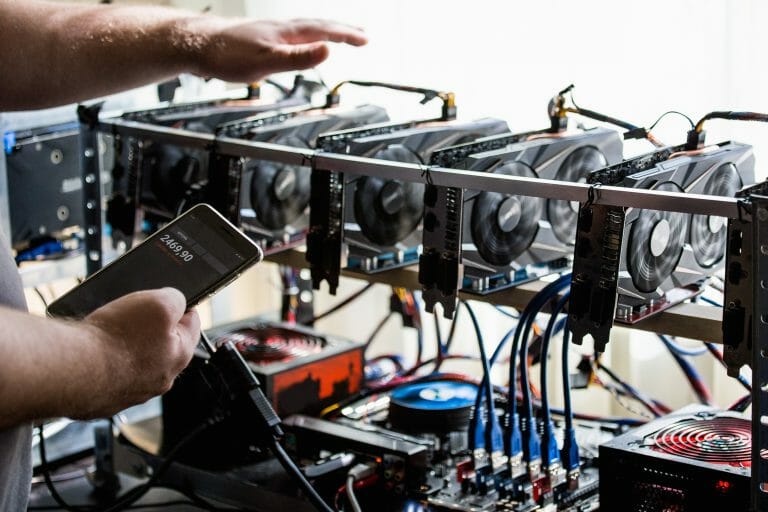
Meanwhile, customs officials in the Huangpu district of Shanghai seized a batch of second-hand crypto mining rigs. They claim that some people were in the process of smuggling them out of the Asian country under assumed names. Officials from Huangzhou described the machines as shabby and rusty Antminer models.

The Fight to Eliminate Cryptocurrency Mining in China Is Not Over

Although it has been increasingly harder to trade cryptocurrencies in China, many Bitcoin (BTC) enthusiasts remain active using VPNs and stablecoins like Tether (USDT). It also seems that there are still over-the-counter (OTC) businesses in the Asian country.

The authorities say they have eliminated cryptocurrency mining, but the fight to control it is far from over. Guotai Junan Securities, one of the biggest securities firms in China, recently warned its employees about the penalties for doing any form of that activity.

In 2021, state organs pointed out they had traced 21% of illegal cryptocurrency mining back to publicly owned companies and offices. An internal notice from the above securities firm required its employees to keep their office computers safe from alleged crypto mining viruses.

By Alexander Salazar

Netflix’ Tinder Scammer’ Denies Accusations and Says He Built His Wealth with Bitcoin

From the hit documentary “The Tinder Scammer,” Simon Leviev had denied falsifying his identity to deceive a group of girls with a false-owned wealth. Instead, he expressed he is an early Bitcoin investor.

The protagonist of the popular Netflix documentary, The Tinder Swindler, Simon Leviev, who would have deceived many women for thousands of dollars, has now opened up to dismiss the accusations these girls made against him and revealed that he is one of the early Bitcoin investors.

Some weeks ago, the Israeli Shimon Hayut became a famous personality after the show’s premiere on Netflix. The featured documentary, which got premiered earlier this month, tells the story of Cecilie Fjellhøy, Pernilla Sjöholm, and Ayleen Charlotte, three victims who claimed that man used many tricks to steal a massive amount of money from them.

The victims told that they met Leviev via Tinder, where he showed himself as the son of Russian-Israeli diamond tycoon. Initially, he treated them with love and even invited them on luxurious dates, giving them gifts as a way to seduce the victims and make them fall into the trap.

After gaining their trust, he started borrowing funds from them and then vanished with millionaire debts behind him.

The film shows the accusations of the three victims but also reveals that the Israeli has ¿ comprehensive list of criminal charges in his native nation, where he has to comply with the courts for many crimes strongly connected to fraud. Leviev received 15 months in prison for theft, forgery, and fraud in 2019, but he met his liberty five months later.

Leviev is Allegedly a Bitcoin Investor Since 2011

 The protagonist of the popular Netflix show refused to take part in the documentary’s filming. However, amid the film’s fame, he opted to finally break the silence and share a version of the situation.

In an exclusive interview with the Inside Edition news outlet, the scammer dismissed the accusations and described himself as a legitimate businessman. He said his wealth resulted from an early investment in Bitcoin when the flagship cryptocurrency had a value of less than $50.

The 31-year-old did not elaborate on how many bitcoins were under his power. Meanwhile, the investigation led by Netflix estimates that Leviev managed to feed his luxurious lifestyle by extracting through deceiving procedures nearly USD 10 million from his victims.

During the interview, Leviev appeared to be amazed at how many women allegedly offered him money or consented to go on a trip with him without meeting him.

The interviewee also explained that the three women who appeared as victims in the documentary didn’t receive any threats while stating that he did not feel wrong about what they alleged. Instead, he expressed that he feels sad about what had happened to him by showing his desire to leave this situation behind and clean his reputation.

By: Jenson Nuñez

War Tests BTC Price: Five Things to Watch about the Top Cryptocurrency This Week

0

Bitcoin (BTC) begins a new week in the shadow of a new geopolitical conflict. In what has become an unrecognizable macro-environment compared to a few days ago, Bitcoin, like many other assets, is feeling the pressure.

The invasion led by Russia, and the subsequent war against Ukraine, is wreaking havoc on global markets, and events can shake sentiment in a matter of hours or minutes.

The timing has affected Bitcoin as well: Its “safe haven” status is undergoing a serious test as investors seek safety and shareholders seek an exit.

As this week’s top influencer, Cointelegraph examines what could be in store for Bitcoin in the short term as it faces complex and almost surreal macro events.

Below, there are five topics for BTC investors to consider this week.

The Ukrainian War Dominates

The situation, which emerged in its current form only five days ago, remains in a state of flux: sanctions keep coming, both sides and their allies continue to bring themselves to their knees, markets react to new threats and odds.

Chief among them is Russia’s economy, which is gearing up for turmoil on Monday. Stock trading is delayed to at least 3 pm local time, and the outlook is grim for its currency, the ruble, already trading at record lows.

Until now, oil, but not Russian oil, has been one of the few beneficiaries of the war, while Bitcoin has managed to remain fairly stable, unlike gold, which first gained rapidly and then lost all of its newly gained ground.

However, the correlation of Bitcoin and altcoins with traditional stock markets remains and therefore low periods can provide a real headache for traders, whatever turns that the war takes.

Macro Spot Price Action Faces Force Majeure

With the traditional markets poised to be extremely volatile at their respective open on Monday, guessing how Bitcoin will fare in the shorter periods is a real problem.

Correlations aside, Bitcoin has managed to stay in a fairly tight range so far, and $40,000 is a clear resistance zone for the bulls to break out of.

The problem, however, is that any more dramatic moves could ultimately be the result of large macro swings and thus be an unreliable long-term signal.

Another Month, Another Red Candle

Sunday’s close did not really go as planned for Bitcoin market watchers.

A last-minute dip eliminated the chances of closing the week and month above $38,500 and thus giving the history books its first four consecutive monthly red candles since the 2018 bear market.

The events of last week, already an unexpected drop, seem to make things worse for Bitcoiners, who have yet to see the cryptocurrency branch out on its own, away from traditional assets.

Another headache for analysts is the monthly chart relative to its 21-month EMA, which could fade as support if losses continue.

The breakout of the 21st EMA has been a common feature of Bitcoin’s bearish macrotrends, and February, fortunately, prevented a repeat performance.

Analyst Kevin Svenson noted that, “tomorrow’s monthly close is critical. If we close below $37,000 (purple 21m/EMA), that gives us the same bearish signal as every other previous macro beartrend.”

Difficulty Stabilizes the Ship

Moving away from geopolitics, investors have every reason to keep faith in the strength of the Bitcoin network.

Despite price pressures and uncertainty on virtually every timeframe, miners continue to mine, and hash rate and difficulty have continued to rise.

This week there may be a challenge to the status quo: the hash rate is constant, but the difficulty will drop for the first time in 12 weeks to account for the latest changes.

This is nothing “bad” as a phenomenon: the 1.25% decline is modest by Bitcoin standards and likely reflects circumstantial changes in miner participation, rather than the start of a new trend.

According to the monitoring resource MiningPoolStats, the hash rate, for its part, remains above 200 exhashes per second (EH/s), a radical change from a few months ago when Bitcoin reached its all-time highs.

Sentiment Predicts the Worst

Its potential roles aside, the largest cryptocurrency is not enjoying a sentiment boost because of recent events.

According to the Crypto Fear & Greed Index, a sentiment indicator that has received increasing attention in 2022, the market is getting increasingly nervous.

BTC/USD saw a relatively small drop overnight on Monday, but that was enough to drag the Index back into its “extreme fear” territory: from 26/100 on Sunday to 20/100, its lowest level since February 1st this year.

In short, this has been a week like no other in Bitcoin history, coming all of a sudden, as traders brace for guaranteed turmoil.

By Audy Castaneda

Ukraine Receives Donations in Bitcoin and Europe Wants to Ban Mining

0

The Ukrainian government decided to accept BTC, ether (ETH) and the stablecoin or stable currency Tether, as a means to support the country in the war against Russia.

The outbreak of the war between Russia and Ukraine monopolized practically all the news space this week, including that of the cryptocurrency sector. The Russian invasion together with the consequent reactions of nations from all continents, mainly from the powers of Europe and the United States, still keeps citizens from all over the world in suspense.

In the midst of this escalation of the confrontation between Russia and Ukraine, the price of Bitcoin -which had been recovering from the fall last January- suffered yet another fall, losing the support above the USD 40,000 that it had achieved at the beginning of this month. The weekly average registers a decrease of 2%. At the time of this writing, the cryptocurrency is trading at USD 38,259, as reflected in the market price of Latin America and Spain, according to the CriptoNoticias price calculator.

News Highlights

The beginning of a Russian attack against Ukraine, in the early hours of February 24, caused a 9% decline in the price of Bitcoin. Although the value recovered a few hours later, the pioneering cryptocurrency maintained a strong coupling with traditional stocks before the outbreak of the war, detaching itself somewhat from the narrative that proclaims it as “digital gold”. In this warlike scenario, the fear and greed index (which serves as an indicator for the sentiment of the Bitcoin market), reflects that users move in “extreme fear”.

In an unusual turn of events, the Ukrainian government decided to accept BTC, ether (ETH) and the stablecoin Tether, in order to get the world to support the country in the war against Russia. This occurred after the Ukrainian Central Bank issued a resolution to suspend the foreign exchange market and operations with electronic money, restricting cash withdrawals.

Countries around the world condemned the invasion and some announced economic sanctions in response to Russia’s actions. The United States, Canada, the United Kingdom, and European Union countries have agreed to expel “selected” Russian banks from the Society for Worldwide Interbank Financial Telecommunications (SWIFT), which will prevent them from conducting financial transactions with the rest of the world.

Vitalik Buterin, the Russian-born co-founder of Ethereum, also criticized Vladimir Putin for his “special military operation” and called the intervention “a crime”. The actions of the Bitcoiner community in support of Ukraine were immediate, and donations in cryptocurrencies grew exponentially in a few days. The NGO Come Back Alive received some 113 BTC. This, while a cryptocurrency exchange decided to donate money to Ukrainians registered on its platform and a Russian rock group created a DAO.

In Europe, representatives of regulatory institutions in Sweden managed to get the ban on Bitcoin mining included in the discussions on the regulation of cryptocurrencies in the European Parliament. The proposal became part of the package of laws known as MiCA (Markets in Crypto Assets) that will regulate crypto assets in the European Union. However, the rejection of the proposal on social networks led Parliament to suspend the vote on the project, which would take place on February 28. According to the German deputy, Stefan Berger, main proponent of the project, he himself requested the cancellation of the act.

As Events Unfold

At the time of writing, the Ukrainian government Bitcoin address had received 115.04 BTC. Based on Bitcoin’s price of $38,068.93 at press time, the coins the government has received are valued at $4.38 million.

So far, the government’s Ethereum address has received 2,115.4 ETH, which corresponds to $5.55 million based on the Ethereum price of $2,623.21 at the time of publishing this article. The government’s Tether address has received 1.04 million USDT.

Ukraine supporters have created a DAO, called UkraineDAO, to support the people and the military by raising funds in ETH for “Come Back Alive”.

On February 24, another separate token called Help Ukraine (HUKR) was developed. The main goal, according to Elliptic, is to donate ETH to “a fundraiser called Support for Ukrainian Sovereignty,” which has raised more than $467,000.

It is worth considering that, with the rise of donation platforms for Ukraine, scammers have also become active. There are many scammers claiming to raise funds for the people of Ukraine and everyone should double check before donating any amount.

By Audy Castaneda

The Bitcoin Whales Have Moved Over 91,000 BTC over the Last Week

Those whales moved 41,290 BTC from exchanges to unknown wallets and 17,948 BTC vice versa. However, those long-term holders accumulated 17,553 BTC and transferred 15,607 BTC between peers.

The Bitcoin whales have moved 91,858 BTC through 44 transactions, a significant increase in the activity from the previous week. The following analysis shows the details and the influence that may have had on the performance of the cryptocurrency.

Over the last seven days, the Bitcoin whales have steadily introduced BTC liquidity into the market. The analysis will allow assessing that in detail by providing data on what those long-term holders have done.

It is necessary to contextualize that activity to better dig into the status of the whales and the market as a whole. However, this is just a micro approach to one of the many factors that can influence the performance of BTC.

Weekly Analysis of the Activity of the Bitcoin Whales

The predominant trend in the activity of the Bitcoin whales over the last week was the introduction of liquidity into the market. In that regard, they moved 41,290 BTC from exchanges to unknown wallets, equivalent to 44.94% of the weekly total.

The second-highest trend in the behavior of the whales was the transfer between exchanges. They moved 17,948 BTC between those platforms, representing 19.53% of the weekly total.

Accumulation was the third-highest trend, as 17,553 BTC went from exchanges to unknown wallets, equivalent to 19.10% of the weekly total. Finally, the whales made transfers between peers, as they moved a total of 15,607 BTC, representing 16.99%.

The Performance of Bitcoin over the Last Seven Days

Bitcoin is trading at around USD 39,739 and has accumulated a 3.2% gain in the last seven days. Its trading volume is above USD 22.37 billion, and its market capitalization is about USD 753.88 billion, according to CoinGecko.

Since last weekend, the market capitalization of all cryptocurrencies has dropped to USD 1.5 trillion. When Russia launched a military attack against Ukraine, it lost nearly 9% in a day.

The growing tension over the war between Russia and Ukraine put pressure on risk assets. The fall in the price of cryptocurrencies indicates that the sector is still in its infancy compared to traditional markets.

However, metrics from Glassnode reveal that investors continue to hold Bitcoin in the long term. Another factor that could influence the leading crypto asset is that the Fed has not talked about the effects of the invasion against Ukraine. They have not said whether the US central bank abandoned its plan to raise interest rates by at least 25 basis points in March.

The behavior of the whales contributes to the changes that the pioneering cryptocurrency undergoes. Therefore, it is crucial to know what those long-term holders have done in the last seven days. Also, no one should forget that the performance of BTC significantly influences the crypto market in general.

The changes in the price of Bitcoin have a crucial effect on the crypto market as a whole, which investors do not overlook. The conflict between Russia and Ukraine has contributed to the drop in the value of cryptocurrencies.

By Alexander Salazar

Real Estate Transactions with Crypto Continue to Advance in LATAM and Spain

The genesis of Bitcoin in 2008 was precisely to allow this type of transaction and business to become more common and possible.

In January 2022, La Haus, a state-of-the-art real estate company, closed a sale in Rivera de Maya, Mexico; and thanks to the cutting-edge technology used by La Haus, the payment in cryptocurrencies was integrated into the purchase process. More recently, in the south of Chile, a young man managed to buy a property by paying with three cryptocurrencies that he had saved Bitcoin, Ethereum, and Dogecoin.

However, before that, there have been other crypto real estate deals in the Latin American region. For example, the real estate company Candoli Properties, based in Argentina, incorporated payments with the Shiba Inu puppy token (SHIB), although it had already accepted other cryptos before. Likewise, the Latin American e-commerce platform MercadoLibre launched in 2021 an official section for real estate trading through cryptocurrency payments for clients in Argentina. In addition, in other countries, in the absence of this official section, the users of the mentioned platform themselves list products, services, and goods (including houses and apartments) that can be paid with crypto.

It is evident that more and more news is coming about the sale or rental of real estate with cryptocurrencies. At the beginning of February, there was the first purchase of a property with Bitcoin as a means of payment in Colombia. Before, the same real estate company had made a sale in Mexico.

On this occasion, the most recent news from the real estate sector comes from two countries: Chile and Spain.

Property with Three Cryptocurrencies

The Chilean media this week spread the news that a young man from Temuco, in the south of Chile, acquired a property thanks to the savings he had had for 3 years in Bitcoin, Ether, and Dogecoin. The name of the buyer is unknown.

The transaction took place in November 2021. The acquired property is located near the ski slopes of the Llaima volcano and the Conguillío National Park, in La Araucanía, where the land alone is worth between 20 and 60 million pesos (about USD $25,000 to 75,000).

The real estate managers RE/MAX mediated the operation, as reported by Joan Sandoval, associate real estate agent at RE/MAX Cordillera in Pucón, “Today we have at least five clients evaluating a purchase in cryptocurrencies through Criptomarket, which is an international platform that is in charge of managing the operation as a digital stockbroker.”

Storage Rooms Paid with Bitcoin

In Spain, where rental operations are extremely important, cryptocurrencies are increasingly becoming a favored means of payment. The storage room (or warehouse) rental company Guardatodo, located in Zaragoza, decided to incorporate Bitcoin as an option to pay for spaces to store furniture or other objects.

It will not happen immediately, as the company wants to incorporate crypto by the end of this year, according to reports. “We do not want to close doors to anyone. If the future involves having and using Bitcoins – and there will be more and more people in this field – it is important to adapt and not be left behind,” said Iñaki Martínez, its financial director.

According to the country’s media, this company is the only one in Spain in the storage area that is incorporating crypto.

“Just like you can pay through bizum, we want to make it easier for the customer to have yet another payment method,” continues Martínez, who says that if large and international companies do so, they do not want to lag behind:

“If they are doing it, we want it to be possible from the local level as well. As if you want to buy bread in Bitcoins, but we should not close ourselves to having only legal tender.”

They will start with Bitcoin first; later, they hope to incorporate other cryptocurrencies such as Ethereum, Shiba Inu, or Solana. They added that they are “working on being able to develop Guardatodo in the metaverse.” That is, warehouses for that virtual universe.

By Audy Castaneda