

According to BlackRock CEO, the Conflict in Ukraine Will Encourage Nations to Reconsider Crypto

Larry Fink believes that the invasion of Ukraine will have an impact on the adoption of digital assets, as it will push governments to reassess their financial dependencies.

The conflict between Russia and Ukraine could boost the adoption of digital assets, as it could prompt governments in the rest of the world to reconsider their advantageous features. That’s the opinion of the CEO of the world’s biggest asset manager.

Larry Fink, president, and CEO of BlackRock’s investment giant revealed a letter directed to investors on Thursday. He speaks about Russia’s offensive against Ukraine and reflects on the possible consequences of this attack on the rest of the world.

Fink highlighted that the conflict could positively impact the widespread acceptance of digital assets among the considerations. He said that the war would oblige countries to reassess their asset dependencies. The CEO also added that some administrations already intended to play a more dynamic role in the digital currency arena, even before the conflict.

Impact on the Energy Sector

The director highlighted his belief that war will intensify some trends already brought about by the pandemic regarding how countries got connected in the global economy. He underscored that the Russian armed attacks over Ukraine had put an end to the globalization faced by the world for the last 30 years.

The director also added the current geopolitical scenario’s impact on the energy sources field along these lines. He expressed that while the short-term energy impact might delay progress towards net-zero emissions, it will boost the shift to greener energy sources over time.

BlackRock Actively Explores Digital Assets

Fink also assured that BlackRock is looking for digital currency features. A CoinDesk report revealed in February had already expected that the administrator with more than USD 10 billion in assets under management became interested in offering cryptocurrency trading services to its clients.

Fink said that as there is growing interest from clients, BlackRock would see digital currencies as an option, stable coins, and underlying technologies to understand how they can help the entity serve clients.

The New York asset management giant made significant moves into the new asset class. In the middle of last year, a job recruitment publication highlighted that it wanted to develop a Blockchain strategy for its Aladdin system.

In October of last year, Fink had already expressed his favorable stance regarding digital assets during an interview for CNBC. While stating that Fink was personally uninterested in Bitcoin, he admitted that he saw a particular role the digital asset could play; at that time, he had also revealed that his company was doing research in the sector to explore new possibilities.

More recently, BlackRock’s iShares made an application for an exchange-traded fund (ETF) that will intend to follow the performance of an index made up of companies in the blockchain and cryptocurrency sector.

By: Jenson Nuñez
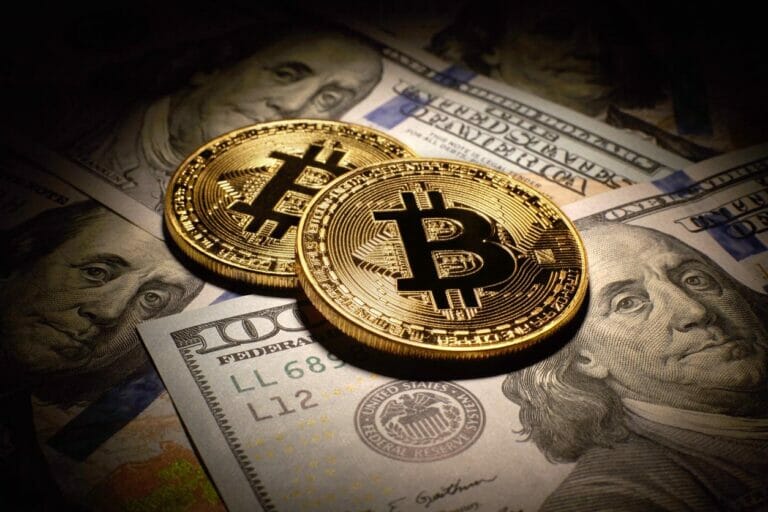
Abuse of Power and Censorship Cause the US Dollar Empire to Crack

The current outlook suggests that the dominance of the US dollar in international business will decline. Meanwhile, Bitcoin strengthens as a global currency and a store-of-value alternative to centralized currencies.

Although people may agree or disagree with the policies of Vladimir Putin, nobody can deny a reality that he recently denounced. He said the US dollar is suffering an increasingly severe crisis of confidence since it has become the money of a few.

Since people no longer want to use money that belongs to others, they clamor for a currency that resists censorship and abuse of power. The leaders of countries sanctioned by the United States now have the same claims that bitcoiners have made for over a decade.

Restrictions imposed by the United States caused Venezuela to create a cryptocurrency pegged to the oil price. They intended to sell the non-renewable resource in currencies other than the US dollar.

Iran followed suit by promoting cross-border cryptocurrency payments and legalizing the mining of crypto assets in the region. They made that move to finance themselves after the economic sanctions imposed by the North American country.

China, one of the leading players in the international market, has also complained about the financial practices of the United States. For that reason, they are promoting the use of the digital yuan (e-CNY) to gain power in that sector.

The Asian country is trying to make trade contracts with Saudi Arabia in yuan, suggesting the end of the petrodollar hegemony. It is crucial to know that financial event to understand the complexity of that crisis in depth.

Bitcoin Emerges as an Option for Sanctioned Countries

A few weeks ago, some analysts would have thought it was too early to say Bitcoin (BTC) would be a strong option for sanctioned countries. The pioneering cryptocurrency is relatively young, and not everyone has yet accepted it globally since several countries banned it.

Nations like Venezuela, China, and Iran decided not to deposit all their government machinery in that cryptocurrency. They do not plan to use it for paying debts, products, and services, or as legal tender.

However, Russia recently said that Bitcoin is an option and is ready to be an alternative against the sanctions by the United States. Pavel Zavalny, the chairman of the Committee on Energy, clarified the Eurasian country would trade oil and gas in currencies other than the US dollar.

The decision emerged following a series of statements by Vladimir Putin, in which he stated the West did not meet its monetary obligations. He argued that the freezing of Russian reserves undermined confidence in the US dollar and the euro.

The invasion of Ukraine by Russia triggered the sanctions that fell on the latter. It worries how easy it has been for the United States to decide the fate of the money of a nation.

The North American country did not conduct the blocking towards Russia alone, but the power of the US dollar is irrefutable. The leaders of a country with fewer than 400 million inhabitants have almost half of the world’s money.

In that context, the priority for the world is to find an alternative to the US dollar and other centralized currencies. Fortunately, nobody has to invent it or fight and reach agreements with the leading powers, as it already exists. Bitcoin emerged as a response to the crisis of confidence in the world economy, standing as an asset not depending on a central bank.

By Alexander Salazar

Binance CEO Changpeng Zhao Visits Argentina and Brazil to Talk about Cryptocurrencies

Zhao had some meetings to learn more about the Argentine market by inquiring about local businesses and crypto-related bills. The CEO of Binance highlighted that cryptocurrencies could transform and facilitate the life of Brazilians with the collaboration of authorities.

Changpeng Zhao, the CEO of Binance, recently went to Brazil and Argentina to discuss the growth of cryptocurrencies in Latin America. When the executive arrived in Buenos Aires, he held almost secret meetings to learn about the Argentine market.

During his visit, he talked to various people from the region interested in the relevance and future of cryptocurrencies. He also spoke about their growing adoption and the need for more education about blockchain worldwide.

Curiously, Zhao went to see the Superclásico soccer game between the River and Boca teams at the Monumental stadium. He attended that popular sports event because his firm recently sponsored the Argentine Football Association (AFA) and the current professional cup bears its name.

Besides enjoying the game, Zhao took advantage of having some meetings to learn more about the local market. He inquired about local businesses and crypto-related bills, as he might be particularly interested in regulatory issues.

Although the visit of Changpeng Zhao to Argentina was brief, he said he hoped to return soon and have more formal interaction. It is relevant to recall that Vitalik Buterin also went to the South American nation in December.

Changpeng Zhao Also Goes to Brazil

A few days ago, Changpeng Zhao also visited Brazil, where he took advantage of meeting with national leaders. He talked to the regulatory director of the Central Bank, Otávio Damaso, the mayor of Rio, Eduardo Paes, and the governor of São Paulo, João Dória.

Zhao confirmed his intentions to acquire banks and payment processors in Brazil. The businessman said that the South American country is relevant to his company. He highlighted that they were moving from an unregulated market to a regulated one.

For that reason, he said that it was crucial to build trust through face-to-face meetings. He gave the message in the context of a Memorandum of Understanding (MoU) to acquire a Brazilian stockbroker. He stated the objective is to develop the cryptocurrency and blockchain ecosystem further.

In that regard, Zhao highlighted that cryptocurrencies could transform and facilitate the life of people in the Brazilian market. He believes that the community and ecosystem in Brazil could develop with the collaboration of local authorities.

The CEO of Binance highlighted that the Central Bank of Brazil and the Securities and Exchange Commission (SEC) authorized the above stockbroker. He also stated that any agreement would require approval by the regulatory authorities, including the Central Bank. However, the companies did not announce any timeframe for closing the potential deal.

The executive always recommends that investors learn about cryptocurrencies before deciding to buy. In that way, they will be able to know how their prices have moved and predict the best time put their money in them.

By Alexander Salazar

Bukele Says the US Wants to Monitor Bitcoin in El Salvador for Fear of His Measures

0

The US State Department will present a report on the presence of Bitcoin in El Salvador in two months. President Bukele believes that the US government does not defend freedom and that Bitcoin is money.

One hundred US senators are preparing to pass a bill that will allow investigating many topics about El Salvador and Bitcoin. These will include remittances sent from the US, efforts to combat illicit activities, monetary policy, and the finances of Salvadorans.

The Committee on Foreign Relations of the US Senate approved the Accountability for Cryptocurrency in El Salvador (ACES) Act. In February, Republican senators James Risch, Bill Cassidy, and Democrat Bob Menéndez introduced the bill.

The argument to consent to the law is to protect the financial system of the United States. They fear that the adoption of Bitcoin as legal tender in El Salvador could affect them.

After the approval in the Senate became public knowledge, President Nayib Bukele did not hesitate to respond to the United States through Twitter.

Bukele Reacts on Twitter, Saying the US Government Is Afraid of Him

Salvadoran President Nayib Bukele expressed on Twitter that he did not imagine the US government would be afraid of what he was doing. In addition, he stated that the United States does not defend freedom while El Salvador does, as Bitcoin is money.

Republican Senator Bill Cassidy, a proponent of the ACES Act, recently tweeted that Salvadorans living in the US do not accept the policies of Bukele. The US official commented that they might not trust a president who boasts about trading Bitcoin naked.

The US Department of State Would Present a Report within Two Months

There is still no definitive date for the vote on the legislative proposal in the plenary session of the US Senate. However, after the approval of the ACES Act, the State Department must prepare a report on the presence of Bitcoin in El Salvador. They seek to include a plan to reduce the potential risks for the financial system of the North American country.

Senator James Risch, another proponent of the law, said that the policy of El Salvador could weaken US sanctions. He added that this would empower malign actors like China and organized criminal organizations.

For that reason, the report must show the impact of the adoption of Bitcoin on the macroeconomic stability and public finances of El Salvador. In addition, they would review the state of law, democracy, and governance in the Central American country.

They must also analyze the effects of the adoption of Bitcoin on the flow of remittances from the United States and the relationship with international financial institutions. The US State Department is due to present the report within two months.

Some analysts consider that this law does not impose anything on El Salvador since its effects only fall on the US government. The latter would be in charge of reporting on the alleged risks of adopting Bitcoin in the Central American country for his nation.

However, Nayib Bukele sees the project as an intrusion into his sovereignty. Furthermore, he stressed that US senators do not have jurisdiction in El Salvador and cannot control its national politics.

By Alexander Salazar

This Metric Proves that the Bitcoin Market Matured a While Ago

The ETH and BTC reserves on exchanges have dropped to their lowest levels since 2018. Users have withdrawn about 55,000 BTC and 583,000 ETH since early March.

The pioneering cryptocurrency has entered a new stage that proves the maturity its market participants have achieved. Investors increasingly seek self-custody solutions for their cryptocurrencies to have more control over their money. For that reason, Bitcoin (BTC) and Ether (ETH) inventories on exchanges reached minimum levels not seen since early 2018.

Data from Glassnode indicates that about 55,000 BTC and 583,000 ETH have left exchanges since early March.

BTC reserves on exchanges recently were 2,506,466, the same level that they recorded on November 5th, 2018. Last March 1st, there were 2,561,570 BTC on those platforms, representing a decrease of 2.15% in around three weeks.

Considering that the current price of BTC is close to USD 43,000, about 24,245 million worth of Bitcoin have left exchanges in March.

The all-time high of BTC inventories occurred on March 15th, 2020, following the market crash caused by the COVID-19 pandemic. Since that high was 3,138 million BTC, the reserves on exchanges have dropped by 20.14% in two years.

The ETH Reserves on Exchanges Decline alongside BTC

A recent low of 21.55 million ETH indicates that the reserves dropped to the levels of September 2018. Compared to early 2022, there is 2.6% less ETH on exchanges, while the decrease since the all-time high of June 2020 is 31.9%. At that time, ETH reserves reached 31.38 million, nearly 10 million above current inventories.

The outflow of BTC and ETH from exchanges has accelerated in the last few weeks, suggesting an accumulation strategy by investors. During accentuated selling periods, associated with a decrease in prices, the inflows of cryptocurrencies are higher.

The current scenery is quite the opposite since there is still outflow on exchanges while the consolidation of the BTC price is underway. It is beginning to fluctuate around USD 44,000, while ETH has exceeded USD 3,000.

Data from CoinGecko indicates that the market capitalization of cryptocurrencies has exceeded USD 2 trillion in the last few days. Meanwhile, CoinMarketCap assigns USD 1.991 trillion to the value of the market.

Investors Seek more Control over their Cryptocurrencies

The volume of transfers of the two leading cryptocurrencies from exchanges to wallets has increased significantly. That could mean that more investors are considering solutions to have greater control over their cryptocurrencies.

That would indicate a greater maturity of the market and a preference among investors to increase autonomy regarding their money. The risks of transferring custody, like fund freezing or transaction censorship, to centralized entities would also decrease.

Sharing private keys with centralized entities, like most exchanges, goes against money decentralization. The latter is the most novel feature of Bitcoin, and trusting third parties is against that advantage. As the traditional monetary system is increasingly centralized and sanctioning, users prefer to keep their cryptocurrency holdings in self-custody solutions.

By Alexander Salazar

According to the Minister of Finance, El Salvador Postponed the Bitcoin Bonus

0

Minister Alejandro Zelaya highlighted that there is an increasing interest in the bonds.

Last week the deadline that El Salvador had revealed for the launch of its Bitcoin Bond or Volcano Bond, with a value estimated at 1 billion US dollars, got met. But it did not happen. The media warned that no progress came to fruition, not even in its legal framework.

Now the announcement of the delay got made by the country’s own Finance Minister, Alejandro Zelaya, who blamed adverse market conditions that obstructed the project’s issue.

The official highlighted on the Salvadoran television program “Frente a Frente” that, although the issue got initially pointed to meet its release between March 15 and 20, the current situation led the administration to apply some changes in the date.

The official also highlighted in the program that they got prepared, but they are waiting for the right moment and the president to give the green light to proceed with the issue. He said that obviously, the president must get consulted on these matters because he is the leader. As a minister, he only shows him the scenarios where the leader could apply the procedures.

Forecast Success

According to Zelaya, the Bitcoin Bond caught the interest of those who desire to acquire it and will have a significant oversubscription that could approach USD 1.5 billion, and that could get conducted towards other financing requirements of the nation.

Zelaya explained that he would conduct the bond issue through the state thermal energy company La Geo. He said that if it gets issued by Geo or the Salvadoran State, it is always a State debt because La Geo is a state company.

The Bond is a Sovereign Guarantee

Likewise, the official maintains that Bitcoin can be the best option for Honduras in response to rumors that that country will also adopt the digital asset as legal tender. However, he said he would wait for the country’s official pronouncement to make a statement on the subject.

He considers it a good decision for a country like Honduras, with high inflation. Handling a robust digital asset such as Bitcoin is an alternative for countries to develop a greater economic flow.

The official acknowledged that it is not textual when he talks about two or three days to wait for a resolution. He stressed that the ideal dates to go on the market take effect during the first semester, so the emissions are between March and April, in May and June, but the market variants are different.

Later he ratified that after September, if a country goes out to the international or national market, it would fail because it is challenging to experience a raise unless there is a pre-foundation, as in the case of Bitcoin Bonds where there are already interested investors.

By: Jenson Nuñez