

Spain: According to Reports, Deloitte got Hired to Develop Its Already Announced Crypto Exchange

0

According to a report revealed by El Confidencial, El Corte Inglés hired Deloitte to release its digital asset exchange.

The most prominent Group of department stores based in Spain, El Corte Inglés, showed its position to jump into the crypto world. According to the most recent information, El Corte Ingles’s position seems clear that it is still moving forward, intending to create its exchange.

Last year, El Corte Inglés made a petition to register a trademark with the European Union Intellectual Property Office. The trademark registration got called “Bitcor.” According to filing request #018434202, the Spanish entity, through Bitcor, intended to offer various services and financial transactions linked to currency swaps, purchases, and sale of assets.

Although crypto did not appear in the request, familiar sources highlighted at the time that it played a role in the project to do business with them. That is why the brand name is so similar to Bitcoin.

A Partnership with Deloitte

Although there was no critical news about the project for almost a year, a report has come from the Spanish media El Confidencial, filtered by other media outlets. However, it does not have official sources. Neither El Corte Inglés nor Deloitte has spoken to confirm or deny the news.

According to the report, El Corte Inglés has hired Deloitte, considered the largest consulting entity worldwide, to develop a technological platform to offer investments in digital assets to the more than 11 million users subscribed with its credit card.

The commercial holding company has sought a consultant to start up the company, called Bitcor, which will allow, among other things, its clients to buy and sell currencies such as Bitcoin or Ethereum. As we said, the Bitcor registry got already under debate in May of last year.

After many months of internal debate on the suitability of exploring this world of alternative investments, El Corte Inglés decided to move forward and recruit  Deloitte, which will get backed up by Minos Global, an entity focused on Blockchain technology created by former employees of Deloitte.

The media expressed that the decision of El Corte Inglés coincides with the step taken by Six Group to ally with LMAX Group, the primary operator of currency and crypto trading platforms for institutional investors.

However, he says that at the same time, European supervisory authorities have warned consumers that many crypto assets are hazardous and speculative. For this reason, they consider that they don’t fit as an investment or as a method of payment or exchange for most consumers.

By: Jenson Nuñez
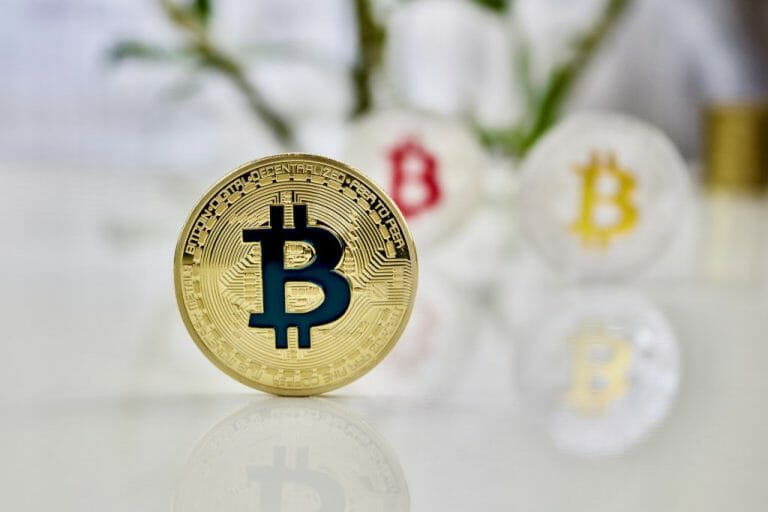
Will Bitcoin Price Hit Higher Levels? Five Things to Know about BTC this Week

Will it really be different this time? Bitcoin is back to its yearly opening level, but traders don’t know what to expect.

Bitcoin (BTC) starts the last week of March with a bang after returning to its yearly opening price above $46,000.

In a surprisingly strong move higher for a weekend, the BTC/USD pair started to rise on Saturday, continuing overnight to challenge its highs since the start of 2022.

Coming against a macroclimate of considerable uncertainty, the strength of Bitcoin is causing uncertainty; naturally, investors take this with a grain of salt this month. The reaction is understandable, as previous attempts to break out of its multi-month trading range have ended in failure.

Despite periods of volatility, the bulls have always been disappointed and the Bitcoin price has not only retraced but also revisited the lower end of its range, costing both long and short positions dearly.

However, the hope is that this time it will really be different: analysts have long argued that just a break above the top of the range, formed by the yearly open of around $46,200, would be enough to trigger a paradigm shift.

Now that this is in action on the charts, attention is turning to the final hurdle: cementing these multi-month resistance levels as support.

With the process underway on Monday, Cointelegraph looks at possible triggers that could help or hinder this major episode in Bitcoin price action.

The Importance of the $46,000 Level

“Little by little and then suddenly” or pure chance? Traders are still trying to make sense of Bitcoin’s newfound strength this week.

There has been a missing chart view since the New Year: BTC/USD is back at $47,000. After jumping nearly $3,000 in 24 hours, the largest cryptocurrency dealt a firm blow to resistance levels that had held bulls firmly in place for months.

The importance of the $46,000 level has been a hot topic for almost as long – a return to the yearly open, many said, would be the sign that Bitcoin was ready for bigger things once again.

Nonetheless, few would have thought that the phenomenon would come ‘off the clock’, and suspicions about the real strength of the rally are naturally pervasive on social media as the week gets underway, just as they were when the own rally started.

On Twitter, user fooo – Mayor of Goblin Town (@bitcoinpanda69), summarized these suspicions like this, “march 2020 – ct was bearish, fooo was bullish; may 2021 ct was bullish, fooo was bearish; july 2021 ct was bearish, fooo was staking fooo’s entire reputation on more upside; november 2021 fooo began dumping, ct was bullish; now ct is bullish and fooo is bearish. Wholesome.”

However, even the most cautious voices are no longer ruling out the potential for further ascent, even if the long-term forecast remains downhill. On Twitter, user Pentoshi (@Pentosh1) posted the following, “$BTC update; Yearly open tagged. Flip to support then 50k next with potential move into 53k imo.”

Bull Market Tendency for BTC?

“Fundamental buying pressure for Bitcoin has now moved into bull market territory,” analyst and statistician Willy Woo reported.

Analyst Matthew Hyland, a key supporter of the $46,000 argument, said that the $52,000 level was the next long-term wall of resistance to breaking.

On Twitter posts, Hyland added that the move was preceded by a breakout in Bitcoin’s relative strength index (RSI) indicator, which itself is a classic sign of breakout trends.

The RSI assesses how overbought or oversold an asset is at a specific price, and in the case of Bitcoin, its score has been rising from a low since mid-January, according to data from Cointelegraph Markets Pro and TradingView.

Therefore, the further development of the RSI could dictate the extent of the rally, based on historical norms of behavior.

As it appears, “Cryptocurrency markets are in a steady uptrend as the supply shock kicks in. It will only take one bull run for this to return to all-time highs,” argued JRNY Crypto on Sunday. Therefore, we should be expecting cautiously an upward trend in cryptocurrencies.

By Audy Castaneda

Why is the Digital Yuan still Stagnant and has not been as successful as Expected?

0

According to data provided by the People’s Bank of China, digital yuan transactions reached $13.68 billion.

The Chinese People’s Bank has been experimenting with the digital yuan for just over two years. However, the very restricted access to this digital currency seems to be cutting its wings. However, the number of users seems to be increasing at a good pace, although it falls short compared to its main competitors, Alipay and WeChat. These platforms already provided the option to pay with the mobile using QR codes without intermediaries. Even so, the government remains firm in its goal of expanding its digital currency as much as possible.

According to data provided by the People’s Bank of China, digital yuan transactions reached $13.68 billion. In the second quarter of last year, this currency reached 8.3 billion dollars according to CNBC estimates.

These data, which may seem hopeful, are still far from what the government expected. The most logical thing would be to think that part of the blame is due to the limited access that exists in the Chinese country. Many businesses are reluctant to accept the digital yuan, mainly because it is unclear what incentives consumers would have, as compared to payment methods like Alipay or WeChat Pay.

Can the Digital Yuan Continue Expanding?

Ant Group, a company affiliated with the Chinese group Alibaba, offers alternative figures. The subsidiary disclosed a monthly volume of 10 billion yuan per month. As of June 2020, it could boast up to 711 million users.

Can we, therefore, expect the digital yuan to continue to expand? It seems that the government remains firm in its bet. At the beginning of January 2022, an application was created that would work in up to 10 regions of China, and in June of last year, prizes were raffled so that citizens could use these currencies to make local purchases.

On the other hand, it is worth noting that the number of users of the digital yuan has increased faster than the volume of transactions. The data we have is up to 261 million at the end of 2021, which represents an increase of 240 million since June of last year, always according to the People’s Bank of China.

The Digital Yuan is NOT Cryptocurrency

The digital yuan as such is not a cryptocurrency, because unlike cryptos like Bitcoin or Ethereum, the digital yuan is controlled by the People’s Bank of China with the aim of replacing bills and coins. It is not a decentralized form of payment as is the case with cryptocurrencies, nor does it use Blockchain.

On top of this, China wants to get ahead of the dollar as the world currency. It would be reasonable to think that they want to impose a kind of “petroyuan” by being buyers of up to 25% of the oil generated in Saudi Arabia. Trade relations between the United States and the Middle East are not going through their best moment and seem to have weakened, which the Asian giant clearly notices.

Nobody knows whether the digital yuan will be able to unseat the supremacy of the US dollar. Bloomberg already stated last year that the Biden Administration was monitoring this currency since for investors from other countries it could be attractive in the long term. This could hypothetically threaten the dollar as the world’s dominant reserve currency. However, the deputy governor of the Chinese Central Bank denied that the digital yuan was intended to replace other international currencies and that the motivation for this new digital currency is focused mainly on the domestic sphere, at least for the moment.

By Audy Castaneda

Why is the Creation of the Digital Dollar Urgent for the Biden Administration?

The United States of America is considering the creation of the digital dollar through the Federal Reserve.

The president of the United States announced earlier this month that the government was studying the possibility of the country’s central bank, the Federal Reserve, issuing a new digital currency in the future. The debate about the implications of the supposed digital dollar, backed by the Fed, caused the main crypto assets in the market to register new rallies in their value. Even so, Biden stressed that he seeks to act cautiously, and after the decree, the president is waiting to receive a report from the US Treasury Department, which has six months to issue analysis on what the future of this currency would be like.

The Biden Administration seeks to know in depth the details about the consequences of this digital dollar initiative, as well as how it could affect the financial system. Specifically, what would be the payment systems, how would this affect economic growth, and what possibilities of access would citizens have. Also, no less important, is how the creation of the digital dollar would affect the security of the country. In addition to this report, the president asked the Fed to continue investigating this issue to assess what steps would be necessary for its eventual launch.

One of the reasons for this is that the United States does not want to fall behind other countries. Currently, as anticipated by the IMF (International Monetary Fund), nearly a hundred countries are exploring the feasibility of issuing their currencies in the form of digital currency, always with the support of their central banks.

If we take into account that there are at least more than 36 trillion dollars in dollar bills in circulation worldwide and hundreds of trillions in accounts, we can appreciate the scope of digital transactions today. For this reason, the existence of purely digital currencies becomes more relevant in 2022. Developments such as the Swedish eKrona or the Nigerian eNaira show us that the time is coming to materialize digital currencies. Although this will not mean the end of metallic money, far from it, we can expect that the use of these assets will introduce new security methods in the transactions that we carry out in the future from our devices.

Is the US Trying to catch up with an e-dollar, to Face China’s Actions?

China seems to have gotten ahead of the United States of America since the digital yuan has been in the experimental phase for almost two years. Some might think that the United States sees this as a possible threat, since currently the dollar holds hegemony when it comes to currencies, and digital currencies could revolutionize global finance.

Biden would be interested in putting a stop to private cryptocurrencies since they have multiplied in recent years, although they are extremely volatile and decentralized instruments. However, some analysts do not believe that this decision will have a negative impact on the digital currency market since a digital currency could increase the efficiency of central banks or the way the government collects taxes. By existing completely digitally, the synergy with online transactions carried out with this currency would be maximum and could improve the performance of the bank network.

According to the current scenario, the interest in developing digital currencies leads us to think if they will have a use case for the Blockchain and what it will mean for the cryptocurrency market, will we all be able to access the digital dollar in a few years, with the same ease as to the fiat dollar?

By Audy Castaneda

Dogecoin Signals Hitting Lows as DOGE Price Rebounds 30% in Two Weeks: What’s Next?

The price of DOGE could rise by more than 150%, based on a classic bullish reversal setup known as a falling wedge.

A brutal correction witnessed in the Dogecoin (DOGE) market between May 2021 and February 2022, which saw the price fall by almost 85%, seems to have stopped this month.

DOGE/USD rebounds 30% in two weeks

DOGE experienced significant “buying down” when its price crashed to levels around $0.10 two weeks ago, resulting in a 30% bounce move to $0.14 as of March 27. Meanwhile, the coin’s bullish pullback originated from a support level that constitutes a “falling wedge” setup, signaling an extended bullish reversal in future weekly sessions.

In detail, a falling wedge pattern occurs when the price is trending lower while fluctuating between two converging, descending trend lines. In a perfect scenario, the setup results in the price breaking out of the downtrend range to the upside, rising as much as the maximum distance between the upper and lower trend lines of the wedge.

DOGE’s rebound from the lower trend line of the wedge two weeks ago opens up its chances of continuing the move higher towards the upper trend line near $0.18. Therefore, the break above the upper trend line further exposes the Dogecoin price rally towards $0.37, more than 150% from the current price.

DOGE Risks

Veteran trader Tom Bulkowski considers a falling wedge to be a “poor performer” when it comes to predicting bullish chart patterns, noting that its “misbalance is high and average price is low.” He cites a study of 800 trades showing that the chance of a falling wedge breakout meeting its upside target is almost 62%.

Furthermore, Dogecoin’s history in showing a period of highly positive correlation with Bitcoin (BTC) — at 0.94 against the perfect score of 1 as of March 27 — could also limit its bullish bias if the latter falls due to macroeconomic pressures and ongoing geopolitics.

Mice McGlone, a senior commodity strategist at Bloomberg Intelligence, noted that the price of Bitcoin could fall as low as $30,000 due to its strong correlation with the US stock market. Nonetheless, he maintained that the price of BTC should recover from its downward slide to reach $100,000 in the long term.

DOGE Price Levels to Watch out for

Dogecoin’s latest bounce move now points to a rapid rally towards the $0.15-$0.19 area, a range that encapsulates three levels of psychological resistance: the 20-day exponential moving average (20-day EMA; the green wave), the 50 day EMA (the red wave) and the 0.618 Fib line (near $0.19) of the Fibonacci retracement chart.

A sharp pullback, accompanied by rising volume from such a resistance zone, could see DOGE test the 0.786 Fib line near $0.10 as an interim downside target. Conversely, a decisive move above the range could lead to extended bullish momentum towards $0.24, with an eye on $0.30 and $0.37, which is also the target of the falling wedge.

Conversely, a decisive move above the range could result in extended bullish momentum towards $0.24, targeting $0.30 and $0.37, which is also the falling wedge target.

By Audy Castaneda

Token Price History Study Helps Patient Traders Enjoy Consistent Profits

0

For those who prefer consistency to luck, this algorithmic indicator has a lot to offer.

Regardless of whether people consider cryptocurrency trading an art, a science, or a game of skill, there is one thing that is beyond dispute: The ones that stand out are not the traders who maintain the longest string of lucky one-off trades, but the ones who establish sustainable trading processes that produce consistent returns.

Ask a sample of seasoned pros if they would rather catch a certain token’s brush with fame by 300% in one day or learn a strategy that consistently generates a 3% return on investment. One would be surprised how many of them (probably close to 100% of the sample) prefer modest but consistent profits.

How Trading Processes can become more Systematic

One way to make trading processes more systematic is to rely on automated data analysis tools with a proven record of accomplishment of consistent performance. One of these tools is the VORTECS™ Score, an artificial intelligence (AI)-powered algorithm available exclusively to Cointelegraph Markets Pro subscribers. Its job is to compare the current mix of trading and social metrics around each crypto asset with past ones, giving traders a head start when historical conditions start to look ripe for a rally.

How to Interpret the Figures Compiled by VORTECS™

To understand what the figures mean, you just have to take into account two simple notions. First, the higher the token’s VORTECS™ score, the more favorable its outlook, historically speaking. Scores of 80 or more are conventionally considered very bullish. On the other hand, scores above 90 indicate the extreme confidence of the algorithm that, in the past, similar patterns appeared systematically before massive increases.

Second, the algorithm detects patterns of trading activity and social sentiment that have preceded big rallies in the past between 12 and 72 hours. On average, assets tend to perform better after more time has elapsed since they reached their highest scores.

This week’s average returns are representative of the larger picture of the performance of the VORTECS™ algorithm. Over a year, between January 2021 and 2022, crypto assets that reached the score of 80 delivered an average gain of 2.45% to the after 72 hours. Those who scored 90 yielded 4.46% after 72 hours.

Although these figures may seem modest, more than a year of observations speak for their consistency. This makes the VORTECS™ Score a solid addition to the arsenal of those who want to make their trading strategies more systematic.

It is worth remembering that trading specializes in buying and selling assets quickly and with the aim of receiving a large percentage of profits.

Trading generally takes place in the short and medium term. Traders analyze market patterns (technical analysis) and follow news, events, activities, or the elements that give value to the financial asset (fundamental analysis). In this way, they develop strategies with the aim of generating returns in a short period.

By Audy Castaneda